A proposal to put Taiwan money into Philippine military infrastructure
A United States congressional commission has recommended allowing Taiwan to pay for improvements at Philippine military sites used by American forces, with priority given to locations in Luzon and Palawan. Its 2025 report proposes routing the money through the US Foreign Military Sales system to strengthen facilities that could support a response if China attacks Taiwan.
Contents
- A proposal to put Taiwan money into Philippine military infrastructure
- How the funding arrangement would work
- Nine sites, with Luzon and Palawan at the center
- Why the strait and the island chains matter
- What construction could change on the ground
- Manila weighs stronger defenses against conflict risks
- China's opposition and the pressure partners could face
- Palau adds another part of the regional network
- Quad Plus, coast guards and Philippine shipyards
- The Philippine role in a Taiwan emergency
- Key Points
The recommendation connects three governments with different interests: Taiwan wants stronger protection, Washington wants more capable regional facilities, and Manila wants better defenses while avoiding decisions that could draw it into a conflict over Taiwan. As of November 28, 2025, Philippine defense officials said they had not previously been briefed on the recommendation, and the government was studying it.
The facilities fall under the Enhanced Defense Cooperation Agreement, known as EDCA. Signed in 2014, the agreement gives US forces rotational access to Philippine military locations for training, storing equipment in advance, and building certain infrastructure. It does not permit permanent foreign bases, and facilities constructed under the arrangement remain Philippine property.
Taiwan would pay for nonweapon support services administered by the United States, rather than provide direct aid to the Philippines. The intended benefit is practical: better runways, fuel storage, communications and supply facilities would help US forces and their partners respond more quickly during a crisis.
The commission also suggested similar funding arrangements for Japan's southwestern islands and Pacific Island countries that recognize Taiwan. Its reasoning is that Taiwan can strengthen its security by supporting facilities elsewhere that help the United States and regional partners operate.
How the funding arrangement would work
The Foreign Military Sales program, or FMS, is an established channel through which partner governments pay the United States to arrange equipment purchases or services. The Defense Security Cooperation Agency manages the contracts. Under the commission's proposal, Taiwan would open an FMS case for nonweapon support services benefiting facilities in another country.
A US contractor would carry out the work, the Philippines would receive the infrastructure, and Taiwan would pay because stronger American regional capabilities could help protect the island. Routing the transaction through Washington would also give Taipei and Manila political distance from a direct agreement to finance Philippine bases.
Commission Vice Chair Randall Schriver has argued that this approach could increase Taiwan's defense investment while improving the ability of the United States to assist it during a crisis. He has also said FMS would offer political cover for Taipei, which is sensitive about financing facilities abroad, and Manila, which stresses Philippine ownership and the absence of a permanent US presence.
Washington already finances EDCA construction. Its recent infrastructure allocations have amounted to tens of millions of dollars, with earlier support totaling hundreds of millions. The 2025 US defense budget includes about $128 million for 36 projects across the nine EDCA sites. Those projects range from airfield improvements and fuel depots to logistics facilities and buildings for humanitarian assistance.
Taiwan's proposed contribution would supplement that work where the commission believes it would do most to strengthen deterrence. Deterrence means making an attack look too costly or difficult for an opponent to attempt. The recommendation still requires decisions by the governments concerned; no Taiwan funding amount or implementation date was given.
Nine sites, with Luzon and Palawan at the center
EDCA initially covered five Philippine locations. Manila added four in 2023, taking the total to nine, an increase of 80 percent. The expansion gave US forces access to more places for joint activities and infrastructure construction while retaining Philippine ownership.
The Luzon sites relevant to a Taiwan contingency include Basa Air Base in Pampanga, Fort Magsaysay in Nueva Ecija, Naval Base Camilo Osias and Lal-lo Airport in Cagayan, and Camp Melchor Dela Cruz in Isabela. Northern Luzon faces Taiwan across the Luzon Strait, making facilities there particularly relevant to movements around the island.
Palawan contains two other EDCA locations, Balabac Island and Antonio Bautista Air Base. They face the South China Sea, where Chinese vessels regularly challenge Philippine ships. The remaining sites are Mactan-Benito Ebuen Air Base in Cebu and Lumbia Air Base in Cagayan de Oro.
The main developments span several years:
- 1951: The Philippines and the United States established their mutual defense treaty.
- 2014: EDCA was signed, initially covering five Philippine sites.
- 2023: Manila added four locations, bringing the EDCA total to nine.
- 2025: The US defense budget included about $128 million for 36 projects across those nine sites.
- November 28, 2025: Manila was studying the commission's recommendation to allow Taiwan funding through FMS.
Why the strait and the island chains matter
The Luzon Strait connects the South China Sea with the Philippine Sea. It cuts across the First Island Chain, a line of islands that constrains the movement of China's navy and air force into the wider Pacific. Northern Luzon sits beside this narrow passage, giving nearby ports and airfields strategic value.
Runways and ports there can support surveillance aircraft, refueling and logistics hubs. Logistics means moving and supplying the people, fuel, equipment and other materials needed for an operation. Having those facilities closer to Taiwan can shorten the time required to respond to developments around the island.
Balabac Island lies near the southern entrance to the South China Sea. Its location can help support maritime patrol aircraft as well as Philippine coast guard and navy missions. The emphasis on both Luzon and Palawan connects preparations around Taiwan with the Philippines' own needs in contested waters.
Recent EDCA work has included runway repairs, fuel storage and warehouses holding humanitarian response supplies. Such facilities have uses in both emergencies and conflict: an aircraft carrying disaster relief needs a usable runway and fuel just as a military aircraft does. The same infrastructure can support different missions depending on government decisions and circumstances.
What construction could change on the ground
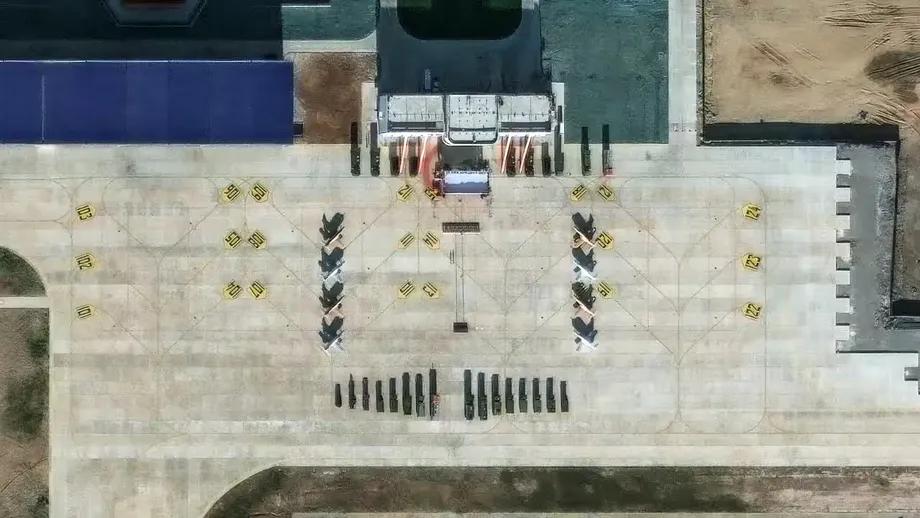
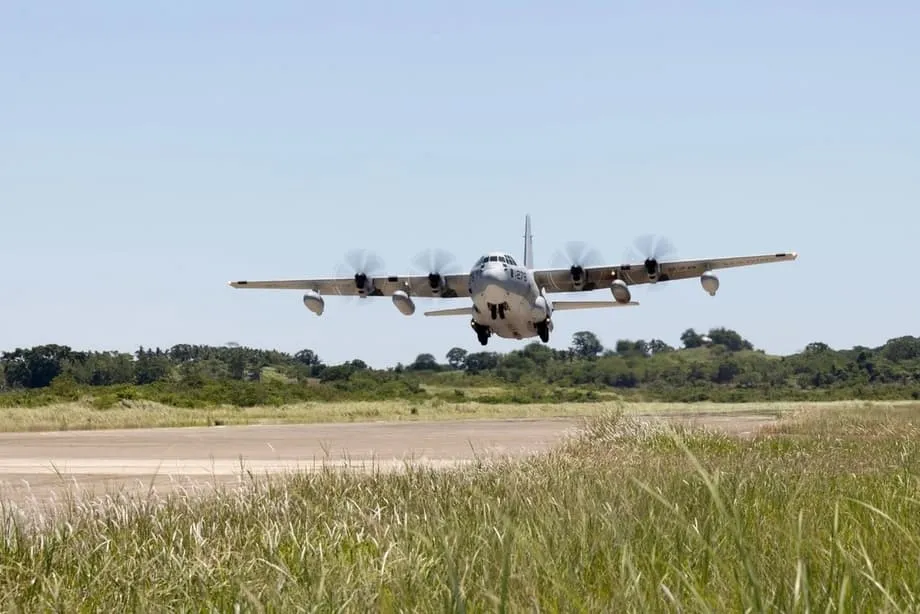
The proposed improvements are largely practical facilities: rehabilitated or longer runways, aircraft parking aprons for transport planes, fuel storage and pipelines, communications and command centers, and warehouses for relief goods and military supplies. An apron is the area where aircraft park, load cargo or receive servicing away from the runway.
Work already underway includes humanitarian logistics buildings, fuel tanks and a command facility in Palawan. Runway improvements have progressed at Basa Air Base and on Balabac. These projects increase the number of places where aircraft can land, refuel and receive maintenance.
More usable locations also provide backup options if one site is damaged or closed. Forces and relief teams can shift to another airfield instead of relying on a single facility. That flexibility can speed up military operations and disaster response.
Maritime domain awareness is another priority. The term means knowing which vessels are operating in an area, where they are moving and what they may be doing. Radar, improved communications and information from aircraft can help authorities spot and track ships in busy waters.
Those systems could work with P-8 maritime patrol aircraft or Philippine reconnaissance assets. EDCA investments also include housing, electricity and water systems, allowing more personnel to arrive for exercises or crises without putting excessive pressure on nearby communities.
Larger joint drills have grown in scope alongside the construction. The facilities support those exercises, while repeated training helps US and Philippine forces practice for possible emergencies and build the working relationships needed for everyday operations.
Manila weighs stronger defenses against conflict risks
President Ferdinand Marcos Jr.'s government has expanded cooperation with Washington after a period of drift in the alliance. The Philippines is a US treaty ally, but linking infrastructure improvements directly to a Taiwan conflict remains politically sensitive.
Critics warn that greater US access in northern Luzon could pull the Philippines into a war over Taiwan. Some lawmakers have questioned why many EDCA locations face north, toward Taiwan, rather than west toward China's outposts in the South China Sea.
Philippine officials have consistently said EDCA facilities will not be used for offensive operations related to Taiwan. They describe the sites as supporting disaster response and broader deterrence, while stressing that the facilities belong to the Philippines and do not host a permanent American presence.
The Department of Foreign Affairs and the Department of National Defense would decide how to proceed if Washington advances the commission's proposal. Their cautious position reflects the government's effort to improve military capabilities and cooperation with allies while avoiding measures that could bring immediate retaliation from Beijing.
The funding proposal brings that balancing act into sharper focus. Taiwan would be paying because it expects a security benefit, while Manila would be receiving infrastructure that can serve Philippine missions. The governments would have to agree on how those interests fit within the uses they permit at EDCA sites.
China's opposition and the pressure partners could face
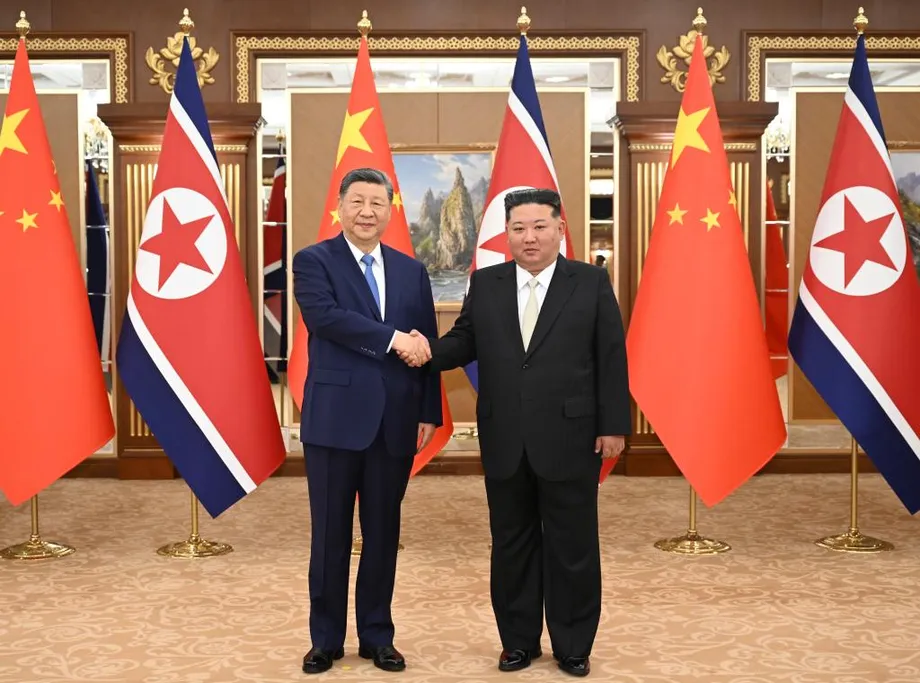
China claims Taiwan as part of its territory and has not ruled out using force to take the island. Beijing regularly objects to measures that tighten cooperation between the United States and its partners around Taiwan or in the South China Sea.
Beijing criticized EDCA's expansion in 2023, describing it as a development that could destabilize the region. A public Taiwan role in financing facilities that strengthen US access in the Philippines would be expected to provoke sharp diplomatic protests. Economic pressure or more assertive activity by Chinese maritime forces in contested waters could follow.
Schriver, the commission's vice chair, warned that regional partners should expect a forceful Chinese response to collective action involving Taiwan. He said:
China is going to stomp heavily on any kind of collective action on Taiwan.
Schriver argued that the question for participating governments would be how much pressure they were prepared to accept. Beijing's opposition to cooperation involving Taiwan extends to arrangements routed through US procedures and described as infrastructure or support services.
China has also pushed back against closer ties between Taiwan and Pacific allies and used sharper rhetoric over joint military drills in the region. For Manila, the expected response adds a diplomatic and security cost to the potential benefits of better facilities.
Palau adds another part of the regional network
Palau, east of the Philippines, features in the commission's wider approach to security in the Western Pacific. It occupies a strategic position in the Second Island Chain, which the United States and its allies use to monitor Chinese naval movements into the broader Pacific.
Palau is also one of the few Pacific Island countries that recognize Taiwan. Its leaders and security officials have called for closer maritime security coordination with Manila, connecting Philippine interests with those of a partner farther into the Pacific.
Philippine officials have pointed to signs of Chinese activity around Palau, including the naming of seamounts claimed by Palau. Seamounts are mountains beneath the sea. Both governments are exploring expanded shiprider agreements, which allow law enforcement officers from one country to join patrol vessels from another.
Those agreements extend the reach of maritime enforcement against illegal fishing, trafficking and other violations. For the Philippines, closer cooperation with Palau adds depth to its regional relationships at a time when Chinese naval and maritime militia vessels are active around contested waters.
Palau's airfields and waters could support surveillance and patrol missions relevant to Philippine security. Connections across the First and Second Island Chains, extending from Japan through the Philippines and into Micronesia, would give the United States and its partners more options for monitoring crossings, resupplying forces and moving humanitarian aid.
Multiple routes would be useful if conflict or a natural disaster interrupted sea transport. The proposed Philippines-Palau partnership fits the commission's broader vision of facilities and maritime cooperation spread across the region, rather than concentrated in one country.
Quad Plus, coast guards and Philippine shipyards
The commission recommended a Quad Plus dialogue to bring the Philippines more directly into discussions with the United States, Japan, India and Australia. Its focus would be activity below the level of open warfare, often called gray zone activity.
The report uses the acronym ICAD for illegal, coercive, aggressive and deceptive actions. In plain language, the concern is pressure that obstructs another country's activities without becoming a conventional military attack. The Philippine Coast Guard is on the front line of these confrontations.
Chinese coast guard and maritime militia vessels have used water cannons, lasers and dangerous maneuvers to block Philippine resupply missions at outposts such as Second Thomas Shoal. These incidents make coast guard training, equipment and coordination part of the same security discussion as improvements to airfields and military logistics.
The commission recommended giving Manila priority for foreign military financing and maintaining programs that fund training and equipment, especially for the coast guard. Foreign military financing concerns financial assistance for military needs, while the proposed FMS arrangement would provide the mechanism through which Taiwan pays for services.
The report also called for support in cybersecurity, energy security and digital infrastructure. It welcomed the Luzon Economic Corridor initiative, which seeks to develop supply chains and transport links across northern Philippines.
Philippine shipyards form another part of the recommendation. The commission urged the United States and partners such as Japan and South Korea to work with them to expand maintenance, repair and overhaul capabilities for military and commercial fleets. More capacity to service ships would complement the proposed improvements to airfields, ports and supply facilities.
The Philippine role in a Taiwan emergency
Manila's leaders say EDCA locations are not launchpads for attacks on Taiwan. They instead describe logistics hubs, training areas and staging points for surveillance, search and rescue, and humanitarian operations. Those functions could still be important during a Taiwan crisis.
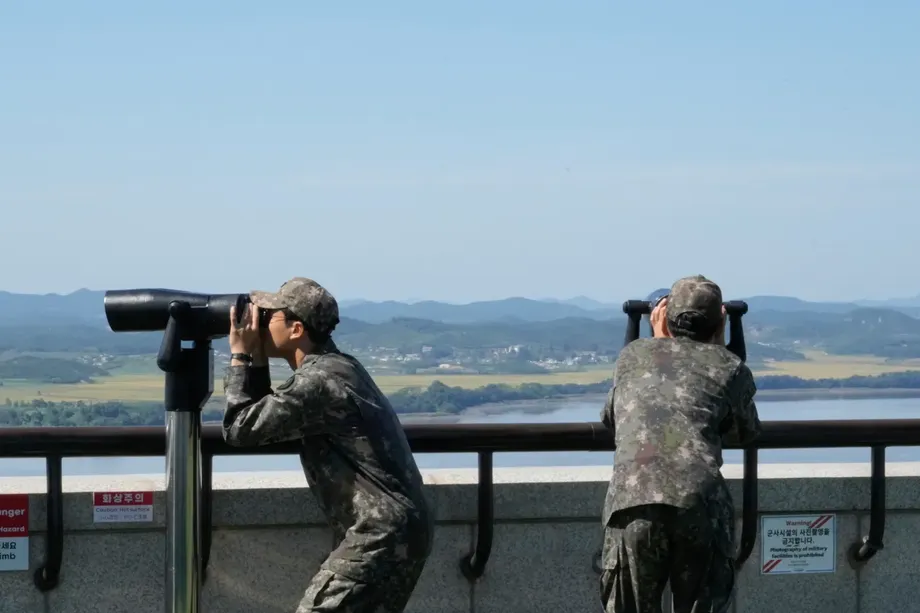
Northern Luzon facilities could help monitor the Luzon Strait, where Chinese and Taiwanese forces would maneuver. Aircraft operating from those sites could relay communications, refuel or carry out reconnaissance. Palawan facilities could support Philippine coast guard and navy patrols, protect resupply missions and help keep sea routes open.
The 1951 mutual defense treaty adds another dimension. In recent years, Washington and Manila have clarified that an armed attack on Philippine vessels or aircraft, including coast guard ships, would invoke the treaty.
Philippine planners already assume that a Taiwan conflict could spread into neighboring waters and are preparing for that possibility. EDCA improvements are part of an effort to help Philippine forces operate with partners while defending their own territory and citizens.
The commission's recommendation would place Taiwan funding inside that existing construction and cooperation program. Its central proposal is to make facilities in partner countries more capable before a crisis, while leaving Manila to weigh the benefits for Philippine defense against the political risks of accepting Taiwan's participation.
Key Points
- A US congressional commission recommended allowing Taiwan to fund nonweapon improvements at Philippine EDCA sites through Foreign Military Sales.
- The proposal prioritizes Luzon and Palawan and suggests similar arrangements in southwestern Japan and Pacific Island countries that recognize Taiwan.
- EDCA expanded from five sites to nine in 2023. Facilities remain Philippine property, and the agreement does not permit permanent foreign bases.
- The 2025 US defense budget includes about $128 million for 36 projects across the nine locations.
- Manila was studying the proposal as of November 28, 2025, and officials say EDCA sites will not support offensive operations related to Taiwan.
- The commission expects strong Chinese opposition to coordinated action involving Taiwan.
- Its wider recommendations include a Quad Plus dialogue, coast guard assistance, shipyard cooperation and stronger regional maritime links involving Palau.