Two home searches bring a chip dispute into sharper focus
Taiwanese prosecutors have searched two homes linked to Wei Jen Lo, a former senior executive at Taiwan Semiconductor Manufacturing Co., and seized computers, USB drives and other digital devices in an investigation into suspected trade secret leakage to Intel. A court also approved a petition to freeze his shares and real estate.
Contents
- Two home searches bring a chip dispute into sharper focus
- A career spanning Intel and TSMC
- What TSMC alleges and investigators are examining
- Intel rejects the allegations and backs Lo
- Why the manufacturing generations matter
- Two legal tracks with different purposes
- Recruitment meets confidentiality obligations
- Investors watch a contest for foundry customers
- Device analysis and court proceedings come next
- Key Points
As of November 28, 2025, prosecutors said Lo was suspected of violating Taiwan's National Security Act. No criminal charges had been filed. The investigation follows a civil lawsuit that TSMC brought in Taiwan's Intellectual Property and Commercial Court after Lo retired in July and rejoined Intel in October.
TSMC alleges a high probability that its confidential manufacturing knowledge was taken or disclosed during that move. Intel denies the allegations, supports its returning employee and says it has no reason to believe the claims have merit.
The dispute concerns knowledge used to make some of the world's most advanced chips. TSMC, the world's largest contract chipmaker, manufactures processors for companies including Apple and Nvidia. Lo spent 21 years at the company and helped lead the move into mass production for its 5 nanometer and 3 nanometer technologies, as well as work toward 2 nanometer manufacturing.
Taiwan's Ministry of Economic Affairs said it was closely monitoring the case because semiconductor intellectual property is strategically important. The searches put the dispute on two legal tracks: TSMC's civil action to protect its information and a criminal investigation into whether Lo broke trade secret or national security laws.
A career spanning Intel and TSMC
Lo worked at Intel for 18 years before joining TSMC in 2004. He rose to senior vice president at TSMC, overseeing research, technology development and the transition of new manufacturing processes into volume production. His return to Intel in October placed him in a senior role connected to manufacturing and research.
His TSMC responsibilities included process integration, yield improvement and increasing production of advanced chips. Process integration means making the many stages of chip manufacturing work together. Yield describes how many usable chips a manufacturer gets from production, so improving it helps turn a promising technology into something a company can reliably manufacture at scale.
Lo's work touched technologies used in smartphones, data centers and artificial intelligence accelerators. His seniority and access are central to TSMC's concern: the company says detailed engineering procedures and proprietary data represent knowledge accumulated over decades that competitors cannot easily reproduce.
The key events span several months:
- Before 2004: Lo spent 18 years at Intel.
- 2004: He joined TSMC, where he eventually became a senior vice president.
- July 2025: He retired after 21 years at TSMC.
- October 2025: He rejoined Intel in a senior manufacturing and research role.
- By November 28, 2025: TSMC had filed its civil lawsuit, prosecutors had searched two residences linked to Lo, and a court had approved a freeze of his shares and real estate.
What TSMC alleges and investigators are examining
TSMC's lawsuit cites Lo's employment obligations, confidentiality rules, a noncompete agreement and Taiwan's Trade Secrets Act. The company alleges that he may have used, leaked, disclosed or transferred its trade secrets to Intel after leaving TSMC.
TSMC said legal action was necessary because it considered the probability of misuse too high to ignore. In its public statement explaining the lawsuit, the company said:
There is a high probability that Lo uses, leaks, discloses or transfers TSMC's trade secrets and confidential information to Intel, thus making legal actions necessary.
Prosecutors acted under a search warrant when they searched the two residences and seized digital media for forensic examination. Such an examination involves checking devices and their records for information about what files were stored, accessed or transferred.
Authorities have not disclosed the detailed scope of the investigation. Local reporting and industry discussion suggest investigators are examining whether documents or data concerning TSMC's 2 nanometer development and its A16 and A14 processes were retained or transferred. Prosecutors have not confirmed those specific technologies as the subject of the inquiry.
TSMC describes its manufacturing knowledge as core technology supporting its leadership in advanced chipmaking. The company's position is that years of investment need protection through court remedies. The civil filing's focus at this stage is Lo's conduct; it does not allege that Intel itself acquired or used the secrets.
Intel rejects the allegations and backs Lo
Intel says its review of what it knows gives it no reason to believe the allegations are true. The company has welcomed Lo back and described him as respected in the semiconductor industry for his integrity, leadership and technical skill.
An Intel spokesperson, setting out the company's response and its commitments on confidential information, said:
Based on everything we know, we have no reason to believe there is any merit to the allegations involving Mr Lo. We take these commitments seriously.
Intel says it operates strict compliance programs that prohibit the use or transfer of confidential information belonging to other companies. It also describes the movement of engineers and executives between employers as normal and healthy for the chip industry, provided that legal and ethical boundaries are respected.
Large chipmakers commonly use several safeguards around employee departures. They can conduct exit interviews, audit devices, revoke access to internal systems and examine file downloads made in the weeks before an employee leaves. New employees may receive specific instructions about what information they may bring or use.
Receiving employers also often require written assurances that a recruit will not use a former employer's confidential information. They can structure duties to keep the employee away from projects that overlap with protected work. Intel's stated compliance position is part of its response to the allegations; the particular steps it has taken concerning Lo have not been detailed.
Why the manufacturing generations matter
TSMC's 5 nanometer, 3 nanometer and 2 nanometer names identify successive generations of chip manufacturing. The numbers are shorthand labels rather than a direct measurement of one physical feature on a chip. A newer generation usually fits more transistors into a given area, delivers more performance at the same power level or uses less energy for the same task.
Those changes help explain why a new manufacturing process can improve phones, laptops and accelerators used in data centers. A transistor is a tiny electronic switch. Packing more of them into a chip and controlling them more efficiently can increase the amount of computing the chip performs within its power limits.
TSMC's 2 nanometer generation is expected to use a transistor structure called gate all around. The structure helps control the transistor's channel, the path through which current flows. Better control reduces unwanted current leakage and can improve power efficiency.
The manufacturing step also relies on extreme ultraviolet lithography. This technique uses light with a very short wavelength to create fine features on silicon wafers, the discs on which chips are manufactured.
Beyond 2 nanometer, TSMC has signaled processes named A16 and A14, intended to push density and efficiency further. Their names reflect a shift toward angstrom labels as the industry moves below the 2 nanometer generation. One angstrom equals 0.1 nanometer, although the process names remain labels for technology generations.
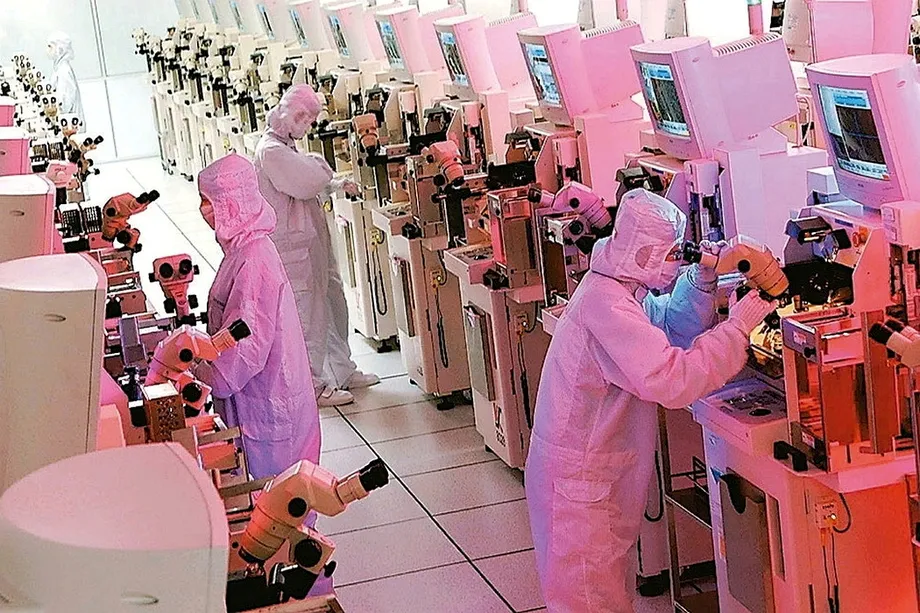
The knowledge behind those processes stretches across thousands of manufacturing steps. It includes chemical recipes, equipment settings, engineering procedures, methods learned while improving yield and design rules that customers follow when creating chips.
Much of that information is protected as trade secrets rather than patents. Publishing a detailed description can give competitors valuable knowledge, while keeping it confidential allows the manufacturer to protect methods developed through years of work. The value lies in the full collection of practical instructions and experience needed to make chips reliably.
Two legal tracks with different purposes
TSMC's civil action in the Intellectual Property and Commercial Court allows it to seek injunctions, damages and other remedies. An injunction is a court order requiring someone to do something or stop doing it. Possible remedies include restricting a former employee's work on certain technologies for a period or requiring retained materials to be returned and destroyed.
The specialized court handles complex commercial and intellectual property disputes. It can act quickly on urgent requests when a company shows a risk of harm that would be difficult to repair later.
Prosecutors are separately examining possible criminal violations. Taiwan's Trade Secrets Act penalizes theft or unauthorized use of trade secrets, with higher penalties when an offense benefits a foreign entity. The National Security Act protects core national technologies and state security interests. Recent amendments have expanded attention to advanced semiconductor knowledge.
Convictions can bring substantial fines and prison sentences, especially when the technology involved is designated strategically important by the state. Investigators must establish that specific trade secrets existed, that TSMC took reasonable steps to keep them secret, and that someone acquired or used them without authorization.
Searches secure potential evidence before it can be changed or destroyed. Freezing shares and property prevents assets from being moved away when they might be needed to satisfy a later civil judgment. Such measures can also help keep a defendant within the court's reach while proceedings continue.
If prosecutors bring charges, the criminal case would move through indictment and trial. If they find insufficient evidence, they could close the criminal inquiry while the civil lawsuit continues. Intel's potential legal exposure would depend on evidence that the company acquired or used TSMC's secrets.
Recruitment meets confidentiality obligations
Semiconductor engineers often build careers across several companies, and employers compete for their experience. The Lo dispute brings that movement into direct contact with the duty to protect a previous employer's confidential information.
Advanced manufacturing processes and packaging methods carry substantial economic value. Corporate boards and governments have made protecting them a priority. Taiwan, the United States, South Korea, Japan and Europe have tightened rules and enforcement connected to economic security and chips.
Noncompete agreements are one tool companies use, although their enforceability differs between jurisdictions. In Taiwan, courts can enforce such agreements when their duration, geographic reach and scope are reasonable and the employer provides suitable compensation.
TSMC's reliance on a noncompete agreement sits alongside its allegations about specific confidential information. Courts examining trade secret claims look for concrete evidence, including unusual file access, downloads to external storage, undisclosed cloud storage or proprietary documents found on personal devices.
Executives working on advanced manufacturing can face long waiting periods before taking certain roles and strict confidentiality terms. Recalling a former employer's process practices can create legal risk if a court finds that proprietary information was used at a new company.
TSMC has previously pursued cases involving suspected theft of sensitive manufacturing information. Companies also separate work assignments and document independent development. Under a clean room approach, independent teams check that improvements come from public information or research carried out within the company. These safeguards reduce risk and help document how technology was developed if a dispute reaches court.
Investors watch a contest for foundry customers
TSMC shares fell by about 3 percent earlier in the week when the lawsuit became public. Intel's stock showed a smaller move. Investors were responding to legal uncertainty and a dispute involving companies competing in advanced chip manufacturing.
The eventual financial effect will depend on how the investigation develops and whether any restrictions affect particular projects or customer programs. TSMC remains the leader in commercial deployment at 3 nanometer and below, with a substantial pipeline of customer designs.
Intel is trying to regain ground through its Intel Foundry strategy. A foundry manufactures chips, including chips designed by other companies. Intel says its 18A process is in preproduction and is intended to serve outside customers as well as Intel's own products.
Winning complex orders that extend over long periods requires customers to trust a manufacturer's technology plans, delivery schedules and protection of intellectual property. A legal dispute surrounding a senior recruit creates a distraction for Intel as it seeks more large customers.
Samsung is also competing in advanced manufacturing. All three companies are investing heavily in new lithography technology, packaging and support that helps customers design chips for their processes. Each faces the continuing task of keeping competitors' confidential information out of its own development work when recruiting experienced employees.
Device analysis and court proceedings come next
Prosecutors will examine the seized devices before deciding whether to bring charges under the Trade Secrets Act or National Security Act. Their work may include reconstructing the timing of data access, recovering deleted files, examining email and cloud usage, and interviewing potential witnesses.
TSMC's civil lawsuit will proceed in parallel. The company could seek temporary orders restricting Lo's work on certain technologies while the court hears the case. Lo and his lawyers will have opportunities to respond through court filings and challenge the asset freeze.
Intel is likely to continue internal review and compliance work to document that it has neither received nor used another company's confidential information. The complexity of digital evidence and court scheduling can make cases of this kind last months or longer. No hearing date, charging deadline or date for an investigative conclusion was given.
Key Points
- Prosecutors searched two homes linked to former TSMC executive Wei Jen Lo and seized computers, USB drives and other digital devices.
- A court approved a freeze of Lo's shares and real estate. Prosecutors suspect a National Security Act violation, but no criminal charges had been filed as of November 28, 2025.
- Lo retired from TSMC in July after 21 years and rejoined Intel in October, having previously spent 18 years there.
- TSMC's civil lawsuit cites confidentiality obligations, a noncompete agreement and the Trade Secrets Act.
- TSMC alleges a high probability of misuse or disclosure of its secrets. Intel rejects the allegations and says it enforces strict controls on confidential information.
- Discussion of possible information involving 2 nanometer, A16 and A14 technologies has not been confirmed by prosecutors.
- TSMC shares fell about 3 percent when the lawsuit became public; Intel's stock showed a smaller move.
- Device examinations and the civil proceedings will continue on separate tracks, with no next court or investigative date announced.