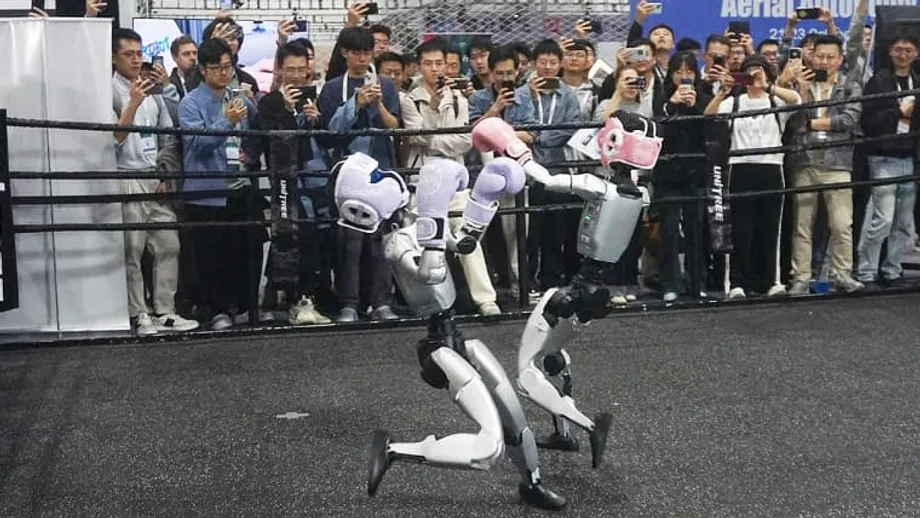
A decade of industrial ambition delivers global reach
A decade after Beijing announced Made in China 2025, China has moved from being the world's assembly line to competing at the frontier of technology. By November 27, 2025, its companies were leading major markets in solar manufacturing, batteries, electric vehicles and commercial drones, while the Communist Party maintained tight political control.
Contents
- A decade of industrial ambition delivers global reach
- Research, factories and the move beyond assembly
- How the party combines control with competition
- Surveillance brings convenience and coercion together
- The pandemic showed how quickly the system could mobilize
- The Digital Silk Road carries Chinese systems abroad
- Can centralization preserve room for invention?
- Democracies respond with restrictions and alternatives
- Quantum research and digital money add new stakes
- Companies and civil society help determine the outcome
- Key Points
The transformation is visible in solar megafactories, battery plants supporting the global shift to electric transport, and consumer drones used by videographers and first responders. China has also become the world's largest exporter of automobiles. Brands once dismissed abroad now sell competitive electric models in Europe, the Middle East and Latin America.
China's rise challenges the expectation, common in Washington and Europe, that a tightly controlled political system would struggle to produce advanced innovation. Beijing has combined restrictions on political life with selected opportunities for businesses, universities and inventors to compete, attract investment and work with foreign partners.
Many scholars call this approach smart authoritarianism. It brings together surveillance, information management and economic incentives, seeking the benefits of technological progress while limiting political risks. Its roots include the earlier developmental states of East Asia, where governments helped steer industrial growth, and Singapore's experience. Sensors, cloud computing and data flowing in real time have given that approach new tools.
The central tension runs through the entire system. Private companies and researchers need room to experiment, while the party wants to retain the power to set boundaries. China's achievements show how far that combination has taken it. Its recurring crackdowns and policy adjustments show how actively Beijing manages the balance.
Research, factories and the move beyond assembly
China's investment in research and development has risen for years. It now produces more science and engineering doctorates than any other country, and many engineers at leading artificial intelligence companies trained within its domestic education system. Universities have expanded and improved, particularly in engineering and applied sciences.
Joint laboratories with foreign partners helped train a generation of scientists. Venture capital, money invested in companies with the expectation that some will grow rapidly, flowed into startups. Government support focused on strategic industries, while private businesses drove many breakthroughs and assumed the risks of turning ideas into products.
China's research output has surged, including growth in highly cited papers, studies that other researchers frequently reference. Patent filings, stronger scientific work and a shift toward manufacturing products of greater value have moved the country into the top tier of the Global Innovation Index. Some assessments place it around tenth worldwide.
Factories increasingly do more than assemble products designed elsewhere. Chinese companies design technology, develop manufacturing methods and build the software that makes their equipment useful. Engineers moving between startups and larger firms carry practical knowledge with them, helping new businesses solve problems that others have already encountered.
Solar manufacturing illustrates the scale of the change. Chinese companies control most stages of the supply chain, from polysilicon, a material used to make solar cells, to finished modules. Their production helped lower global prices and speed the adoption of renewable energy.
Battery manufacturers set industry benchmarks for cost, energy density and manufacturing scale. Energy density describes how much energy a battery can store for its size or weight, a crucial consideration for electric vehicles. In civilian drones, a few Chinese firms command the global market through combinations of hardware, software and cloud tools designed to work together. China is also advancing in biomanufacturing, industrial robotics and satellites.
How the party combines control with competition
Beijing's model rests on three connected practices: collecting detailed information about society, tightly controlling information flows, and allowing selected parts of the economy and academic world to remain open to competition, foreign collaboration and venture investment.
Government incentives direct capital and talent toward industries the leadership considers strategic. Competition between regions creates another source of pressure to develop businesses and attract investment. Universities, laboratories and municipal pilot zones provide places where experimentation can proceed within boundaries set by the state.
Political control extends beyond blanket repression. Authorities use constant monitoring, information restrictions, performance incentives and the outsourcing of heavy coercion. The aim is to direct economic energy without giving up the party's ability to intervene.
Private enterprise remains central to this arrangement, but its freedom is conditional. Crackdowns on powerful technology platforms and large tutoring businesses showed where political limits lay. Regulators later eased restrictions in some areas to restore confidence and encourage investment. A period of tighter control followed by greater flexibility has become a recurring feature of the model.
Surveillance brings convenience and coercion together
Police and local officials can draw on large databases combining phone location signals, travel histories, camera footage, social media posts and financial transactions. Bringing those records together gives authorities a detailed view of people's movements and activities.
In Xinjiang, that architecture has been used to monitor and control millions of Turkic Muslims. Elsewhere, safe city platforms combine information from streets, trains, schools and business systems to anticipate trouble and deter dissent. Required apps encourage citizens and officials to study party doctrine, while the central bank's digital currency trial adds another layer of visibility into payments.
Chinese companies work closely with state agencies to build these systems. Their affordability also makes them attractive to developing countries, extending the reach of tools first used within China.
Human Rights Watch, a nongovernmental organization that investigates abuses, has warned that this combination of social control and administrative efficiency is spreading beyond China's borders. The organization described the government's ambition this way:
The Chinese government hopes that technology will help it cement its chillingly innovative form of government.
Public services use some of the same data infrastructure. During the pandemic, health code systems and city dashboards helped authorities track exposures and route supplies. For governments seeking both efficient services and greater control, the combination offers an appealing package.
Jennifer Lind, an associate professor of government at Dartmouth College who studies East Asia and smart authoritarianism, has argued that advances in the technology of control have changed how authorities apply pressure. She highlighted the growing use of tools that identify people through physical characteristics:
Technologies of repression have really advanced. We are also seeing a movement toward the use of biometrics, which is really scary.
Biometrics means using identifying features of a person's body, such as their face, to recognize them. Such tools give surveillance systems another way to connect an individual with information gathered across different settings.
The pandemic showed how quickly the system could mobilize
China's pandemic response brought government agencies and private companies into rapid experiments with digital services. Health code apps controlled access to public spaces to slow contagion, while ecommerce and logistics businesses expanded delivery without direct contact.
Schools adopted distance learning, and companies moved to cloud offices to keep working. Cloud services allow people to use software and access information through remote computing systems, making collaboration possible without everyone being in the same room.
Government agencies acted as controllers or endorsers, depending on the service. Companies pursued both social aims and commercial goals. The combined experience strengthened the practice of using software and data to address immediate problems, even as access controls demonstrated the state's power over everyday movement.
The broader development of China's technology system spans several stages:
- Decades of investment in education and research expanded the pool of scientists and engineers.
- Beijing announced Made in China 2025 a decade before the article's November 27, 2025 publication date, setting out its industrial ambition.
- During the pandemic, authorities and companies rapidly deployed health codes, delivery services, distance learning and cloud offices.
- By November 27, 2025, China had become the largest automobile exporter and a leading force in solar manufacturing, batteries, electric vehicles and civilian drones.
The Digital Silk Road carries Chinese systems abroad
Chinese technology exports extend well beyond consumer products and factories. Under the Digital Silk Road banner, vendors build core digital infrastructure across much of the developing world, including 4G and 5G networks, smart city platforms, cloud data centers and subsea cables.
The BeiDou satellite navigation system is embedded in a wide range of devices. Chinese cloud providers and payment platforms are expanding along trade routes. Financing from state banks and aggressive pricing help suppliers win contracts in countries where budgets are limited and security risks can feel distant.
Purchasing a complete system can be attractive to a government that needs networks, software and financing together. The same arrangement can create lasting dependence on a supplier, especially when that company controls software updates or important parts of the network.
Equipment vendors with that control can gather data or shape how networks operate. Smart city packages arrive with surveillance settings built in, and contracts often move data storage into partner cloud services. Some projects also involve debt arrangements whose terms are difficult to examine.
Policy specialists argue that affordable alternatives matter as much as warnings about security. Open radio access networks are one option for reducing reliance on a single supplier. They allow parts of a mobile network to work through more open arrangements rather than depending entirely on one vendor's complete system.
Price and performance remain central to purchasing decisions. Without alternatives that can compete on both, many governments will continue buying from suppliers that arrive with a complete, inexpensive package. China's industrial scale and financing therefore shape decisions far beyond its own borders.
Can centralization preserve room for invention?
Xi Jinping's centralization of power creates a continuing tension within China's technology strategy. The party has tightened its grip on civil society and the media, punished outspoken entrepreneurs and relied on tools that place stability above unrestricted experimentation.
Critics warn that appointments based on loyalty can narrow the flow of accurate information to senior leaders. They also argue that the continuing weight of state owned enterprises distorts the allocation of capital, influencing which organizations receive resources and opportunities.
Supporters of the model point to Beijing's willingness to reverse course when policies go too far. They argue that laboratories, factories and municipal pilot zones still retain targeted flexibility. The easing of some restrictions after major crackdowns fits that pattern of adjustment.
China's manufacturing and research successes depend partly on private companies taking commercial risks and researchers testing ideas. Political leaders simultaneously seek tighter oversight of information and public life. Managing those competing priorities remains central to the system, without a settled answer about how much centralization its creative strengths can absorb.
Democracies respond with restrictions and alternatives
The United States and other democratic governments are responding through a mixture of controls and investment in their own capabilities. The common goal is to reduce strategic dependence on Chinese technology without ending all trade.
Washington has tightened export controls on advanced chips and the tools used to manufacture them. It has also screened investment entering and leaving the country, restricted insecure telecommunications equipment in public networks and enforced limits on imports connected to forced labor.
Agency rules give the executive branch new powers to review technology transactions. Procurement bans keep certain vendors out of government systems. These measures address different parts of the same relationship: the technology companies can buy, the investments they can make and the systems public authorities can use.
Allies are aligning with parts of this agenda and financing alternatives, from secure cloud services to satellites. Building competing systems gives governments and businesses more choices, particularly where replacing an established supplier would otherwise be expensive or difficult.
The contest also extends to technical standards, the shared rules that determine how devices and networks work together. Participation in standards bodies matters because decisions made there can affect which technologies become widely used and how security is built into them.
Quantum research and digital money add new stakes
Chinese research groups are working toward quantum computers capable of threatening today's encryption. Encryption protects information by making it unreadable without the right key. More powerful quantum computing could eventually challenge some of the methods now used to keep data private.
That prospect creates a risk for information already being collected: data stolen now could be decrypted later. Security researchers therefore urge rapid adoption of post quantum cryptography, methods designed to protect information against attacks involving quantum computers.
China operates the Mozi satellite for quantum key distribution and is building a national quantum network. Quantum key distribution concerns the exchange of keys used to protect communications. China is also planning links across borders with partners in BRICS.
The central bank's digital currency gives authorities direct visibility into transactions. Projects such as mBridge test uses across borders that might reduce the effect of sanctions. These developments connect payment technology with questions about state power and the international financial system.
The account of these projects gives no timetable for quantum computers capable of threatening today's encryption or for the planned links with BRICS partners. Security researchers are urging action now on post quantum cryptography, greater transparency in AI surveillance and active participation in standards bodies.
Companies and civil society help determine the outcome
Major American technology companies have at times complied with censorship and security demands inside China, shared technical knowledge with entities linked to the state, or bought from suppliers accused of using forced labor. Those choices helped build dependencies that now complicate government policy.
Businesses influence how technology travels through their purchasing, partnerships and decisions about market access. The connections formed through years of collaboration make efforts to reduce reliance more complicated than simply issuing a ban or ending a contract.
Civil society organizations are pursuing a different set of responses to digital authoritarianism. They are building tools to bypass censorship, examine algorithmic systems and make public data useful for accountability. Auditing an algorithm means examining how a system reaches decisions and what effects those decisions have.
China's technology rise is therefore a story about factories and scientific achievement, but also about the rules built into daily services. Networks, payment systems, surveillance platforms and cloud tools can improve convenience while expanding the power of the institutions that operate them. Governments, companies and civic organizations all help determine that balance.
Key Points
- A decade after Made in China 2025, China leads major technology markets while maintaining tight political control.
- China produces the most science and engineering doctorates and has expanded research, universities and advanced manufacturing.
- Chinese firms lead in solar manufacturing, batteries, electric vehicles and civilian drones. China is the largest automobile exporter.
- Surveillance databases, safe city systems, health codes and a digital currency trial give authorities detailed visibility into society.
- The Digital Silk Road exports networks, cloud infrastructure, payment services and surveillance systems, creating lasting supplier dependencies.
- Centralization under Xi Jinping places pressure on the room for experimentation, while policy reversals preserve selected flexibility.
- Democratic governments are combining export controls, investment screening and procurement restrictions with investment in alternatives.
- Quantum research and digital currencies bring further security concerns. Corporate decisions and civil society efforts also shape how technology is used.