A 264 million yuan test at busy border crossings
UBTech Robotics has signed a 264 million yuan agreement, worth about US$37 million, to deploy Walker S2 humanoid robots at border crossings in Guangxi, the southern Chinese region adjoining Vietnam. Deliveries are scheduled to begin in December 2025 through a humanoid robot center in the coastal city of Fangchenggang.
Contents
- A 264 million yuan test at busy border crossings
- What travelers and border staff could see
- A human-shaped machine built for industrial work
- How a three-minute battery change supports long shifts
- Why metals plants are part of the same project
- China is moving robots into everyday services
- UBTech's orders and manufacturing targets
- What earlier factory trials taught the company
- Safety, privacy and the risk of expanding too quickly
- How the border trial compares with other humanoid efforts
- Key Points
The robots are intended to guide travelers, help manage crowds, assist patrols, move supplies and provide commercial services at border facilities. The agreement also extends beyond the crossings: UBTech says the machines will carry out inspections at manufacturing sites that process steel, copper and aluminum.
The project is one of the largest deployments of humanoid systems in Chinese government operations. Its significance lies in the setting. Border halls bring robots into direct contact with the public, where people move unpredictably, queues change and reliable operation matters throughout the day.
UBTech is taking a platform designed for industrial work into those public spaces. The aim is to show that a robot with a body shaped like a person can handle several useful jobs in buildings already designed around people, without extensive changes to the site.
Guangxi crossings serve travelers and freight associated with regional trade, tourism and commerce across the border. Human staff already use kiosks, cameras and fixed scanners. A walking robot adds something different: a machine that can move to a busy counter, deliver instructions, answer routine questions or carry a small load where assistance is needed.
The agreement also gives UBTech a demanding commercial test. Success depends on turning the robot's movement, sensing and battery capabilities into dependable daily service, both among travelers and inside metals plants.
What travelers and border staff could see
Walker S2 units will serve as mobile information points, direct travelers toward queues and counters, and help organize movement during busy periods or special events. Their duties can change as demand shifts across a facility.
During quieter periods, the robots can follow predefined patrol routes, flag unattended items and assist with simple logistics, such as moving parcels or supplies between counters. Commercial tasks may include directions, promotional information and basic customer support.
Fangchenggang lies on a major trade corridor with Vietnam. Its crossings handle tourists, migrant workers and cargo teams, creating a mixture of needs that goes beyond answering the same question repeatedly. A robot could spend part of a shift managing crowd flow, then guide a passenger needing extra help to a particular service window or exit.
The intention is to support officers and other staff, freeing them for more complex checks. Speech interaction and multilingual support can be tailored to local requirements, while the range of duties can expand with performance results and feedback.
UBTech's proposal relies on mobility as much as conversation. A fixed information kiosk stays in one place; a humanoid can travel to a developing bottleneck or accompany someone through a building. That flexibility is central to the border trial, where the same unit may be asked to switch between assistance, patrol support and carrying supplies.
A human-shaped machine built for industrial work
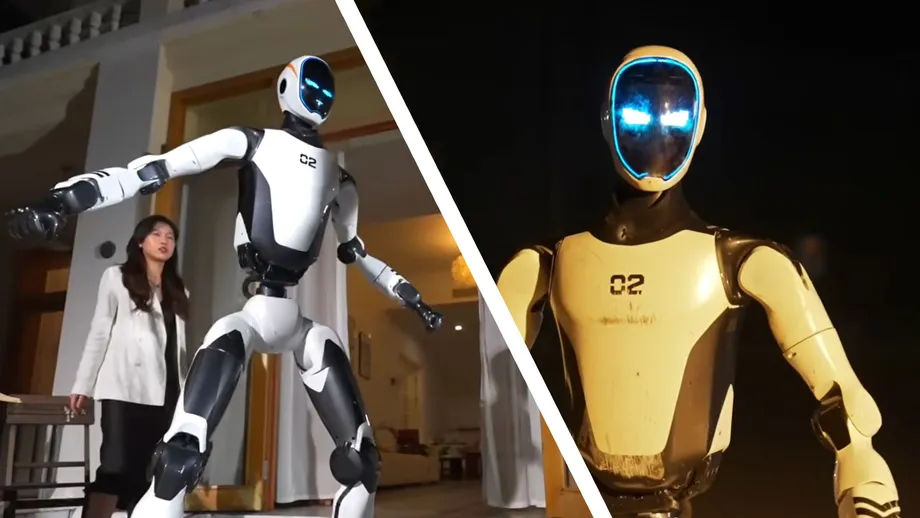
Walker S2 stands about 1.76 meters tall and has 52 degrees of freedom. This term describes the separate movements its joints can make, allowing different parts of its body to bend or rotate for walking, reaching and handling objects.
Each hand has 11 degrees of freedom for detailed manipulation. UBTech describes precision below one millimeter for assembly and grasping tasks, a capability intended to help the robot handle objects accurately rather than simply lift them.
Each arm can carry up to 15 kilograms. Its working area extends from ground level to roughly 1.8 meters, while joints in the waist provide the turning force needed for deep squatting and stooping. Those movements help it reach low shelves and work in confined spaces where fixed robots struggle.
Walker S2 uses binocular stereo vision with RGB cameras. Two camera views help the system judge depth and map its surroundings, much as two eyes help a person estimate distance. RGB cameras capture color information that the robot can use when interpreting a scene.
Dynamic balancing algorithms adjust its movements to keep it stable while walking on two legs. The system is designed to support movement while carrying loads, crossing uneven surfaces or traveling at speeds up to 7.2 kilometers per hour.
Factory aisles, stockrooms and border halls share a practical challenge: the robot must move through spaces where people and objects can change position. Strong joints and capable hands provide part of the answer, but useful work also requires the machine to judge its surroundings and keep its balance as conditions change.
How a three-minute battery change supports long shifts
Walker S2 has two battery packs and a hot swap system, meaning it can replace a depleted battery while maintaining power. It can navigate to a station, remove the used pack, insert a charged replacement and return to work in around three minutes.
UBTech designed this autonomous battery exchange to support operation nearly around the clock without a person performing each change. At a busy checkpoint or on a continuous inspection route, shorter interruptions can make a difference to how much useful work a robot completes.
The economics are straightforward: a machine that spends a long time waiting for a charge spends less time doing the job it was purchased to perform. Battery swapping is intended to limit that downtime, particularly where operations continue through long shifts.
UBTech also integrates its BrainNet 2.0 and Co Agent AI frameworks for perception, task planning and autonomous handling of unexpected situations. The software combines information from different types of input with motion planning, allowing the robot to interpret an instruction, divide it into steps and adjust when an obstacle appears.
A unit assigned to shuttle materials, answer a routine question or check equipment status may need to revise its plan as traffic, staffing or its surroundings change. This ability connects the physical machine to embodied artificial intelligence, in which software must make decisions through a body operating in the real world.
Why metals plants are part of the same project
Steel, copper and aluminum facilities will provide another setting for Walker S2 inspections. These jobs can involve repetitive rounds, reading gauges, scanning labels, checking for leaks or unusual sounds, and moving through stairs and narrow passages.
A humanoid can travel through spaces sized for people, direct cameras or sensors toward equipment and send inspection data to supervisors. Its body shape and range of movement are intended to make existing industrial layouts workable without rebuilding them around a fixed machine.
Long inspection routes and hot areas place demands on both power supply and hardware. Autonomous battery changes and robust materials are intended to help the robot remain on task with less frequent manual assistance.
The industrial and border duties share several requirements, including reliable walking, accurate sensing and the ability to reach or carry objects. Their working conditions differ, however. A factory inspection follows equipment and routes, while a public border hall adds changing crowds, questions and passenger needs.
The Guangxi pilot therefore tests a range of uses for the same platform. In public venues, a unit can alternate between directions, crowd management and basic logistics. In factories, it can reach items at floor level, lift moderate loads and repeat checks in places that are tiring or risky for people.
China is moving robots into everyday services
China's Ministry of Industry and Information Technology has established a national committee for humanoid robotics. The move signals government support for standards, research and commercial adoption as agencies, airports, factories and city services introduce embodied AI into daily work.
Police patrol robots already operate in Shenzhen, Shanghai and Chengdu. At Hangzhou Xiaoshan International Airport, a robot answers passenger questions. Immigration teams have tested multilingual systems at major summits, while customs officers in Shenzhen have paired language models with inspection robots to verify cargo.
These trials give developers and organizations installing the systems information from real operations. The Guangxi deployment follows that pattern, expanding the use of robots beyond demonstrations and into facilities with recurring duties.
The China Academy of Information and Communications Technology projects that China's humanoid robot market could exceed 100 billion yuan by 2030, growing from a small base today. Goldman Sachs Research forecasts a global market near US$154 billion by 2035 under its mid case scenario.
Those forecasts describe expectations rather than current sales. Public showcases, long walking trials and national competitions have attracted attention, but border halls and factory floors offer a different test: whether the machines can perform regular work that produces measurable value.
UBTech's orders and manufacturing targets
UBTech says cumulative orders for its Walker series have reached 1.1 billion yuan since shipments began in November 2025. The Guangxi agreement, at 264 million yuan, is equivalent to about 24 percent of that stated total, illustrating the scale of this single project alongside the company's order book.
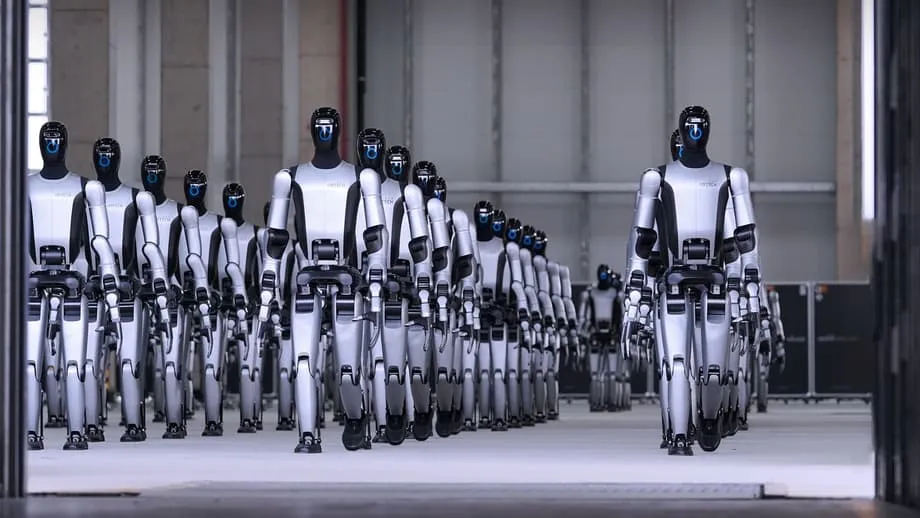
Management plans to deliver around 500 industrial humanoids by the end of 2025, increase production by a factor of ten in 2026 and reach annual output of 10,000 units by 2027. These are different measures: deliveries count machines handed over to customers, while output counts machines produced.
UBTech is also working to reduce manufacturing costs as volumes grow. It has pursued a share placement in Hong Kong to raise fresh capital for expansion. Such a placement raises money by issuing shares, and its shares dipped slightly on the financing news, a common market reaction when new equity is announced.
The company's industrial customers include BYD, Geely Auto, FAW Volkswagen, Audi FAW and BAIC. These automakers have begun integrating UBTech robots for production tasks that require movement. Foxconn and SF Express are also deploying robots in warehouses and smart factory operations.
Early results point to reliable performance in busy industrial spaces, the environment Walker S2 was designed to serve. UBTech is moving beyond selling individual robots toward providing complete operational packages, including deployment planning, training and setup for particular working situations.
Tan Min, a UBTech executive, discussed customer interest in an interview in November. Addressing the scale of orders, Tan said:
The orders we have received far exceed the announced number,
Tan said the market for practical humanoids was expanding beyond early pilots. UBTech has used its growing backlog to answer concerns about whether demand can keep pace with production.
What earlier factory trials taught the company
UBTech's early prototypes in 2024 struggled with slow movement and depended on visual markers to navigate or perform tasks. Their efficiency lagged far behind human workers, showing how much development was needed between a functioning prototype and a useful industrial assistant.
A later generation added steadier walking, more capable hands and improved vision. Those changes expanded the range of workable tasks and increased throughput, meaning the amount of work completed within a given period.
Walker S2 builds on those lessons with stronger joints, refined control and autonomous battery replacement. UBTech also uses a layered AI approach so that skills learned at one location can be shared across a fleet, reducing the training needed when robots are deployed elsewhere.
The company describes this as a big brain and small brain model. A planner operating in the cloud allocates tasks and refines strategies, while local controllers handle balance and movement in real time. The split allows broader planning to happen alongside the immediate adjustments needed to keep a walking machine stable.
When one robot learns a task, others can receive the same skill through the network. UBTech expects that approach to shorten deployment cycles at new sites. Crowded border facilities will test it under conditions different from those on a production line.
Safety, privacy and the risk of expanding too quickly
Border facilities collect sensitive information and operate under strict rules. Robots that move, sense their surroundings and interact with travelers require clear policies governing data use, privacy and physical safety.
Operators will need to define what information the machines can access, maintain human oversight and make any analysis of collected data auditable. In simple terms, staff should be able to review what the system did and how information was used.
Hardware reliability is another concern. Border sites can face sudden crowd surges, humidity, rain and heat. The pilot will test whether an industrial platform can maintain dependable service amid those conditions while switching between public assistance and other duties.
Goldman Sachs analysts have warned about overcapacity if manufacturers increase production faster than genuine orders grow. Overcapacity means the industry can make more robots than customers are ready to buy, placing pressure on businesses investing in factories and equipment.
UBTech's response is that its order book is strong and demand is widening across manufacturing, logistics and public services. The Guangxi pilot and its industrial contracts will test the economics of each deployment: whether the useful work performed can justify the costs of buying, operating and maintaining the machines.
The production targets make that test urgent. Keeping manufacturing costs down is one part of the calculation; maintaining productivity at customer sites is another. Higher production volumes will depend on robots delivering enough value for customers to keep placing orders.
How the border trial compares with other humanoid efforts
Humanoid robots have attracted substantial investment worldwide, although few programs have moved from laboratories into daily use. In the United States, Agility Robotics is rolling out Digit in warehouses, while Boston Dynamics has shifted Atlas to a new generation for research and industrial tasks.
In China, a rival developer recently set a distance record for humanoid walking. Walking records and other demonstrations help test mobility and durability, while regular workplace assignments demand repeated useful performance.
UBTech's approach centers on an industrial platform that can move through spaces built for people, carry moderate loads and operate with limited downtime. Battery swapping, joints that sense force and dexterous hands are intended for repetitive jobs requiring movement.
The Guangxi project brings those features together in two demanding settings. Border halls will test assistance and movement among the public; metals plants will test inspection work around industrial equipment. Their results will help show which tasks benefit most from humanoids and where human staff remain essential.
Key Points
- UBTech signed a 264 million yuan agreement, worth about US$37 million, for Walker S2 robots at Guangxi crossings near Vietnam.
- Deliveries are scheduled to begin in December 2025 through a humanoid robot center in Fangchenggang.
- Planned duties include traveler guidance, crowd management, patrol assistance, logistics and commercial services, alongside inspections at steel, copper and aluminum facilities.
- Walker S2 stands about 1.76 meters tall, has 52 degrees of freedom and can carry up to 15 kilograms with each arm.
- The robot can replace its own battery in around three minutes, supporting operation nearly around the clock.
- UBTech reports 1.1 billion yuan in Walker series orders and plans around 500 industrial humanoid deliveries in 2025, with annual output targeted at 10,000 units by 2027.
- The pilot will test reliability, safety, privacy controls and operating costs as China expands everyday uses for humanoid robots.