Tokyo shoppers face missing stock and rising prices
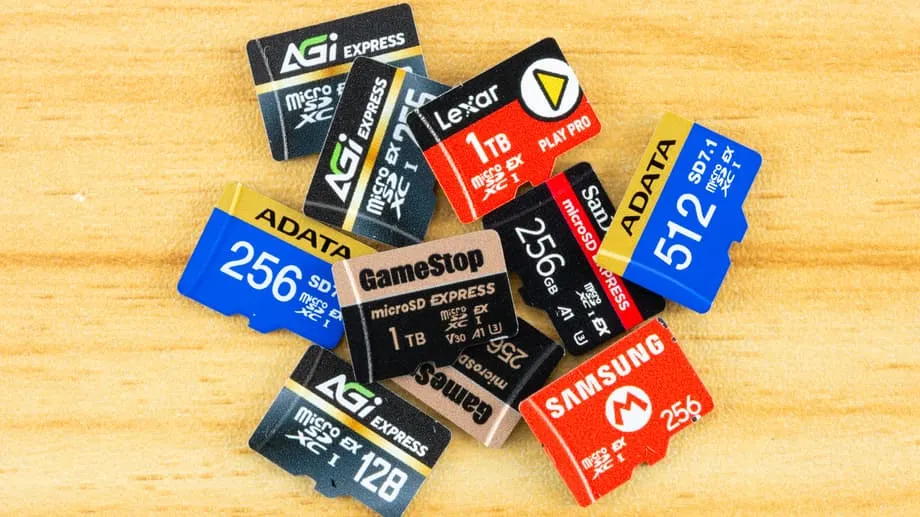
Large microSD cards in capacities of 512 GB, 1 TB and 2 TB are frequently missing from shelves in Tokyo's computer shopping districts as of November 24, 2025. High capacity hard drives are also becoming harder to find or more expensive, while some DDR5 memory kits in Japan have nearly doubled in price within weeks.
Contents
- Tokyo shoppers face missing stock and rising prices
- Why large microSD cards disappear quickly
- How AI consumes memory and storage
- Manufacturers give priority to AI components
- Hard drive delays push cloud buyers toward flash
- microSD Express offers speed with a compatibility catch
- DDR5 and DDR4 prices rise together
- Choose storage for the job it must do
- Protect existing drives and free usable space
- Supply pressure could continue into 2026
- Key Points
Retailers in Akihabara have started limiting purchases of storage devices and memory to spread dwindling supplies among customers. Some distributors have reduced or temporarily stopped deliveries, citing low inventories and uncertain schedules. Stock still arrives at stores, but popular products can sell out quickly.
The pressure comes from a global expansion of artificial intelligence data centers. AI systems need large amounts of memory to process information and vast storage systems to hold the text, images, audio and video they use. Cloud providers and hyperscalers, companies operating enormous computing networks, are securing supplies for years, leaving fewer components for consumer products.
Japan's shortage now stretches across several categories. When shoppers cannot find an affordable SSD or a large hard drive, some turn to microSD cards or whatever other storage remains available. That extra demand spreads the squeeze, even to products that serve different purposes.
Graphics card prices have been relatively steady in recent months, unlike memory and storage. Retailers nevertheless expect rising component costs and tight supplies could reach graphics cards later. For people planning a PC upgrade, a home storage system or a larger handheld game library, the immediate problem is finding the right product at a manageable price.
Why large microSD cards disappear quickly
Tokyo shoppers describe repeated out of stock signs for microSD cards with capacities of 512 GB, 1 TB and 2 TB. These small cards serve a wide range of devices, including phones, cameras, handheld gaming systems, drones and tablets. Their broad usefulness makes them a natural alternative when other storage becomes expensive or scarce.
Store staff say replenished stock often sells quickly. Some shops remove price tags from display cases when products run out, an unusual sight in Japan's normally orderly retail displays. A restock therefore does not necessarily mean a particular model will remain available long enough for shoppers to compare prices or return later.
For many customers, microSD offers a straightforward way to add space without opening a computer chassis or carrying a separate drive enclosure. Interest has also increased with the arrival of microSD Express, a faster card format that promises performance closer to an entry level SSD.
Large hard drives face similar pressure. Models used for network attached storage, or NAS, and video archives are frequently snapped up. A NAS is a storage device connected to a network so that multiple computers or other devices can access its files.
Store staff and wholesalers identify AI related purchases as a major reason for the hard drive shortage. Even when deliveries arrive, higher wholesale prices feed through to retail prices. Consumers who had planned storage upgrades around the middle of the year now face fewer choices and a larger bill.
How AI consumes memory and storage
AI training can involve thousands of powerful accelerators working together. These processors need large amounts of memory and a constant flow of data. Training teams build storage arrays with both enough capacity for huge collections of text, images, audio and video and enough throughput to keep the processors busy. Throughput means how much data a system can move in a given time.
Each GPU uses stacks of high bandwidth memory, known as HBM. Host servers also need DRAM, the working memory used to hold information while a computer is processing it, to buffer and prepare data for those accelerators.
Storage systems must handle constant reading and writing as training software shuffles data, saves checkpoints and records logs. Checkpoints preserve progress during training, while logs record what the system has been doing. Serving an already trained model, a process called inference, also requires large memory pools and fast caches to keep response times low across millions of queries.
Those demands put pressure on several kinds of component at once. DRAM supports active computation, while NAND flash stores information in devices such as SSDs and microSD cards. Hard drives provide large amounts of storage for data that does not always need the fastest access. Each layer draws on supplies that also support consumer products.
Manufacturers give priority to AI components
Memory producers are directing more production toward their most profitable products. DRAM makers are investing heavily in HBM for AI accelerators, while HBM and advanced DRAM command higher selling prices than standard consumer memory modules.
Industry watchers describe deals intended to secure up to 900,000 wafers of DRAM per month for AI expansion. Wafers are the material on which manufacturers produce memory chips. If fully realized, that volume would represent a very large share of global output. It describes the scale of proposed supply commitments, rather than a confirmed monthly allocation already in place.
Factories have limited clean room space, and installing more production equipment takes time. Manufacturers therefore favor products that bring stronger returns. Some are also cautious about building new factories too quickly, because a rush to expand could be followed by another fall in demand.
The shortage follows an earlier downturn. During 2022 and early 2023, memory prices collapsed and suppliers cut output. Those reductions cleared excess stock. When AI demand then accelerated, inventories were thin and prices rebounded quickly.
Capital is now tied up in new product lines serving AI, while geopolitical obstacles are slowing factory expansion. That combination leaves little room to increase mainstream DRAM and NAND supplies quickly.
- 2022 and early 2023: Falling memory prices prompted output cuts and reduced excess inventory.
- 2025: Rising AI demand met thinner inventories, while Japanese retailers faced rapid price changes and shortages.
- November 24, 2025: Large microSD cards, high capacity hard drives and some memory modules were difficult to find in Japan.
- 2026: Industry forecasts pointed to continuing supply pressure, with some QLC production already booked well into the year.
Hard drive delays push cloud buyers toward flash
Enterprise hard drives face delivery waits that can stretch toward two years. Nearline models, the large helium filled drives used for cloud cold storage, are especially tight. Cold storage holds data that is accessed less often, rather than information needed constantly for active processing.
Nearline drives operate around the clock in data centers and typically offer capacities from 16 TB to 24 TB or more. Their design gives priority to durability and predictable response times. Consumer hard drives often range from 1 TB to 12 TB and are built for different patterns of use.
Enterprise and consumer models share some parts. When demand from data centers rises, manufacturers focus more production on enterprise orders. The effect reaches consumer shelves through fewer discounts, higher prices and less available stock.
Cloud operators facing waits across multiple quarters are turning to SSD arrays built with QLC NAND. QLC stores four bits in each memory cell, reducing the cost per gigabyte. It suits workloads that read data frequently but write it less often, including some archives and content delivery systems.
That switch adds another source of demand for flash. Some manufacturers say QLC output is booked well into 2026. When hyperscalers buy large volumes, retailers have less access to SSD inventory, and prices rise. Customers then pursue microSD cards or hard drives of more modest capacity, spreading pressure to other categories.
Some manufacturers expect QLC to overtake TLC in popularity toward the middle of the decade. TLC stores three bits per cell. If that expected shift takes place, consumer SSD prices would become more closely tied to changes in cloud demand.
microSD Express offers speed with a compatibility catch
microSD Express uses PCIe and NVMe, technologies also used by fast SSDs, to move data more quickly through a card roughly the size of a thumbnail. Read speeds reach hundreds of megabytes per second, bringing the format closer to an entry level SSD.
Samsung's P9 cards advertise read speeds close to 880 MB per second, compared with the 150 MB per second ceiling described for older UHS I cards. The advertised P9 figure is nearly six times that older figure. Faster reading can matter for handheld gaming and high resolution video capture.
The device must support microSD Express to use its fastest mode. Many existing devices instead operate these cards through UHS I. A microSD Express card will often work in an older slot, but its performance falls back to that older connection.
Owners of devices supporting Express stand to gain the most. Other users may still benefit from newer controllers and NAND, but they will not receive the headline speeds through an older slot. Scarcity can also lead shoppers to buy a faster or more expensive card than they need simply because it is available.
microSD can serve as a temporary alternative for archival files, handheld game libraries, action cameras, drones and some single board computers. For these lighter tasks, a reliable card with suitable speed ratings can bridge a shortage.
System drives and workloads involving sustained heavy writing or frequent access to scattered files still favor true NVMe SSDs. A tiny removable card and a computer SSD may both use flash, but their suitability depends on how the device will use them.
DDR5 and DDR4 prices rise together
DDR5, the mainstream memory standard for new PCs, has seen sharp price increases in Japan. Shoppers report that some kits have doubled in price within weeks, and popular modules can be difficult to find.
DDR4 is also becoming more expensive, despite expectations that an older standard being phased out would remain cheap. Manufacturers are moving capacity toward DDR5 and HBM for AI, reducing the supply available for DDR4 products.
A few suppliers have restarted DDR4 production lines, but the output has not been large enough to materially improve availability. Buyers upgrading older computers therefore face pressure alongside people building newer systems.
Akihabara retailers and shops in other computer shopping hubs have introduced purchase limits. Some cap purchases at eight items per group. Others allow each buyer two storage drives or SO DIMM modules and up to four memory sticks. SO DIMMs are compact memory modules used in smaller computers. Higher limits may be available when a customer buys a complete PC.
These restrictions aim to spread limited inventory among more customers and discourage resellers from buying every available unit. Stores say deliveries are smaller than expected, while some distributors have suspended shipments of specific models until supply stabilizes.
Purchase caps are a blunt response, similar to measures used during earlier shortages. They slow panic buying and give stores time to adjust prices as wholesale costs change. They also mean buyers assembling several computers may need to check a shop's rules before ordering.
Choose storage for the job it must do
Consumers can reduce unnecessary spending by starting with the workload rather than the largest capacity or highest advertised speed. An operating system, heavy applications or a workstation used for video editing benefits from a quality NVMe SSD, especially when sustained writing matters.
A handheld game library or an archive may be adequately served by a reliable microSD card. HDDs remain an option for bulk storage where speed is less important. For a home NAS, smaller drives combined in a RAID arrangement can provide a temporary alternative when larger models are unavailable or overpriced, although that approach may use more drive bays and electricity.
RAID combines multiple drives into a storage arrangement. Its practical value during a shortage depends on the capacity needed and the cost of using additional drives, rather than simply replacing one large model with several smaller ones.
A portable SSD is another option. Pairing a mainstream NVMe or SATA SSD with a suitable USB enclosure can provide fast external storage and may offer better value than a single large microSD card.
- Match the product to its task: NVMe SSDs for system drives and demanding applications, microSD for handhelds and cameras, and HDDs for bulk storage.
- Check card ratings: U3 or V30 for 4K video, A2 for application performance, and confirmed device support for microSD Express.
- Buy from trusted sellers. Counterfeit microSD cards are common in gray markets, so test new cards with verification tools to check their real capacity and speed.
- Buy what is needed rather than stockpiling. Hoarding adds pressure to supplies and can push prices higher for other customers.
Protect existing drives and free usable space
Current storage becomes more valuable when replacements are expensive or difficult to find. Keeping firmware up to date, enabling TRIM on SSDs, leaving some free space and providing adequate cooling for high performance drives can help maintain performance. TRIM lets an SSD know which stored data is no longer needed.
Backups also matter during a shortage. A 3 2 1 backup plan means keeping three copies of important data, using two types of storage and keeping one copy elsewhere. It reduces the risk of losing files if a drive fails while replacement supplies are tight.
Housekeeping can postpone a purchase. Removing large downloads, duplicate photographs and old project folders can free hundreds of gigabytes. Rarely used files can be moved to cheaper storage media or cloud cold storage tiers.
Video collections offer another possible saving. Transcoding videos with high bitrates to more efficient codecs can reduce the space they occupy when the resulting quality is acceptable. A codec is the method used to compress and store video.
Storage tiering provides a further option: keep active files on an SSD and move older material to hard drives or external storage. This puts the fastest capacity to work where it is most useful, while reserving larger, slower storage for files accessed less often.
Supply pressure could continue into 2026
Industry forecasts suggest constrained supplies of NAND, DRAM and large hard drives could extend into 2026. Building factories and expanding equipment capacity takes years rather than quarters, while producers continue giving priority to enterprise orders and products designed for AI.
New production lines may bring additional supply, but shortages of particular products can persist while those lines increase output. No firm date for broad price relief has been given. Consumers may therefore encounter uneven availability rather than a quick return to plentiful stock.
Hard drive delays are already encouraging cloud companies to use more QLC SSDs for cold storage, pulling additional NAND into data centers. That shift links the outlook for consumer flash more closely to the purchasing decisions of large cloud operators.
Graphics cards have seen steadier prices during 2025, yet board makers and retailers could pass on higher costs if memory remains expensive and supply chain costs rise. Gamers and creators planning upgrades in 2026 have reason to watch memory prices as well as new GPU announcements.
For Japanese shoppers, the practical response is to plan purchases, check compatibility and avoid reacting to every rumor. Prices can move quickly in either direction. Using existing storage carefully and choosing products suited to the actual task can reduce the cost of navigating the shortage.
Key Points
- As of November 24, 2025, large microSD cards and high capacity hard drives were frequently unavailable in Japan or rising in price.
- AI data centers were absorbing DRAM, NAND and hard drive supplies, while manufacturers prioritized enterprise products.
- Enterprise hard drive waits could approach two years, encouraging cloud buyers to purchase QLC SSDs.
- Some DDR5 kits nearly doubled in price within weeks, while DDR4 also became more expensive.
- Akihabara retailers imposed purchase limits as deliveries shrank and some distributors paused shipments.
- Samsung P9 microSD Express cards advertised speeds near 880 MB per second, but compatible devices were needed for Express performance.
- Industry forecasts pointed to supply pressure continuing into 2026, with no firm date for broad price relief.
- Careful purchasing, genuine product checks, backups and better use of existing storage could help consumers manage the squeeze.