Kumamoto leads a decade of growth across Japan
Ten Japanese prefectures more than doubled their foreign resident populations between 2015 and 2025, with Kumamoto recording an increase of more than three times its earlier total. Official comparisons of resident data show growth in all 47 prefectures, while the national foreign population reached 1.78 times its level a decade earlier, an increase of 78 percent.
Contents
- Kumamoto leads a decade of growth across Japan
- Factories, tourism and new routes into work
- How Kumamoto's chip factory spreads demand
- Resort communities see some of the largest shares
- Who is arriving and how they enter employment
- Rural Japan is attracting workers and children
- What the welfare figures show
- Schools and public services adapt
- Housing and transport affect whether people stay
- Tokyo's attraction remains strong
- Building communities around work and study
- What to Know
Kumamoto's expansion stands alongside rapid growth in Hokkaido, Okinawa and two other prefectures in Kyushu. Factories, tourist resorts, farms, logistics businesses and care services are drawing workers into communities facing low birth rates and a shrinking, aging Japanese population. Many of those communities are also losing younger Japanese residents to larger cities.
Japan recorded 3,768,977 foreign residents at the end of 2024, its third consecutive record high. Resident registers counted about 3.68 million on January 1, 2025, also well above levels before the pandemic. The figures come from immigration data and resident registers, respectively.
Tokyo remained home to the largest foreign community, with 738,946 residents at the end of 2024, roughly one in five of the national total. The fastest percentage increases, however, were often in regional prefectures starting from much smaller populations. A rapid rise in a small community can become especially visible in its workplaces, schools and housing market.
By November 23, 2025, the pattern showed two changes happening together: major cities continued to attract the largest communities, while foreign workers and families were becoming a greater part of daily life in regional Japan.
Factories, tourism and new routes into work
Kyushu's industrial base helps explain its growing appeal. The region has a long history of manufacturing, including automotive parts, steel, electronics and food processing. Employers increasingly depend on foreign workers to keep factories and services operating when local recruitment falls short.
Kyushu and Okinawa also benefit from their proximity to other parts of Asia. Shorter travel times make recruitment and movement easier and support supply chains connecting businesses across the region. In Hokkaido and Okinawa, tourism creates another source of demand, particularly in hotels, restaurants, resorts and maintenance services.
Work and study policies have widened the routes through which people arrive. The longstanding trainee system and specified skilled worker visas bring workers into industries struggling to recruit. Universities and Japanese language schools attract international students, many of whom later move into employment after graduation.
The pandemic temporarily interrupted arrivals. Once border controls eased, backlogs cleared and placements increased sharply. Employers that had already struggled to hire could again recruit from abroad, helping foreign resident numbers climb beyond their levels before the pandemic.
The main developments stretch across several years:
- 2015: The starting year for the comparison of foreign resident populations across Japan's prefectures.
- After 2015: Analysis of census groups found that rural regions began attracting more migrants, extending a pattern previously concentrated mainly in major cities.
- During the pandemic: Restrictions interrupted arrivals and produced a temporary decline.
- Late 2024: Taiwan Semiconductor Manufacturing Co began mass production at its Kumamoto factory.
- End of 2024: Japan's foreign resident population reached a record 3,768,977.
- January 1, 2025: Resident registers counted about 3.68 million foreign residents.
How Kumamoto's chip factory spreads demand
Taiwan Semiconductor Manufacturing Co, or TSMC, began mass production in Kumamoto late in 2024. Its major semiconductor investment has drawn suppliers and specialized staff, adding momentum to the prefecture with the strongest foreign population growth over the decade.
Semiconductor production depends on precise quality control, stable output and operations running around the clock. The resulting demand reaches beyond engineers to technicians, operators and support staff. Parts makers and contractors also need workers as activity grows around the factory.
Kumamoto's expanding chip industry requires clean room technicians, safety specialists, water treatment staff, logistics planners and teams maintaining buildings and equipment. Rail, port and road improvements supporting chip shipments create related employment.
New workers and their families also need homes, shops, restaurants, transport and schools. Retailers and restaurants serving them may hire more staff, spreading the economic effect beyond the factory. Local authorities see an opportunity to retain newcomers after their first employment contract or student visa, helping communities that have experienced years of decline.
Housing and transport planning are central to that opportunity. Growth can put pressure on rents and commuting routes, making it harder for existing residents and newcomers alike to find suitable homes near work.
Resort communities see some of the largest shares
Hokkaido and Okinawa illustrate how tourism can change the population of a small community. Hotels, restaurants, ski operations and maintenance businesses need both seasonal staff and employees who stay throughout the year.
Municipal data showed that foreign residents made up more than 10 percent of the population in 27 municipalities as of January. Those communities were already ahead of the level envisaged in a national research institute's projection for 2070.
Shimukappu, a village in Hokkaido, had the highest foreign resident share at 36.6 percent. Akaigawa and Kutchan in Hokkaido, Ikuno Ward in Osaka and Oizumi in Gunma each had shares above 20 percent. Many of these places combine industrial employment or resort work with relatively affordable housing, helping attract and retain workers.
Hokkaido's resort districts draw visitors from across Asia and elsewhere. Demand extends to multilingual reception staff, chefs, lift operators, ski instructors and cleaners. Kutchan and nearby towns have developed foreign communities that remain throughout the year, while local officials watch housing and school capacity.
Okinawa's hospitality businesses rely on foreign employees during peak seasons and in specialized jobs. A graduate science university has also brought researchers, other talent and families, widening the local workforce and supporting shops and services. Stable contracts, opportunities for advancement and basic services in several languages can help retain residents who might otherwise move to mainland Japan.
Who is arriving and how they enter employment
China, Vietnam and South Korea were the largest countries of origin for Japan's foreign residents at the end of 2024, followed by the Philippines and Nepal. Nepal moved into fifth place, overtaking Brazil.
Residence categories show that the population includes people with very different circumstances. Permanent residents numbered 918,116. Another 456,595 people were registered as trainees, while 402,134 were students. Some residents have established homes and families; others arrive through education or employment programs with specific conditions.
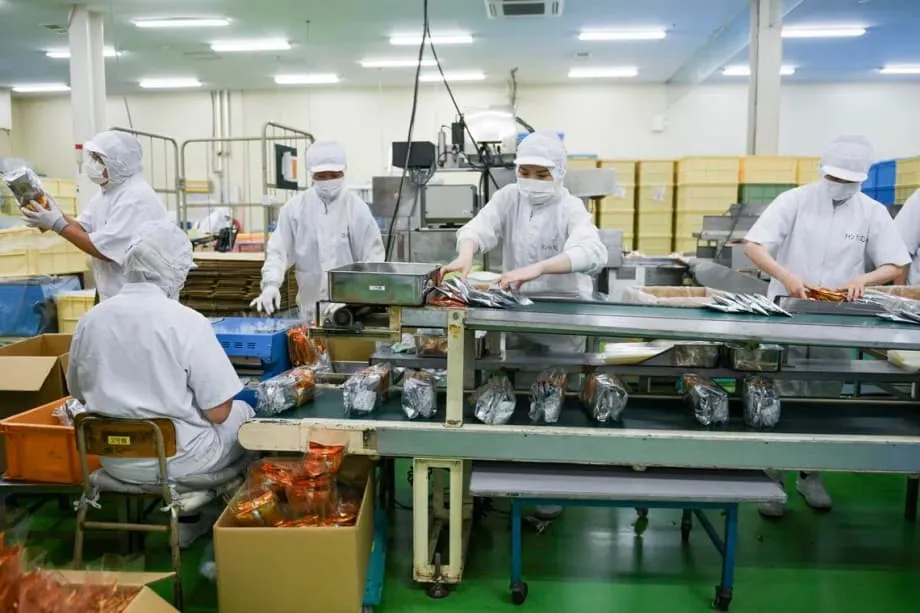
The trainee system was designed to transfer skills but became a major route into entry level work in regions unable to recruit enough employees. Trainees and specified skilled workers fill jobs in agriculture, food processing, manufacturing, construction, shipbuilding, caregiving and hospitality.
The specified skilled worker system created formal routes into sectors facing acute shortages, with defined skills and Japanese language requirements. Students often work part time while studying, then move into employment after graduation. Many employers now regard foreign recruitment as essential to daily operations.
The different routes also affect whether workers can settle. A first job or course of study brings someone into a community, but continued employment, suitable housing and family services help determine whether that person stays.
Rural Japan is attracting workers and children
Academic analysis of groups tracked through census data indicates that foreign residents began spreading more widely into rural regions after 2015. Previously, they had been concentrated mainly in large cities.
Parts of Tohoku and Kyushu experiencing population decline have recorded increases in foreign residents of working age and in children. Working adults help fill vacancies, while children add pupils to local schools. New households also spend money in shops and services.
Researchers recommend support suited to these different groups, including Japanese language education, schooling for children and community programs for older migrants. Helping families establish lasting homes can support schools and keep services operating in towns where falling populations threaten their survival.
Foreign children can help stabilize schools facing closure, while new households broaden local tax bases and support small businesses. The national foreign population remains modest compared with Japan's total population, but its concentration in particular towns makes the local effects much more visible.
What the welfare figures show
National data covering the past decade suggests that the fiscal effect of foreign residents on welfare is limited. Eligible foreign residents have a higher rate of welfare use than Japanese citizens, but their numbers are relatively small.
The increase in foreign residents who are ineligible for assistance has no clear statistical link to welfare spending or recipient numbers at prefectural level. Many foreign workers are young and employed. Eligibility depends on factors including residence status and assets, so foreign residents do not all have the same access.
Following public debate about welfare access, the health and welfare minister said foreign nationals were treated under the same standards as Japanese citizens. Officials explaining the ministry's position said its rules gave foreign residents no favorable treatment and that applications underwent the same screening.
The minister described how eligibility checks apply to foreign applicants:
The eligibility and asset requirements for foreign nationals are investigated in the same manner as for Japanese citizens. Many foreign residents are not eligible because of their residency status.
Schools and public services adapt
Schools, clinics and municipal offices are handling more work in several languages as foreign communities expand. Elementary and junior high schools in growing areas are hiring language support staff and setting up bridge classes for pupils preparing to learn in Japanese.
Hospitals use interpreters and digital translation tools. Fire departments and police stations hold outreach sessions explaining local rules and emergency procedures in multiple languages. Community centers offer Japanese lessons in the evening so employees can attend after their shifts.
These services need funding and planning, and requirements vary by industry and place. A resort with changing seasonal staff faces different pressures from a factory town where workers bring children and establish permanent homes.
Workers need fair contracts, safe accommodation and access to language classes. Families need schools able to teach in Japanese while supporting children still learning the language. Employers also benefit when training and community connections encourage employees to stay, reducing the cost of replacing departing staff.
Housing and transport affect whether people stay
Resort towns must balance accommodation for workers against the demand for tourism rentals. Heavy seasonal demand can put pressure on the same housing that employees need to live near their jobs.
Factory districts face different transport problems. Additional night shifts create a need for late buses so employees can get home after trains stop running. A job may be available, yet reaching it reliably can still be difficult.
Some local governments offer incentives encouraging landlords to rent to foreign families. Help desks guide newcomers through school registration, tax filings, garbage sorting rules and driving license procedures, tasks that can be hard to navigate in an unfamiliar language.
Employers that provide housing support, commuting arrangements and language training often achieve better retention. Keeping experienced staff reduces turnover costs and makes operations more stable. Coordinated planning can also help prevent industrial or tourism growth from pricing existing residents out of their communities.
Tokyo's attraction remains strong
Regional authorities are trying to persuade international students to remain after graduation. Finding a first placement is only part of that task. Large cities offer more jobs, larger professional networks and more extensive services for families.
Tokyo and the surrounding prefectures house the largest share of foreign residents and continue to attract more. At the same time, many rural areas lose younger Japanese residents to those same urban centers, adding to the challenge of maintaining a stable workforce.
Pay, promotion prospects, childcare and housing all influence decisions about where to live. Central Tokyo also concentrates international schools, clinics with multilingual staff and communities from the same country of origin.
Regional cities can compete through clear career paths, steady pay increases and affordable family housing near schools. Faster access to permanent residence for workers committed to living in a region is another proposed way to strengthen retention; it is presented as an option for attracting lasting settlement.
Programs supporting easier movement between jobs, clearer routes to lasting residence and recognition of skills could also strengthen regional labor markets. For employers, the benefit would be a more settled workforce. For families, it would mean greater scope to plan their lives.
Building communities around work and study
An Okinawa village hosting a graduate science university and seaside resorts has seen its foreign resident share rise without widespread friction. A local official described relations between residents as cooperative:
We have not seen an increase in problems. It seems we are coexisting well.
Regional authorities working with universities and employers can help connect study, employment and settlement. Graduates find internships that lead to jobs. Workers bring family members, children enter local schools and households begin spending in the surrounding economy.
Foreign residents are already helping keep factory lines running and hotel rooms available. Many municipalities depend on them to staff nursing homes, harvest fields and operate buses. Their contribution reaches beyond vacancies when families settle and become customers, pupils and taxpayers.
Local governments coordinating with employers, schools and community groups can build trust and make settlement easier. Kumamoto's chip industry, Hokkaido's resorts and Okinawa's combination of tourism and higher education show different routes to growth. Each requires services suited to the people arriving, alongside employment that gives them a reason to stay.
What to Know
- Ten prefectures more than doubled their foreign resident populations between 2015 and 2025. Kumamoto's population more than tripled.
- All 47 prefectures recorded increases. The national total grew to 1.78 times its 2015 level.
- Japan had 3,768,977 foreign residents at the end of 2024, its third consecutive record high.
- Tokyo had 738,946 foreign residents, roughly one fifth of the national total.
- Manufacturing, tourism, agriculture, logistics and care services are helping drive regional demand.
- Foreign residents exceeded 10 percent of the population in 27 municipalities as of January. Shimukappu led at 36.6 percent.
- China, Vietnam and South Korea were the largest countries of origin. Nepal overtook Brazil to rank fifth.
- Welfare data suggests a limited fiscal effect, while schools, housing, transport and language services need local planning.
- Keeping workers and graduates in regional Japan depends on employment prospects, family services and stable living conditions.