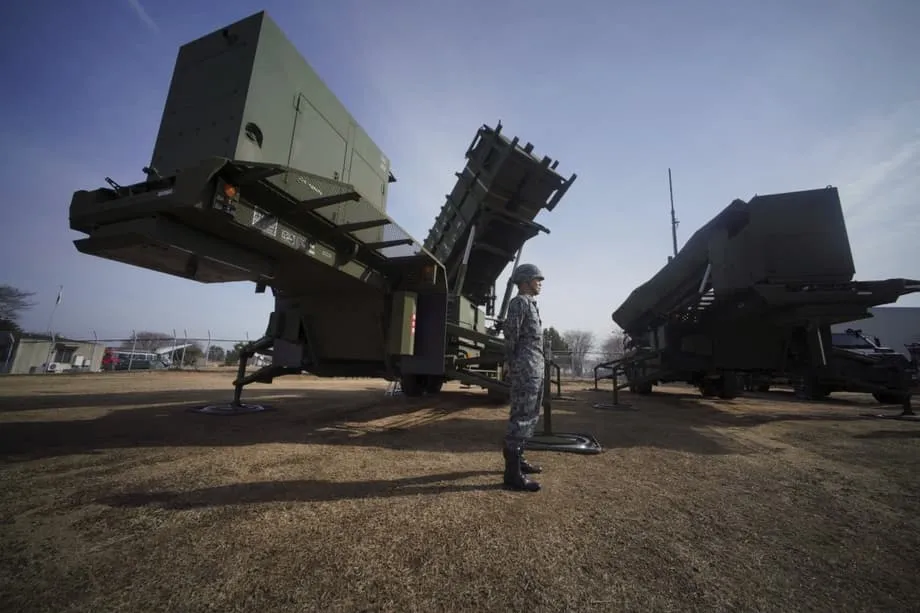
A first shipment with consequences beyond Japan
Japan has exported domestically produced Patriot PAC-3 missile interceptors to the United States for the first time, drawing from Japan Air Self Defense Force stocks under eased arms export rules. The transfer helps Washington replenish its missile inventories while supporting Ukraine and maintaining air and missile defense deployments across Europe, the Middle East and the Indo Pacific.
Contents
- A first shipment with consequences beyond Japan
- How Tokyo opened the export channel
- China invokes Japan's postwar commitments
- Taiwan adds pressure to China Japan relations
- What a Patriot interceptor does
- Japanese factories face limits on expansion
- Why US inventories and Ukraine are connected
- Russia warns of consequences for relations
- Southeast Asia weighs security gains and risks
- Japan's defense plans and domestic debate
- The Bottom Line
As of November 22, 2025, the shipment has become a focus of a wider dispute over Japan's changing security policy. China has condemned the move, arguing that Tokyo is weakening restrictions that have shaped its military role since World War II. Russia has also objected, pointing to the possibility that replenishing American inventories could make more US missiles available to Ukraine.
Tokyo says the Japanese missiles will remain with the US military. That restriction is central to its position: Japan is supplying its ally through a newly permitted export channel, while keeping the transferred weapons out of the hands of any third country.
The shipment also marks a practical change in Japan's defense industry. Mitsubishi Heavy Industries produces the interceptors under a Lockheed Martin license. Japan previously could export parts of weapons made under foreign licenses, but could not send complete missiles back to the country holding the license.
Japan's broader defense shift began before this shipment. Its 2022 National Security Strategy identifies China as the greatest strategic challenge to Japanese security, sets a course toward defense spending equivalent to 2 percent of gross domestic product and commits to new capabilities, including strikes against distant targets. The Patriot export connects those policy changes with a growing industrial partnership between Tokyo and Washington.
How Tokyo opened the export channel
Japan's Three Principles on Transfer of Defense Equipment and Technology set the framework for overseas transfers. Updated in 2014, the principles replaced an older near total ban with a limited set of conditions, including strict controls on how exported equipment could be used and a preference for equipment that was not lethal.
The cabinet approved a targeted revision in 2023. Under the change, a completed system built in Japan under a foreign license can be supplied to the license holder's country when that country requests it. Because Japan produces Patriot interceptors under an American license, the revision created a route for complete missiles to be sent to the United States.
The shipment is the first transfer of finished lethal weapons since Tokyo updated its guidelines. It moves Japan beyond its previous role as a supplier of parts, while keeping the transaction within a narrow channel tied to the original license holder's country.
A Japanese Defense Ministry official described the restrictions on the transferred interceptors, saying they would remain under American control:
The interceptors "will only be used by the US military and not be provided to a third country."
Those end use controls govern who may receive and operate the missiles after export. For this shipment, Tokyo's stated condition is that the United States uses them itself. The quantity transferred and the exact shipment date were not given.
The policy changes leading to the export span several years:
- 2014: Japan updated the Three Principles on Transfer of Defense Equipment and Technology, replacing an older near total ban with conditional transfers.
- 2022: The National Security Strategy named China as Japan's greatest strategic challenge and set out a larger defense role.
- 2023: The cabinet permitted completed weapons made under foreign licenses to be exported to the license holder's country on request.
- By November 22, 2025: Japan had made its first export of domestically produced Patriot PAC-3 interceptors to the United States.
- 2027: Japan's strategy aims for defense spending equivalent to 2 percent of GDP.
China invokes Japan's postwar commitments
China views the Patriot shipment as part of a larger retreat from Japan's self imposed military limits since 1945. Its criticism brings together several developments: rising Japanese defense spending, looser arms export rules and closer coordination with the United States on extended deterrence, meaning American commitments to help discourage attacks on Japan.
Chinese Foreign Ministry spokeswoman Mao Ning argued at a regular briefing in Beijing that Japan's direction conflicts with its pledge to pursue peaceful development and with the international order established after World War II:
Chinese people and the international community will not allow Japan to go back to the path of militarism, violate its commitment to peaceful development, and disrupt the post war international order. Such attempts will only end in failure.
Beijing's objection reaches beyond the weapons in this particular shipment. Chinese officials see the combination of export changes, military spending and closer cooperation with Washington as a challenge to regional stability. Tokyo presents the same changes as a response to a more difficult security environment.
Zhang Xuefeng, a Chinese military expert, argued that the export could become a model for wider Japanese arms sales. He described Japan's approach as lacking restraint and warned of consequences elsewhere in the region:
an extremely dangerous signal" that could "trigger a series of chain reactions.
Zhang's warning reflects the concern that other governments could adjust their own defense policies in response to Japan's expanding role. Beijing's position is that Tokyo is loosening longstanding restraints; Japan's position is that carefully controlled transfers strengthen its security and its ability to support an ally.
Taiwan adds pressure to China Japan relations
China and Japan are already dealing with tensions over the East China Sea and Taiwan. Exchanges of retaliatory measures have at times affected trade and other contacts, adding an economic dimension to their security disputes.
Prime Minister Sanae Takaichi has taken a firmer position on a possible conflict over Taiwan. She told parliament that an attack on Taiwan could qualify as a situation threatening Japan's survival under Japanese law, allowing the deployment of Self Defense Forces.
The legal phrase matters because it links events outside Japan to a possible Japanese military response. Takaichi's statement places a Taiwan conflict within the circumstances Tokyo might consider serious enough to act.
China has rejected any suggestion of Japanese involvement in a Taiwan conflict and warned of strong countermeasures. Against that backdrop, the Patriot export becomes another point of disagreement over how closely Japan should coordinate with Washington and how far its military role should extend.
Tokyo is also deepening industrial cooperation with the United States. Bringing Japanese production into allied supply chains makes its factories and inventories part of a wider effort to sustain deterrence in East Asia. The shipment therefore connects a dispute about Japan's postwar identity with the practical question of how allies obtain the weapons they need.
What a Patriot interceptor does
Patriot is a defense system operating from the ground that is designed to intercept aircraft, cruise missiles and certain types of ballistic missiles. An interceptor is a missile fired to stop an incoming threat before it reaches its target.
The PAC-3 interceptor used by Japan is compact and designed to destroy its target through a direct collision, often called a hit to kill approach. An onboard Ka band seeker, a radar sensor that helps locate the target, works with agile control surfaces to guide the missile into the incoming weapon.
Older PAC-2 missiles use larger warheads that explode and scatter fragments. PAC-3 relies on the energy of an impact at close range to destroy the incoming missile, improving its ability to defeat modern threats.
A launcher can hold up to 16 PAC-3 class interceptors in place of four older PAC-2 rounds. That is four times as many missiles available on the launcher, giving operators more opportunities to respond when several threats arrive in a salvo.
The Missile Segment Enhancement variant, known as MSE, has a larger dual pulse motor and upgraded actuators, the mechanisms that move its control surfaces. Those changes extend the area it can defend in both range and altitude.
For a Patriot battery, which brings launchers and other system equipment together, a wider defended area provides more room to engage ballistic missiles that dive steeply or change direction. The aim is to intercept them before they reach critical infrastructure.
Japanese factories face limits on expansion
Mitsubishi Heavy Industries leads Japan's licensed production of PAC-3 interceptors, with key components supplied by US partners. Japanese output has been on the order of dozens of missiles a year, making the production base useful to the alliance but limited in scale.
Tokyo and Washington have explored increasing production. Availability of seekers and other supply chain constraints has been a bottleneck. Producing more complete missiles depends on obtaining enough of the specialized components needed to guide them accurately.
The current transfer draws from Japan Air Self Defense Force stocks. It therefore provides missiles already held in an inventory while the two governments consider how to increase the flow from factories.
Japan's move from supplying parts to exporting finished interceptors brings its industrial capacity more directly into allied missile defense planning. Decisions about production, components and inventories now have a closer connection to American requirements.
Supporters of Japan's reforms argue that a stronger defense industry makes the country better able to sustain its own forces and support partners. The production constraints show why changing export rules is only one part of that effort: permission to ship a missile and the capacity to manufacture more missiles are separate practical needs.
Why US inventories and Ukraine are connected
Patriot interceptors are in high demand across several regions. Ukraine is using air defense ammunition to counter Russian missile and drone attacks. NATO allies are reinforcing their eastern flank, while US forces maintain Patriot coverage in the Middle East and the Indo Pacific.
Washington must balance those commitments with the stocks available to its own military. Receiving interceptors from Japan helps refill American inventories as the United States continues to support Ukraine and maintain deployments elsewhere.
Tokyo's restriction means the Japanese missiles stay with the US military. The wider effect is that replenished American stocks can give Washington more flexibility to use other US missiles where they are needed, including in support of Ukraine.
This is the link behind Russia's objection. A weapon sent to one ally can affect the supplies available to another country because inventories are connected through decisions about replacement and allocation.
Washington and its partners are also pursuing broader efforts to expand production. The Japanese shipment addresses current inventory needs, while higher factory output would help sustain supplies over a longer period. Both efforts are taking place as different regions compete for the same kind of air defense ammunition.
Russia warns of consequences for relations
Russia has argued that Japan's decision departs from its pacifist posture. Moscow is especially concerned that sending Patriots to the United States could allow more interceptors to flow to Kyiv by replacing missiles in American stocks.
Russian Foreign Ministry spokeswoman Maria Zakharova warned during a briefing that any redirection of Japanese made Patriots to Ukraine would be treated as hostile. She described a weapons transfer leading to supplies for Ukraine as:
unequivocally hostile toward Russia.
Zakharova also warned of negative consequences for relations with Tokyo. Japan maintains that the missiles it exported will be used only by the US military, while Moscow's argument focuses on how the transfer could affect the broader supply of weapons to Ukraine.
Russia Japan relations were already strained after Tokyo joined sanctions over the invasion of Ukraine. The two countries also remain at odds over the status of islands off Hokkaido.
The Patriot dispute adds an industrial and military dimension to those existing disagreements. A Japanese decision about exports to the United States is now part of Moscow's political argument about international support for Ukraine.
Southeast Asia weighs security gains and risks
Japan's wider security role is also affecting countries in Southeast Asia that have long tried to maintain balanced relations with major powers. Tokyo's official security assistance program provides equipment such as radars and patrol boats to partners including the Philippines and Vietnam.
Manila has signed a reciprocal access agreement with Japan that enables exercises and logistics. Vietnamese coast guard projects financed through Japanese loans are also under way.
These arrangements help countries monitor their waters and improve maritime awareness without entering formal alliances. Better information about activity at sea and more capable patrol forces support the everyday work of protecting maritime interests.
Closer ties with Tokyo also bring political risks. Governments that expand security cooperation with Japan can face Chinese diplomatic or economic pressure. Some in the Association of Southeast Asian Nations, known as ASEAN, worry that Japan's closer alignment with Washington and its export reforms could appear to form a tighter coalition directed at Beijing.
Other governments welcome a more capable Japan as a provider of support for maritime governance, search and rescue and related public services. The region's response therefore includes both interest in Japanese assistance and concern about being drawn deeper into competition between major powers.
The Patriot shipment adds to that debate because it shows Japan's willingness to move finished weapons across borders under a controlled legal framework. Tokyo is taking a more active role in allied deterrence alongside its longstanding position as a buyer of American systems.
Japan's defense plans and domestic debate
Japan's leadership describes its defense changes as a response to China's military buildup, advances in North Korean missiles and closer coordination between Beijing and Moscow. The 2022 strategy documents set the ambition of bringing defense spending to 2 percent of GDP by 2027.
Budgets have climbed along that course. The fiscal 2025 defense request was around 8.7 trillion yen. Tokyo is acquiring US made Tomahawk cruise missiles and accelerating deployment of the Type 12 anti ship missile with extended range.
Japan has also joined the United Kingdom and Italy in the Global Combat Air Program, which aims to develop a next generation fighter around the mid-2030s. Export rule changes cover limited transfers such as Patriots to the United States and future fighter sales under tight conditions.
Tokyo presents those measures as ways to strengthen deterrence and keep its defense industry capable of meeting future needs. Supporters argue that legal and industrial reforms are overdue and that a larger Japanese role supplies partners with needed capacity.
Critics warn that easing arms exports could weaken postwar constraints and involve Japan in conflicts beyond its control. The Patriot transfer sits at the center of that disagreement: it creates a precedent for finished weapons exports, while its permitted destination and use remain narrowly defined.
China's criticism, Russia's warning and Japan's end use restrictions all converge on the same shipment. Its immediate purpose is to replenish US missile stocks. Its wider importance lies in Japan's decision to make its weapons production a more active part of allied security planning.
The Bottom Line
- Japan exported domestically produced Patriot PAC-3 interceptors from Air Self Defense Force stocks to the United States for the first time under eased rules.
- A 2023 revision permits completed weapons made under foreign licenses to return to the license holder's country on request.
- Tokyo says the missiles will be used only by the US military and will not be supplied to a third country.
- China condemned the move as a retreat from Japan's postwar restraints. Russia warned about consequences if the transfer increases supplies for Ukraine.
- The shipment helps replenish US inventories amid demand from Ukraine and American deployments across several regions.
- Japan produces PAC-3 interceptors through Mitsubishi Heavy Industries, but seekers and other supply constraints limit expansion.
- Japan aims for defense spending equivalent to 2 percent of GDP by 2027 and is pursuing new missiles and a future fighter with Britain and Italy.
- Southeast Asian governments are weighing the benefits of Japanese security assistance against the risk of greater pressure from China.