Blue Water Prompts Mining Suspensions in Perak
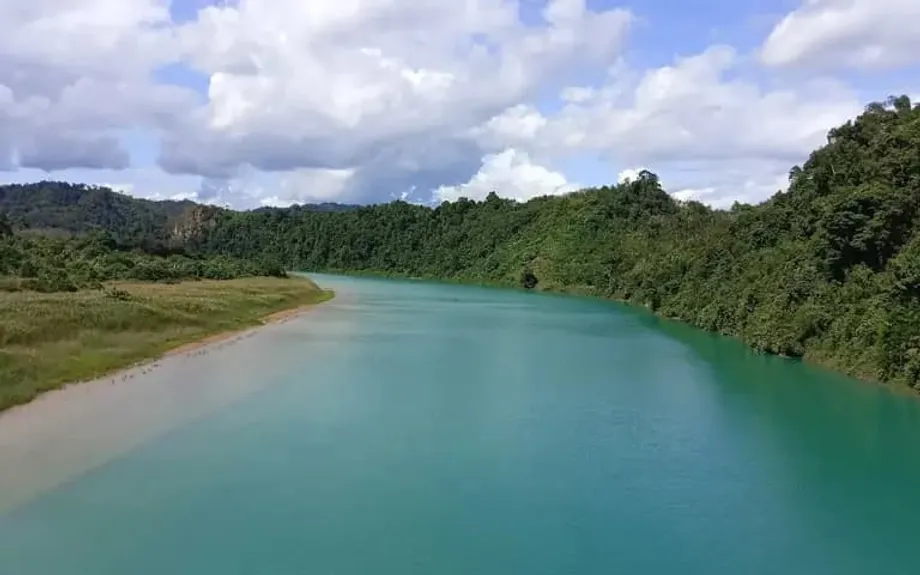
Malaysia has suspended a rare earth pilot project and two tin operations in Upper Perak after a stretch of the Perak River turned bright blue. Investigators found discharge with a similar bluish appearance at the rare earth site operated by MCRE Resources, where radiation readings reached up to 13 becquerels against a limit of 1 becquerel set in the project's environmental impact assessment.
Contents
- Blue Water Prompts Mining Suspensions in Perak
- What Inspectors Found at the Mining Sites
- Which Companies Were Ordered to Stop?
- How Rare Earth Extraction Can Affect Water
- Why Communities Need Water Testing
- What Must Change Before Mining Resumes?
- Greenpeace Calls for Independent Findings
- Malaysia's Minerals Ambitions Face a Test
- Earlier Mining Curbs Show What a Pause Can Require
- Testing Will Guide the Next Decisions
- Key Points
The Ministry of Natural Resources and Environmental Sustainability opened an investigation following public reports of the discoloration. Early findings link the blue water to discharge from the MCRE Resources site, while inspectors are examining the chemicals used in extraction and checking whether operations match what the companies declared to regulators.
State officials said the color change was first recorded on October 21 at the Kampung Sungai Papan Bridge, about five kilometers north of Kampung Air Ganda in Gerik. The Perak River is the second longest river on Peninsular Malaysia and supplies communities, farms and small businesses along its length.
The Cabinet approved an initial suspension of three weeks after the incident. Regulators said the mines cannot resume operations until corrective measures have been completed and verified at the sites. The suspension therefore involves both a period for investigation and a requirement for companies to fix the problems inspectors identify.
As of December 3, 2025, the exact chemical cause of the blue color had not been confirmed. The striking change in the river has brought national attention to mining oversight, with calls for swift enforcement, tighter controls and public access to test results.
What Inspectors Found at the Mining Sites
Discharge samples collected at the MCRE Resources site had a bluish tone similar to the water seen in the Perak River. Investigators are comparing the chemical makeup of those samples with the substances companies said they used during extraction.
Inspectors from the Minerals and Geoscience Department and the Department of Environment also recorded failures at several locations involving effluent treatment, erosion and sediment controls, and chemical handling. Effluent is liquid discharged from an industrial process. Treating it properly is necessary to control what leaves a mine and enters surrounding waterways.
Water quality checks have spread beyond the main river channel to Sungai Rui, Sungai Kijang and Sungai Kepayang in Hulu Perak following complaints of pollution. The enforcement action therefore covers concerns at several rivers, rather than only the visibly blue stretch of the Perak River.
Laboratories are checking the chemical profiles of samples against the reagents declared by the operators. A reagent is a substance used to produce a chemical reaction, in this case to help extract minerals. Matching those substances with what inspectors find is central to checking whether actual mining practices follow the approved plans.
The investigation has two connected tasks: tracing the discharge associated with the river's color and examining whether the mines are managing water, chemicals and waste as required. Repairs and any further enforcement will depend on those findings.
Which Companies Were Ordered to Stop?
Suspension orders were issued to three operators in Upper Perak: MCRE Resources Sdn Bhd, Rahman Hydraulic Tin Sdn Bhd, and another tin operator identified in official notices as Asiatic Mine Sdn Bhd or Nalidah Tin Mine Sdn Bhd.
MCRE Resources operates Malaysia's first rare earth extraction project using in situ leaching, with technology shared by Chinese rare earth firms. Rahman Hydraulic Tin operates the country's largest open pit tin mine, located in Klian Intan. The third operation is also a tin mine.
The Cabinet's initial suspension period was three weeks, but regulators tied any reopening to corrective measures that inspectors can verify on site. Companies must satisfy the requirements attached to their operations before work can resume.
The sequence of the incident and response includes:
- October 21: State officials first recorded the blue discoloration at the Kampung Sungai Papan Bridge near Gerik.
- Following public reports and pollution complaints: The ministry opened an investigation, and inspections and water sampling covered the Perak River and other waterways in Hulu Perak.
- After the discoloration incident: The Cabinet approved an initial suspension of three weeks for the rare earth project and two tin operations.
- As of December 3, 2025: Chemical comparisons and checks of mining practices were continuing, with reopening dependent on verified corrective work.
How Rare Earth Extraction Can Affect Water
MCRE Resources uses in situ leaching, a method that extracts minerals without digging a large open pit. Operators inject a chemical solution through boreholes into rock containing the target minerals. The solution dissolves those minerals underground, and the resulting fluid is pumped to the surface for processing.
The method depends on keeping that fluid under control. Lined well fields, reliable containment and careful handling are needed to prevent seepage into groundwater or nearby streams. Avoiding a large excavation still leaves operators responsible for controlling where the extraction solution travels and how it is treated.
Some substances used or encountered in extraction can give water a distinctive color. Metal complexes, tracer dyes or residual copper compounds can produce a visible blue hue, depending on the reagents involved. Investigators in Perak are working to identify the specific cause by comparing chemicals used at the mine with those declared to authorities and detected in samples.
Rare earth deposits also often occur alongside low levels of thorium and uranium in the surrounding rock. Processing can concentrate these radioactive elements in waste streams, which explains the importance of the site's radiation threshold and the checks on how residues are contained.
A becquerel measures radioactivity and equals one atomic decay per second. Inspectors recorded readings of up to 13 becquerels at the rare earth site, compared with the 1 becquerel limit allowed in its environmental impact assessment. The highest reported reading was therefore 13 times that threshold.
Although the readings are modest by nuclear standards, the exceedance makes checks on containment necessary. Investigators are examining waste handling, the integrity of pond liners and possible accidental releases alongside their work on the blue discharge.
Why Communities Need Water Testing
Villages along the Perak River use its water for household needs, farmers depend on irrigation networks, and small businesses rely on fishing and tourism. Pollution concerns can therefore affect daily life and livelihoods well beyond the boundaries of a mining site.
A large color change can signal a chemical discharge, suspended solids or an algal response to new nutrients. Assessing the immediate risk requires measurements of pollutant concentrations, the length of exposure and whether the affected stretch intersects with water intakes.
Radiation measurements at the mine and water measurements in the river address different parts of that assessment. Regulators have widened sampling to check pH, dissolved metals, turbidity and radioactivity downstream. The pH measurement describes how acidic or alkaline water is, while turbidity describes its cloudiness.
Authorities said communities would be supplied with safe water if needed while remediation proceeds. Remediation means the work required to remove pollution or repair the damage it causes. Testing helps determine where that work and any temporary water supply would be necessary.
Nearby residents also need clear information about the investigation and corrective measures. The public response to the blue river has included demands for transparent results, while regulators have stressed communication with surrounding communities and worker safety during the response.
What Must Change Before Mining Resumes?
Officials have tied reopening to full compliance with approved Mining Operation Schemes, the Mineral Development Act, environmental permits and water standards. Companies must show that the causes of the blue discharge have been identified and removed.
The corrective requirements described by officials cover treatment equipment, runoff controls, chemicals, monitoring and waste management:
- Stop every discharge that fails to meet standards and operate effective effluent treatment units.
- Rebuild or upgrade erosion and sediment controls, including diversion drains and settling ponds, to prevent runoff during heavy rain.
- Store, label and track all reagents used in leaching, with accurate inventories and logs.
- Install continuous water quality monitoring at key points upstream and downstream of each site.
- Verify radiation management plans for residues and tailings, with secure containment and routine scans.
- Commission independent audits and provide data to regulators and the public.
Diversion drains and settling ponds address the movement of water and sediment around a mine. Chemical inventories and logs allow inspectors to check what substances are present and how they are used. Monitoring above and below a site helps regulators follow changes in water quality along the river.
Suspensions will remain until inspectors verify the corrective work. For operators, that can involve building new infrastructure, strengthening operating procedures, conducting emergency drills and submitting regular reports. A restart depends on the condition and management of the site, rather than simply the end of the initial three weeks.
Greenpeace Calls for Independent Findings
Greenpeace Malaysia welcomed the suspensions and called for an independent expert panel to identify the cause of the discoloration. The organization also sought public release of the findings and a polluter pays approach, under which those responsible for pollution would bear the cleanup costs.
The group urged immediate testing downstream and the provision of safe water where needed. Its proposals also included live water monitoring, higher penalties for repeat violations and stronger community involvement in remediation plans to prevent another blue river incident.
Heng Kiah Chun, Campaign Lead at Greenpeace Malaysia, warned against expanding mining at the expense of public health and confidence. He said:
The expansion of the mining industry must never come at the cost of poisoned rivers, unsafe radiation levels, and erosion of public confidence, health and safety. A clean environment is not negotiable.
Greenpeace's demands extend beyond stopping work at the mines. The organization wants an independent explanation of what happened, public access to the findings and arrangements that make the responsible polluter pay for repairs.
Malaysia's Minerals Ambitions Face a Test
Malaysia holds an estimated 16 million tons of rare earth deposits. Policymakers have sought to turn those resources into a new industrial pillar, with talks under way with Chinese partners on processing and a fresh cooperation agreement on rare earth development signed with the United States in November, the month before this article's December 3 publication.
Rare earths are used in high strength magnets for electric vehicles and wind turbines. They also play a role in phones, sensors and some defense technologies. Tin remains important for solder, which joins components in electronics, and for certain chemicals used by industry.
Malaysia has long sought more processing knowledge at home so that its role in the minerals industry can extend beyond the deposits themselves. The Perak suspensions make environmental performance part of the test of that ambition.
Investors want predictable rules and steady progress on new supply. Communities want clean water, safe workplaces and transparent oversight. Enforcement can delay early projects, while also helping build confidence that industrial production will be subject to safeguards for rivers and health.
The immediate effect on rare earth supply appears limited because the Perak project is still at an early stage. Tin production at the two suspended operations may face temporary disruption, although the global trade in tin is broad. The larger issue is whether Malaysia can develop critical minerals while keeping its environmental controls effective.
Earlier Mining Curbs Show What a Pause Can Require
Malaysia previously suspended bauxite mining around Kuantan in Pahang in 2016 after waterways turned red and coastal waters were affected by truck traffic and poor sediment control. That moratorium lasted several years.
Operations resumed only after new rules and enforcement capacity were in place. The experience is shaping expectations in Perak, where the public is looking for concrete corrective work and consistent sharing of monitoring data.
The two episodes concern different minerals and different visible changes in water. Their connection is the government's use of a mining pause to address environmental concerns, followed by requirements for changes before production resumes.
Testing Will Guide the Next Decisions
Investigators are matching chemical signatures from the rare earth site with samples from the river. The results will help determine whether the reagents being used match the documents submitted for environmental approval.
Discrepancies could lead regulators to tighten permits, extend the suspensions or pursue sanctions under existing law. The Cabinet's three week suspension provides a period for initial testing and the start of repairs, while the conditions for reopening require verified compliance.
Partners in China and the United States will be watching how quickly the sites address deficiencies and how reliably monitoring data is shared with authorities and the public. Malaysia's credibility as a minerals producer will depend on environmental performance as well as the size of its deposits.
For communities along the river, the immediate priorities are the test results, any necessary safe water provision and effective control of discharge. For the suspended companies, the next step is to demonstrate that corrective measures work and that their operations meet the requirements regulators have set.
Key Points
- Malaysia suspended the MCRE Resources rare earth pilot project and two tin operations in Upper Perak after the Perak River turned bright blue.
- State officials first recorded the discoloration on October 21 at the Kampung Sungai Papan Bridge near Gerik.
- Early findings link the color change to discharge from MCRE Resources, but the exact chemical cause remains under investigation.
- Radiation readings at the rare earth site reached 13 becquerels, against a limit of 1 becquerel in its environmental impact assessment.
- Inspectors cited failures involving effluent treatment, erosion and sediment controls, and chemical handling.
- Testing covers the Perak River, Sungai Rui, Sungai Kijang and Sungai Kepayang.
- The Cabinet approved an initial suspension of three weeks. Reopening requires corrective work verified by inspectors.
- Greenpeace Malaysia called for independent findings, public disclosure, downstream testing and cleanup paid for by the polluter.
- Malaysia's estimated 16 million tons of rare earth deposits remain central to its industrial plans, alongside cooperation with China and the United States.