Six countries unite against scam compounds and their organisers
Myanmar has transferred more than 5,500 criminal suspects to China in 2025, while joint operations involving Cambodia have resulted in 2,141 arrests. Those figures form part of a widening regional campaign that China and five Southeast Asian neighbours have agreed to strengthen through coordinated arrests, faster intelligence sharing and the continued handover of suspects.
Contents
- Six countries unite against scam compounds and their organisers
- What the Kunming agreement changes
- Where joint operations have struck
- How the campaign developed
- Why compounds grew in border areas
- How the scams take money
- Workers trapped behind the screens
- Courts, police and financial investigations
- Why arrests alone are difficult to sustain
- Tourism and the next priorities
- What to Know
At a ministerial meeting in Kunming, Yunnan Province, senior law enforcement officials from China, Cambodia, Laos, Myanmar, Thailand and Vietnam signed outcome documents setting out common goals against telecom and online fraud. Their focus includes dismantling scam compounds, pursuing the people who run them and rescuing people trapped by traffickers.
As of November 17, 2025, the campaign has extended across several major centres of criminal activity. China and Laos have detained more than 600 suspects in the Golden Triangle Special Economic Zone. Operations with Vietnam have netted 149 suspects, alongside a separate case involving five fraud dens in Ho Chi Minh City.
The six countries face a crime that crosses borders at almost every stage. Recruiters can approach workers in one country, transport them to a compound in another and force them to contact victims elsewhere. Money, messages and the people directing the operation may pass through several jurisdictions, making cooperation necessary for both arrests and investigations.
The Kunming agreement follows a year of increased enforcement, particularly around Myawaddy in Myanmar. Authorities want that pressure to reach beyond individual raids and disrupt the businesses behind fraud and illegal gambling. The stakes include stolen savings, the safety of people recruited into compounds, confidence in digital commerce and the reputation of countries that depend on tourism.
What the Kunming agreement changes
Officials committed to coordinated multinational operations against known crime areas and mobile scam teams. They also agreed to build a standing coordination mechanism, meaning a continuing channel through which authorities can exchange information and organise action instead of arranging cooperation anew for each case.
Intelligence sharing will cover criminal networks, recruiters, financial flows and the technology used to commit fraud. The countries pledged to continue returning suspects and speed the handover of seized data and equipment so investigators can prepare cases for prosecution.
Ringleaders and the compounds housing fraudulent call centres and illegal casinos are central targets. The agreement also calls for better cooperation to rescue people trapped by traffickers. Connecting these tasks matters because a raid can uncover organisers, people carrying out scams and workers who have been coerced into participating.
Interpol and the United Nations Office on Drugs and Crime attended the Kunming meeting as observers. Their participation reflects concern about a criminal industry whose reach extends far beyond the Mekong basin.
The Lancang Mekong Integrated Law Enforcement and Security Cooperation Center plans a new phase of regional operations. Its coordination platforms allow police units to organise action at borders, align case files and respond when an investigation produces a lead in another country. No date was given for that next phase.
Where joint operations have struck
Myawaddy, near the Thai Myanmar frontier, has been a major focus of the trilateral coordination mechanism established by China, Myanmar and Thailand. Authorities have increased pressure on the town and nearby areas, which have long been associated with telecom fraud and illegal gambling.
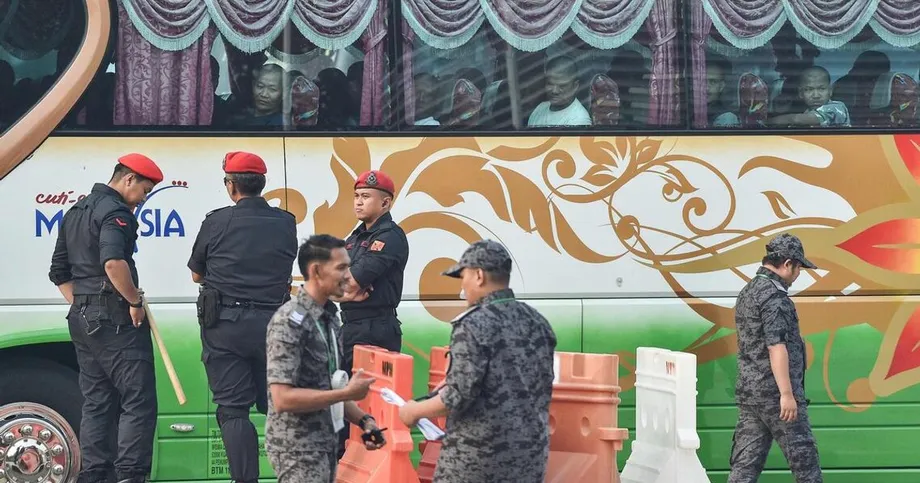
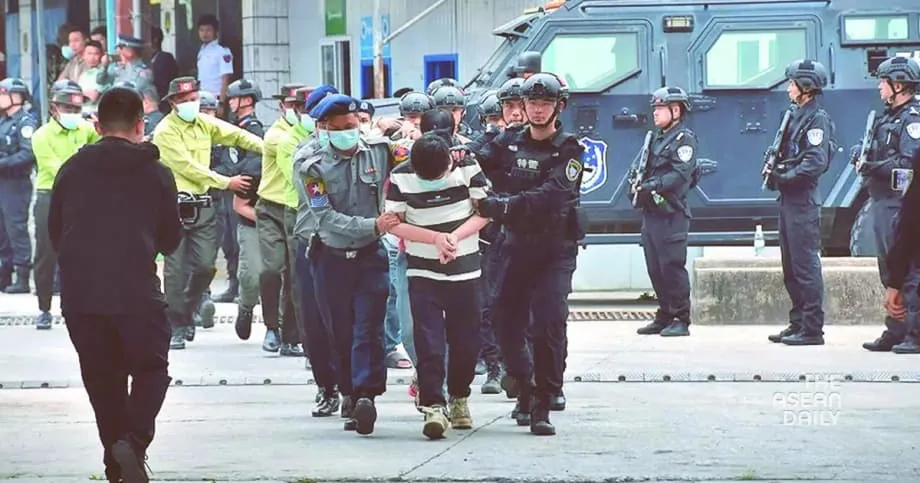
Myanmar has repatriated more than 5,500 suspects to China in 2025 following combined pressure on those compounds. Thai agencies have worked with their counterparts to move people safely through checkpoints and reduce the flow of recruits and supplies into the sites.
Chinese and Lao officers detained more than 600 suspects in a single sweep of compounds in the Golden Triangle Special Economic Zone. Cooperation with Cambodia produced 2,141 arrests across several provinces, with all those suspects handed to Chinese authorities for investigation.
Joint teams working with Vietnam arrested 149 suspects in a special operation targeting telecom fraud and online gambling. In a separate case, Vietnamese police acted on Chinese leads to dismantle five dens in Ho Chi Minh City. They transferred 19 Chinese suspects and seized devices through Dongxing Port in Guangxi.
The operations show why both people and equipment must move through official channels. A seized device may contain conversations, account details or other records needed to connect a suspect to activity in another country. The Kunming commitments seek to make that exchange faster so cases can progress after a raid.
How the campaign developed
The regional effort has expanded from individual operations into a broader framework. The first phase of a joint campaign under the Lancang Mekong security framework, conducted in late 2024, produced 160 busts, more than 70,000 arrests and coordinated rescues of victims.
Those figures cover a broad range of cyber and related crimes, with a strong focus on online scam networks and the illegal gambling infrastructure supporting them. The 2025 operations have continued that work through specific partnerships and action against major hubs.
- Late 2024: The first phase of the Lancang Mekong joint operation recorded 160 busts, more than 70,000 arrests and rescues of victims.
- During 2025: Myanmar transferred more than 5,500 suspects to China amid increased trilateral pressure on Myawaddy and nearby compounds.
- By November 17, 2025: Operations involving Laos, Cambodia and Vietnam had produced further arrests, while the six countries had agreed in Kunming to expand cooperation.
Authorities aim to combine arrests with the closure of physical sites, the seizure of servers and devices, and the tracing of funds through payment processors and cryptocurrency wallets. These are different parts of the same task: stopping the operation, preserving its records and following the money it collected.
Chinese foreign ministry spokesperson Guo Jiakun described the campaign as a shared interest for countries confronting the same threat.
Fighting online gambling and telecom fraud is a necessary choice to safeguard the common interests of China and other regional countries.
Why compounds grew in border areas
Myawaddy and Shwe Kokko in Myanmar, the Golden Triangle Special Economic Zone in Laos, and parts of Cambodia became centres for scam compounds, fraudulent call centres and online gambling sites over the past several years. In Cambodia, the affected locations include Sihanoukville and border towns.
These operations grew where rapid digital adoption met gaps in local oversight. Many sites are close to borders that are difficult to police. Some are in areas where government control is weak, giving organisers room to establish compounds and move people or supplies.
Criminal groups combined internet infrastructure and online payment systems with a supply of workers attracted by false job offers. A compound could operate from one country while its workers contacted people elsewhere, using phones and online accounts rather than needing to approach victims in person.
Online gambling and telecom fraud are closely connected in the regional campaign. Authorities are targeting the illegal gambling infrastructure that sustains scam networks, as well as the call centres themselves. Closing a visible site is one part of the effort; identifying the organisers, technology and financial channels behind it is another.
How the scams take money
Telecom fraud includes romance and investment scams, phishing messages, fraudulent loan and parcel offers, and impersonation of officials. Phishing is a deceptive message designed to persuade someone to reveal information or follow instructions that benefit the criminal.
Romance and investment schemes sometimes use the fixed term pig butchering. Criminals build a relationship with a target, earn trust and then steer that person towards a fake trading platform. The apparent investment is controlled by the scammers, who use convincing conversations and staged displays of profits to encourage more deposits.
Operators use social engineering, meaning manipulation that persuades a person to act, alongside stolen identities, spoofed phone numbers and prepared scripts. Spoofing makes a call appear to come from a different number, making it harder for the recipient to recognise the deception.
Scammers may begin with a small test deposit, then press for larger transfers after showing fabricated gains. They can ask targets to install unfamiliar apps or move conversations to encrypted channels. Some groups use deepfake images and voices, digitally created imitations intended to make a false identity more convincing.
Cryptocurrency and stablecoins are also used to move money quickly. Stablecoins are a type of cryptocurrency designed to maintain a steady value. In these schemes, targets may be instructed to convert their money before sending it, adding another step between the victim and the people receiving the funds.
Recurring warning signs include:
- Unsolicited contact that quickly moves from a public app to a private chat.
- A rapidly developing personal relationship followed by talk of investing together.
- Requests to install unfamiliar trading apps or use offshore websites.
- Pressure to deposit more money after a dashboard displays apparent profits.
- Demands for taxes or fees before withdrawals can be released.
- Insistence on secrecy or attempts to discourage independent verification.
Workers trapped behind the screens
Recruiters advertise jobs in hospitality, customer service or technical support with promises of high pay, then route applicants to compounds near borders. Many people inside those sites report having their passports taken and facing threats, fines or violence when they refuse to follow scam scripts.
A recent case involving a Chinese actor drew wide attention in China. The actor went missing near the Thai Myanmar border and was later found in Myanmar, bringing renewed attention to the connection between trafficking and online fraud and the risks facing travellers.
Rescuing people from compounds is therefore a central part of the regional response. Rights advocates have urged authorities to combine arrests and repatriations with screening and care for trafficking victims. Safe shelters, clear referral systems and legal support are among the measures needed for people coerced into committing crimes.
Benedikt Hofmann, acting regional representative of the United Nations Office on Drugs and Crime for Southeast Asia and the Pacific, said cooperation had helped build momentum.
The cooperation between China and other countries in the region has been encouraging and has created momentum for such collaboration.
Sustained action is needed to maintain that pressure. Rescues must also be connected to protection and support, particularly when investigators encounter people whose participation in fraud resulted from threats or confinement.
Courts, police and financial investigations
Governments have combined repatriation, extradition and sanctions with new investigative methods. Repatriation returns people to their country, while extradition is a legal process through which a country transfers a person to another jurisdiction to face criminal proceedings.
Thailand extradited She Zhijiang to China to face charges connected to a large development in Myanmar that authorities say became a hub for internet fraud and illegal casinos. The case illustrates the involvement of national courts, police and immigration units when a suspect moves across jurisdictions.
Beyond Asia, United States authorities have announced a federal task force aimed at disrupting scam operators and seizing equipment and cryptocurrency assets linked to fraud centres. The international reach of the response reflects the reach of operations that contact victims far from the compounds where scams originate.
Within the Mekong framework, police are building continuing channels for intelligence sharing and case coordination. Interpol notices, shared databases and joint training in digital forensics are becoming routine. Digital forensics involves examining electronic devices and records while preserving material that can be used as evidence.
Observers from United Nations agencies provide technical guidance on protecting victims and handling digital evidence. China's public security authorities say they will focus on dismantling hubs, securing arrests and using seized data to identify accomplices and trace money.
The Ministry of Public Security described its intended next steps in a statement.
Chinese police will continue to deepen international collaboration, advance joint operations, dismantle fraud hubs, and pursue suspects with greater determination.
Why arrests alone are difficult to sustain
Criminal organisers can shift operations to other towns or countries when authorities apply pressure. They can also split call centres into smaller cells and use encrypted apps and offshore servers to obscure their communications.
Cryptocurrency movements create further difficulties for recovering stolen money. Funds can pass through mixers, which make transactions harder to follow, and exchanges outside the reach of a single regulator. Investigators therefore need cooperation across financial and national boundaries as well as access to devices seized during raids.
Some compounds operate in places with weak state control. Corruption, intimidation and complex local power structures can slow enforcement. Maintaining pressure requires authorities to address those conditions while continuing to identify people who have been trafficked.
Cases spanning several countries also require investigators to preserve digital evidence, match records held in different systems and work through language barriers. Mutual legal assistance, the process through which countries formally help each other gather evidence, can be slow without dedicated contact points.
The Kunming commitments seek to reduce these delays by aligning procedures, improving data exchange and using joint task forces to keep case files moving. Faster cooperation can help connect a raid in one country with suspects, victims or payments located elsewhere.
Tourism and the next priorities
Southeast Asian economies depend heavily on tourism, and Chinese travellers spent large sums in neighbouring countries before the pandemic. Reports of trafficking and scams have worried travellers and families. Some tour groups have cancelled trips during earlier spikes in safety concerns.
Thai officials have said they want to address problems affecting the country's image as a safe destination. Police operations have been paired with public messaging intended to reassure visitors.
For regional governments, the campaign is also tied to financial stability, confidence in digital commerce and the reputation of border areas seeking legitimate investment. China is seeking to protect citizens whose losses may begin with a message on a phone and end with the disappearance of substantial savings.
Officials expect the next phase to maintain pressure on remaining hubs in Myawaddy and other enclave areas, renew action against illegal online gambling that funds scams, and pursue organisers and financial managers. Regular joint patrols and case reviews are likely to continue through the Lancang Mekong coordination centre.
The six countries are also looking to deepen cooperation on digital forensics, tracing illicit funds and using risk alerts within messaging and social platforms. Closer work with telecom carriers, payment companies and cryptocurrency exchanges can help block funds and shut down services used by fraud networks.
Public awareness campaigns in multiple languages and faster assistance for potential victims are intended to reduce both recruitment into compounds and the number of people drawn into scams. The agreement joins those protective goals with immediate enforcement and continuing regional cooperation.
What to Know
- China, Cambodia, Laos, Myanmar, Thailand and Vietnam agreed in Kunming to expand joint action against telecom fraud and online gambling.
- The commitments include coordinated operations, a standing coordination mechanism, faster intelligence sharing and the handover of suspects and seized evidence.
- Myanmar transferred more than 5,500 suspects to China in 2025 amid pressure on Myawaddy and nearby compounds.
- Operations involving Laos detained more than 600 suspects; cooperation with Cambodia produced 2,141 arrests.
- Joint work with Vietnam netted 149 suspects. A separate operation dismantled five Ho Chi Minh City dens and led to the transfer of 19 Chinese suspects.
- The late 2024 Lancang Mekong campaign recorded 160 busts and more than 70,000 arrests across cyber and related crimes, alongside rescues of victims.
- Interpol and the United Nations Office on Drugs and Crime attended the Kunming meeting as observers.
- The campaign combines action against compounds and financial networks with the rescue and protection of trafficking victims.