Panels keep homes and businesses running
Myanmar imported about $100 million worth of solar panels from China in the first nine months of 2025, more than double the amount a year earlier. Household solar installations have climbed from a few hundred in 2019 to roughly 300,000 in 2025, as families and businesses seek electricity that the national grid can no longer reliably provide.
Contents
- Panels keep homes and businesses running
- A power system losing its ability to deliver
- Gas shortages, sanctions and conflict compound outages
- Small systems become a means of staying open
- Rice mills move beyond diesel
- Commercial rooftops combine generation and storage
- Officials push solar use and local production
- Cost, roof space and safety limit the gains
- Renters and poorer households face barriers
- Regional growth and financing for businesses
- What to Know
In Myawaddy, near the Thai border, hospitals, offices and households rushed to install panels after Thailand cut electricity supplies across its western border in 2025 to target online scam operations. The disruption reached beyond those criminal hubs. Residents say three out of four people in some neighborhoods now rely on solar, while businesses combine several panels with small batteries to keep lights, refrigeration and payment systems working.
By November 15, 2025, the shift had spread from household rooftops to rice mills, factories and commercial buildings. A basic system with solar panels and a battery can cost less than $1,000. Larger businesses are arranging contracts that let them buy solar electricity without paying for an entire installation at the start.
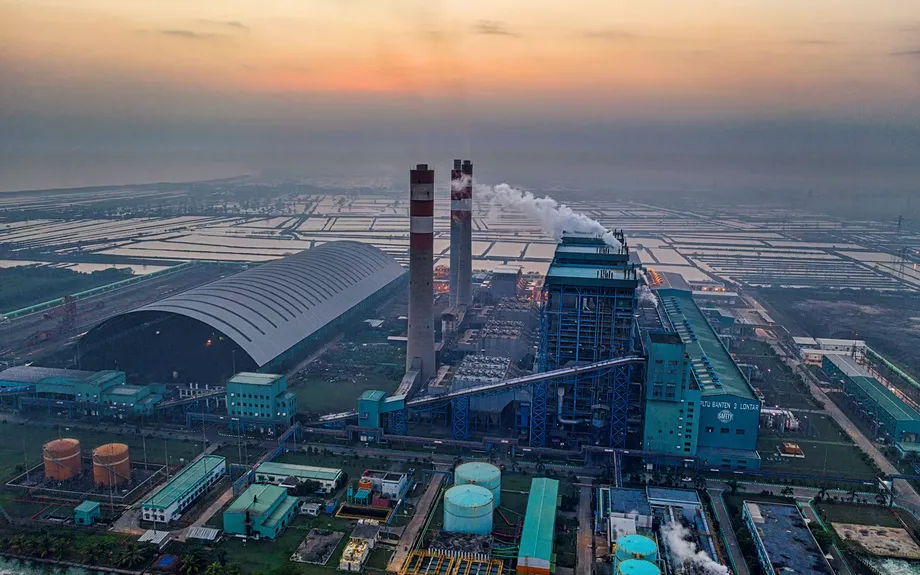
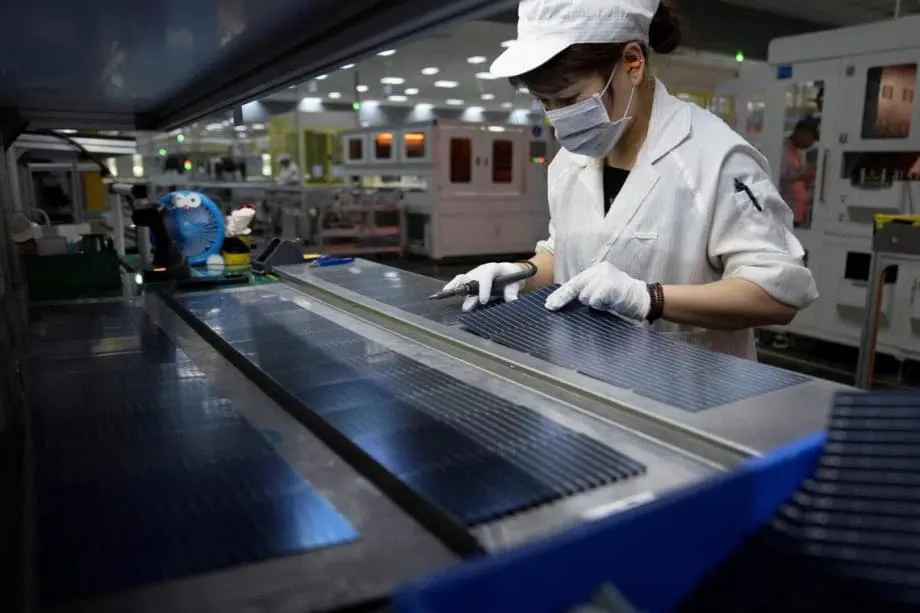
Myanmar's electricity crisis has deepened since the military takeover in 2021 and the spread of civil conflict. Domestic gas supplies are shrinking, imported fuel has become harder to finance, and damaged infrastructure is difficult to repair. Chinese manufacturers have supplied cheaper panels, while local installers have multiplied to meet demand.
For many buyers, the immediate goal is simple: keep a shop open, protect refrigerated goods or prevent a computer from switching off during a blackout. Solar has become a practical response to daily disruption, even as its cost puts it beyond the reach of many households.
A power system losing its ability to deliver
The World Bank estimates that Myanmar's operating power capacity had fallen back to its 2015 level by 2024. Operating capacity means the amount of generation that can actually be used, which depends on working equipment and available fuel.
Authorities have said generation capacity has fallen by nearly half from levels before 2021, while some official statistics show only limited change in electricity output since 2018. Capacity describes how much power plants can produce at a given moment; output is the electricity they generate over a period. Households and businesses experience the crisis through rolling outages and the expense of running diesel generators.
Myanmar's grid was already vulnerable before the political crisis. Cities generally had better access than the countryside, yet even major urban centers experienced interruptions. Years of insufficient investment and rising demand left little room to absorb fuel shortages, financial pressure or damage from fighting.
United Nations satellite readings show that light intensity has declined by an average of about 8 percent a year since the coup. Light visible from space is used as a proxy for electricity access and economic activity. The dimming accompanies businesses closing early, hospitals rationing power and neighborhoods arranging their own backup supplies.
Several dates show how the shift has developed:
- 2019: Household solar installations numbered only a few hundred.
- 2021: The military takeover and subsequent conflict accelerated pressure on electricity supplies.
- 2024: Operating power capacity fell back to its 2015 level, according to the World Bank.
- 2025: Thailand cut border electricity supplies to target scam operations, prompting more solar purchases in Myawaddy.
- June 2025: Senior General Min Aung Hlaing urged wider solar use during a factory visit in the Yangon administrative region.
- November 15, 2025: Household installations had reached roughly 300,000, while industrial projects were expanding.
Gas shortages, sanctions and conflict compound outages
Domestic natural gas is the backbone of Myanmar's thermal electricity generation, where fuel powers turbines to produce electricity. Production has declined as some gas fields mature. Plants that depend on those supplies have less fuel available to operate.
Imports of liquefied natural gas, intended to help cover the shortfall, were halted because of a shortage of foreign currency. Without enough money in the currencies needed to pay overseas suppliers, Myanmar could not sustain those purchases. Turbines can sit idle even when the machinery itself remains available.
Western sanctions linked to the coup have also complicated maintenance. Operators face difficulties obtaining spare parts and specialist technical support for aging power plants and substations. Substations help move electricity between different voltage levels so it can travel through transmission networks and reach users.
Fighting has damaged transmission lines and substations, and repairs can take time. Fuel shortages, maintenance problems and physical damage together reduce the grid's ability to deliver steady electricity. In conflict areas, outages are frequent and lengthy, leaving communities to improvise their own supplies.
Diesel generators fill some of the gaps, but they consume costly fuel and require continuing purchases. For businesses facing both blackouts and financial strain, that recurring expense has made solar panels and batteries increasingly attractive.
Small systems become a means of staying open
Households, shops, clinics and schools commonly install a handful of panels with a battery and an inverter. Panels generate electricity from sunlight. The inverter converts that electricity into the form used by ordinary appliances, while the battery stores some of it for later.
A basic kit costing less than $1,000 can be cheaper to buy than many diesel generators and much cheaper to operate from week to week. Depending on its size, it can run lights, fans, phone chargers, payment devices, a small refrigerator and a few other appliances for several hours a day.
Street vendors and small businesses gain hours in which they can continue trading after grid power fails or daylight fades. Clinics and schools can maintain essential services. Buyers also report fewer damaging power surges affecting their appliances.
Solar panel shipments from China have risen more than eightfold compared with levels before the pandemic. Diesel imports fell 11 percent in the first ten months of 2025 as homes and businesses switched from generators to panels and batteries.
Chinese suppliers and local distributors have made equipment easier to obtain. Companies linked to Chinese investors, including Sandisolar, have completed dozens of projects each year and expanded beyond cities into rural townships. Customers commonly cite unreliable grid service and rising electricity costs as their reasons for buying.
Rice mills move beyond diesel
The Myanmar Rice Federation is expanding solar use at mills in Yangon, Ayeyarwady, Bago and Nay Pyi Taw. Its program calls for 28 mills to run at least part of their operations on solar during the fiscal year spanning 2025 to 2026. Four installations had already been completed.
Mill managers say solar can reduce diesel consumption by up to 70 percent. They also report less noise and better product quality because generator emissions are kept away from rice processing lines. The federation has signed several agreements with Chinese solar companies to obtain equipment and technical support.
A mill in Kyaikto, Mon State, has installed a rooftop system rated at 487 kWp through a developer based in Mandalay. The unit kWp, or kilowatt peak, describes the panels' rated maximum output under standard test conditions. The installation is expected to cover about 31 percent of the mill's energy needs, cutting costs and helping operations continue during outages.
The Kyaikto project uses a power purchase agreement. Under that arrangement, the developer owns and operates the rooftop array and sells its electricity to the mill under a contract. The mill avoids paying the full equipment cost upfront.
Such contracts are becoming a route into solar for manufacturers that want to preserve cash or cannot easily obtain bank financing. The mill still needs other electricity supplies for the share of its demand that the rooftop system does not cover, but the contract makes part of its energy supply less dependent on diesel and the grid.
Commercial rooftops combine generation and storage
A recent installation in the Yangon Region combines a 70.8 kWp panel array, a hybrid inverter rated at 50 kW and a battery with a storage capacity of 50 kWh. The panels generate power, the inverter manages its conversion and movement, and the battery holds electricity for use when needed.
Kilowatts describe power, or how quickly electricity is being supplied or used. Kilowatt hours describe an amount of energy. Those separate measures help explain why a battery's storage capacity and an inverter's power rating serve different purposes.
The Yangon system supports lighting and air conditioning in training and administrative areas. It also provides backup electricity for information technology and communications rooms. During outages, the installation keeps key equipment running.
When grid service returns, the system can recharge its battery and manage the use of solar electricity to reduce bills. Where electricity tariffs allow, systems of this kind can also charge batteries when power is cheaper and use the stored energy during more expensive periods. In Myanmar, their central value remains reliability.
Hybrid inverters allow a building to use a combination of grid electricity, solar panels and batteries. Many newer units can switch between supplies in less than 10 milliseconds, helping computers and payment devices keep operating without shutting down.
Some inverters support a panel array with a higher rated capacity than the inverter itself. That arrangement helps collect more energy during limited periods of strong sunshine. Systems can also give priority to essential equipment, and some work alongside diesel generators to reduce fuel consumption during long outages.
Batteries make solar useful beyond the hours of direct sunshine. A shop can keep a freezer cold during a midday outage, while a clinic can operate sterilization equipment after dark. Factory storage can help keep production lines running and avoid expensive restarts. Businesses can add battery capacity in stages as money becomes available.
Officials push solar use and local production
Senior General Min Aung Hlaing called for wider solar use during a June 2025 visit to a solar panel factory in the Yangon administrative region. He urged ministries and producers to expand installations for households and industry, and to improve locally made panels so their quality matched imports.
Myanmar's Ministry of Information released a statement after the visit describing the push to supply electricity at different scales. Its statement said:
The ministry needs to strive to generate electricity through solar power to ensure small-scale electricity for household use as well as large-scale electricity for factory use.
Min Aung Hlaing also called for domestic production of raw materials and encouraged efforts to begin silicon production. Silicon is a material used in solar cells, which turn sunlight into electricity.
International Renewable Energy Agency data puts Myanmar's installed solar capacity at 216 MW at the end of 2024, compared with 181 MW a year earlier. That is an increase of 35 MW, or about 19 percent, although the total remains modest by regional standards.
Local manufacturing faces practical difficulties. Producers need access to polysilicon, specialized glass, modern production lines and quality assurance. Polysilicon is a highly purified form of silicon used to make solar cells. Producing reliable panels requires both suitable materials and consistent manufacturing standards.
The official push signals a desire to reduce dependence on imported equipment and support a technology that many residents already regard as essential. Imports remain central to the expansion described by distributors and industrial buyers.
Cost, roof space and safety limit the gains
Many households cannot afford even a system costing $1,000 without financing. Roof space limits the number of panels a family or business can install, and battery size limits how much electricity can be saved for later. A rooftop installation may supply only part of a small factory's needs.
A manufacturer in Yangon said the initial investment needed to operate an entire plant on solar would be very high and could outweigh any gain in profits. For heavy industry, a reliable grid remains necessary even when solar reduces disruption and generator use.
Larger arrays need roofs strong enough to support them, suitable engineering and capable installers. Equipment quality also varies. Poor wiring and battery banks without adequate protection can create safety hazards.
Lead-acid batteries remain common because they are cheaper, but their recycling and disposal require care. Lithium batteries generally last longer and store more energy for their weight. They need proper battery management systems, which monitor and control battery operation, as well as reliable suppliers.
Businesses must consider both the savings from using less diesel and the money committed to equipment. A system that protects essential machinery may be more affordable than one designed to run every part of a factory. Many users focus on consuming their own solar electricity and, where possible, retain a generator for prolonged outages.
Renters and poorer households face barriers
Research based on household surveys found that married homeowners in rural areas without grid access were more likely to own solar devices. Renters were less likely to invest. Those patterns point to unequal access even as the number of installations rises.
The same analysis found no strong rebound effect in electricity use after adoption. A rebound effect would mean users substantially increased consumption because a new energy supply became available. Solar users in the research did not significantly increase their total electricity consumption.
Targeted financing and community projects could help extend access to people with lower incomes. Business financing arrangements show how paying for electricity over time can reduce the initial burden, although household needs and resources differ from those of factories.
Myanmar's utilities also face changing patterns of demand. Customers who generate their own electricity during the day may return to the grid in the evening, when solar output falls. That creates sharper rises and falls in the amount of power the utility must supply.
Planning becomes more difficult, and supplying the remaining electricity could become more expensive. Better metering, tariffs that change with the time of day and programs that pay users for surplus solar electricity could help manage those changes. Most users currently concentrate on meeting their own needs rather than supplying power to the wider network.
Regional growth and financing for businesses
Myanmar's solar expansion resembles developments in Pakistan, Iraq, Sri Lanka and Afghanistan, where unreliable grids have encouraged people to buy their own generating equipment. In these markets, solar often serves first as protection against outages rather than as a response to climate targets.
Falling panel prices have supported rising installations globally. Within Southeast Asia, some neighboring countries have moved faster on large solar projects supplying electricity to the grid. Much of Myanmar's expansion is instead coming from individual households and businesses.
An analysis of regional electricity mixes in 2024 put Myanmar's solar share at around 5.2 percent, behind Vietnam and slightly ahead of Cambodia in that comparison. Myanmar's absolute installed capacity remains small, but demand for Chinese panels has made it one of the fastest growing destinations by percentage for exports to developing markets.
The Global Energy Alliance for People and Planet has supported small and medium sized enterprises through rooftop solar and technical assistance. Since 2023, that work has mobilized more than $4.2 million, enabled about 5 MW of projects and supported 1,500 jobs.
Managers report energy savings of 30 to 65 percent and fewer interruptions. Diesel costs have risen several times over since 2021, making reduced generator use an immediate source of relief. Partnerships involving banks and local developers aim to extend financing to businesses that would struggle to purchase systems outright.
Myanmar's solar growth is giving users more control over part of their electricity supply. Panels, storage and financing agreements can keep essential activities running, while the gas shortage, damaged infrastructure and maintenance difficulties continue to restrict the grid. The rice federation's program for 2025 to 2026 is one concrete measure of the industrial expansion now underway.
What to Know
- Household solar installations rose from a few hundred in 2019 to roughly 300,000 in 2025.
- Chinese solar panel imports exceeded twice their earlier value, reaching about $100 million in the first nine months of 2025.
- The World Bank estimates that operating power capacity fell back to its 2015 level by 2024.
- United Nations satellite readings show an average annual decline of about 8 percent in light intensity since the 2021 coup.
- Declining gas production, halted liquefied natural gas imports, sanctions and conflict damage have strained electricity supplies.
- Diesel imports fell 11 percent in the first ten months of 2025 as users shifted toward panels and batteries.
- The Myanmar Rice Federation plans solar use at 28 mills during 2025 to 2026, with four installations already completed.
- A 487 kWp rooftop system in Kyaikto is expected to meet about 31 percent of a rice mill's energy needs through a power purchase agreement.
- Installed solar capacity reached 216 MW at the end of 2024, up from 181 MW a year earlier.
- Upfront costs, limited roof space, battery requirements and equipment safety continue to constrain adoption.