Airport service brings phone access and payments together
Bank Indonesia has launched the Indonesia Tourist Travel Pack at I Gusti Ngurah Rai International Airport in Bali, combining a local SIM or eSIM, mobile data, a local phone number and access to digital payments. A new Tourism Information Center helps international visitors set up the services and use QRIS, Indonesia's nationwide QR code payment network.
Contents
- Airport service brings phone access and payments together
- What travelers receive in the pack
- How one QR code serves many payment apps
- Regional visitors may be able to use their home wallets
- What changes during a day in Bali
- Bali is working to simplify its tourism levy
- Nusa Islands move local fee collection toward digital payments
- Why merchants and local governments support the shift
- Support and precautions remain part of the service
- Rupiah plans leave current travel budgets unchanged
- Getting ready before leaving the airport
- Key Points
The initiative makes Bali a pilot for a wider rollout across Indonesia. Visitors can use the payment system at participating hotels, cafes, shops, taxis and attractions, while receiving help at the airport instead of arranging connectivity and payment accounts separately after arrival.
The pack brings together three services: connectivity, a digital wallet with QR payment access and support for chip based electronic money, and assistance on the ground. Travelers also receive the QRIS Nusantara Tourism Guidebook, which explains how to use digital payments across the island.
Foreign visitors often encounter a practical difficulty when trying to register for Indonesian digital wallets: many require local registration. The new airport service provides a guided route for foreign passport holders to complete the necessary checks and join the payment network in minutes.
Bali's wider tourism sector is also moving toward digital services, including cashless tickets at popular destinations and efforts to simplify mandatory levy payments. The travel pack fits into that shift, giving visitors another way to pay when a merchant displays a QR code or has a card terminal.
Cash still matters, particularly at small businesses. The immediate benefit is greater choice: tourists can make fewer ATM withdrawals, track spending in rupiah and reduce the amount of money they carry in crowded places, while keeping cash available for purchases that require it.
What travelers receive in the pack
Visitors can purchase or activate an Indonesian SIM or eSIM in the airport arrival area and leave with working mobile data and a local number. An eSIM provides mobile service without inserting a physical SIM card, provided the phone supports it.
A local number helps travelers register for transport, delivery and attraction apps. It also gives hotels and tour providers a reliable way to contact their guests. Tourism Information Center staff can help check device compatibility, select a plan and complete activation.
The payment component gives visitors access to a wallet that supports QRIS and can be topped up for immediate use across Indonesia. Staff can guide tourists through identity checks using a passport and explain how to add money to the account.
Top up methods depend on the provider and location. Options can include card payments at counters or partner kiosks. Travelers need to confirm which methods are available at their counter, obtain a receipt and check that the balance shown in the app has increased.
The Tourism Information Center is at the international arrivals level. Visitors can collect or buy the pack there, receive assistance in multiple languages and ask about participating merchants, recommended routes and transport options.
The QRIS Nusantara Tourism Guidebook covers accommodation, dining, retail and ticketed attractions where the payment system is already accepted. It also explains how to check transaction histories, request a refund after a duplicate payment and find assistance during a stay.
How one QR code serves many payment apps
QRIS stands for Quick Response Code Indonesian Standard. Overseen by Bank Indonesia, it uses a common QR format that participating banks and digital wallet providers can accept. This means a merchant can display one code and receive payments from customers using different participating apps.
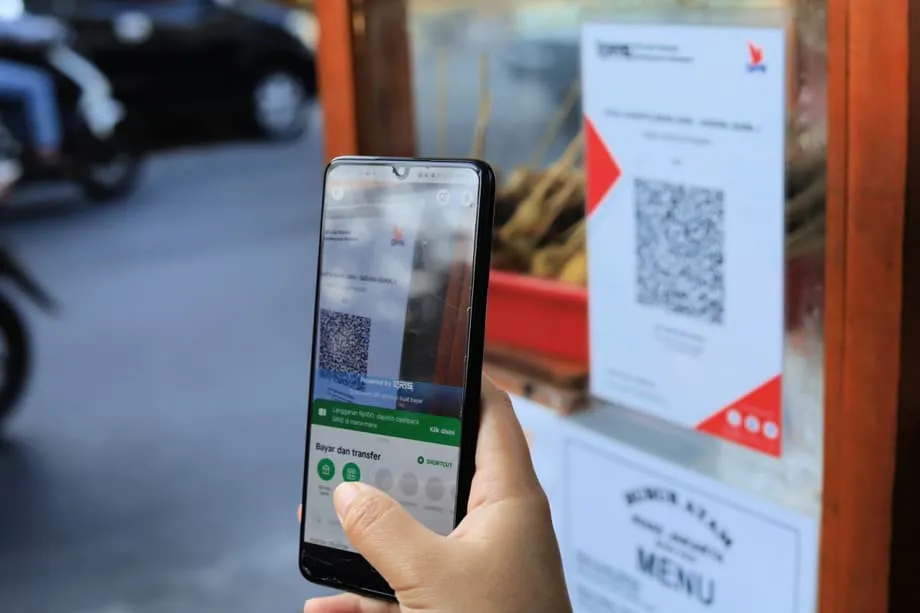
A customer opens a wallet or banking app, selects the scanning function, points the phone camera at the merchant's code, confirms the price and approves payment. The app displays a success screen, while the merchant receives confirmation on their device.
Hotels, restaurants, convenience stores, spas, markets and beach clubs commonly use QRIS. Some taxis and tour operators accept it as well. Small businesses often display a printed code on the counter, allowing customers to pay without handing over a physical card.
For a visitor, the practical advantage is a familiar payment process across different businesses. Where a QR code is displayed, there is no need to ask which card networks the merchant accepts or whether a contactless card payment falls within a tap limit.
The wallet records transactions digitally, helping travelers see where their money has gone. Payments through a local wallet take place in rupiah, without a foreign exchange conversion at the moment of purchase.
Regional visitors may be able to use their home wallets
Indonesia's cross border QR payment connections link QRIS with systems in Malaysia, Thailand and Singapore. Some visitors from those countries can scan an Indonesian merchant's code using a participating wallet from home. Expansion to other markets is under discussion.
Bank Indonesia's Riau Islands office recorded several thousand cross border QRIS transactions by Malaysian visitors from January to May 2025. Visitors from Singapore followed, then those from Thailand. Younger travelers familiar with scanning to pay at home tend to adopt the service fastest, particularly in border hubs and destinations visited for short breaks.
Tourists whose home wallets are connected can use them at merchants displaying QRIS codes. Any fees are usually applied by the visitor's wallet provider, which also sets the exchange rate. Checking those charges helps travelers understand the cost before paying.
The Tourist Travel Pack serves visitors whose home wallets are outside the connected network. It provides access to an Indonesian wallet, assistance across language barriers during registration and support when a payment goes wrong.
Regional connectivity and the local wallet therefore offer two routes into the same merchant network. A traveler can use a supported home wallet or set up the pack's Indonesian wallet, depending on which service is available to them.
What changes during a day in Bali
Hotels and restaurants of medium size or larger often accept both cards and QRIS. Tourists can settle bills digitally instead of making an ATM visit immediately after arriving. Many ride services and some metered taxis also accept QR payments linked to an app or a driver's account.
Souvenir shops, yoga studios, dive operators and tour desks are adopting QRIS too. Using a wallet for these purchases gives visitors a digital spending record across different parts of their trip, from transport and meals to activities and shopping.
Cash remains useful at small family businesses such as warungs, roadside food stalls, beach shacks, temple gates and rural attractions. Parking attendants may also prefer cash. Tipping is not compulsory, but service tips are welcomed, and small notes make them easier to give.
ATMs are widely available in Bali. International cards using networks such as Visa and Mastercard generally work, although machine fees vary. Contactless card payments are growing at chains and cafes, but some terminals lack tap support and limits can apply to individual payments.
Apple Pay and Google Pay are not officially available in Indonesia. A physical card, some rupiah and a wallet capable of QR payments give travelers more flexibility than relying on one method throughout their stay.
Drivers also need to account for tolls and parking facilities that use specific stored value cards or accept QR payments only at designated points. Cash is often the quickest way to make temple donations or pay small community fees. The travel pack reduces the need to find an ATM repeatedly, while leaving these everyday cash needs in place.
Bali is working to simplify its tourism levy
Bali introduced a provincial tourism levy of 150,000 rupiah per international visitor in 2024. Authorities are working on changes to make payment more straightforward, including integration with immigration systems and the creation of more payment points around the island.
Industry groups are collaborating with the provincial government on arrangements that would allow travel agencies to accept and process the levy for clients. Early compliance was well below targets, making easier payment a priority for officials and tourism operators.
The levy work and the airport travel pack address related parts of a visitor's arrival: access to a usable payment method and the ability to complete required payments conveniently. The proposed changes to levy collection remain work in progress.
The developments span several periods:
- 2024: Bali introduced the provincial tourism levy of 150,000 rupiah for international visitors.
- January to May 2025: Bank Indonesia's Riau Islands office recorded several thousand cross border QRIS transactions by Malaysian visitors, followed by visitors from Singapore and Thailand.
- By November 14, 2025: Bank Indonesia had launched the Indonesia Tourist Travel Pack at Bali's international airport, with Bali serving as a pilot for a wider national rollout.
Nusa Islands move local fee collection toward digital payments
Klungkung Regency, which oversees the Nusa Islands, has committed to digital collection of retribution fees and entry tickets. Visitors to Nusa Penida, Nusa Lembongan and Nusa Ceningan pay a tourist retribution fee of 25,000 rupiah for adults and 15,000 rupiah for children, with card payment required at official counters.
The adult fee is 10,000 rupiah higher than the child fee. These local charges sit alongside Bali's provincial tourism levy, which is 150,000 rupiah per international visitor. Marine activities within the Nusa Penida Marine Protected Area carry an additional fee for international visitors.
Local leaders say digital collection helps close gaps through which revenue can be lost, improves transparency and presents a more professional experience for guests. Electronic records allow authorities to track payments more easily than collections handled entirely in cash.
Visitors traveling between Bali and the Nusa Islands therefore encounter several payment arrangements: a provincial levy, local visitor fees and an additional charge for marine activities within the protected area. Keeping a physical card available is useful where official counters require card payment.
Why merchants and local governments support the shift
Small shops can accept QRIS payments using a printed code rather than buying a dedicated payment terminal. One code connects them to customers using many participating apps, reducing the cost and complexity of accepting payments without cash.
Dedicated terminals can be expensive and prone to signal dropouts. QRIS gives stalls and small shops another way to take payments, while digital records help them match incoming money with sales, identify missing funds and complete their accounts at the end of the day.
Larger merchants can reduce the security risks associated with holding cash and serve customers faster during busy periods. For visitors, quicker payment can make queues at popular sites move more consistently, particularly where handling notes and change slows entry.
Local governments also gain a clearer record of fee and levy collections. Digital systems can monitor payment volumes in real time, helping officials plan public works, check that revenue reaches the correct budget accounts and build trust with communities that depend on tourism.
The shared benefit is a transaction record. A visitor can check an app history, a business can reconcile sales and a public authority can review collections. Each uses the same basic feature of a digital payment: a recorded movement of money.
Support and precautions remain part of the service
Digital transactions run through licensed banks and payment service providers. After paying, customers receive a confirmation screen in their app and can show it to the merchant when necessary.
Visitors should use a reputable wallet or banking app, protect their phone with strong device security and keep it charged. A power bank can be useful on long days away from accommodation, especially when the phone provides both connectivity and payment access.
The Tourism Information Center can guide travelers toward the appropriate support channel if a payment fails or is duplicated. The guidebook also explains refund requests and where to seek assistance elsewhere on the island.
Research on travel technology in Bali found that customer support available around the clock had the greatest positive effect on tourist satisfaction. Digital payments also contributed strongly to a smoother trip. Those findings support the pack's combination of payment access and assistance at arrival.
The research concerns the value of continuous support. The airport service provides assistance in person as visitors set up their accounts, while the guidebook helps them retain information for later use.
Rupiah plans leave current travel budgets unchanged
Indonesia has discussed redenominating the rupiah by removing three zeros from prices and banknotes. Redenomination simplifies the unit used to express money. The real value of goods and services would stay the same, rather than falling through a devaluation.
No timetable has been set for that change. Any transition would be gradual and clearly communicated. Travelers should continue to budget in existing rupiah units, and the Tourist Travel Pack and QRIS operate within the current monetary system.
Getting ready before leaving the airport
Foreign passport holders can arrange the pack inside the international arrivals area before continuing to ground transport. The setup brings phone access, account registration and payment guidance into one process.
Arriving travelers can follow these steps:
- Find the Tourism Information Center signs in the arrivals hall at I Gusti Ngurah Rai International Airport.
- Present a passport and choose a SIM or eSIM plan suited to the length of the stay. Ask staff to check device compatibility and install an eSIM if the phone supports it.
- Open or create the wallet included in the pack and complete the required identity checks with staff assistance.
- Confirm the available top up methods, which may include a card payment or a partner kiosk. Obtain a receipt and check the balance in the app.
- Collect the QRIS Nusantara Tourism Guidebook for guidance on dining, transport, shopping and attractions, along with payment records and support.
- Make a small test purchase at an airport merchant or kiosk accepting QRIS to practice scanning and confirming payment.
- Keep a backup payment method, carry some rupiah and save the guidebook's support contacts in the phone.
- Enable mobile data roaming only when needed. With a local SIM or eSIM, most visitors can leave roaming switched off and avoid extra roaming charges.
Travelers using either a connected home wallet or the pack's local wallet should check app notifications for payment confirmations. Saving screenshots for purchases of higher value provides a readily accessible record during the trip.
Key Points
- Bank Indonesia launched the Indonesia Tourist Travel Pack at Bali's international airport, with Bali serving as a pilot for a wider rollout.
- The pack combines local connectivity, access to QRIS payments, a guidebook and assistance at a Tourism Information Center.
- QRIS lets participating banks and wallets pay through a common merchant QR code.
- Cross border connections link Indonesia with Malaysia, Thailand and Singapore.
- Travelers still need some cash and a backup card for businesses and facilities using other payment methods.
- Bali's tourism levy is 150,000 rupiah per international visitor, while Nusa Islands visitor fees are 25,000 rupiah for adults and 15,000 rupiah for children.
- Digital collection gives businesses and authorities clearer payment records and can speed up service.
- Rupiah redenomination has no set timetable. Travelers should use current rupiah units.