A missile threat with a global economic cost
Taiwan is preparing a new air defense network, T Dome, to protect its people and the semiconductor factories that underpin much of the world's technology. As of November 14, 2025, Taipei's priorities include Hsinchu Science Park, Taipei and other critical centers of the island's chip economy, where damage from a missile strike could spread through supply chains far beyond Taiwan.
Contents
- A missile threat with a global economic cost
- What Lai has promised
- Connecting Patriots, Sky Bow and Chiang Kong
- Surviving mass attacks, drones and hypersonic weapons
- Why Hsinchu matters to the rest of the world
- The silicon shield and the effort to spread production
- China's arsenal and Washington's role
- Keeping society and factories functioning
- Domestic divisions and international partnerships
- Beijing's response and the wider trade risk
- At a Glance
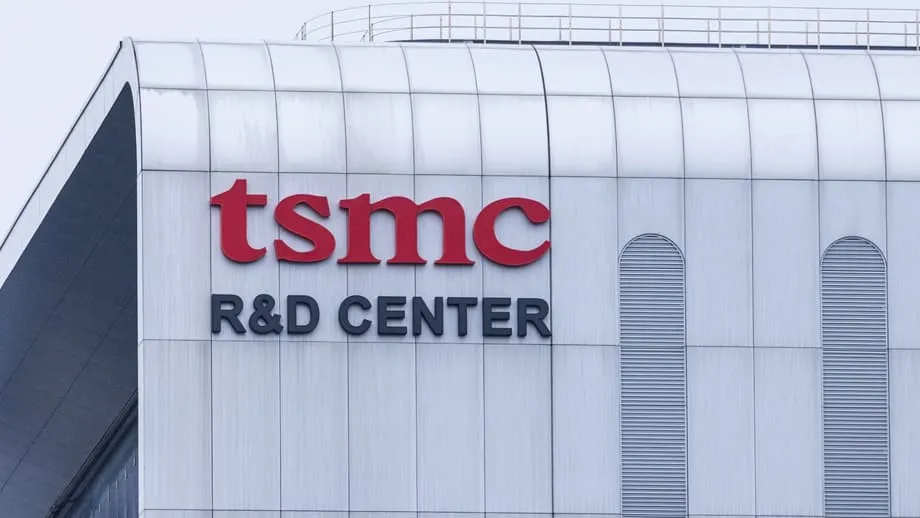
A researcher with Taiwan's National Science and Technology Council warned that one missile detonating in Hsinchu Science Park could trim 6 to 10 percent from global gross domestic product and disrupt new iPhone production for years. GDP measures the value of goods and services an economy produces. The park houses more than 600 technology firms, including Taiwan Semiconductor Manufacturing Company, or TSMC, making it a concentrated target with an unusually large economic reach.
China regards Taiwan as its territory and has increased air and naval pressure around the island. The United States assesses that the People's Liberation Army could have the capability to mount an invasion by 2027. Taiwan's geography, the concentration of its industrial assets and China's growing ability to strike across the Taiwan Strait have made stronger defenses an urgent government priority.
President Lai Ching te's administration is committing to raise defense spending to 5 percent of GDP by 2030. T Dome, inspired by Israel's Iron Dome, is intended to connect several defensive layers against aircraft, drones, cruise missiles, ballistic missiles and emerging hypersonic threats. Its purpose reaches beyond keeping factories running: it is meant to protect lives, limit damage and preserve Taiwan's ability to recover if an attack occurs.
What Lai has promised
Lai used his National Day address to pledge a tighter air defense network with stronger detection and interception. The government describes T Dome as a system that will combine domestic and foreign equipment with smart technology, helping operators identify incoming threats, rank them by danger and select an appropriate interceptor.
Lai, Taiwan's president, described the intended protection for civilians and their property in his address:
We will accelerate our building of the system and weave a safety net for Taiwan to protect the lives and property of citizens.
Initial integration is expected to begin soon, supported by a special defense budget. Officials say the spending plan will fund better radar coverage, data fusion and interception capacity. Data fusion means bringing information from different sensors together so operators can work from a shared picture of what is approaching.
Taiwan has not disclosed T Dome's exact missile mix or a precise date for the start of integration. The milestones described so far combine an immediate push to connect defenses with a longer commitment to increase military spending:
- In his National Day address, Lai pledged to accelerate T Dome and improve protection for people and critical sites.
- As of November 14, 2025, initial integration was expected to start soon, backed by a special defense budget.
- By 2027, the United States assesses that China's military could have the capability to mount an invasion.
- By 2030, Taiwan aims to raise defense spending to 5 percent of GDP.
The administration has also established a Whole-of-Society Defense Resilience Committee. Its role is to improve coordination among ministries, first responders and private companies, including those responsible for electricity, water and chip production. Military interception and civilian preparation are being treated as connected tasks.
Connecting Patriots, Sky Bow and Chiang Kong
Taiwan already operates several layers of air defense. Patriot batteries made in the United States protect key population centers and military bases. Taiwan's own Sky Bow interceptors, also called Tien Kung, provide area defense, covering a wider zone rather than just one installation.
The new Chiang Kong system, unveiled at a defense exhibition, is designed to engage ballistic missiles of medium range at higher altitudes than Patriots. T Dome is intended to connect these existing and emerging systems into a network that can adapt to different threats and keep operating while under attack.
Early warning is central to that effort. Fixed and mobile radars, passive sensors that detect emissions, and information from friendly aircraft and satellites can contribute to a better picture of the airspace. Passive sensors listen for signals rather than transmitting their own radar pulses.
Taiwan plans to use advanced software, including artificial intelligence, to filter noise, classify targets and recommend engagement options to human operators. The aim is to shorten the time between detecting a threat and deciding how to respond. Across the Taiwan Strait, missile flight times can be measured in minutes, leaving little room for delays.
No single interceptor can handle every threat. Short range missiles and mobile guns can counter rockets and drones, while interceptors operating at medium and high altitudes address cruise and ballistic missiles. Cruise missiles fly through the atmosphere toward their targets; ballistic missiles follow a high arc before descending.
The likely approach is to increase the numbers of existing systems, add defenses close to factories and bases, and introduce new short range interceptors that cost less per shot. Israel's experience shows the value of a dense but flexible defensive layout supported by rapid resupply. Taiwan's challenge is to connect its equipment while keeping enough missiles available for repeated attacks.
Surviving mass attacks, drones and hypersonic weapons
Launchers, radars and command posts must survive long enough to use their weapons. Taiwan's defensive approach includes frequent movement, hardened shelters and decoys. Communications also need several backups so units can continue fighting after part of the network is hit.
A saturation strike is an attack involving enough missiles at once to overwhelm defenses or exhaust their interceptor stocks. Mobility, concealment and backup communications raise the cost of such an assault by making it harder to disable the network with an early wave of strikes.
Drones and loitering munitions create another problem. Loitering munitions can remain near an area before attacking, while drones can fly low, change direction and arrive in large numbers. T Dome will need a combination of jamming, inexpensive interceptors and directed energy where feasible. Jamming interferes with the signals a drone uses, while directed energy concentrates energy on a target.
Hypersonic glide vehicles, including those carried by China's DF 17, travel at very high speed and maneuver in the upper atmosphere. Their movement complicates tracking and interception. Taiwan's approach is to extend detection farther outward, improve tracking with better sensors and use interceptors that can reach higher and respond faster.
Chiang Kong's ability to engage targets at high altitude, alongside upgrades to Patriots and Sky Bow units, forms part of that effort. The broader requirement is a network able to manage very different attacks, from a low flying drone to a fast missile approaching from above, without relying on one defensive layer.
Why Hsinchu matters to the rest of the world
Taiwan manufactures most of the world's cutting edge chips. TSMC alone produces the vast majority of the most advanced logic devices used in smartphones, cloud data centers and artificial intelligence accelerators. Logic chips perform the calculations that allow these products and services to work.
Hsinchu Science Park brings more than 600 companies together around shared electricity, water and gas infrastructure. That concentration makes production efficient in peacetime, but it also leaves many businesses exposed to damage affecting the same essential services. A factory can lose production even when the building itself survives.
Chip plants, often called fabs, depend on carefully controlled clean rooms, reliable electricity and ultra pure water. A strike disrupting any of those can halt a fab for months. Specialized manufacturing tools are expensive and slow to replace, so restarting production can involve far more than repairing a damaged wall or restoring power.
Industry experts warn that one missile landing in the wrong place could make it impossible to buy a new flagship smartphone for several years. The National Science and Technology Council researcher's estimate of a 6 to 10 percent loss in global GDP reflects the potential reach of such disruption. Cars, medical devices, industrial sensors and national defense systems would also feel the shock.
Taiwan's factories are therefore both economic assets and security concerns. Protecting them means defending the plants themselves and the networks supplying water, power and specialty materials. T Dome addresses the danger from the air, while civilian continuity planning addresses the services that production depends on.
The silicon shield and the effort to spread production
Taiwan's central place in advanced chipmaking is often described as a silicon shield. The idea is that an attack would damage so much of the world economy that the likely costs help deter it. Former president Tsai Ing wen has presented semiconductors as both an economic engine and a source of national resilience.
Tsai, Taiwan's former president, linked the technology industry to global prosperity and Taiwan's ability to withstand threats:
Our high tech sector, particularly in semiconductors, has become an indispensable part of the global economy. In an age where AI also defines power, Taiwan's chip industry anchors global prosperity. Now, it is such an initiative that helps Taiwan strengthen its defence and societal resilience in the face of threats.
Governments elsewhere are trying to spread the manufacturing risk. The United States has funded new plants through the CHIPS and Science Act, with TSMC building in Arizona and other companies expanding capacity. Japan has attracted major projects, while Europe is pursuing its own plan.
Factories are only part of the supply chain. Production also depends on chemicals, specialized equipment and lithography, the process used to create tiny patterns on chips. Industry analysts estimate that real independence from Taiwan and China could take at least 20 years because of the scale and complexity of these connected businesses.
The silicon shield also depends on Beijing's objectives. If China's leadership chooses to destroy production rather than capture it, the factories' economic value offers less deterrence. Taipei is consequently pursuing deterrence and physical defense together, with protecting people and infrastructure becoming the immediate priority if deterrence fails.
China's arsenal and Washington's role
China has expanded missile brigades along its coast and fields a growing range of ballistic and cruise missiles. Analysts track deployments of the DF 26, an intermediate range missile, and the DF 17, which carries a hypersonic glide vehicle. Several assessments conclude that the Rocket Force has increased its arsenal by roughly half in recent years.
Chinese air and naval operations around Taiwan also seek to probe defenses and wear down readiness. Large flights entering Taiwan's air defense identification zone form part of that pressure. The zone is an area in which approaching aircraft are monitored and identified for defensive purposes.
The United States remains Taiwan's key external security partner. Washington sells F 16 fighters, Patriot interceptors and other systems to the island, and trains with Taiwan's forces. Congress approved a large foreign assistance bill that included funding for Taiwan and other Indo Pacific partners, as well as humanitarian aid. The assistance will support advanced military technology and training across the region.
American policy retains strategic ambiguity, leaving uncertainty about the precise response to a conflict while seeking to discourage forced unification and avoid giving Taiwan a blank check. Successive administrations have urged Taipei to spend more on its own defense. Taiwan's target of 5 percent of GDP by 2030 reflects both that pressure and the rising cost of modern air and missile defense.
A senior US administration official, responding to Lai's National Day speech, called for restraint and said routine speeches should not become a reason for coercion or military action:
We are not going to speculate on how Beijing might react. Our general policy is that we do not think routine speeches should be used as a pretext for taking any sort of coercive or military action.
Keeping society and factories functioning
T Dome is intended to protect population centers and critical infrastructure, helping society function long enough for assistance to arrive. Sustained bombardment could still interrupt semiconductor manufacturing. Taiwan's practical objectives are to reduce casualties, limit destruction and retain the capacity to recover more quickly after an attack.
The Whole-of-Society Defense Resilience Committee seeks to align government agencies, utilities and private companies around continuity plans. Those plans include backup electricity, alternative water sources, stockpiles of specialty gases and stronger protection for the data centers that manage fabrication lines.
Technology companies are also moving some production overseas as insurance against disruption, although the most advanced work remains in Taiwan. This creates a second form of protection alongside air defense: some manufacturing can be geographically dispersed, while facilities at home receive stronger military and civilian support.
Taiwan's preparations address a chain of dependencies. Interceptors may protect a plant from a direct hit, but production also needs functioning utilities, communications and supplies. Coordination between military units, first responders and businesses is intended to preserve those services and organize recovery when damage occurs.
Domestic divisions and international partnerships
Taiwan's defense spending plans face political debate. The opposition Kuomintang, or KMT, favors reducing tension and pursuing dialogue with Beijing. The governing Democratic Progressive Party argues that stronger defenses support stability by making an attack more costly.
Andrew Hsia, the KMT's vice chairman, has warned that the absence of a political basis for talks is contributing to growing hostility:
There is no political base for a dialogue between the ruling Democratic Progressive Party and Beijing, so there is no dialogue and they are becoming more hostile towards each other.
Taiwan is also exploring cooperation with advanced defense industries abroad. Officials discuss learning from Iron Dome and connecting cyber defenses with tools against drones. Unofficial relationships with partners in the Middle East, including Israel and Gulf states, have widened in artificial intelligence and cybersecurity despite the absence of formal diplomatic recognition.
Civil society groups have alleged that some Taiwanese companies supply materials or technologies used in foreign weapons programs, including missile defense. Their claims name businesses working in metals, motion control and electronics. The allegations have prompted debate about transparency and dual use exports, meaning products that can serve civilian or military purposes.
The government faces pressure to strengthen oversight while preserving a technology economy that sells internationally. The debate connects Taiwan's search for security partners with questions about how commercial products are used abroad and how export decisions fit public values.
Beijing's response and the wider trade risk
Beijing has responded harshly to Taipei's defense agenda and continues to urge unification on its terms. Chinese Foreign Ministry spokesperson Guo Jiakun accused Lai of encouraging confrontation and promoting Taiwan independence.
Guo, speaking for China's Foreign Ministry, directed this accusation at Taiwan's president:
He peddles the separatist fallacy of Taiwan independence.
The economic stakes extend beyond factories and the Taiwan Strait. Recent attacks on merchant shipping in the Indian Ocean and the Red Sea have already forced cargo to take different routes and increased costs for many industries. A war over Taiwan would multiply those disruptions while striking at the center of the electronics supply chain.
Taiwan's T Dome plan brings those concerns together: a growing missile threat, an economy with globally important factories and the need to protect civilians and essential services. The immediate work is to connect defensive systems and strengthen continuity planning, supported by the special budget and the spending target for 2030.
At a Glance
- Taiwan plans T Dome as a network of defensive layers against aircraft, drones, cruise missiles, ballistic missiles and emerging hypersonic threats.
- Hsinchu Science Park houses more than 600 technology firms, including TSMC. A government council researcher warned that one missile strike there could cut global GDP by 6 to 10 percent.
- Patriots, Sky Bow and the new Chiang Kong system form key parts of the defenses Taiwan intends to connect.
- Initial integration is expected to begin soon with a special defense budget. Taiwan aims to spend 5 percent of GDP on defense by 2030.
- The United States assesses that China's military could have invasion capability by 2027, while China's missile arsenal and pressure around Taiwan continue to grow.
- The Whole-of-Society Defense Resilience Committee is coordinating government, emergency services, utilities and businesses on continuity planning.
- Overseas chip projects are spreading some production, but industry analysts estimate that independence from Taiwan and China could take at least 20 years.
- T Dome's goals are to protect people, reduce damage and support recovery. Sustained attacks could still disrupt chip production.