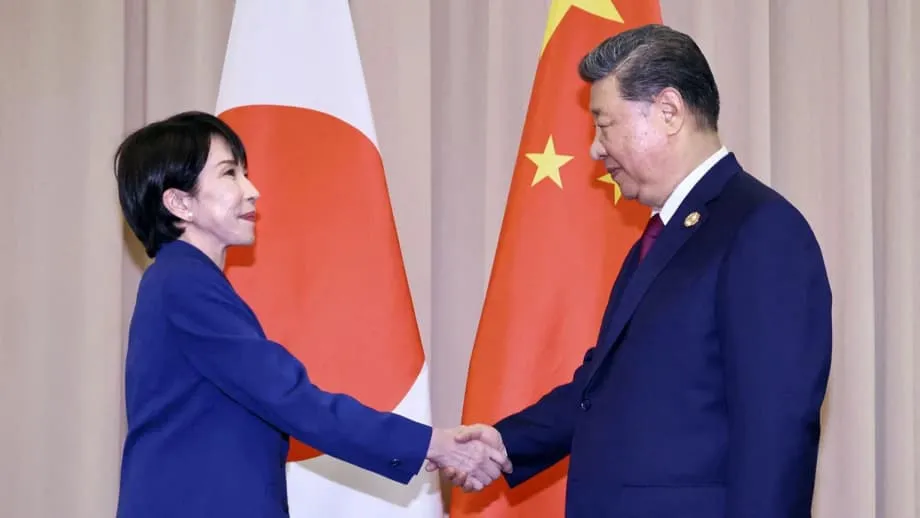
A Taiwan Warning Becomes a Diplomatic Confrontation
China has summoned Japan's ambassador in Beijing after Prime Minister Sanae Takaichi said a Taiwan crisis involving warships and the use of force could qualify as a survival threatening situation for Japan. As of November 14, 2025, her comments have triggered a week of diplomatic protests, demands for a retraction and increasingly sharp warnings about possible Japanese involvement in a conflict.
Contents
- A Taiwan Warning Becomes a Diplomatic Confrontation
- What Takaichi Told Parliament
- The Three Conditions in Japan's Security Law
- Beijing Demands a Retraction and Warns of Retaliation
- The Deleted Osaka Post Adds Another Dispute
- Why Taiwan Is Close to Japan's Security Concerns
- Takaichi's Position Fits a Wider Defense Shift
- What Taiwan, Japan and the United States Say
- Historical Grievances Complicate Recent Diplomacy
- A Crisis Could Begin Before an Invasion
- Trade Ties Raise the Cost of Escalation
- Diplomacy Faces Competing Demands
- Key Points
China's Vice Foreign Minister Sun Weidong described Takaichi's remarks as extremely wrong and dangerous. Beijing regards Taiwan as a sovereignty issue and condemned her comments as crude interference in its internal affairs. Tokyo rejected the demand to withdraw them, saying Japan's position had not changed and repeating its call for disputes across the Taiwan Strait to be resolved peacefully through dialogue.
The confrontation widened when China's consul general in Osaka, Xue Jian, posted language that Japanese officials interpreted as a threat against the prime minister. The message was later removed, but Japan demanded corrective action. A Chinese foreign ministry spokesperson then warned that Japanese military intervention in the Taiwan Strait would be treated as aggression and met with a decisive response.
Takaichi has defended her remarks as consistent with existing government policy while signaling that she will be more careful when discussing specific military contingencies. At the center of the dispute is a legal question with practical consequences: when could fighting around Taiwan become serious enough to allow Japan's Self Defense Forces to act?
What Takaichi Told Parliament
Takaichi made the remarks during a parliamentary session in Tokyo after an opposition lawmaker asked what developments around Taiwan might meet Japan's survival threatening threshold. She answered with a scenario involving military vessels and force, bringing a sensitive security question into public debate.
Prime Minister Sanae Takaichi described the hypothetical situation in these words:
If there are battleships and the use of force, it could constitute a survival threatening situation.
Takaichi said she was explaining the government's established position. Her choice of example nevertheless drew attention because the phrase she used has a specific meaning under Japan's 2015 security legislation. It concerns circumstances in which an attack against a close partner could threaten Japan's own survival and the rights of its citizens.
Beijing treated the remarks as a challenge to its claim over Taiwan. Tokyo framed them as an explanation of Japanese law. Those competing views help explain why a hypothetical answer in parliament produced a formal diplomatic confrontation.
The Three Conditions in Japan's Security Law
Japan's postwar constitution renounces the use of force to settle international disputes. The 2015 security legislation retained that principle while creating a narrow route for collective self defense. In simple terms, collective self defense means taking action in response to an attack on a partner when that attack also endangers Japan.
Japan's law sets three strict conditions for such action:
- The situation must threaten Japan's survival and the rights of its citizens.
- There must be no other appropriate way to remove the danger.
- Any use of force must be limited to the minimum necessary to protect Japan.
The Self Defense Forces, known as the SDF, could act in limited ways when those conditions are met. Possible activities include guarding sea lanes, providing missile defense, supporting operations led by the United States through logistics, or protecting ships and aircraft that are critical to Japan's security.
The threshold is deliberately high. A decision would require Cabinet approval and notification to parliament. Japan would have to assess the circumstances of a particular crisis, the danger to the country and the measures needed to address it.
Takaichi's comments therefore connect a potential Taiwan conflict to a legal process inside Japan. Her government says any decision on the use of force would remain limited by law and circumstance. Direct Japanese combat operations would continue to face legal constraints.
Beijing Demands a Retraction and Warns of Retaliation
Sun Weidong summoned Japan's ambassador to lodge a formal protest and demand that Takaichi withdraw her remarks. His response showed how seriously Beijing views any suggestion that Japan or another ally might help Taiwan during a conflict.
China's vice foreign minister, Sun Weidong, used the following description of the prime minister's comments while urging Japan to retract them:
extremely wrong and dangerous
Chinese officials said Japan would have to bear the consequences if it persisted. Beijing presented Tokyo's comments as interference in China's internal affairs, placing the dispute within its claim that Taiwan is part of China.
Chinese Foreign Ministry spokesperson Lin Jian went further, warning that military involvement by Japan would bring retaliation:
If Japan intervenes militarily in the Taiwan Strait situation, it would be an act of aggression and China would strike back decisively.
Tokyo rejected Beijing's demand for a retraction. Japan continued to state that it wanted a peaceful resolution through dialogue, leaving a wide gap between the two governments over both the meaning of Takaichi's remarks and the circumstances in which Japan might act.
The Deleted Osaka Post Adds Another Dispute
Xue Jian, China's consul general in Osaka, reshared a news item about Takaichi's comments and added a message that Japanese officials viewed as a direct threat. His intervention moved the dispute beyond legal language and formal diplomatic protests.
Referring to Japan's role, Consul General Xue Jian wrote:
The dirty head that sticks itself in must be cut off.
Japan protested, and the post was deleted. Tokyo also asked Beijing to address the message and avoid language that threatened Japanese leaders.
Japan's Chief Cabinet Secretary Minoru Kihara called the message unacceptable and said Tokyo had demanded corrective action. He described the post as:
highly inappropriate.
The United States' envoy in Tokyo also criticized the consul's threatening language. Taiwan criticized the tone of recent comments by Chinese officials and urged restraint.
The dispute has developed through several linked steps, although specific dates for each step were not given:
- During a parliamentary session, Takaichi said a Taiwan crisis involving battleships and force could meet Japan's survival threatening threshold.
- Xue posted his threatening message, prompting Japanese protests before the post was removed.
- Sun summoned Japan's ambassador, demanded a retraction and condemned Takaichi's remarks.
- Lin warned that Japanese military intervention would be treated as aggression and met with a decisive response.
- Tokyo maintained that its policy had not changed, while Takaichi signaled greater care in discussing specific contingencies.
Why Taiwan Is Close to Japan's Security Concerns
Yonaguni, the Japanese island closest to Taiwan, lies just over 100 kilometers from Taiwan's coast. That proximity makes a Taiwan crisis a nearby security problem for Japan, especially for its southwestern islands.
Japan depends on sea lanes carrying energy supplies and traded goods. Fighting around Taiwan could disrupt those routes, as well as air travel and shipping near Japan's southern islands. US forces stationed in Okinawa would likely play a central role in a regional crisis, drawing attention to Japanese bases and the support Japan might provide.
Japanese defense planners have long studied what a Taiwan contingency would mean for the country. Within the US Japan alliance, Japanese roles in logistics, surveillance and missile defense are central to planning. Logistics means moving the supplies, equipment and other resources that military operations need.
Taiwan is also a critical part of the global semiconductor supply chain. Semiconductors are the chips used in electronic products. Japan and Taiwan maintain close trading relationships in advanced technology and materials, making disruption around the island a concern for manufacturers as well as defense officials.
A major crisis would affect shipping, insurance, manufacturing and energy markets on which Japan relies. Those connections explain why Japanese leaders sometimes describe a Taiwan emergency as a possible Japanese emergency: the consequences could reach Japan through geography, trade and its alliance with the United States.
Takaichi's Position Fits a Wider Defense Shift
Takaichi has long been viewed as taking a tough position on China. Her approach developed during years under former prime minister Shinzo Abe, who pressed for a larger role for the Self Defense Forces and closer alignment with the United States.
Successive Japanese governments have increased defense budgets and invested in missile defense, weapons that can be launched from a distance, counterstrike capabilities and stronger protection for bases in the southwest. The cabinet describes these changes as a response to a more demanding security environment, including China's military buildup and North Korean launches.
Missile defense is intended to protect against incoming missiles. Weapons launched from a distance allow forces to operate farther from a target, while counterstrike capabilities concern the ability to strike back. Improving the resilience of bases means making them better able to withstand disruption and continue operating.
Takaichi's parliamentary answer sits within that broader effort to prepare Japan for regional dangers. At the same time, she has repeated that her position follows existing policy and has indicated that future discussion of specific scenarios will be more cautious.
What Taiwan, Japan and the United States Say
Taiwan rejects Beijing's sovereignty claim and says that only its people can decide the island's future. Its criticism of threatening Chinese statements reflects concern about the pressure surrounding the dispute.
China insists on its One China principle, which asserts that Taiwan is part of China. Most countries, including Japan and the United States, follow a One China policy. These diplomatic arrangements maintain formal relations with Beijing while allowing unofficial relations with Taipei.
The policies acknowledge Beijing's position without endorsing it. Japan says it does not recognize Taiwan as a state, opposes unilateral changes to the status quo and wants disputes across the Strait resolved peacefully. Unilateral changes are changes imposed by one side without agreement.
The United States maintains a One China policy and is legally committed to providing defensive arms to Taiwan. Washington has also signaled concern about coercion near the island. Its envoy's criticism of Xue's message added an American response to the diplomatic exchange.
Japan's call for dialogue and Taiwan's insistence that its people decide their future remain central to their positions. Beijing continues to view outside military involvement as a challenge to its sovereignty claim, which is why the discussion of Japan's security law has drawn such a forceful response.
Historical Grievances Complicate Recent Diplomacy
China and Japan bring a long history of conflict to this confrontation. The First and Second Sino Japanese Wars, Japan's occupation of parts of China and wartime atrocities remain painful parts of the relationship.
Diplomatic normalization in 1972 was followed by rapid growth in economic ties. Public opinion has often remained sour in both countries, however, and territorial disputes continue to cause friction. The Senkaku Islands, called the Diaoyu Islands by China, are a recurring source of tension in the East China Sea.
Chinese references to past conflict, along with warnings that Japan would suffer heavy losses if it intervened, draw on those historical memories as well as present security calculations. They give the Taiwan dispute an additional layer of sensitivity.
Both governments have nevertheless sought a more stable relationship. Their leaders met at a recent Asia Pacific summit and pledged to build more constructive ties. The confrontation over Takaichi's remarks shows how quickly that effort can be overshadowed when Taiwan becomes the focus.
A Crisis Could Begin Before an Invasion
Chinese forces have used gray zone tactics around Taiwan for years, including flights near the island's air defense identification zone and naval patrols in surrounding waters. Gray zone tactics are forms of pressure that operate below the level of open war.
A possible future test could involve a blockade, cyberattacks or a military show of force instead of a sudden invasion. A blockade restricts the movement of ships or goods. Such a crisis could threaten Japanese shipping, air routes and bases in the south even before fighting expanded.
If Japan's Cabinet judged that a crisis met the survival threatening threshold, it could authorize support missions. Possible tasks include guarding vessels, missile defense, search and rescue, intelligence gathering, surveillance and protection of critical infrastructure.
Japanese combat operations would remain constrained by law, while even logistical support could expose Japanese territory to retaliatory strikes. The nature of a mission would therefore matter alongside the initial decision about whether Japan faced a threat to its survival.
Tokyo and Washington have invested in hardened facilities, dispersing military assets across more locations and improving crisis communication channels with Beijing. These measures aim to keep forces operating and reduce the chance that a misunderstanding or mistaken judgment turns a confrontation into a wider conflict.
Trade Ties Raise the Cost of Escalation
Japan and China remain deeply connected through supply chains for electronics, automobiles and consumer goods. Tourism and education also sustain exchanges between people in the two countries, despite their security disagreements.
Companies face uncertainty over export controls and sanctions. Insurers and shipping businesses assess the danger of operating in the Taiwan Strait, a route that carries a large share of global commerce. A prolonged crisis could spread disruption through factories and markets across the region.
Japan's trade with Taiwan is valued in the tens of billions of dollars, with particularly close connections in semiconductors and materials. Trouble around Taiwan would therefore affect several overlapping commercial relationships, rather than trade between only two economies.
Tokyo has sought to reduce vulnerable points by diversifying supply chains and stockpiling critical goods. It has encouraged semiconductor investment at home and expanded consultation with allies and partners.
Japan still faces a difficult balance. Its geography and alliance commitments bring it close to a possible Taiwan conflict, while its economic ties and stated preference for dialogue give it strong reasons to avoid a clash.
Diplomacy Faces Competing Demands
Tokyo is asking Beijing to address the Osaka consul's deleted post and avoid threats against Japanese leaders. Beijing continues to demand that Takaichi retract her remarks and warns of consequences if Japan participates in operations related to Taiwan.
Further formal diplomatic exchanges are likely in the near term, alongside efforts to prevent the dispute from spilling into trade or consular operations. Takaichi has maintained that Japan's policy is unchanged and that any use of force would depend on the law and the circumstances.
Quiet communication could help the two governments reduce the risk of escalation. Japan wants peace across the Strait and a strong alliance with the United States. China treats an external role in Taiwan as a sovereignty issue.
Practical efforts to avoid incidents at sea or in the air and keep trade flowing will test both governments in the weeks ahead. Their immediate positions remain far apart: Beijing wants a retraction, while Tokyo is defending its legal position and demanding an end to threatening language.
Key Points
- China summoned Japan's ambassador after Sanae Takaichi said a Taiwan crisis involving battleships and force could qualify as a survival threatening situation.
- Japan's 2015 security legislation permits limited collective self defense under three strict conditions, with Cabinet approval and notification to parliament.
- Beijing demanded a retraction and warned that Japanese military intervention would be treated as aggression.
- China's consul general in Osaka deleted a threatening post after Japanese protests. Tokyo demanded corrective action.
- Japan says its policy has not changed and seeks a peaceful resolution through dialogue.
- Taiwan rejects Beijing's sovereignty claim and says its people must decide its future.
- Yonaguni lies just over 100 kilometers from Taiwan, while regional shipping, US forces in Okinawa and semiconductor trade connect the crisis to Japanese security.
- Historical grievances and territorial disputes complicate diplomacy, while extensive economic ties increase the costs of escalation.