From two suppliers to a global powerhouse
China had just two manufacturers supplying batteries for electric vehicles in 2005. By November 14, 2025, it produces more than three quarters of the lithium ion cells used worldwide and holds more than four fifths of global cell manufacturing capacity. Its rise has changed the costs, technology and supply chains behind electric cars.
Contents
- From two suppliers to a global powerhouse
- Why Beijing chose electric vehicles early
- How subsidies favoured domestic suppliers
- The milestones behind the expansion
- Why making more batteries made them cheaper
- The chemistry that helped China compete on price
- Charging speed becomes another contest
- Control stretches from materials to finished packs
- Global customers meet new trade barriers
- Export licences reach battery manufacturing technology
- Why catching up is expensive
- The next battery contest and its effects on buyers
- Key Points
That position grew from a long campaign combining public investment, incentives for buyers and intense competition among dozens of private companies and firms with state links. Other countries invented the technology and led its first markets. China made a national commitment to produce it faster, cheaper and in much larger quantities.
The 2008 Beijing Olympics provided an early public demonstration, with city buses running on lithium ion battery packs. Behind that showcase, government programmes were creating demand, factories were accumulating experience and suppliers were building the industrial network needed to support mass production.
Two companies now define much of the industry: Contemporary Amperex Technology Limited, known as CATL, and BYD. CATL reached the top of global supplier rankings by 2017. BYD combined battery production and vehicle manufacturing within the same business. Both improved manufacturing techniques, developed close relationships with materials and equipment suppliers, and learned to move quickly from laboratory ideas to commercial production.
The resulting advantage extends beyond any single battery design. China has a manufacturing system that can expand quickly, maintain consistent quality and reduce costs year after year. Its lead rests on policy, production experience, technical choices and control over important stages of the supply chain.
Why Beijing chose electric vehicles early
Chinese policymakers concluded as early as 2001 that moving directly toward battery electric cars offered a better opportunity than trying to catch up with established manufacturers of internal combustion vehicles. National plans included new energy vehicles and rechargeable batteries, giving the industry a place in the country's development strategy.
After the global financial crisis, stimulus spending and municipal projects accelerated trials involving public transport and taxis. The Ten Cities, Thousand Vehicles programme helped establish demand in important urban clusters. Local governments also worked with companies such as BYD to electrify buses and other fleets.
Consumer subsidies and tax breaks began in 2009 and continued for more than a decade. Public money supported charging networks, while large cities made vehicle registration plates easier to obtain for electric car buyers. People buying gasoline vehicles could still face long waits for plates, giving electric models another practical advantage.
These policies created a dependable flow of orders. Manufacturers could build factories, train workers and improve their processes while serving customers whose purchases were supported by public spending. Government demand for buses and work vehicles added another source of business alongside private car sales.
Tesla later chose Shanghai for its first factory outside the United States. The plant became a major export hub and a training ground for suppliers, including battery pack manufacturers and component companies. Its role added to an industrial base that Chinese policy had already helped establish.
How subsidies favoured domestic suppliers
Beijing also used subsidy eligibility to steer automakers toward Chinese batteries. Rules introduced in 2015 and tightened in 2016 excluded vehicles using batteries from foreign brands that had not received approval. Automakers seeking incentives had to buy cells from suppliers on a domestic white list.
The arrangement directed business toward a small group of Chinese manufacturers and pushed them to expand quickly. The policy eventually relaxed, but local producers had already accumulated manufacturing experience and developed cost advantages that helped them compete internationally.
Public support for electric vehicles and batteries exceeded $200 billion over the past decade. Subsidies carried technical conditions covering driving range, energy density and safety. Energy density means how much energy a battery can store relative to its weight or size, an important factor in how far a vehicle can travel.
Production mandates required automakers to build and sell electric models to earn credits. During the critical period of factory expansion, local content rules kept most of the benefits within China. Together, these measures turned a protected domestic market into a base for global growth.
The milestones behind the expansion
China's battery leadership developed over more than two decades. Early planning was followed by public demonstrations, purchasing incentives, restrictions favouring domestic suppliers and the emergence of companies able to compete worldwide.
- 2001: Policymakers identified battery electric vehicles as an opportunity to move ahead of established combustion vehicle manufacturers and included new energy vehicles and rechargeable batteries in national plans.
- 2005: China had two manufacturers supplying batteries for electric vehicles.
- 2008: Buses using lithium ion packs operated during the Beijing Olympics.
- 2009: Consumer subsidies and tax breaks began, continuing for more than a decade.
- 2015 and 2016: Subsidy rules introduced and then tightened restrictions on vehicles using batteries from unapproved foreign brands.
- 2017: CATL reached the top of global battery supplier rankings.
- Mid 2025: China introduced export licensing requirements covering several core technologies for LFP battery manufacturing and lithium refining.
Each stage helped the next. Public purchases gave factories work, buyer incentives expanded the market, and supplier restrictions concentrated orders among domestic producers. Larger production volumes then gave manufacturers more opportunities to improve quality and reduce costs.
Why making more batteries made them cheaper
Battery manufacturing becomes cheaper through repeated practice as well as scientific progress. Data from multiple markets show that each doubling of a supplier's cumulative output reduces unit costs by roughly 9 percent. Cumulative output is the total number of batteries made over time, so the benefit comes from accumulated experience.
Learning through production accounted for an estimated 40 percent of the decline in battery prices over years of rapid expansion. That contribution exceeded the gains attributed to general industry advances or simply operating at a larger scale.
Consumer subsidies and fleet purchases strengthened this process. More sales meant more production, which gave manufacturers more experience. Lower costs then helped support further demand. The effect linked government support to improvements inside factories, rather than stopping at the initial purchase incentive.
China invested in the people needed to run those factories. Universities developed specialised courses in electrochemistry and materials science, and the country now trains large groups of battery engineers and technicians each year. Companies can staff large plants quickly and operate multiple shifts with experienced teams.
A broad supplier network developed alongside battery makers. It includes manufacturers of separators, electrolytes and production equipment. Separators keep a battery's electrodes apart, while electrolytes allow ions to move inside the cell. Close access to these suppliers shortened development cycles and improved production yields, meaning a larger share of manufactured cells met quality requirements.
The chemistry that helped China compete on price
Chinese producers concentrated on lithium iron phosphate batteries, commonly called LFP, for buses and cars aimed at the mass market. These cells use inexpensive iron and phosphate, avoid cobalt and much of the nickel supply concentrated outside China, and have strong safety performance.
Early LFP batteries stored less energy for their size or weight, limiting vehicle range. Improvements in materials, packaging and production raised performance while preserving their cost advantage. That combination suited vehicles designed for large numbers of buyers rather than mainly premium customers.
Nickel manganese cobalt batteries, or NMC, continue to power many luxury vehicles and models offering longer driving ranges. Japanese and South Korean manufacturers developed strong portfolios in that chemistry. For manufacturers seeking high sales volumes, however, LFP became the default choice.
BYD's blade shaped cell helped address the packaging challenge. Its design fits large cells densely into a battery pack, saving space and weight. Other changes removed intermediate modules, the smaller groups of cells traditionally assembled before being placed into a pack.
Manufacturers developed cell to pack and cell to chassis designs, including arrangements that place cells directly into the vehicle structure. Removing parts simplifies assembly and reduces costs. These designs also help automakers make better use of the space occupied by the battery.
Charging speed becomes another contest
CATL and its rivals are also competing to shorten charging times without sacrificing battery life. The latest generation of CATL's Shenxing battery advertises the ability to add hundreds of kilometres of driving range in a few minutes when connected to a charger with high power. Competitors report similar advances.
Improvements involve anode materials, electrolyte formulations and thermal control. The anode is one of a cell's electrodes, while thermal control manages temperature during use and charging. Together, these changes are making LFP batteries more versatile, including in cold climates.
Chinese manufacturers have widened their lead over Western competitors in production methods and the speed at which new designs reach the market. Chemistry, packaging and factory execution work together: a promising cell design becomes commercially useful when a company can manufacture it reliably at large volumes.
Control stretches from materials to finished packs
China's position extends upstream to the materials used inside batteries. It processes around seven tenths of the lithium entering batteries, according to many estimates, and holds more than nine tenths of graphite processing capacity for anodes. It also has an overwhelming share of LFP production capacity.
More than four fifths of global cell manufacturing capacity is located in China. Much of the mining of raw minerals takes place abroad, but Chinese companies finance and operate connections running from extraction through refining, component production and final battery pack assembly.
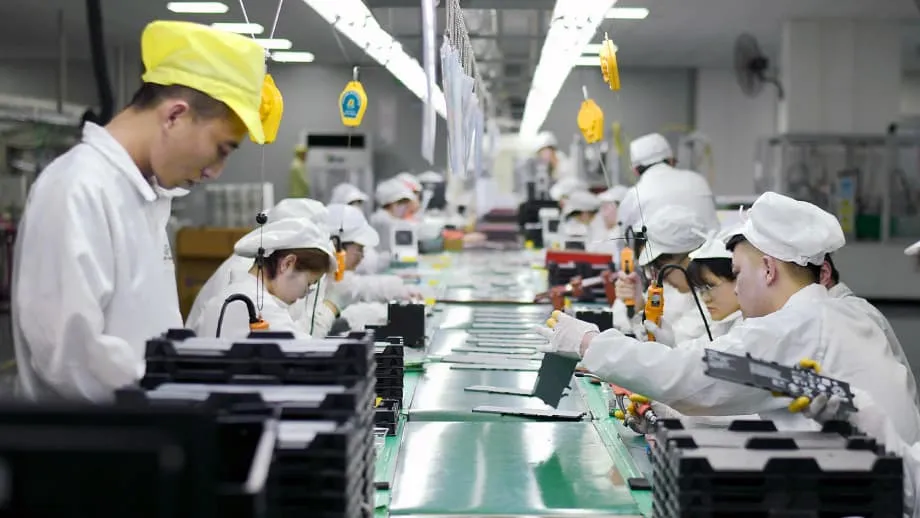
This network supports rapid production and tight control of costs. Flagship plants can produce a cell in about a second and assemble a battery pack in minutes. High factory utilisation spreads fixed expenses across a large output, reducing the share of those expenses assigned to each battery.
BYD brings mines, materials, cells and vehicles together within one group. CATL supplies domestic brands and international automakers. Bringing several production stages under common ownership, often called vertical integration, can reduce transport costs and delays.
The same industrial reach gives companies flexibility when demand changes. Manufacturers can shift output between batteries for vehicles and stationary storage, where batteries remain in one place to store electricity. That flexibility helps them respond to fluctuations in automotive demand.
Global customers meet new trade barriers
Chinese battery makers now supply or partner with major automakers around the world. CATL packs are used in models from Tesla, BMW, Mercedes Benz, Volkswagen and numerous Chinese brands. BYD mainly supplies its own vehicles while expanding its battery business serving other manufacturers.
Exports of Chinese electric cars have surged as competition at home puts pressure on prices. Europe has taken a growing share, and the United Kingdom has become an important entry point because its market remains relatively open.
The United States has raised tariffs on batteries, materials and some vehicles. It has also established rules limiting Chinese content in vehicles qualifying for tax credits. The European Union has taken trade action over subsidies and encouraged Chinese companies to build factories locally to serve European customers.
Chinese manufacturers are investing in plants across several European countries to reduce risk, comply with local rules and move closer to customers. Automakers outside China are also seeking more varied sources of materials and increasing efforts to recycle metals.
Trade measures are changing where companies build factories and how they organise partnerships. A battery's price now sits alongside questions about where its materials came from, where it was manufactured and whether a vehicle using it qualifies for financial incentives.
Export licences reach battery manufacturing technology
Beijing introduced new export licensing rules in mid 2025 covering several core technologies for manufacturing LFP batteries and refining lithium. Transfers of those technologies abroad now require government approval. The move followed earlier restrictions involving rare earth magnets.
The licensing requirements add uncertainty for foreign projects planning to use Chinese equipment or manufacturing processes. Ford's planned Michigan factory, designed to produce LFP batteries using Chinese design expertise, is a prominent example facing new questions.
The scope of the challenge extends beyond buying finished cells. An overseas factory may also need access to the designs, equipment and processes that make large scale production possible. Government approval for technology transfers has therefore become another factor in investment decisions.
Why catching up is expensive
The United States, Europe, Japan and South Korea are investing in local battery capacity, but much of their output in the near term still depends on Asian equipment, materials and engineering talent. Matching China's position in existing lithium ion technologies would require very large, sustained spending.
China's cost base, closely connected suppliers and accumulated production experience are difficult to reproduce quickly. Building a factory is one step. Running it efficiently, maintaining quality and securing competitively priced inputs are continuing tasks.
South Korean manufacturers that concentrated on cells rich in nickel for premium cars are adding LFP production for models aimed at volume buyers. Chinese plants still retain advantages in production yields, scale and material costs. Factories operated by South Korean companies outside China have also struggled with low utilisation during periods of slower electric vehicle sales.
Western automakers are forming joint ventures with battery specialists, placing battery assembly near car factories, and signing contracts lasting many years for lithium and nickel. These measures can narrow the gap, although Chinese manufacturers retain a substantial advantage from accumulated experience.
The next battery contest and its effects on buyers
New chemistries could create another opening for competitors. Solid state designs using lithium metal anodes promise more energy per kilogram, improved safety and fast charging. Sodium ion batteries offer the prospect of cheaper storage and less dependence on scarce minerals.
Chinese, American, European and Japanese companies have working prototypes and small production lines. Scaling up remains difficult because new chemistries often require different materials, new manufacturing equipment and revised safety procedures. These changes increase costs and extend the effort needed to achieve reliable mass production.
Research support, funding for pilot and demonstration plants, and incentives for the first commercial production lines can help bring laboratory developments into factories. Public purchases for grid storage, buses or defence systems can provide early demand. Many analysts favour these measures over attempts to match China's factory expansion in established lithium ion technologies.
China will also compete in these emerging technologies. Moving quickly from a scientific idea to dependable production will remain central to that competition.
Consumers are already seeing lower battery prices and more affordable electric cars in many markets, particularly vehicles using LFP. Safety has improved, charging is becoming faster, and pack designs that remove modules or integrate cells into the vehicle floor can free interior space.
More brands now use Chinese batteries, while newer vehicle manufacturers are pushing established automakers to reduce costs and move faster. Many companies are designing vehicle platforms around cell to pack or cell to body arrangements, building closer ties with materials suppliers and recyclers to reduce exposure to price shocks, and buying or investing in battery businesses to secure supplies and protect intellectual property.
Drivers can expect more choice at lower prices, although availability varies by region. Trade rules, export controls and industrial policy will influence which companies work together and which vehicles reach particular markets.
Key Points
- China produces more than three quarters of the world's lithium ion cells and holds more than four fifths of global cell manufacturing capacity.
- National planning, subsidies, fleet purchases and temporary supplier restrictions helped build its domestic battery industry.
- Each doubling of cumulative production reduces unit costs by roughly 9 percent, with learning through production accounting for an estimated 40 percent of battery price declines.
- LFP chemistry, BYD's blade shaped cells and simpler pack designs helped reduce costs and improve performance.
- China processes around seven tenths of lithium used in batteries and holds more than nine tenths of graphite processing capacity for anodes.
- CATL and BYD have become central suppliers as tariffs, local factory investment and export licensing reshape international expansion.
- Competitors are investing in existing lithium ion production and emerging chemistries, while consumers benefit from cheaper batteries and faster charging.