Akihabara buyers face limits as deliveries shrink
Computer shops in Tokyo's Akihabara electronics district are restricting purchases of SSDs, HDDs and RAM as the global rush to build artificial intelligence infrastructure draws memory and storage toward data centers. As of November 9, 2025, multiple retailers are reporting reduced deliveries, rapidly shrinking inventories and frequent changes to prices.
Contents
- Akihabara buyers face limits as deliveries shrink
- Why AI systems need so much memory and storage
- DDR4 users face a difficult upgrade choice
- Memory prices show the scale of the squeeze
- CPU shortages meet the Windows 11 upgrade wave
- Optical drives return to shopping lists
- Factories and packaging cannot expand overnight
- Electricity adds another limit to AI expansion
- Japan's AI demand grows alongside worker shortages
- New memory research targets speed and lower power use
- How buyers can adjust without abandoning a build
- The environmental cost extends beyond store shelves
- Supply relief is expected in stages
- Key Points
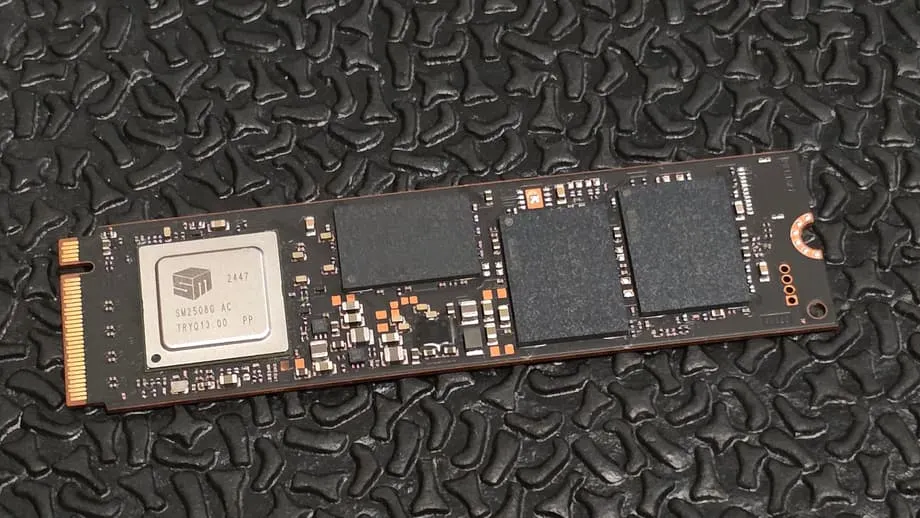
Some shops allow only a handful of items per group, with tighter limits on storage drives and memory kits. Buying a complete PC can unlock higher allowances at certain stores, although staff warn that supplies remain uncertain. The restrictions are intended to spread limited stock among more customers.
Distributors have paused shipments of particular models and capacities. Retailers have not received a clear timetable for normal deliveries to resume. Store managers describe a market in constant motion: price lists need frequent revision, and popular configurations can disappear from shelves for stretches of time.
The pressure reaches beyond Japan's best known district for computer shopping. AI operators need enormous quantities of memory and storage, while manufacturers are shifting production toward newer and more profitable technologies. Some memory contract prices have already doubled, and consumers are encountering similarly steep increases on parts used for gaming, creative work and ordinary PC upgrades.
Older DDR4 memory is especially exposed as manufacturers move production toward DDR5 and high bandwidth memory, or HBM, used alongside AI processors. Some companies have restarted or extended DDR4 production, but those volumes remain too small to relieve the retail squeeze. Buyers trying to keep an older computer running therefore face pressure from both rising demand and shrinking production of the parts their machines need.
Why AI systems need so much memory and storage
AI training and everyday use depend on more than powerful processors. Large language model sessions run on groups of graphics processing units, known as GPUs, or specialized accelerators. Those chips need memory to hold information while they work and storage to keep the much larger collections of data they use.
HBM is stacked memory positioned very close to a processor. Its chief advantage is bandwidth, the amount of data it can deliver in a given time. Feeding data quickly helps prevent an expensive AI chip from sitting idle while it waits for information.
Conventional DRAM, the working memory also used in PCs, serves another need: capacity. AI systems use it to cache model parameters and intermediate results. Parameters are the numerical settings a model learns during training; intermediate results are the calculations it produces along the way. Demand for HBM and conventional DRAM therefore rises together.
Training a modern model involves keeping thousands of processors supplied with data. Datasets can span petabytes, so operators install racks of SSDs for speed and HDDs for lower costs per terabyte. SSDs store information electronically, while HDDs use spinning disks. Both have a place in large AI installations.
Cloud companies increasing capital spending on AI pull on the entire supply chain, including silicon wafers, chip substrates, DRAM, NAND flash, storage controllers and the racks holding the equipment. NAND is the memory used to store data in SSDs. Substrates provide the base and connections beneath chips, while controllers manage a drive's operation.
The largest cloud operators place orders with a scale and urgency that often give them priority over retail distribution. Enterprise customers are also absorbing storage for training and inference, the process of using a trained model to produce an answer. Manufacturers rebalance allocations toward those customers, leaving consumer models vulnerable to shortages and price increases.
DDR4 users face a difficult upgrade choice
Memory manufacturers are prioritizing DDR5 for newer computer platforms and HBM for AI accelerators. DDR4 and DDR5 are successive generations of conventional memory, and older systems designed for DDR4 depend on continued supplies of that generation.
Companies making products where keeping costs low matters, or supporting large numbers of existing machines, are stockpiling DDR4. That buying adds to the pressure created by the production shift. Consumers looking to extend the life of an older PC are competing for a smaller pool of memory.
Some manufacturers have restarted DDR4 lines or extended production runs to meet this demand. Those measures are small compared with the growth in AI and data center construction. More wafers are going toward DDR5 and HBM, leaving fewer available for DDR4.
A wafer is the thin disk of semiconductor material on which many chips are manufactured. Redirecting wafer capacity changes which products can reach the market. For a consumer, that factory decision can appear months later as a missing memory kit or a higher upgrade bill.
Memory prices show the scale of the squeeze
Recent retail snapshots put a DDR5 kit with 32 GB of memory at about $220, compared with roughly $104 earlier. A pack containing two 16 GB DDR4 modules that cost about $52 in late spring is now around $115 in several listings. Both examples represent increases of more than double.
Those figures also show how sharply an ordinary purchase can change. The DDR5 example adds about $116 to the cost of the same memory capacity, while the DDR4 example adds about $63. Buyers are seeing kits cost twice as much as they did only months earlier.
Retail price trackers describe steady increases beginning in early autumn and a steeper climb in winter. Market researchers connect the rise to AI data center construction and the transfer of production capacity toward HBM and server memory. General purpose DRAM for PCs is receiving fewer wafers and less production time.
Memory markets have long moved between periods of excess supply and shortage. This squeeze is complicated by the size of AI orders and the difficulty of expanding advanced packaging. Storage follows a similar pattern, particularly popular SSD capacities used for gaming and content creation. Large orders for SSDs and HDDs can leave consumer products unavailable or more expensive while suppliers adjust shipments.
CPU shortages meet the Windows 11 upgrade wave
Selected CPU segments are also under pressure, particularly chips made using older manufacturing processes that remain widely used. Intel has flagged strong demand for server and PC chips manufactured on its Intel 7 and Intel 10 processes while it prioritizes newer designs for future launches.
Businesses refreshing their computer fleets for Windows 11 and companies adding AI workloads in data centers are keeping orders high. Supplies of the substrates beneath those chips are tight as well. A factory can have wafer capacity available and still face an output limit if it lacks the materials needed to package finished chips.
The end of Windows 10 support has prompted home users and small offices to consider replacing hardware earlier than planned. That adds demand for CPUs in the middle of the market, motherboards and RAM, including the very product tiers already facing supply pressure.
Some Akihabara retailers give customers higher purchase limits when they buy parts for a full system. The policy helps direct scarce components into working PCs rather than stockpiles. It also allows shops to balance rapidly selling memory against items that move more slowly, such as cases and power supplies.
Purchase limits can make daily stock management more orderly, but the number of parts available still depends on distributor deliveries. A shop can spread its inventory among customers; it cannot manufacture the missing supply.
Optical drives return to shopping lists
Japan's upgrade wave has brought an unexpected increase in demand for optical drives. Users moving to Windows 11 want to access existing disc collections or burn backups, putting renewed pressure on equipment that had fallen out of favor.
Internal Blu ray drives are difficult to find in some shops. Basic DVD RW drives, which can read and write DVDs, are also selling faster than usual. These shortages add another complication for people replacing a computer while retaining access to older media.
Many modern PC cases no longer include the 5.25 inch bays used for internal optical drives. External drives offer a common workaround, although those products have experienced spot shortages too. A replacement system may therefore need both suitable components and a different way to handle a user's disc library.
Factories and packaging cannot expand overnight
Semiconductor capacity takes years and substantial investment to add. A new fabrication plant can require three to five years to reach full output, moving through land selection, permits, equipment installation and qualification. Qualification means checking that a production process can reliably make chips to the required standard.
Retooling an existing line or adding space also takes time. Even a manufacturer willing to increase DDR4 output immediately cannot quickly create all the equipment and production capacity needed to flood the market.
Industry analysis indicates that an increase in demand of about 20 percent can push the supply balance into shortage. AI demand is growing well beyond that level in several parts of the chain, particularly memory and advanced packaging. If demand for AI GPUs doubles within a short period, suppliers across the chain must expand together.
Advanced packaging connects chiplets, stacks memory and carries signals at high speed. Chiplets are smaller pieces of a processor assembled into a larger package. These methods depend on specialized equipment and materials that are themselves in short supply.
Substrate suppliers and providers of chip on wafer on substrate processes face pressure to expand at a pace that is difficult to achieve quickly. That packaging method combines chips and supporting layers into a connected assembly. Substrate plants and advanced packaging lines face timelines extending across several years, much like chip factories.
Manufacturers and buyers are responding by moving from keeping only the inventory needed immediately toward holding reserves against disruption. Longer purchase agreements can secure components and production slots. They also commit a larger share of future output to the biggest customers, leaving retail channels less flexibility when demand jumps.
Electricity adds another limit to AI expansion
Data center construction depends on more than having enough chips. Operators also need electricity and grid connections capable of supporting dense installations of processors, memory and storage. Funded projects can still be delayed while power infrastructure catches up.
Studies point to a shortfall of 15 to 25 gigawatts of data center capacity in Asia by the end of the decade. The race for electricity supplies and grid upgrades therefore runs alongside the race for semiconductor capacity.
Power constraints and component constraints act at different stages of the same expansion. A data center needs equipment before it can begin operating, and enough reliable electricity to keep that equipment running. Increasing chip output alone leaves the other requirements in place.
Japan's AI demand grows alongside worker shortages
Japan is adopting AI across healthcare, manufacturing, mobility and finance. Its AI market was valued at nearly $12 billion in 2024 and could exceed $120 billion by 2032 if current trends continue. Those figures point to a market roughly ten times as large over that period.
The expansion draws on Japan's strengths in robotics and precision electronics. It also increases demand for domestic computing capacity, networking equipment, memory and storage, adding to the same categories of hardware that consumers are finding harder to buy.
Japan's aging and shrinking population gives businesses another reason to invest in automation. Construction, logistics, agriculture and eldercare are adopting AI, robotics and cloud services to maintain operations with fewer workers. Those systems require computing resources even when their purpose is to address a shortage of people.
A lack of skilled engineers and technicians in AI and semiconductor production complicates expansion. Workforce shortages can raise costs and delay projects. Companies and policymakers are pursuing training programs and partnerships to build the necessary skills.
Businesses are also using more varied supply chains, bringing production home where practical and sourcing from friendly countries to reduce exposure to disruption. These approaches seek more dependable access to equipment as demand grows.
New memory research targets speed and lower power use
A collaboration reported in Japan aims to develop stacked DRAM with performance in the HBM class while reducing energy use. The effort reflects the search for memory that can move large amounts of data without adding as much pressure to data center power budgets.
Memory efficiency matters because processors depend on a constant flow of information. Faster delivery can help keep computing equipment productive, while lower energy use per unit of work can reduce the electricity needed to support it.
Even smaller research projects show the range of work under way to meet AI demand. The objective extends beyond producing more chips: memory and packaging must also handle growing bandwidth needs within the power limits faced by data centers.
How buyers can adjust without abandoning a build
PC building remains possible during shortages, but buyers may need to revise parts lists and compare complete system costs. A cheap upgrade on paper can become expensive when the required memory is scarce, particularly for an older DDR4 machine.
Store assembled systems or prebuilt PCs deserve consideration where buying a full computer unlocks higher purchase limits. The useful comparison is the total price of the working system against the cost of buying its components separately.
- Buy only the parts needed for the next build. Hoarding adds to shortages and ties up money.
- Compare prebuilt and store assembled PCs with separate components, including any purchase limits attached to a full build.
- Price a DDR5 platform against a DDR4 upgrade. Once expensive DDR4 memory is included, a new CPU and motherboard using DDR5 can sometimes cost less than a large upgrade to an older system.
- Check which capacities offer better value. Configurations using two modules of 16 GB, or kits totaling 32 GB, can compare favorably with a single large module, depending on stock.
- Consider another SSD brand or a similar capacity. A SATA SSD can serve as an alternative when a preferred NVMe model is scarce, particularly for work requiring substantial storage.
- Reuse suitable cases, good quality power supplies and coolers to preserve more of the budget for scarce components.
- Follow reputable retailers and stock alerts. Avoid memory from uncertain sales channels where its origin or warranty is unclear.
- For an older DDR4 PC, consider a smaller increase, such as adding 16 GB instead of 32 GB, to limit spending while supplies remain tight.
- Back up important data before replacing drives. Shortages can complicate returns and exchanges, making preparation more valuable.
NVMe and SATA are different ways for storage drives to communicate with a computer. Flexibility over models and interfaces can help complete a purchase, provided the selected drive suits the system and the intended workload.
The environmental cost extends beyond store shelves
Data centers already consume hundreds of terawatt hours of electricity each year. AI workloads increase that demand through dense racks of GPUs, memory and storage. A terawatt hour is a measure of electrical energy used over time.
Cooling these systems also requires large amounts of water. Electricity supplies in many regions still depend heavily on fossil fuels, so successive waves of AI deployment add carbon emissions unless operators bring in clean power alongside the new equipment.
Training a model at the frontier of AI capability can consume enough electricity to power more than 100 homes in the United States for a year. Training is only part of the lifetime demand: rapidly growing numbers of daily inference queries create continuing electricity use.
Hardware production carries its own carbon costs, including mining, chemicals and complex fabrication. More efficient memory and packaging therefore matter both for computing performance and for reducing the energy required per unit of work.
Supply relief is expected in stages
Near term conditions point to continued tight consumer supplies of SSDs, HDDs and DRAM in Japan. AI demand is likely to keep a substantial share of memory and storage allocations directed toward data centers, while packaging and substrate constraints take time to ease.
DDR4 availability is expected to remain uneven, with people extending the life of older systems facing higher prices through much of 2025. Restarts and extended production runs offer some support, but they remain limited against the demand pulling manufacturers toward newer memory.
New packaging lines, substrate plants and memory capacity are increasing production. Their effect is expected to arrive over several quarters rather than weeks. Retail buyers are likely to encounter periodic restocks, bundles linked to full builds and changing prices as shipments reach shops.
Akihabara's purchase caps are a practical response to that uneven flow. Buyers willing to compare platforms, substitute brands and reuse suitable hardware have more options for finishing a PC without paying excessive prices for a particular scarce part.
Key Points
- As of November 9, 2025, Akihabara retailers are limiting SSD, HDD and RAM purchases amid reduced deliveries and falling inventories.
- AI infrastructure needs HBM, conventional DRAM and large quantities of SSDs and HDDs, increasing pressure across the supply chain.
- Retail examples put a 32 GB DDR5 kit at about $220 instead of $104, and two 16 GB DDR4 modules at about $115 instead of $52.
- DDR4 supplies are shrinking as manufacturers prioritize DDR5 and HBM, despite some extended or restarted production.
- Selected CPUs, substrates and optical drives are also under pressure as AI demand meets Windows 11 upgrades.
- New chip factories can take three to five years to reach full output, while packaging, workforce and electricity constraints add delays.
- Japan's AI market was valued near $12 billion in 2024 and could exceed $120 billion by 2032 if current trends continue.
- Buyers can compare full systems, reconsider platforms and capacities, reuse suitable components and back up data before replacing drives.
- New capacity is expected to help over several quarters, while AI expansion continues to increase electricity, water and manufacturing demands.