University visits become part of the family holiday
A 90 minute guided tour at the University of Hong Kong (HKU) costs 140 Hong Kong dollars. At the National University of Singapore (NUS), more than 70 student docents have been trained to guide visitors. These arrangements reflect a growing challenge for Asian universities: families are coming to see campuses as tourist attractions and possible destinations for their children's education.
Contents
- University visits become part of the family holiday
- Why families are looking closer to home
- Returning graduates reveal a regional shift
- Social media brings campus life into view
- Universities and surrounding businesses gain visitors
- Tour groups put pressure on everyday campus services
- Guided tours and registration organize the crowds
- Safety concerns and visa policy influence choices
- Keeping campuses accessible without interrupting study
- What to Know
From Hong Kong to Singapore and Seoul, university visits are becoming part of holiday itineraries. Many visitors are neither applicants nor alumni. They want photographs, a glimpse of student life and a chance to imagine what studying there might feel like.
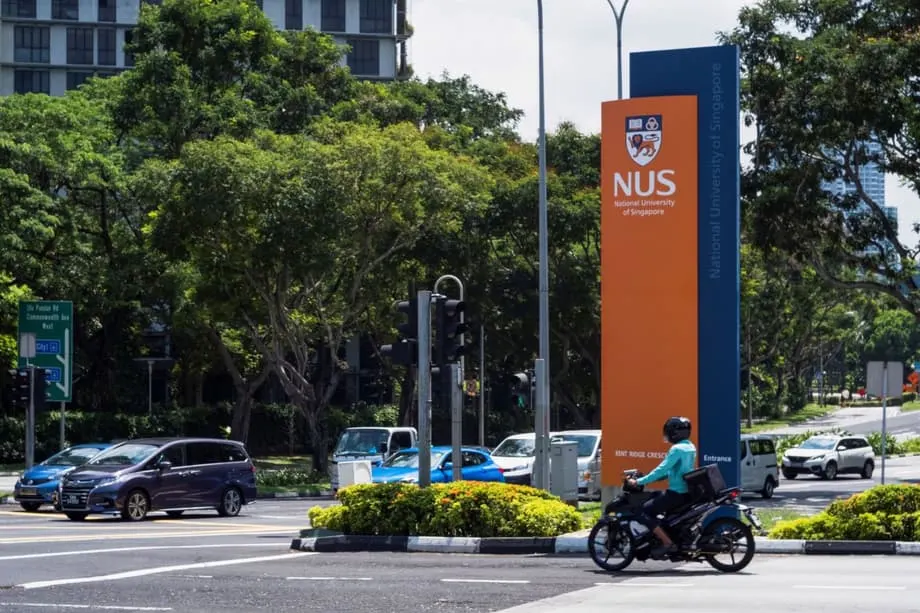
At UTown, the green heart of NUS, student guides lead groups through breezeways and lawns, while visitors take photographs beside libraries and laboratories. The activities resemble a traditional campus tour, but they also fit into a wider city break.
Travelers have long walked through the university grounds at Oxford and Cambridge, visited Harvard Yard or explored Yale's college town. That tradition is spreading east. Groups from mainland China began appearing across campuses in Asian hubs in early 2024, against a changing pattern of international study.
China remained the largest source of students studying overseas, with more than one million abroad in 2023, according to UNESCO. Its data indicate that the number of Chinese students studying in the United States fell by about 20 percent between 2018 and 2023. Over the period beginning in 2018, mainland Chinese enrolments grew by 17 percent in South Korea, 82 percent in Hong Kong and 273 percent in Malaysia.
Singapore has also become a major attraction. Its large ethnic Chinese community and use of English as an official language appeal to families considering education abroad. Local estimates suggest that students from China account for nearly half of the city's international students.
Why families are looking closer to home
Chinese families are weighing several practical concerns together. Flights within Asia are shorter, proximity and cost matter, and a campus visit can be combined with sightseeing. Language and cultural familiarity can make an unfamiliar city easier to navigate.
Parents also consider safety and political stability when choosing where their children might travel or study. The rising global standing of Asian universities, alongside stronger connections with industries ranging from technology to finance, gives families confidence that studying closer to home can lead to attractive careers.
Gerard Postiglione, an emeritus professor at HKU, describes the visits as both cultural experiences and expressions of educational ambition:
For these families, visits to a university with their children is not just a tourist event. It is a cultural event, akin to visiting a museum but also aspirational.
A father attending a large education exhibition in Beijing in 2025 explained why his son hoped to pursue postgraduate studies at NUS after completing an undergraduate degree in Australia. His priorities were the university's academic standards and employment opportunities:
We value the school's academic quality and job prospects after graduation. We never considered Europe or the US.
A university visit can sit somewhere between a museum outing and a rite of passage. Parents see a chance to connect a holiday with their child's future, while children encounter a place that may previously have existed only in conversations about exams and careers.
Returning graduates reveal a regional shift
The Chinese Service Center for Scholarly Exchange, an agency under China's Ministry of Education, describes a related change in a recent blue paper. A blue paper is a report examining a subject and its development. Here, the figures concern Chinese graduates returning home after studying overseas.
Between 2020 and 2023, the share of returnees who had studied in Asia rose from roughly 22 percent to more than 31 percent. That is an increase of about nine percentage points, meaning that Asia accounted for a larger share of the returning graduate population.
Doctoral graduates show an even stronger regional pattern. In 2023, just over half of Chinese PhD returnees had studied in Asia, while the share returning from North America declined. Nearly one third of returning graduates with master's degrees had studied in Asia.
Families considering future study can see more established routes within the region. A doctorate is an advanced research degree, while a master's degree usually follows an undergraduate qualification. Both feature in the growing share of returnees educated in Asia.
The changes described in the student and graduate figures span several years:
- 2018 to 2023: UNESCO data indicate a fall of about 20 percent in the number of Chinese students studying in the United States.
- Since 2018: Mainland Chinese enrolments increased by 17 percent in South Korea, 82 percent in Hong Kong and 273 percent in Malaysia.
- 2020 to 2023: The share of Chinese returnees educated in Asia rose from roughly 22 percent to more than 31 percent.
- 2023: Just over half of returning Chinese PhD graduates had studied in Asia, as had nearly one third of returning master's graduates.
- Early 2024: Groups from mainland China began appearing at campuses across Asian hubs as part of their travels.
Social media brings campus life into view
HKU's heritage buildings, which echo British colonial architecture, circulate widely on Xiaohongshu, a Chinese platform combining travel, lifestyle content and short reviews. Images can turn a university landmark into a destination that families recognize before arriving.
In Seoul, Ewha Womans University's leafy boulevards and brick facades appear alongside nearby shopping streets and cafes associated with Korean youth culture. Visitors are drawn to the neighborhood and atmosphere as well as the university itself.
Research on student travel in Asia helps explain the appeal. Surveys involving thousands of university students across the region suggest that exposure to information, particularly through social channels, increases familiarity with destinations. Greater familiarity, in turn, increases the intention to visit.
Jung Jisun, an associate professor at HKU who studies tourism and education, has followed the trend and the disruption it can bring into academic spaces. She describes visitors seeking a close look at ordinary lessons:
Tourists even peek into classrooms to see how university students take their courses.
Educational tourism covers formal study tours and summer programs as well as informal campus visits. A family might spend an afternoon in a visitor center, look at a library exhibition and eat in a student canteen. Children gain a more tangible picture of university life, while parents turn leisure time into a learning opportunity.
Short flights connecting Asia's cultural and financial hubs make these outings easier to fit into school breaks and long weekends. Online images supply the inspiration; the campus visit gives families a physical place to attach to their educational ambitions.
Universities and surrounding businesses gain visitors
Universities can use campus tourism to reach people beyond their existing applicants and alumni. A student guide explaining a laboratory or performing arts center becomes an ambassador for the institution, introducing its work to families who may know little about it.
Children who walk through a campus and imagine studying there may be more likely to apply years later. For universities, a visit can therefore become an early connection with a future applicant rather than simply an afternoon of sightseeing.
Campus cafes, bookstores and museums gain customers from the visitor flow. Official tours can also bring in modest revenue that can be put back into visitor services. Beyond university grounds, hotels, transport services and nearby businesses benefit when families include campuses in their travel plans.
Singapore and Hong Kong bring tourism and higher education together within limited urban space. Campus visits connect these activities and reinforce the cities' identities as places associated with knowledge and innovation.
Educational travel is also broadening elsewhere in Asia. Chinese families are booking trips focused on study along the historic Silk Road in Central Asia, where new transport links and visa arrangements make journeys through several countries easier.
Specialized institutions, including the Silk Road International University of Tourism and Cultural Heritage, cater to interest in heritage and research. These trips sit alongside the growth of campus sightseeing in East and Southeast Asia, showing a wider appetite for holidays that include cultural learning.
Tour groups put pressure on everyday campus services
University canteens and internal shuttle buses are designed primarily for students and staff. Large visitor groups joining the lunch rush or filling a bus can put pressure on services needed for daily academic life.
Lecture halls and classrooms create another point of friction. Treating them as places to take photographs, or looking into rooms during lessons, can unsettle the learning environment. The attraction for tourists is often the same activity that universities need to protect: teaching and research in progress.
Universities are deciding how much access to offer and how to organize it. Welcoming visitors can support public engagement and introduce families to academic work, while uncontrolled crowds can interrupt the people using a campus every day.
Jung argues that restrictions also need to account for the public purpose of universities. She says that institutions supported by local taxpayers should remain places where the community feels welcome:
I am concerned about the role of public universities and their relationship with the local community. Public universities are intended to be open spaces for the public, as they are operated with local taxpayers' money, and people should have access to the campus and feel connected to the university.
Her concern puts community access alongside the needs of students and staff. The task is to organize visits so that public interest in a university can coexist with its working routines.
Guided tours and registration organize the crowds
NUS has trained more than 70 student docents and opened a visitor center to give campus visits more structure. Docents are guides who explain a place and its activities to visitors. The program directs groups toward designated routes and visiting hours.
A visitor center can provide context before families begin walking around, while student guides can explain university history and research in accessible language. Together, they make a campus outing a more organized educational experience.
HKU and Nanyang Technological University (NTU) have adopted stricter controls, requiring visitors to register in advance and, in some cases, pay to join a guided tour. At HKU, the 90 minute tour priced at 140 Hong Kong dollars helps limit crowds arriving without notice and allows the university to predict demand.
The approach has reduced congestion and interruptions to classes. Booking systems give institutions a clearer picture of how many visitors to expect, making it easier to plan access around the needs of students and staff.
The measures range from guided access at NUS to more restrictive arrangements at HKU and NTU. Each addresses the same practical issue: a university can be an appealing public destination while still needing space and reliable services for teaching and research.
Safety concerns and visa policy influence choices
China's government has urged citizens to be cautious about travel to the United States amid strained relations. In an advisory, the Ministry of Culture and Tourism encouraged travelers to consider risks before leaving:
Assess risks and travel with caution.
The US State Department has also moved to increase scrutiny of Chinese student visas. Its measures include steps to revoke visas in certain cases and expand security checks. A student visa is the permission required to enter and remain in a country for study, so uncertainty about that permission can affect a family's education plans.
University leaders in the United States have sought to support students as rules change. Families still have to weigh visa unpredictability alongside safety concerns and perceptions of a hostile political climate. For many Chinese students, those concerns provide reasons to consider other destinations.
Chinese officials issued warnings about discrimination in Western countries before the current shift. During the pandemic, they advised students considering Australia to exercise caution, citing incidents targeting people of Asian descent.
An individual university may remain welcoming while families feel less certain about the wider environment. Asian destinations appeal to those seeking a combination of academic quality, safety and cultural familiarity. No dates for the US visa measures or the travel advisory were specified.
Keeping campuses accessible without interrupting study
Universities can organize growing visitor interest through clear rules. Visiting windows, limits on numbers, designated walking routes and advance group bookings help institutions plan access around teaching and research.
Digital passes connected to QR codes at entrances can help security teams manage arrivals. Clear signs, multilingual maps and volunteer guides can direct people toward public areas and away from laboratories or classrooms in use.
Student guides can explain history and research to a general audience while showing visitors how to behave on campus. Codes of conduct can set expectations for quiet areas and photography. Dedicated places for photographs, such as a landmark or lookout, can reduce pressure on academic buildings.
Transport arrangements also matter. Separating staff shuttle services from public transport stops during peak periods can help preserve essential journeys. Campus managers can track visitor numbers, busy days and popular locations, then adjust routes and staffing as demand changes.
Partnerships with city tourism boards and travel platforms can distribute visitors across museums, science centers and neighborhood attractions. Hiring and training guides who speak Mandarin or other regional languages can make visits easier to understand and reduce confusion.
NUS, HKU and NTU already illustrate different ways of responding to the same growth in interest. The wider goal is to keep universities welcoming enough for visitors to connect with them while preserving the daily work that made those campuses attractive in the first place.
What to Know
- Chinese families are adding universities in Singapore, Hong Kong and Seoul to their travel itineraries, combining sightseeing with interest in future study.
- UNESCO data indicate that Chinese student numbers in the United States fell about 20 percent from 2018 to 2023, while Asian destinations gained enrolments.
- Mainland Chinese enrolments have risen by 17 percent in South Korea, 82 percent in Hong Kong and 273 percent in Malaysia since 2018.
- The Chinese Service Center for Scholarly Exchange reports that Asia's share of returning Chinese graduates rose from roughly 22 percent in 2020 to more than 31 percent in 2023.
- Just over half of returning Chinese PhD graduates in 2023 had studied in Asia, alongside nearly one third of returning master's graduates.
- Social media promotes campus landmarks, while visitor crowds can strain canteens, shuttle buses and classroom routines.
- NUS has trained more than 70 student docents and opened a visitor center. HKU and NTU require advance registration, with fees applying in some cases.
- HKU's guided tour lasts 90 minutes and costs 140 Hong Kong dollars.
- Safety concerns, Chinese travel warnings and increased US student visa scrutiny are influencing family decisions.
- Guided routes, visiting windows, multilingual information and clear conduct rules can help universities welcome visitors while protecting academic work.