About 2,800 playgrounds, but no count of their swings
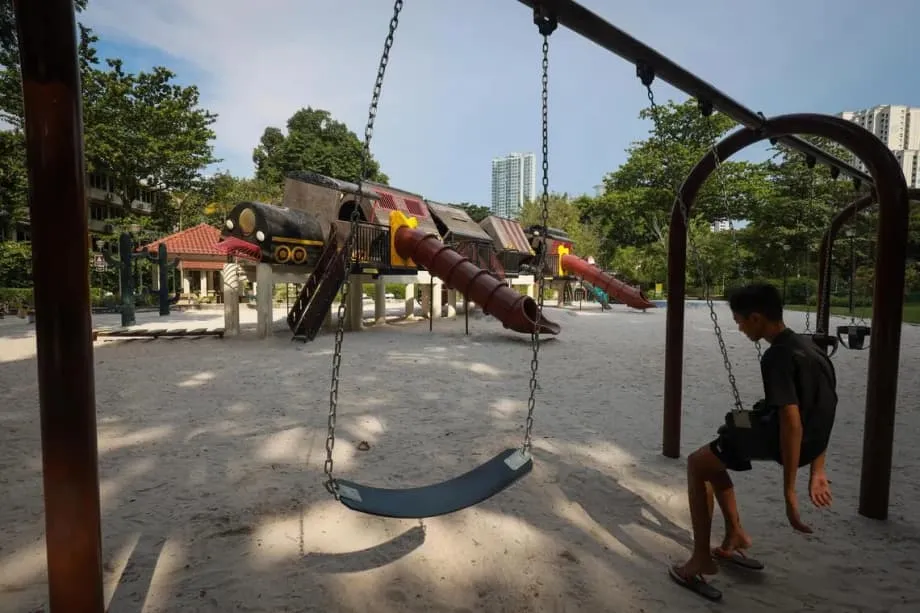
Singapore has about 2,800 public playgrounds, according to the Ministry of National Development, yet residents looking for a swing can struggle to find one. The familiar ride that once anchored almost every playground has become a rarer sight across housing estates and parks, where towers, slides and climbing nets increasingly shape the play experience.
Contents
- About 2,800 playgrounds, but no count of their swings
- Why a swing needs so much clear space
- The choice between a swing and a busy play tower
- Maintenance matters as much as the layout
- What changes when sand gives way to rubber
- What children learn from swinging
- When themes take priority over simple movement
- Where swings remain part of the playground
- Making room for a wider range of play
- Key Points
The issue became a public talking point after Sembawang GRC MP Ng Shi Xuan asked in Parliament how many playgrounds still had swings or sand areas. The ministry gave the nationwide playground total but did not specify how many were equipped with swings. As of November 9, 2025, the picture is therefore one of uneven availability from estate to estate, without a national swing count to show the scale of the change.
Space, safety requirements and changing design preferences help explain why swings lose out. A swing needs room for a child to travel forward and backward, plus a clear area around that movement. In a small plot between housing blocks, accommodating that space can mean leaving out other equipment that several children could use together.
Parents and therapists are questioning whether some modern playgrounds go too far in removing challenge or put too much weight on decorative themes. Their concern extends beyond memories of childhood. Swinging gives children practice in balance, timing and coordination, alongside the excitement of gathering momentum. The central issue is how to keep playgrounds safe while preserving varied, meaningful play that makes children want to return.
Why a swing needs so much clear space
Singapore Standard SS 457 governs playground equipment and surfacing and aligns with international safety benchmarks such as EN 1176. Its requirements cover details including the height of top bars and the types of chains and seats used. For a swing, one of the most consequential requirements is the free movement zone: the area that must remain clear of obstacles around its path.
The clearance in front of and behind a swing seat should extend at least twice the height of its pivot point in each direction. The pivot is the point above the seat from which it hangs. With a pivot 2 metres high, the clear zone can span up to 8 metres from end to end. Side clearance matters too, and impact absorbing surfacing is required beneath and around the equipment.
A swing frame therefore occupies much more space than its metal supports alone suggest. Designers must consider the full area in which a child moves and might land, keeping obstacles outside that zone. The higher the swing, the greater the space tied to its movement.
SS 457 makes this a practical planning issue in compact estates. A swing may look like a simple piece of equipment, but fitting it into a playground requires a generous, carefully arranged footprint. That helps explain why a small site can have several kinds of climbing equipment yet no swing.
The choice between a swing and a busy play tower
A frame with two swing bays and the required clear zones can take up space that might otherwise accommodate a tower with slides, bridges and climbing nets. In small plots, designers commonly have to choose how to use that limited area.
Vendors say towers and nets can serve more children within the same space. Designers also aim to keep queues short, particularly where many families visit. A conventional swing usually accommodates one child at a time, making it less attractive when the priority is to provide places for several children to play at once.
Singapore's density makes these choices especially visible between housing blocks. Every square metre assigned to the movement of a swing is space that cannot hold another structure. The result can be a playground with plenty of climbing routes and platforms but fewer opportunities for the repeated back and forth motion that swings provide.
Different equipment offers different experiences. A tower gives children several routes and activities in one structure, while a swing asks them to build rhythm, wait for a turn and spend time on one movement. Playground planning has to balance those experiences alongside the number of children a site can accommodate.
Maintenance matters as much as the layout
Suppliers must certify that equipment meets the standard, and trained auditors inspect installations before handover. Agencies or town councils then carry out regular maintenance checks. This system has raised safety across estates, although problems with equipment and playground conditions still occur.
From 2022 to 2024, authorities received an annual average of around 7,000 public feedback cases about playgrounds. Most concerned broken components or cleanliness rather than accidents. The figures put everyday upkeep at the centre of the discussion, alongside decisions about what equipment to install.
Heavy daily use and exposure to weather affect both play structures and the surfaces beneath them. A carefully planned safety zone still needs to be kept clear, and equipment still needs attention as its components wear. Maintaining a playground is an ongoing responsibility after its opening or upgrade.
Residents asking for swings are therefore also asking for equipment that can be cared for consistently. Design, inspections and routine maintenance each contribute to whether children can keep using a playground comfortably and safely.
What changes when sand gives way to rubber
Sandpits once softened landings while giving children room to dig, pour and explore different textures. Many estates have replaced sand with rubber surfaces such as EPDM to make cleaning easier and reduce hidden hazards, including sharp litter.
Rubber offers a durable, tidy surface, but it leaves fewer opportunities for the sensory activities that sand supports. A child can dig a hole, fill a container or pour sand from one place to another. Those activities are a different form of play from climbing a fixed structure or walking across a rubber floor.
The flooring change sits alongside the removal of firemen poles and merry go rounds at many sites. Together, these choices reflect a broader approach that is cautious about risk and narrows the range of movements children can try.
Safety and cleanliness remain practical concerns for families and the organisations maintaining playgrounds. The question for design is how to meet those needs while retaining varied experiences. Replacing sand changes more than a playground's appearance: it also changes what children can do with their hands and how they explore the ground beneath them.
What children learn from swinging
A swing's back and forth motion activates the vestibular system, which helps the brain regulate balance and movement. In simple terms, it helps a child make sense of how their body is moving. Pumping the legs and gripping the chains also build core strength and coordination.
Children practise social skills when they take turns or match their rhythm with a partner. The activity combines physical effort with timing: a child learns how movements of the legs and body affect the swing's momentum.
Occupational therapists warn that removing challenge and varied sensory input can leave children with fewer chances to develop these skills. That concern includes children with additional needs, whose opportunities to use playground equipment may depend on the seats and supports available.
Managed risk means giving children challenges they can approach in small steps within a planned setting. Equipment with graduated levels of difficulty allows them to test their limits without making the entire play experience equally demanding.
A well planned swing area can offer bucket seats for toddlers, expression seats that let a child face a parent, and wider basket seats that support children with limited trunk control. Trunk control is the ability to hold and steady the upper body. Choosing different seats allows more children to enjoy the movement with suitable support.
When themes take priority over simple movement
Neighbourhood renewal has brought colourful towers, slides and nets into playgrounds, often using themes drawn from local heritage or familiar icons. These designs have replaced many older standalone elements. Themes can give a place a recognisable identity, while larger central playgrounds can become social hubs.
Visual appeal can nevertheless crowd out simpler equipment when space is tight. Some structures also feel unintuitive to children using them for the first time. Where routes through the equipment are not obvious, children may take risky shortcuts.
Residents in newer estates such as Punggol and Sengkang often describe upgraded playgrounds with ship or adventure themes, many platforms and few swings. Those designs bring several activities together, but the mix can leave out equipment that needs a large clear area of its own.
Parents are present more often, and screen time at home competes for children's attention. Designers face pressure to make a visit exciting, including a short stop. Packing a site with eye catching equipment responds to that pressure, while swings can be pushed aside because they need space and require children to take turns.
The debate is therefore also about what makes a playground appealing after the first impression. Colour, themes and large structures help establish its identity; the movements available determine what children can repeatedly enjoy and practise.
Where swings remain part of the playground
Swings have not disappeared from Singapore. Several parks and estates retain them, particularly at larger sites where space is less restricted or where inclusive play is a design goal. The available choices range from seats for young children to swings that support shared play.
- Canberra Park in Sembawang has a large variety of swing seats, including accessible options, a standing swing and a group rope swing. It also has ramps and a rope obstacle course.
- Admiralty Park in Woodlands has dozens of slides and several swing types, including an expression swing that allows a child to face a parent. Sand areas provide sensory play.
- Yishun Swings Park has a covered corner with bench swings, a basket swing and garden swings for children and adults, next to a small play area with slides and a seesaw.
- Jubilee Park at Fort Canning is a biophilic play garden, bringing play into a setting connected with nature. It includes swings, sandpits, climbing nets and a treehouse, with inclusive features for a range of abilities.
- Forest Ramble at Jurong Lake Gardens is a nature play area with basket swings and other movement elements among plants and boardwalks.
- Tiong Bahru Park and Tampines GreenSpring are among the selected parks and estates where swings remain in the playground mix within themed designs.
These locations show several ways to retain swinging alongside other activities. They include opportunities for children to face a parent, use a more supportive seat or share movement with others. The equipment mix also demonstrates that themes and swings can coexist when the layout allows.
Making room for a wider range of play
Balanced playgrounds combine zones for different ages, levels of challenge and types of play. Town councils and designers can reserve a corner for a frame with two swing bays, provided it has the required clear space, and select seats suited to toddlers, older children and children with additional needs.
Shade, seating and separation from roads improve comfort and safety around the play area. Early input from therapists and child development specialists can help align layouts with how children move and learn, including the support some need to participate.
Residents can use public design exercises to request inclusive swings and better maintenance alongside new slides. That makes the discussion more specific: which movements are missing, which children need different seating, and how equipment will be kept usable.
Singapore's playground choices bring several needs together in a limited space: safe movement, manageable maintenance, access for different abilities and enough activities for busy sites. Keeping swings in that mix means planning for their footprint while recognising the distinct physical and social experiences they provide.
Key Points
- Singapore has about 2,800 public playgrounds, but the Ministry of National Development did not specify how many have swings.
- SS 457 requires generous clear zones and impact absorbing surfacing around swings. A pivot 2 metres high can require a zone spanning up to 8 metres from front to back.
- Designers often favour towers and nets that accommodate more children within compact sites.
- Authorities received around 7,000 playground feedback cases a year from 2022 to 2024, mostly concerning broken components or cleanliness.
- Replacing sand with rubber makes cleaning easier and reduces hidden hazards, while removing opportunities for digging, pouring and tactile exploration.
- Swinging supports balance, coordination, core strength and social skills. Different seats can make it accessible to more children.
- Swings remain at locations including Canberra Park, Admiralty Park, Yishun Swings Park, Jubilee Park and Forest Ramble at Jurong Lake Gardens.
- Inclusive seating, suitable clear space and regular maintenance can preserve swinging alongside other forms of play.