Singapore's All Hours Retail Landmark Comes Home
Mustafa Centre launched its online store on October 28, 2025, bringing just over 3,000 items and islandwide delivery to shoppers across Singapore. The service offers free delivery for orders of SG$150 and above, while smaller orders carry a SG$10 delivery fee. Same day delivery is not yet available as the retailer adjusts staffing, picking schedules and delivery routes.
Contents
- Singapore's All Hours Retail Landmark Comes Home
- From Campbell Lane to an Online Checkout
- What Shoppers Can Buy Now
- How Delivery Charges Shape the Basket
- Mustaq Ahmad Wants Convenience to Pay Its Way
- Ten Staff Turn the Store Into a Dispatch Base
- Convenience Without Losing the Store Experience
- A Familiar Name in a Competitive Market
- Expansion Depends on Orders and Reliable Service
- At a Glance
By November 4, early orders averaged around SG$200, with appliances and bulk groceries helping to drive larger baskets. The launch gives regular customers an alternative to travelling to the Little India flagship and introduces the retailer to people who have never visited its complex on Syed Alwi Road.
The online range is a small opening selection for a business whose physical store carries about 500,000 items and attracts around 15,000 shoppers each day. Management plans to add roughly 1,000 products a month once the operation settles into a reliable routine.
Mustafa's priority is convenience that can pay for itself. Management says the online business must be profitable from its first day, with prices reflecting the expense of picking, packing, delivery and customer service. That approach shapes what goes on sale, how orders reach customers and when the service can expand.
For families and businesses, the immediate attraction is practical: bags of rice, cartons of drinks and appliances can arrive at the doorstep instead of being carried through the store and onto public transport. For Mustafa, the launch creates another way to serve customers while keeping its familiar retail operation at the centre of the business.
From Campbell Lane to an Online Checkout
Mustafa's history began in 1971, when it opened in Campbell Lane. It later expanded along Serangoon Road before settling into its current premises in 1995. The complex, spread across six storeys, operates 24 hours a day and has become one of Singapore's most recognisable retail destinations.
The store's breadth is central to its appeal. Its departments range from gold jewellery and perfumes to rice cookers, sportswear and specialty foods. Customers can arrive looking for a household staple and leave with something they discovered while moving through its many aisles.
The move online adds a new stage to that history:
- 1971: Mustafa opened in Campbell Lane.
- After its opening: The business expanded along Serangoon Road.
- 1995: Mustafa moved into its current premises.
- October 28, 2025: The online store launched with just over 3,000 items and islandwide delivery.
- November 4, 2025: Early orders averaged around SG$200 as the operation continued adjusting staffing and routes.
The opening online catalogue represents roughly 0.6 per cent of the approximately 500,000 items sold in the physical store, using 3,000 as the rounded launch figure. That comparison shows how much of Mustafa's range still sits within its walls. Adding about 1,000 items each month would broaden the digital selection gradually while giving staff time to manage the extra work.
What Shoppers Can Buy Now
Groceries, pantry basics, household supplies, small appliances, fragrances and chocolates form part of the launch selection. The catalogue also includes regional brands familiar to regular customers, including Amul dairy products. Shoppers can browse the range at the Mustafa online store.
The website presents delivery terms and minimums clearly, with navigation designed to make the opening selection easy to browse. Buying directly from Mustafa brings different categories into a single checkout and consolidates delivery for a mixed basket, removing the uncertainty customers can encounter with marketplace listings.
Early purchases have included appliances, cartons of drinks, bags of rice and packs of everyday staples. Those products help explain the average basket of around SG$200: customers are using the service for substantial purchases and weekly restocking, rather than only picking up one small item.
Families can build a large order without planning around parking or a taxi queue. Businesses near the city fringe can replenish office pantries through one checkout. Perfumes, chocolates and familiar regional foods also bring some of the physical store's mix of value and variety to customers buying gifts or household supplies.
The planned catalogue expansion is deliberately gradual. Bringing more products online means more items for staff to locate, check and pack. Adding roughly 1,000 each month gives the team room to build a broader selection without overwhelming the people preparing orders.
How Delivery Charges Shape the Basket
Mustafa charges SG$10 for orders below SG$150 and offers free delivery at SG$150 and above. The fee for smaller orders is in line with the cost of the final delivery journey in Singapore, while the threshold encourages customers to combine purchases into a larger basket.
An early average order of SG$200 is SG$50 above the free delivery threshold. Larger purchases give the retailer more sales value over which to spread the work involved in preparing and delivering an order. That matters when a basket contains heavy groceries or an appliance that takes extra time to handle.
Delivery partners currently carry orders to customers. Same day delivery is unavailable while Mustafa calibrates picker shifts, delivery windows and handover times. Management intends to explore faster delivery as volumes grow, but no starting date has been given.
The final journey from a store or dispatch point to a customer's door is often called the last mile. It is the costliest part of many online retail journeys because deliveries travel through congested streets to homes spread across different neighbourhoods. A delivery fee alone will often fall short of covering the expense unless the basket is sufficiently large.
Free delivery at SG$150 and above is therefore part of the business model, not just a promotion. Higher order values help the economics of each drop, while greater order volume can improve route density, meaning more deliveries grouped along a route. Mustafa's opening rules tie the convenience of doorstep delivery to the cost of providing it.
Mustaq Ahmad Wants Convenience to Pay Its Way
Founder Mustaq Ahmad said in a company statement that customers had been asking for an online shopping option for years. He described the launch as a response to changing shopping habits and demand for the choice to buy from home.
For years, our customers have asked for an online option. The market is changing, people want convenience. They still want to buy from Mustafa, but they also want the choice to shop from home. So we decided it is time to make it happen and give them what they have been asking for.
Mustafa arrived late to ecommerce by design. Management watched the market develop before choosing a model intended to protect margins, the money left from sales after relevant costs are paid. Singapore's established ecommerce logistics now reduce some of the risk for a retailer that values control over its operation.
Mustaq also set out the financial position guiding the launch. His statement linked pricing directly to the costs of operating the service.
Many online retailers lose money, but we do not believe in that. From day one, we must be profitable. Our prices reflect real costs, delivery, logistics and service to make sure the business is sustainable.
Online prices account for picking, packing, delivery and customer service. Some purchases may therefore cost more online than at the physical store. Customers are choosing between the convenience of delivery and a visit to obtain the lowest shelf prices in those cases.
Management's approach differs from strategies that pursue rapid online growth through subsidised shipping and waived fees. Its concern is that chasing sales without covering the cost of each order can damage the main retail business. Mustafa intends the website to complement the flagship, with financial discipline setting the pace of expansion.
Ten Staff Turn the Store Into a Dispatch Base
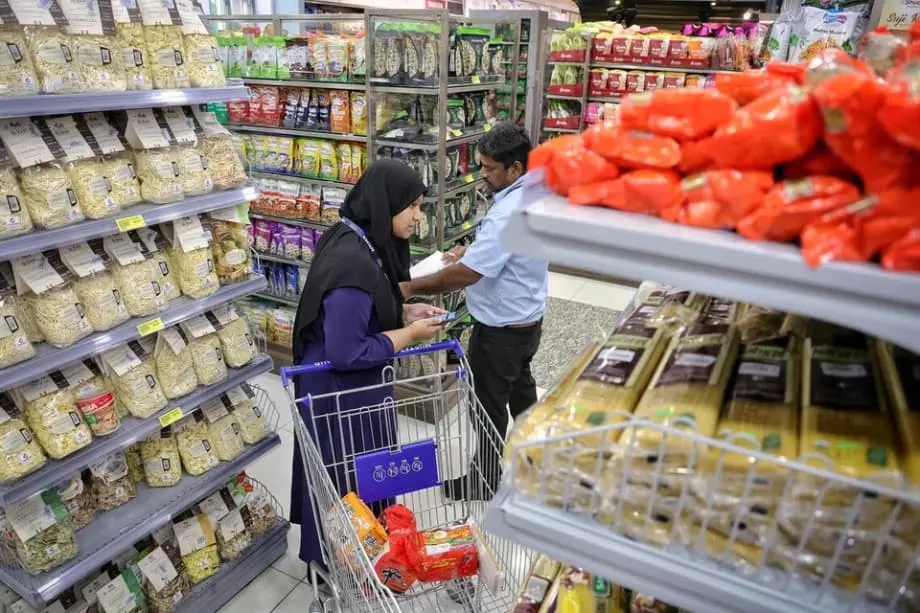
About ten staff currently pick and pack online orders within the six storey complex. Many were previously cashiers and have been retrained for the new work. They collect products from store shelves, bring them together in a staging area and hand the completed parcels to delivery partners.
The physical store is effectively serving as a warehouse as well as a shopping destination. That arrangement reduces the money needed at the outset and lets Mustafa test demand using inventory already held in the building. It also keeps the launch close to the retailer's existing operation.
Staff collecting online orders share aisles with customers. During busy periods, that can slow the work. Heavy baskets add another demand on the team, particularly when orders include appliances or cases of drinks. Understanding when orders arrive and when staff need to prepare them is part of the current adjustment.
Mustafa's 24 hour operation could support picking late at night and handing orders to carriers early in the morning. Such scheduling can help delivery partners avoid peak traffic. The benefit depends on matching staff availability, order patterns and collection times.
Dedicated back rooms, stores used only to prepare online orders, or distribution centres can make preparation faster, but each requires investment and careful planning around demand. Mustafa's current arrangement balances getting the service running with keeping control of spending.
If sales grow, possible changes include dedicated picking zones, conveyors or compact fulfilment systems that keep frequently ordered products within easy reach. Management has also said it may invest in automated packing and a dedicated delivery fleet if order volumes justify the expense.
Convenience Without Losing the Store Experience
Early customer reception has been warm among shoppers who value Mustafa's selection but find travel and parking inconvenient. Customers using the new service have welcomed relief from carrying bulky goods, along with the ability to order gifts and pantry staples from home.
Some regular shoppers are comparing website prices with the shelves they know. Their choice is straightforward: pay a little more online for some products in return for delivery, or continue visiting the store for its lowest shelf prices. Either route keeps them shopping with the same retailer.
Mustaq Ahmad, Mustafa's founder, said the online and physical businesses would offer different experiences while operating alongside each other.
The physical store offers the joy of discovery, while the online store opens an unlimited market beyond our walls.
Frequent visitors value the maze of departments, access throughout the day and night, and the possibility of finding a difficult to source product tucked away on a shelf. Many want Mustafa to preserve that character while extending its online catalogue.
Ways for the two channels to support each other could include letting customers check stock online before visiting or collecting a purchase, and accepting returns at familiar store counters. These are possibilities for a more connected shopping experience, rather than services announced as part of the launch.
A Familiar Name in a Competitive Market
Singapore's shoppers are comfortable with technology and attentive to prices. Marketplaces and grocery delivery services have already shaped expectations about how quickly orders arrive and how much choice a website should offer. Many retailers sell through major platforms, their own websites or both.
Winning customers online can be expensive. Mustafa enters with an established name and a loyal customer base, giving it a starting advantage. Its recognition and broad assortment provide reasons to shop there without relying on constant discounts.
Electronics manufacturers, beauty brands and specialty grocers have also raised expectations through websites that sell directly to customers. Over the past few years, several brands added official local online stores in Singapore alongside their marketplace shops. Those arrangements combine direct control with the wider reach of established platforms.
A retailer's own website lets it manage prices, warranty policies and the service offered to customers. Marketplaces provide another route to reach buyers. Mustafa's launch follows a similar calculation: it controls the selection and service on its own domain while using established logistics networks for delivery.
The retailer's position rests on a combination of familiarity, variety and measured spending. Its aim is to bring some of the flagship's demand online while reaching households that have never made the trip to Little India. Delivery charges, product selection and staffing all reflect the decision to keep that expansion financially sustainable.
Expansion Depends on Orders and Reliable Service
The clearest planned change is a larger catalogue, with approximately 1,000 items added each month once workflows stabilise. A wider range would bring more of the store's breadth online, but it would also increase the number of products the team needs to manage.
Same day delivery is being explored for popular categories once Mustafa can provide it reliably. A delivery fleet of its own could follow if demand warrants the investment. Such a fleet could give the business more control over routes, costs and timing during busy periods, as well as food temperatures and how orders are presented at the doorstep.
Collection from the store is another possible upgrade. Mustafa's long opening hours could allow flexible collection windows, while online stock information could help customers plan visits. Better search tools, filters and support for several languages could make it easier to navigate a catalogue drawn from such a large physical range.
Seasonal bundles for festivals and value packs of pantry staples could also simplify ordering and increase basket sizes. These remain possible developments. The immediate work is to establish reliable preparation and delivery, expand the range in manageable steps and keep the service aligned with the founder's requirement that it cover its costs.
At a Glance
- Mustafa Centre launched its online store on October 28, 2025, with just over 3,000 items and islandwide delivery.
- Delivery is free for orders of SG$150 and above. Smaller orders carry a SG$10 fee.
- Early orders average around SG$200, with appliances and bulk groceries helping drive larger baskets.
- Same day delivery is not available while staffing, routes and delivery windows are adjusted.
- About ten staff pick and pack orders from the six storey complex on Syed Alwi Road.
- The physical store carries about 500,000 items and attracts around 15,000 shoppers daily.
- Management plans to add roughly 1,000 online items a month once workflows stabilise.
- Founder Mustaq Ahmad says the service must be profitable from its first day and complement the 24 hour physical store.