Two hours in armor, with a movie to take home
Shogun Studio Japan has launched a Samurai Battle Movie Experience in Kyoto's Arashiyama district, combining photographs at famous local settings with a choreographed fight on a private mountain set. Up to six participants can join a session lasting about two hours, then receive still photographs and a professionally edited movie of around two to three minutes.
Contents
- Two hours in armor, with a movie to take home
- Choosing the look of the Arashiyama shoot
- How the mountain battle is filmed
- Safety depends on props, spacing and rehearsal
- Why these Kyoto settings suit a period film
- A growing range of samurai activities
- How the package compares with temple and studio lessons
- Who can take part and how to prepare
- Planning a clear story for the camera
- What to Know
Studio staff can appear as opponents or allies, allowing a solo traveler, a couple or a group of friends to build a scene around the people taking part. Drone footage adds sweeping aerial views to the finished film, while shots from several angles give the editors material to shape the action into a short, cinematic story.
The outing moves through two locations and two kinds of performance. The first part concentrates on armor, poses and Kyoto scenery. The second introduces movement, rehearsal and a staged confrontation away from the crowds. Guests become the people on screen rather than watching a demonstration from the sidelines.
Arashiyama provides a choice of backdrops: Togetsukyo Bridge, the bamboo grove or a traditional teahouse where matcha can be served during the shoot. The mountain venue supplies the space for the battle sequence, with instructors directing the action and staff helping complete the cast.
The package is designed for small groups, including couples and friends traveling together. Its combination of recognizable Kyoto landmarks, a secluded outdoor battlefield and professional editing gives participants both a gallery of photographs and a movie that plays like a short trailer.
Choosing the look of the Arashiyama shoot
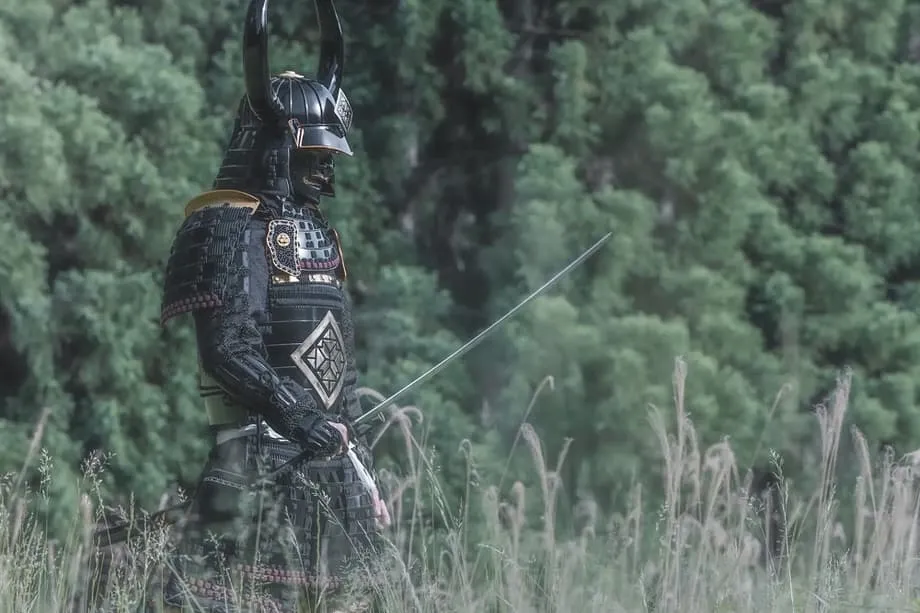
Participants begin at the studio by choosing armor. Staff fit each person and check how comfortably they can move, an important step because the same outfit will later be worn during the action segment. Armor changes both a person's silhouette and their freedom of movement.
Togetsukyo Bridge offers river views with the mountain ridge behind the subject. It is the broadest of the three settings, bringing the landscape into the picture alongside the armor. The river and seasonal color on the hills give the photographs the feel of a classic Kyoto postcard.
The bamboo grove creates a different composition. Tall stems form strong vertical lines, while filtered daylight and softer light suit portraits, armor details and movement. Its relatively simple visual pattern helps keep attention on the person being photographed.
A traditional teahouse provides an indoor alternative, with tatami, cedar beams and warm wooden surfaces contrasting with lacquered armor plates and cords. Matcha can be served during the shoot, adding a tea moment to the photographs and a quieter mood than the outdoor settings.
Photographers direct stances, poses and blade handling so that participants look natural within the period style. They also work with the shape of the armor, using its details and silhouette as part of the image rather than treating it simply as a costume.
Groups can use this stage to decide who their characters will be. A participant might take the role of a stoic retainer, a roaming ronin or a lord accompanied by retainers. A retainer serves a lord; a ronin is a samurai without a lord. These simple roles give the later action a clear starting point.
How the mountain battle is filmed
The second part takes place at a secluded mountain venue, away from the busy sightseeing areas. Before any action begins, staff explain weapon handling, spacing and the marks participants need to reach. A mark is a planned position in a scene, helping the performer and camera stay coordinated.
Instructors then guide a rehearsal built around straightforward footwork and movements that read well on camera. These can include parries, sweeping cuts, spear thrusts and archery poses. Swords, spears and bows form part of the staged sequence, with the action arranged around timing and visual effect.
The crew films from multiple angles and uses aerial footage captured by a drone to give the scene scale and motion. A close view can concentrate on a stance or reaction, while a wider view places the performers within the mountain setting. The edited movie brings that coverage together with tight pacing.
Group size shapes the story. A solo visitor can face a studio actor. Two participants can duel or fight together as allies. A larger group can divide into heroes, rivals and supporting characters for a short battle. Staff fill additional roles when the scene needs them.
The same staff members also help manage timing, eyelines and movement paths while remaining in character. An eyeline is the direction a performer looks, which helps viewers understand who is facing whom. Coordinating those details makes the staged encounter easier to follow on screen.
The finished package includes still images and a professionally edited film of about two to three minutes. The photographs preserve the armor and landmark settings; the movie adds movement, interaction and a short story assembled from the rehearsed action.
Safety depends on props, spacing and rehearsal
Japan's tourist sword activities operate under strict rules. Japanese police guidance states that allowing tourists to handle real, registered katana for temporary activities violates the Firearm and Sword Control Law. Entertainment programs for visitors therefore use training equipment and stage props rather than real sharpened blades.
Shogun Studio Japan uses stage props and training weapons. Its safety briefing covers spacing, timing and cues, with participants learning how to carry out the planned movements without contact. The choreography relies on camera angles and visual moments to create a convincing fight.
The limit of six participants keeps the group manageable for instruction and filming. Staff supervise the movement as well as performing in the scene, helping guests stay on their assigned paths and respond to the correct cues.
Other Kyoto programs follow similar patterns. Lessons on temple grounds and at movie studio parks teach visitors to bow, draw and sheathe a sword, and perform basic cuts before filming a short scene under an instructor's supervision. Many also have arrangements for bad weather, moving indoors and changing the staging to keep guests comfortable.
Why these Kyoto settings suit a period film
Arashiyama brings together natural scenery and traditional architecture within an area that allows a small production to change mood without long journeys or complicated logistics. Togetsukyo supplies a broad river setting, the bamboo paths offer filtered light and visual order, and teahouses provide wood and tatami textures.
Those differences matter to the finished images. A river view can make a scene feel expansive. Bamboo can create a more focused frame around a figure in armor. A teahouse can suit a quieter exchange between characters, with the indoor setting drawing attention to their relationship and clothing.
Kyoto also has a long connection with historical filmmaking. The city is home to established period drama sets and crews familiar with jidaigeki, the Japanese term for films and television shows set in historical eras. That filmmaking tradition gives the activity a local connection beyond its scenery.
Film festivals in Kyoto showcase the genre and maintain interest among local audiences and visitors. Recent works range from intimate features to comedies involving time travel, showing how period settings can support humor, drama and carefully performed swordplay alongside contemporary storytelling techniques.
Productions with scenes in and around Kyoto also keep the city visible to viewers interested in warriors and courtiers. Visitors can arrive with images from the screen in mind, then choose an experience that places them in recognizable surroundings and a similar visual style.
A growing range of samurai activities
Interest in samurai culture has grown alongside the international reach of streaming series and films featuring swords, armor and courtly drama. For some travelers, seeing those settings and costumes on screen creates an interest in trying a practical version during a visit to Japan.
Activities across the country include museum programs where guests wear armor and throw shuriken, as well as guided sword technique workshops ending in a filmed fight. Shuriken are throwing weapons associated with ninja. The choices range from learning about historical objects to performing a short action sequence.
Kyoto combines its cultural history with accessible, photogenic landmarks, making it a central destination for these activities. A family can spend a morning learning katana basics on a period set and then visit castle grounds or take part in a tea ceremony during the afternoon.
Museums devoted to samurai and ninja provide another route into the subject. Guides explain authentic swords and armor preserved in their collections, giving visitors more context for the clothing and weapons they encounter in performance activities.
Many venues combine education with action, so the visit includes both an introduction to the era and photographs or video to take away. Shogun Studio Japan's package places particular weight on the production itself, building a sequence from landmark portraits to a filmed mountain encounter.
How the package compares with temple and studio lessons
At temple grounds such as Myokaku ji, visitors dress in kimono and learn sword grips and striking lines from actors who perform in period dramas. They then film a short performance. The sessions usually last a little over an hour and use small groups so instructors can give focused attention.
The temple experience ends with photographs and a downloadable video file capturing the movements learned during training. Its emphasis is a compact progression from instruction to performance, with the temple setting supplying the atmosphere.
Kyoto's long established movie studio park offers another format. Visitors enter streets recreating an Edo period town, choose roles such as samurai or ninja, and learn a sequence with guidance. The program lasts around an hour and a half and has offered several time slots during the day.
A photograph walk through the period streets accompanies the studio park activity, with a filmed fight completing the experience. The controlled set allows visitors to move from training to performance within surroundings built for historical productions.
Shogun Studio Japan's session lasts about two hours, compared with a little over an hour for the temple format and around an hour and a half at the movie studio park. Its defining combination is real Kyoto landmarks, a private mountain battlefield, drone filming and staff who can act as additional characters.
Couples and small groups can use those supporting performers to make their scene feel like a larger skirmish. The two kinds of finished material also serve different purposes: still photographs concentrate on appearance and setting, while the short film brings together the characters and action.
Who can take part and how to prepare
Friends on a city break, couples marking a special trip, content creators looking for a different view of Kyoto and families with older children who enjoy active play are among the audiences suited to the format. Participants should expect light movement, instructions to follow and repeated actions for the camera.
Armor adds weight and limits mobility, so comfortable clothing underneath and closed shoes are useful. Guests who prefer not to run or roll can discuss a scene built around poses, evasion steps and dramatic reveals rather than faster footwork.
Weather in the hills can change quickly. Water and a small towel can help during summer, while guests concerned about heat should discuss shade or timing with the crew. During cooler seasons, a thin layer under the armor provides warmth without adding much bulk.
People who wear glasses or contact lenses should mention that during fitting so helmets and masks can be adjusted for comfort. Groups can also assign roles before the session, helping the choreography proceed smoothly and giving each participant a moment in the finished sequence.
Booking is handled through the Shogun Studio Japan website. Prospective guests can check schedules, select preferred scenery and ask questions before paying. The provider lists pricing, weather policies, language support and age or health restrictions, which may vary by season.
The studio manages availability, location options and seasonal adjustments. Group leaders can confirm preferences when reserving. Arrival times and meeting points are supplied in the booking confirmation, and staff guide participants from the armor fitting through the final filming.
Planning a clear story for the camera
A simple concept gives the short film a readable shape. Armor and props already supply much of the visual character, leaving participants free to focus on clear movement and rhythm. The editors then assemble the filmed material into a tightly paced sequence.
A duel at dawn, a lord and retainer guarding a teahouse, or allies gathering on the bridge are possible themes to discuss. Choosing the setting to match the mood helps: the river offers scale, the bamboo grove symmetry and the teahouse a more intimate atmosphere.
Groups can coordinate colors through matching cords or complementary armor pieces. They can also discuss an opening walk along the bridge, close views in bamboo shade and a wide drone reveal at the end. Those choices give the film visual variety without requiring a complicated plot.
Listening for cues is part of the performance. Participants should hold poses until the crew calls cut and repeat actions with consistent energy when resetting. That consistency helps the editors combine footage from different angles into one continuous scene.
Guests can ask about variations such as a spin shown in slow motion, a staged arrow release or a synchronized sword draw. Staff guidance also matters at the landmarks, where armor and props need to stay clear of fragile surfaces and the shoot must respect the surroundings.
What to Know
- Shogun Studio Japan's Samurai Battle Movie Experience lasts about two hours across an Arashiyama photograph location and a private mountain action set.
- Up to six participants can join, with studio staff appearing as opponents or allies.
- Photograph settings include Togetsukyo Bridge, the bamboo grove and a traditional teahouse where matcha can be served.
- The action uses stage props and training weapons, with instruction on spacing, timing, cues and movement without contact.
- Participants receive still photographs and a professionally edited movie of around two to three minutes, including drone footage.
- Japanese police guidance restricts temporary tourist handling of real, registered katana under the Firearm and Sword Control Law.
- Kyoto alternatives include kimono and sword lessons on temple grounds and filmed performances at a period movie studio park.
- Reservations, current prices, weather arrangements, language support and participation restrictions should be checked with the provider.