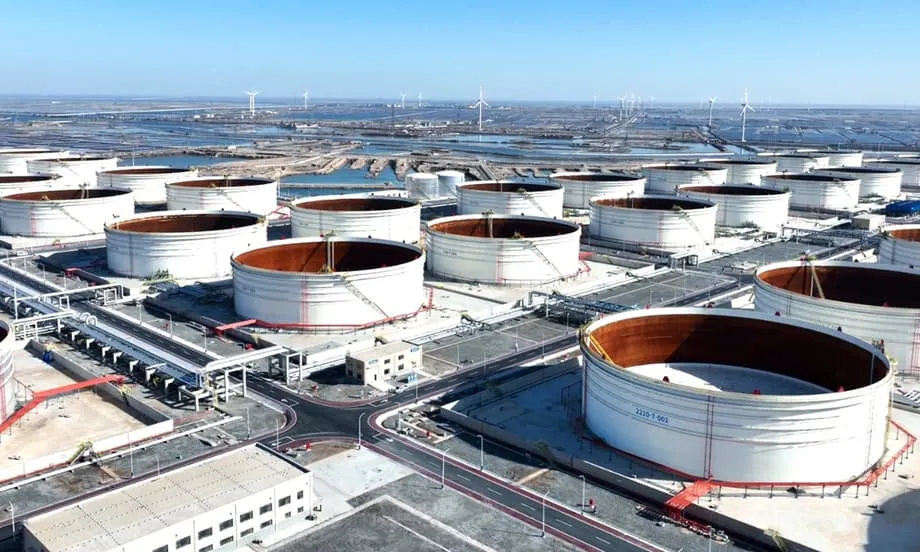
A Coastal Oil Depot Shows the Scale of China's Buying
About 10 million barrels of crude oil have flowed into storage at Dongjiakou on China's Shandong coast since mid January, lifting the site's inventories to roughly 24 million barrels. Satellite and port data show how quickly a complex barely two years old has become one of the country's largest coastal oil storage hubs.
Contents
- A Coastal Oil Depot Shows the Scale of China's Buying
- Beijing Sets a Faster Pace for Strategic Reserves
- Why Oil Takes Priority
- A January Law Brings Company Stocks Into the System
- How Much Oil Is Already Stored?
- Metals Extend the Strategy Beyond Fuel
- Food and Gas Reserves Address Different Pressures
- From Floating Roofs to Underground Caverns
- Reserve Buying Is Moving Global Markets
- Shipping Routes, Sanctions and the Security Calculation
- The Price of Keeping a Larger Buffer
- Key Points
The site is already more than half full. Its giant tanks have floating roofs that rise as oil enters and fall as it leaves. By resting on the liquid, the roofs reduce the space where vapor can collect, limiting losses and lowering the risk of fire.
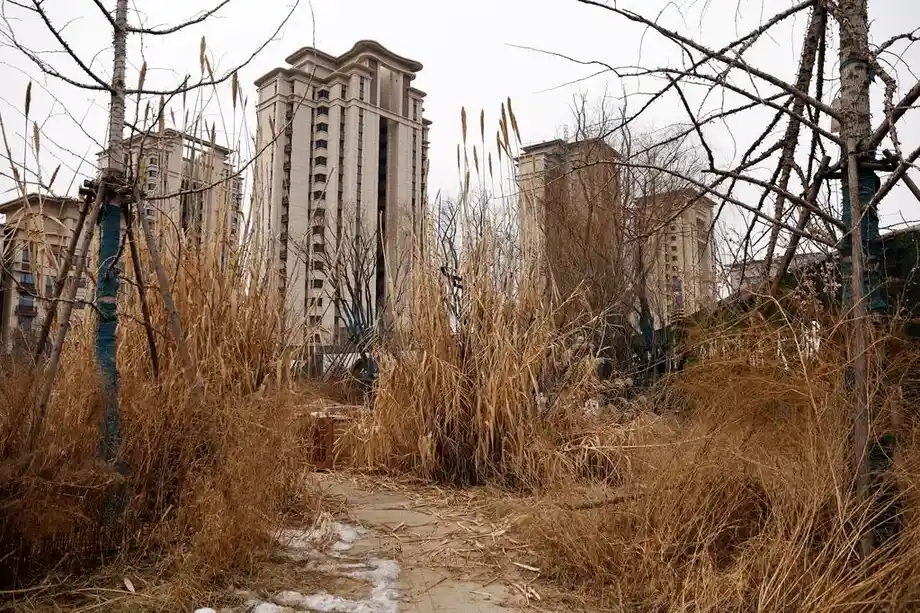
Dongjiakou is one visible part of a much wider effort. Across coastal tank farms, inland depots and underground caverns, China has accelerated the accumulation of fuel, food and industrial materials through 2024 and 2025. A small circle of government agencies and state companies manages the work, with limited public disclosure.
As of November 1, 2025, the resulting reserve network is deeper and broader than many foreign observers expected even a few years ago. Its purpose reaches beyond keeping fuel available: Beijing wants supplies that can cushion shipping disruptions, trade disputes, sanctions and sudden jumps in domestic prices.
Oil remains the centerpiece, with at least 11 new storage sites scheduled to open in 2025 and 2026. Together, they would add about 26.8 million cubic meters of capacity, equivalent to roughly 169 million barrels. Alongside that construction, authorities are seeking more critical minerals and planning larger stores of grain and natural gas.
Beijing Sets a Faster Pace for Strategic Reserves
The National Development and Reform Commission, China's top economic planner, has formally pledged to accelerate annual stockpiling of strategic goods. Its latest policy outline calls for larger reserves, faster construction of storage for petroleum, grain and other materials, and better planning for the exploration, production and storage of key minerals.
The commission described its commitment in these terms:
We will move faster to fulfil the yearly task of stockpiling strategic goods as we work to expand the scale of reserves.
China consumes a large share of the world's raw materials while lacking enough domestic oil, gas and many metal ores to meet its needs. It has about one fifth of the world's population but less than one tenth of its arable land. Water shortages in many regions add to the challenge of securing food supplies.
The pandemic, the war in Ukraine and repeated tariff disputes exposed the risks of depending on supplies that must cross borders and oceans. Reserves give authorities time to respond when deliveries slow and provide material that can be released when domestic prices rise sharply.
Storage expansion, periods of attractive oil prices and weaker demand in several heavy industries have also created an opportunity. China can purchase materials when prices ease, hold them for later use and continue building the facilities needed for a larger buffer.
Why Oil Takes Priority
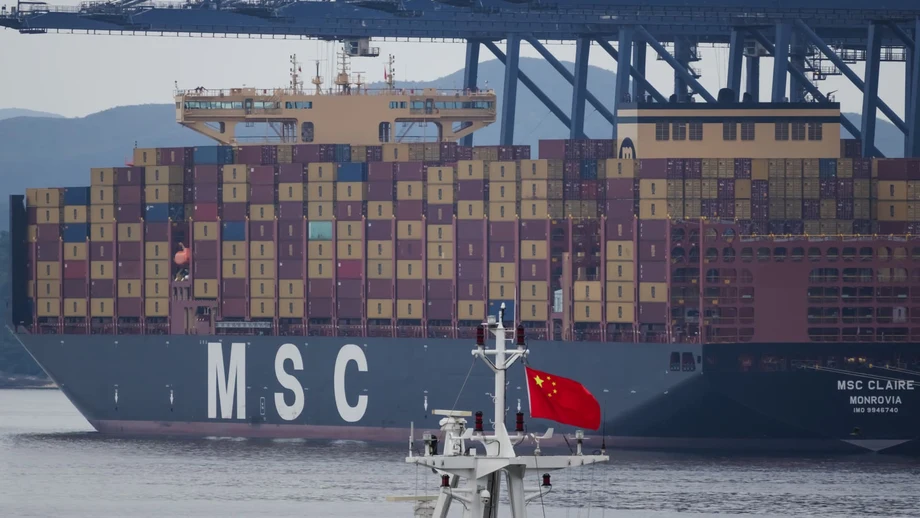
China is the world's largest crude importer, and about 70 percent of the barrels feeding its refineries arrive by sea. Tankers passing through routes such as the Strait of Malacca connect overseas producers with Chinese factories, transport networks and consumers.
A disruption along those routes could restrict fuel supplies across several parts of the economy at once. Larger reserves allow China to keep drawing oil while officials and companies seek replacement deliveries. They also give the government a market tool: buy during price declines and release barrels when a shortage threatens to drive prices higher.
That approach requires both physical space and the ability to move oil where it is needed. Coastal facilities connect directly with import terminals and refineries, while inland bases put more supplies closer to consumers away from the shoreline.
Public environmental approvals, company postings and local announcements identify at least 11 oil storage projects due to enter service during 2025 and 2026. Three are inland, in Shaanxi and Yunnan. The others lie along the eastern and southern coasts.
National oil companies, mainly Sinopec and CNOOC, are carrying the construction on their books. Many facilities are described as commercial storage, although they also form part of the country's emergency supply system.
A January Law Brings Company Stocks Into the System
A law adopted in January brought government strategic bases and company inventories under a single national reserve definition. It also requires state firms to hold supervised stocks that officials describe as a "social responsibility" reserve.
Since January, commercial inventories meeting government standards have been treated as part of the national reserve. That gives authorities a larger pool of oil and other materials to mobilize during an emergency and tightens supervision of supplies held outside dedicated government bases.
The National Food and Strategic Reserves Administration sets policy and supervises holdings, while state energy companies and commodity traders operate many facilities and manage daily transport, deliveries and storage. The system combines central direction with a network of company operations.
The main stages of the current expansion stretch across several years:
- In 2017, China released its last official tally of state oil reserves.
- In mid 2024, outside analysts estimated the core strategic petroleum reserve at about 290 million barrels.
- Through 2024 and 2025, stockpiling and storage construction accelerated across fuels, food and industrial materials.
- In January 2025, a new law integrated qualifying company inventories and government strategic bases into the national reserve framework.
- Since mid January, Dongjiakou has added roughly 10 million barrels, taking its inventory to about 24 million barrels.
- During 2025 and 2026, at least 11 new oil storage sites are scheduled to add roughly 169 million barrels of capacity.
- By 2030, plans envisage natural gas storage reaching as much as 85 billion cubic meters.
How Much Oil Is Already Stored?
China has not published regular updates on its oil reserves since the official state tally in 2017. Private trackers estimate that state entities and commercial tanks held about 735 million to nearly 800 million barrels of onshore crude in early autumn 2025. Those estimates exclude four underground storage sites with space for roughly 110 million barrels.
The underground figure describes storage capacity, while the onshore estimates describe oil held in tanks. The core strategic petroleum reserve is another measure within the wider system: outside analysts put it at around 290 million barrels in mid 2024.
Several industry sources say policymakers want a much larger buffer. Targets discussed in the sector range from enough storage for three months of net imports to an ambitious six months. Net imports are the amount brought into a country after subtracting exports.
Those ambitions would imply more than 1 billion barrels of capacity and, at the upper end, close to 2 billion barrels over time. The eventual target and the amount of oil currently available across the entire system remain undisclosed.
Energy consultancies estimate that an average of roughly 500,000 barrels a day has moved into storage during 2025. Newly opened facilities, including Dongjiakou, have taken some of those deliveries. Purchases accelerated when global prices fell below $70 a barrel.
More capacity scheduled for 2026 gives China room to continue accumulating oil if officials choose. The pace will depend partly on prices and how much additional protection Beijing wants against interruptions.
Metals Extend the Strategy Beyond Fuel
The National Food and Strategic Reserves Administration manages grain stocks and a growing range of industrial materials. During 2025, the agency sought prices and bids to add cobalt, copper, nickel and lithium to official holdings.
Those metals help make batteries, motors, power grids and electronics. China refines a large share of many of them, but its processing strength still depends on foreign mines supplying ores and concentrates. Concentrates are materials processed at or near a mine to increase their metal content before further refining.
China's wider resource strategy dates to the late 1980s. It combines stored supplies with overseas mine investments, ownership ties to producers and contracts securing deliveries over long periods. The approach expanded after the 2008 financial crisis and gained fresh urgency during the pandemic and the war in Ukraine.
Importers increased purchases when prices eased, helping inventories of some metals and energy materials rise during 2023 and 2024. Stockpiling fits alongside those other supply arrangements by keeping some material physically available inside the country.
Copper shows the reasoning. Electric vehicles, renewable power systems and modern transmission grids all require the metal. Supply growth has been uneven in leading producing countries, while higher costs and the long time needed to develop mines slow new projects.
Buying copper during calmer markets gives factories and the power sector a buffer against later shortages or freight disruptions. It also means reserve decisions can influence demand even when immediate industrial activity is weak.
Food and Gas Reserves Address Different Pressures
China is self sufficient in rice and wheat, but it is the world's largest soybean importer and buys corn abroad when domestic harvests fall short. Grain stocks help stabilize food prices and supplies of animal feed when bad weather damages crops or external shocks interrupt trade.
Large grain depots near railways and river hubs help move those supplies around the country. Managers must rotate stored grain to preserve quality and reduce spoilage, replacing older stocks as they release them for use.
Natural gas presents another storage problem because demand changes with the seasons. Officials have outlined plans to expand gas storage toward as much as 85 billion cubic meters by 2030, providing a larger buffer for winter consumption swings.
Food, gas and oil require different facilities, but all depend on more than purchasing the commodity. Authorities need storage in suitable locations, reliable transport and management that keeps the material usable until it is needed.
From Floating Roofs to Underground Caverns
Above ground tank farms hold crude oil and refined products near ports and refineries. Floating roofs such as those at Dongjiakou move with the liquid, reducing vapor buildup, corrosion and the risk of ignition.
Salt caverns and mined rock caverns provide another option for storing oil over long periods. They offer large volumes at a lower cost per barrel and are harder to disrupt during a crisis. Inland underground facilities also place supplies farther from exposed coastal infrastructure.
State companies and traders handle the daily work of filling, maintaining and drawing down these sites. For grain and some metals, careful stock rotation is essential to maintaining quality. Across the system, poor handling can leave supplies damaged or unusable.
Authorities can also auction small quantities of metals or grain when domestic prices surge. Those sales put additional material into the market, helping ease pressure on buyers without emptying the reserve.
Volumes, locations and release schedules are closely guarded. That secrecy protects information about emergency supplies, while making it harder for traders and producers to judge how much China is buying or how quickly it might sell.
Reserve Buying Is Moving Global Markets
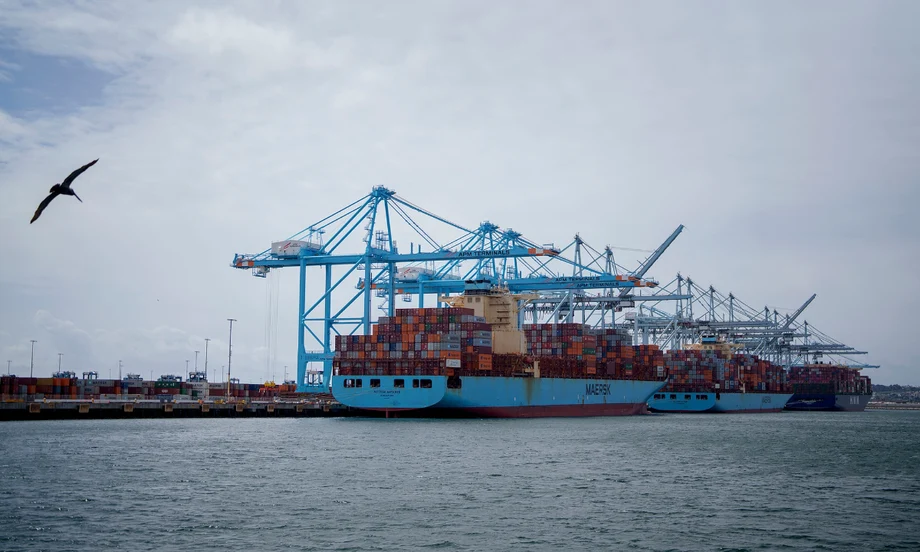
China has imported more crude than its refineries immediately process, absorbing surplus barrels at times when producers have been easing supply curbs. Market analysts expect that pattern to continue into 2026. The United States Energy Information Administration has said Chinese stockbuilding will continue supporting global oil prices into next year.
For other buyers, that means Chinese reserve purchases can keep demand stronger than refinery activity alone would suggest. A slowdown in domestic industry can occur alongside substantial imports because some incoming supplies are being stored rather than consumed.
Large purchases of refined copper, aluminum and nickel can lift futures prices and tighten time spreads, the differences between prices for delivery at different dates. Changes in whether importers buy concentrates or refined metal can also alter material flows through smelters and affect treatment charges, the fees charged to process concentrates.
Seasonal increases in iron ore and coal arrivals, even during weak factory output, show how inventory cycles and reserve building have become a larger part of China's commodity trade. Shipping rates, storage costs and prices for future delivery all respond to those flows.
Heavy reserve buying tends to narrow discounts for supplies available promptly and lift prices for later delivery. When Beijing pauses purchases or releases stocks, the pressure can reverse. Limited disclosure makes the timing difficult to anticipate.
Ilia Bouchouev, a senior research fellow at the Oxford Institute for Energy Studies and a former oil trader, described the uncertainty over how long buying could continue:
Nobody has a crystal ball about the duration of Chinese buying for its strategic storage.
Shipping Routes, Sanctions and the Security Calculation
Tensions around Taiwan give China's import dependence a security dimension. A worsening crisis could threaten seaborne deliveries through choke points such as the Strait of Malacca, while sanctions affecting finance and shipping could slow trade.
China imports far more oil than it produces. A larger reserve reduces the danger that a sudden interruption will spread rapidly through transport, factories and military operations. Inland storage adds protection by keeping more fuel away from the coast.
Trade friction with the United States and Europe is another concern for policymakers, with new tariffs on Chinese goods a recurring threat. Major energy suppliers face uncertainties of their own: Russia is subject to Western sanctions, while pressure on Iran creates risks for its exports.
Pipelines, a broader range of suppliers and contracts lasting many years help secure deliveries. Reserves provide another form of protection by holding material already inside China.
Domestic fuel production, the spread of electric vehicles and rapid growth in renewable power can reduce exposure to imported crude over time. Oil will still be needed for aviation, shipping, heavy industry and logistics for many years, supporting Beijing's push for additional storage.
The Price of Keeping a Larger Buffer
Tanks, caverns and depots require land, steel, concrete and skilled construction crews. Filling them ties up money that could be used elsewhere and brings financing costs, while maintenance continues throughout the storage period.
Grain and some metals need constant attention to preserve quality. Leaks, contamination and poor rotation can turn an emergency buffer into waste. A large reserve therefore needs reliable management as well as sufficient capacity.
Stockpiling also complicates the reading of China's economy. Strong imports during weak factory activity can reflect purchases for storage rather than rising consumption. Investors trying to judge industrial demand must account for that difference.
Buying surges can support international prices when consumers elsewhere would prefer cheaper commodities. If authorities purchase heavily during a rally and prices then fall, taxpayers bear the cost of the decision.
China's preference for buying during price weakness reflects those financial pressures. Its limited disclosure also makes planning more difficult for other market participants. The approach through 2024 and 2025 has been to expand capacity, fill it during price declines and preserve room to respond to shocks. The rapid filling of Dongjiakou and construction scheduled through 2026 show that strategy taking physical form.
Key Points
- Dongjiakou added roughly 10 million barrels of crude since mid January, reaching about 24 million barrels in storage.
- At least 11 oil storage sites scheduled for 2025 and 2026 would add about 169 million barrels of capacity, including inland facilities.
- Private estimates put onshore crude inventories at about 735 million to nearly 800 million barrels in early autumn 2025, excluding underground sites with roughly 110 million barrels of capacity.
- A January law integrated qualifying company inventories and government strategic bases into the national reserve system.
- Authorities sought additional cobalt, copper, nickel and lithium in 2025, alongside broader food and energy reserves.
- Natural gas storage plans envisage capacity of as much as 85 billion cubic meters by 2030.
- Reserve buying helps cushion disruptions and support global commodity prices, while creating construction, financing and maintenance costs.
- China has not disclosed a complete current inventory or its final oil reserve target.