A sharp retreat from local government borrowing vehicles
China says the number of local government financing platforms fell 92% between the end of March 2023 and the end of September 2026, as authorities pushed companies that financed roads, housing and other public projects to give up their government borrowing functions.
Contents
- A sharp retreat from local government borrowing vehicles
- What does leaving the platform list mean?
- How the debt swap works
- The milestones and deadlines
- How much debt remains?
- Why former platforms still need scrutiny
- A borrowing model with a long history
- Property loans and overdue business payments
- Targeted credit and financial opening
- Key Points
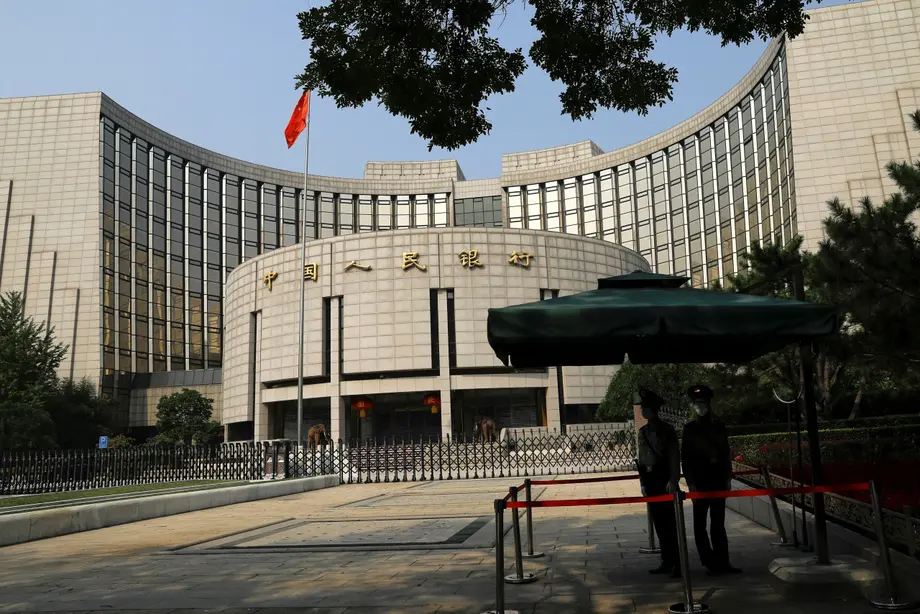
The State Council's financial work report also recorded a 79% reduction in outstanding operational financial debt by the end of June 2026, measured against the same March 2023 baseline. People's Bank of China Governor Pan Gongsheng presented the report on behalf of the State Council to the National People's Congress Standing Committee on November 3. It was published on November 5.
The figures mark a rapid acceleration. At the end of 2025, the number of remaining platforms was already 74% below the March 2023 level. By September 2026, the reduction had deepened by another 18 percentage points. More than 7,000 platforms had been removed during 2024 alone.
For local governments, banks and companies waiting to be paid, the practical challenge now is to turn that administrative retreat into lasting financial stability. Former platforms need reliable business income, local authorities need to manage their repayment obligations, and lenders need to track debts after companies leave the financing platform category.
The report places the overhaul alongside other financial measures: more than 8.4 trillion yuan in approved property project loans, a liquidity facility addressing unpaid business bills, and targeted lending support for agriculture, private enterprises and small businesses. Together, the measures seek to ease several connected pressures on China's economy.
What does leaving the platform list mean?
Local government financing platforms are companies established by local authorities and related public bodies, often using public funds, land or shares as their initial assets. They borrow to support projects such as transport infrastructure, affordable housing, social services and environmental protection.
A city might use such a company to raise money for a public project whose benefits reach many residents but whose direct income is limited. The company owes the money, while its close relationship with the government can create an expectation that public finances will support repayment.
China's current reform seeks to strip these companies of their government financing role. A company can leave the platform list and continue operating as a business. The next task is to earn enough income to meet its costs and debt payments, rather than depend on borrowing arranged around government projects.
The two headline figures measure different changes at different dates. The platform count was down 92% by September, while operational financial debt was down 79% by June. Each uses March 2023 as its starting point. On an index beginning at 100, the platform count had fallen to eight and the debt measure to 21.
How the debt swap works
China's debt replacement programme is central to the restructuring. The plan provides for 10 trillion yuan in government bonds over 2024 to 2028 to replace existing hidden local debt. Hidden debt means repayment obligations accumulated outside the formal government borrowing framework, including borrowing associated with financing platforms.
Finance Minister Lan Fo'an explained the package in November 2024. One component raised the local government debt limit by 6 trillion yuan, to be implemented over three years. The funds were restricted to replacing hidden debt already under monitoring, with regional allocations based on the scale of that debt.
The second component allocated 800 billion yuan annually from newly issued local government special purpose bonds for five years, adding capacity to replace up to 4 trillion yuan in hidden debt. These bonds are government borrowing instruments issued within approved limits.
Lan described that second component at a press conference:
For five consecutive years starting in 2024, RMB 800 billion will be allocated each year from newly issued local government special-purpose bonds to replenish government-managed funds [政府性基金], specifically for debt reduction.
The mechanism replaces existing obligations with formal government bonds. Lan's explanation said the arrangement would leave local repayment responsibilities unchanged and estimated interest savings of about 400 billion yuan from the difference between the borrowing costs of hidden debt and statutory debt.
For a local authority, lower interest payments can release money for salaries, basic services and other spending. For a creditor, replacement borrowing can make repayment arrangements more predictable. The underlying obligation still has to be managed over time.
The milestones and deadlines
China's overhaul brings together an accelerated platform exit programme and a debt replacement timetable extending to 2028. The main dates show how the two efforts fit together:
- End of March 2023: The baseline for the reported reductions in platform numbers and operational financial debt.
- November 2024: The central authorities introduced the debt resolution package, including the government bond replacement arrangements.
- End of 2025: Platform numbers were down 74% from the baseline, and hidden local debt stood at 6.5 trillion yuan.
- End of June 2026: Outstanding operational financial debt was down 79% from March 2023.
- End of September 2026: Platform numbers were down 92% from March 2023.
- November 3 and 5, 2026: Pan presented the financial work report, followed by its publication.
- 2028: The debt replacement programme reaches the end of its planned five year period.
Wen Laicheng, a professor at the Central University of Finance and Economics, said platform exits were proceeding as expected. He said the requirement was to have the platforms largely cleared by 2027 and that the current pace made that achievable.
The debt timetable has another important provision. About 2 trillion yuan in hidden debt linked to redevelopment of rundown urban areas, due in or after 2029, remains payable under its original contracts. Lan's 2024 explanation projected that the amount of hidden debt requiring resolution by 2028 would fall from 14.3 trillion yuan to 2.3 trillion yuan after the combined arrangements.
How much debt remains?
China's hidden local debt stood at 14.3 trillion yuan at the end of 2023, according to Lan's explanation. The later figure of 6.5 trillion yuan at the end of 2025 represents a decline of 7.8 trillion yuan, or about 55%.
Formal local government debt, meanwhile, stood at about 60.65 trillion yuan at the end of September 2026, according to Ministry of Finance figures. That balance was within the limit approved by the National People's Congress.
Hidden debt and formal government debt are different categories. When a government bond replaces a hidden obligation, the repayment commitment moves into the formal borrowing framework. Readers therefore need both figures to understand the changing structure of local public finances.
Lan put the government debt ratio, including statutory and hidden debt, at 67.5% of gross domestic product at the end of 2023. That calculation used a preliminary GDP estimate of 126.06 trillion yuan. His explanation linked repayment difficulties to weak domestic demand, tax revenue falling short of expectations and a sharp decline in land sale income, all of which reduced the funds local authorities had expected to use for debt reduction.
Why former platforms still need scrutiny
Luo Zhiheng, chief economist at Yuekai Securities, identified several difficulties facing the companies after their government financing role is removed. Their ability to generate cash internally has weakened, profits remain under pressure, and commercially attractive projects are insufficient.
Local fiscal strain also keeps some companies tied to public responsibilities. Traditional projects serving public needs may earn limited returns, while newer commercial operations have yet to produce enough profit. A company must cover interest, operating expenses and repayments with cash it can actually collect.
Luo recommended monitoring debt after platform exits and preventing the government financing function from reappearing through newly created companies or related entities. He also called for clearer boundaries between local authorities and the businesses they own.
Wen raised a related concern: former platforms should not pass their business debts to local governments, and governments should not use ordinary state owned enterprises to borrow outside the rules. The Ministry of Finance has called for reducing expectations of automatic government support and making responsibilities clearer.
A borrowing model with a long history
The scale of today's restructuring reflects the platforms' longstanding role in public investment. A 2013 IMF working paper, titled Local Government Financing Platforms in China: A Fortune or Misfortune?, described them as municipal enterprises engaged in infrastructure, affordable housing, social services and environmental projects.
The paper cited National Audit Office figures putting local government debt at 10.7 trillion yuan at the end of 2010, equivalent to 27% of that year's GDP. Financing platform debt accounted for around 4.97 trillion yuan. It also cited the banking regulator's estimate that loans to platforms stood at 9.2 trillion yuan at the end of 2012.
Regulators had already begun tightening controls. In June 2010, the State Council ordered debt verification, classification of platforms, closer supervision of borrowing and lending, and a prohibition on local government guarantees for platform debts.
Banking guidance issued in April 2013 capped the stock of platform loans at the level recorded at the end of 2012. New lending required cash flow coverage above 100%, liabilities below 80% of assets and collateral meeting regulatory requirements. Those tests focused on whether a borrower had enough incoming cash and a manageable balance sheet.
The revised Budget Law adopted in 2014 opened a formal route for provincial government bond issuance. The State Council also required platforms to lose their government financing function and barred them from creating new government debt. The current programme is accelerating a separation between public borrowing and corporate borrowing that has been pursued for years.
Property loans and overdue business payments
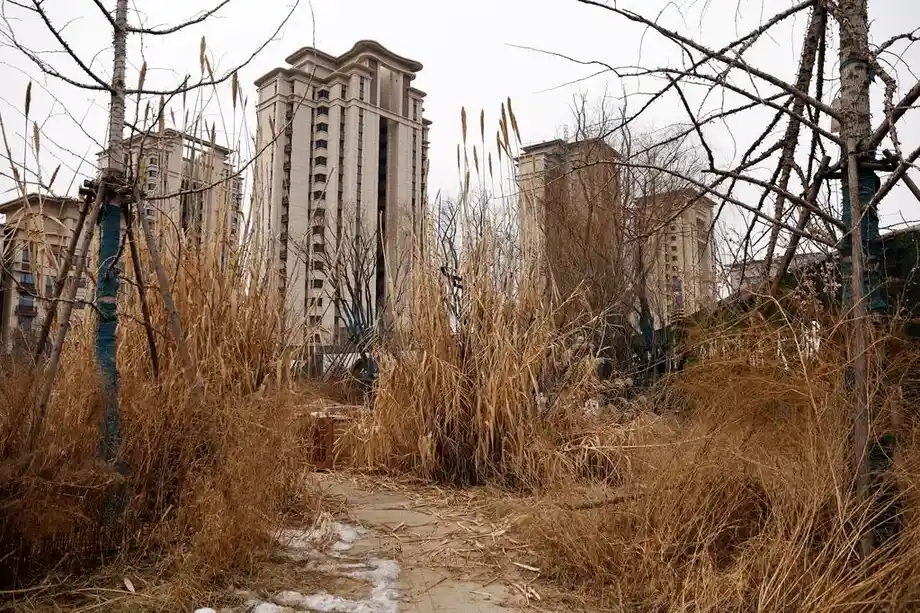
Commercial banks have approved more than 8.4 trillion yuan in loans through the property financing coordination mechanism's whitelist, the financial work report said. The mechanism identifies property projects eligible for coordinated financing support.
Authorities plan to make the arrangement a regular feature to meet reasonable project financing needs. For housing projects that need money to continue construction, access to bank financing can help pay contractors and maintain work. The figure of 8.4 trillion yuan refers to cumulative loan approvals; actual disbursement follows the lending process.
The report also disclosed a liquidity support facility to address overdue payments by large companies. Liquidity means cash available to meet immediate bills. Payment delays can spread through a supply chain when a supplier waiting for money also has workers and other businesses to pay.
Authorities have summoned prominent companies considered able to pay and pressed them to correct their payment practices. The report did not identify the companies, give their number or disclose the value of unpaid bills involved.
Targeted credit and financial opening
The central bank introduced structural monetary policy measures in January and September 2026. These included larger relending quotas for agriculture and small businesses, a separate relending facility for private enterprises, and efforts to encourage more lending to micro and small businesses.
Relending provides central bank funding to financial institutions so they can support designated borrowers. Unlike a measure intended to affect credit across the whole economy, these tools direct support towards particular groups.
The State Council report also called for continued financial reform and opening, wider international use of the renminbi and development of offshore renminbi markets. Its objectives include greater use of the currency for pricing, payments, investment, financing and reserves.
Authorities said they would expand access in the foreign exchange sector, make cross border trade and investment transactions easier, and encourage more foreign financial institutions and capital committed for longer periods to enter China. Alongside these plans, the report committed to handling risks in key regions and financial institutions and supporting the commercial transformation of former financing platforms.
Key Points
- China reported a 92% fall in local financing platform numbers by September 2026, compared with March 2023.
- Outstanding operational financial debt fell 79% by June 2026 against the same baseline.
- A programme spanning 2024 to 2028 provides for 10 trillion yuan in government bonds to replace hidden local debt.
- Hidden local debt fell from 14.3 trillion yuan at the end of 2023 to 6.5 trillion yuan at the end of 2025.
- Former platforms face pressure to generate reliable business income and manage their remaining debts.
- Banks approved more than 8.4 trillion yuan in property whitelist loans, while authorities also targeted overdue business payments.