A national icon faces a costly transformation
Eighty years after World War II, the Philippine jeepney faces a transformation that reaches far beyond its brightly painted bodywork. Modern vehicles that meet new standards can cost around US$50,000, three to four times the price of a traditional unit. For drivers who depend on a single vehicle to feed their families, the price of cleaner, safer transport can mean taking on daunting debt.
Contents
- A national icon faces a costly transformation
- What the modernization program would change
- Why consolidation became a flashpoint
- The financial burden on drivers and passengers
- Can electric jeepneys make daily operations cheaper?
- Bacolod tests the practical requirements
- Where Philippine manufacturers fit
- What passengers would notice
- Cleaner air depends on vehicles and electricity
- Keeping fares affordable and journeys accessible
- Preserving more than paint and chrome
- Several paths could coexist over the next decade
- The Bottom Line
The Public Utility Vehicle Modernization Program (PUVMP), launched in 2017, seeks to replace aging vehicles, reorganize operators into cooperatives or corporations, and make services more predictable. Electric jeepneys are already operating on selected routes, while cities such as Bacolod are testing how financing, charging facilities and local government support can work together.
As of October 27, 2025, the debate involves more than choosing between an old diesel engine and a battery. Drivers want to protect their livelihoods. Passengers need affordable rides. Manufacturers want room for Philippine craftsmanship and production. Government officials want cleaner air, safer vehicles and a transport system that is easier to manage.
The jeepney became indispensable because it solved an urgent problem with materials already at hand. In the late 1940s, Manila lay in ruins, and public transport had been shattered by war. Mechanics converted surplus military jeeps into passenger carriers, adding two long benches, a roof and a rear entrance.
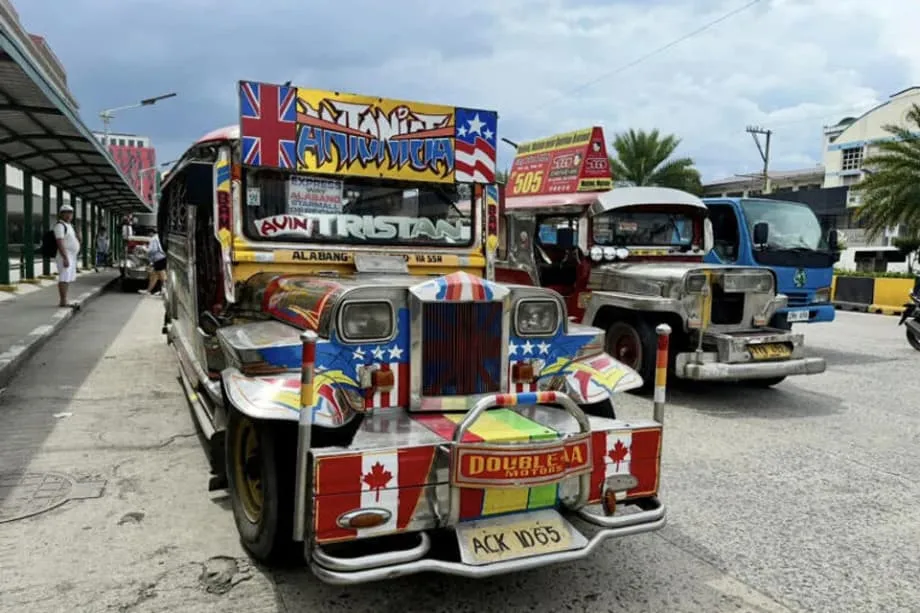
Those improvised vehicles grew into a daily lifeline for workers, students and families, reaching narrow streets that buses and trains could not serve. Owners covered them with saints, superheroes, family tributes and symbols of hometown pride. Their decoration told stories of faith, migration, love and the struggle to earn a living. For many small operators, the vehicle and its livelihood passed from one generation to the next.
What the modernization program would change
The PUVMP combines vehicle replacement with changes to how public transport operates. Its goals include safer, cleaner and more accessible vehicles, standardized routes, and services that passengers can rely on. Cooperatives are intended to help operators obtain loans, maintain fleets and meet safety and environmental requirements.
Older jeepneys are sturdy and relatively easy to repair, but their diesel engines emit soot that worsens urban air quality. Diesel exhaust contains pollutants that harm lungs and aggravate asthma. Officials also cite safety and traffic management as reasons to replace aging units.
Proposed improvements include better brakes, side doors, stronger chassis, modern fare systems and GPS tracking. A chassis is the supporting structure beneath a vehicle. Regulators want engines that meet Euro 4 emissions standards or electric drivetrains, the equipment that delivers power to the wheels.
Euro 4 compliant engines and electric vehicles offer different routes toward cleaner transport. The program also seeks more orderly operations, replacing a fragmented system of individual vehicles with fleets that can follow schedules and receive standardized maintenance.
One senior finance policymaker framed the issue sharply, arguing publicly that jeepneys should move from roads to museums because they are inefficient and unhealthy. Transport leaders say commuters deserve cleaner air and safer rides, while insisting that the transition must protect the people earning their living behind the wheel.
Why consolidation became a flashpoint
Operators were required to consolidate into cooperatives or corporations to retain their routes. Officials see this as a way to organize a sector made up of many small businesses. A group can pool resources, qualify for financing and manage a fleet more easily than an individual owner.
Many drivers see the same requirement as a threat to independence. Consolidation fees, compliance costs and expensive replacement vehicles could overwhelm small operators. Driver groups warn that the changes put a micro industry supporting hundreds of thousands of workers at risk.
The government reported that a large majority of franchise holders had consolidated by the end of 2023. Transport groups disputed those figures and argued that many small operators had been excluded. Protests periodically halted traffic in Metro Manila and other cities as drivers demanded a slower and fairer transition.
The main stages of the dispute span several years:
- Late 1940s: Mechanics began converting surplus military jeeps into passenger vehicles after World War II.
- 2017: The government launched the Public Utility Vehicle Modernization Program.
- End of 2023: The government reported consolidation by a large majority of franchise holders, a claim challenged by transport groups.
- 2024: The Senate moved to suspend implementation while concerns from drivers and operators were addressed.
- October 27, 2025: Vehicle costs, livelihoods, fares and the pace of change remain central to the modernization debate.
The Senate intervention reflected the difficulty of balancing health and safety goals with the needs of workers and passengers on low incomes. A timetable for completing the transition was not specified.
The financial burden on drivers and passengers
A modern jeepney or minibus costing around US$50,000 is a major purchase for a family business operating on thin margins. Government subsidies and bank financing can help, and cooperatives can spread costs across members. Drivers still worry about the debt they may have to carry.
Passengers could face higher fares if operators need more revenue to pay for expensive vehicles, maintenance and formal terminal fees. Traditional jeepneys have long provided some of the cheapest journeys through crowded cities. A modest fare increase can become a repeated expense for someone commuting every day.
A veteran Manila driver described his jeepney as a partner he knew inside and out, a daily companion that had helped support a large family. He feared that losing his route would leave him without work and force him to return to the province.
A medical student expressed the passenger side of that dependence, describing the jeepney as the only and most convenient option and saying taxis were expensive on a student budget. For riders in that position, modernization must preserve access as well as improve the vehicle.
Labor organizers have called for a just transition, meaning changes that protect workers while transport is improved. Their proposals include higher subsidies, local manufacturing to lower vehicle prices, and service contracting, under which government pays operators to provide scheduled trips on assigned routes.
Transport unions have used a direct message during protests and negotiations:
No modernisation without a just transition.
Can electric jeepneys make daily operations cheaper?
Electric jeepneys offer a possible reduction in daily energy spending. Estimates put diesel fuel costs at about 1,500 to 1,800 pesos a day, compared with roughly 500 to 700 pesos for electricity for a similar workload. The actual saving depends on the route, passenger load and electricity rate.
Electric vehicles produce zero tailpipe emissions, helping reduce pollution where passengers, pedestrians and residents are exposed to traffic. They are quieter and often use energy more efficiently in urban driving with frequent stops and starts. Their greenhouse gas advantage grows when the electricity used to charge them comes from cleaner sources.
Operators must weigh those potential savings against the purchase price and the practical demands of keeping vehicles running. Charging requires investment in overnight depots and places where vehicles can add power during their routes. Batteries must cope with heat, heavy loads and frequent stops.
Mechanics need training, and replacement parts must be available. Tax incentives, route planning and charging arrangements also need to fit together. A vehicle that saves energy still needs enough time and access to electricity to complete its scheduled service.
The financial measure that matters is total cost of ownership: the purchase price plus financing, energy, maintenance and other expenses over the vehicle's working life. Electric models have higher upfront prices, but lower energy spending and fewer moving parts can reduce lifetime costs. Interest rates, subsidies, energy prices and daily distance all affect that calculation.
Bacolod tests the practical requirements
Bacolod has added electric jeepneys to an urban route through a cooperative that plans to introduce dozens more vehicles under a regulatory franchise. The city pledged additional charging stations, while the cooperative arranged financing with an electric vehicle supplier through a scheme allowing it to rent vehicles and eventually own them.
The initial fleet is small. Its importance lies in bringing several necessary pieces together: local government support, cooperative financing and a manufacturer partnership. These arrangements put vehicles into daily service, where their strengths and problems become easier to measure.
City trials can reveal actual operating costs, charging patterns and passenger acceptance. They can also expose maintenance problems early and help planners adjust routes. Driver training and support systems must keep vehicles dependable through heat, rain and rush hour crowds.
Bacolod's experience also illustrates why purchasing vehicles is only part of the task. Charging stations, workshop support and workable repayment terms have to develop alongside the fleet. As more cities refine those arrangements, cooperatives will have clearer information for deciding whether electric vehicles fit their routes.
Where Philippine manufacturers fit
Sarao Motors and Francisco Motors helped anchor a domestic jeepney industry that produced vehicles suited to Philippine roads and tastes. Production dwindled as cheaper imports and new transport lines reduced demand, while proposed standards required investment beyond the financial capacity of many small workshops.
Manufacturers and academics have discussed locally assembled modern vehicles, cleaner engines or electric drivetrains, and standardized safety features. Their aim is to retain more of the production value in the Philippines while matching vehicles to actual route conditions.
Local manufacturing could shorten parts supply lines, support maintenance training and preserve the craftsmanship associated with the jeepney. Vehicles that meet the standards at lower prices could also make upgrading more manageable for operators.
A market dominated by fully imported units could bring parts delays, higher maintenance costs and fewer opportunities for the workshops that have kept jeepneys running for decades. A combination of locally assembled bodies and imported drivetrains is another possible approach, balancing price, technical requirements and cultural design.
Training in electric vehicle maintenance and electronics could create technical jobs while helping cooperatives maintain their fleets. The industrial choices therefore affect mechanics and body builders as well as vehicle owners.
What passengers would notice
Modern vehicles can offer more headroom and space, better ventilation or air conditioning, and smoother rides. Side entrances, higher floors, stronger frames and better brakes are among the proposed safety changes intended to reduce risks for passengers and pedestrians.
GPS tracking, scheduled dispatch and automatic fare collection could make services more predictable and reduce cash handling. Cooperatives would be better placed to coordinate vehicles rather than leaving each driver to decide independently when to depart.
Boarding habits may also change. Passengers could use designated stops instead of tapping the roof to ask a driver to halt. Fixed schedules could help commuters on main corridors, while reducing some of the flexibility that makes jeepneys convenient on smaller streets.
Ed Sarao of Sarao Motors has challenged whether the replacement vehicles retain the jeepney's identity, describing them as minibuses:
The new vehicles are definitely not jeepneys, all the lines and details are different,
Thomas Orbos, a transport undersecretary, offered a different view, predicting that experience of the improved service would overcome resistance:
I am sure when people see the new system on the road, and once people try it, the opposition will be lost,
For passengers, the practical test will be whether greater comfort and reliability arrive without an unaffordable fare or the loss of a useful connection.
Cleaner air depends on vehicles and electricity
Replacing older diesel engines with Euro 4 compliant engines or electric drivetrains can reduce soot and nitrogen oxides along busy roads. Electric fleets can also reduce noise in neighborhoods crowded with vehicles and tricycles, improving daily conditions beyond the passenger compartment.
The climate calculation includes the electricity used for charging. A growing contribution from gas, solar, wind and geothermal power would increase the emissions advantage of electric vehicles. The energy supply matters alongside the absence of exhaust from the vehicle itself.
Charging plans also need to match the local electricity network. Depots can be located where there is sufficient grid capacity, and charging can be scheduled during periods of lower demand. City governments can map depots, charging bays and pauses between trips against vehicle battery range.
Coordination with power utilities and investment in distribution lines will help determine how quickly electric fleets can grow. Battery recycling and second uses for bus battery packs will become part of managing those fleets as they expand.
Route design connects the environmental and financial goals. Vehicles need enough passengers and daily use to justify their cost, while charging arrangements must keep them available when riders need them. More experience with charging networks and maintenance will make those costs easier for cooperatives to assess.
Keeping fares affordable and journeys accessible
Passengers on low incomes face the sharpest pressure if the cheapest transport option becomes more expensive. Drivers argue that commuters should not have to absorb modernization through higher fares or fewer available rides.
Service contracting offers one proposed response. Government would pay operators for delivering scheduled trips, creating a steadier income rather than leaving earnings entirely dependent on fares collected that day. Supporters see it as a way to protect affordability while making operator finances more predictable.
Transparent route planning and public consultation could help maintain access in neighborhoods that already have limited transport. Larger or more formal services need to preserve useful connections rather than simply concentrate on the busiest corridors.
Wider doors and priority seating can help older passengers and people with disabilities. Accessibility also depends on sidewalks, crossings and curb design. A vehicle with improved features still needs a boarding place that passengers can reach and use safely.
Dense districts present another practical constraint. Narrow streets require compact vehicles that can turn and stop safely. A modern system will need to account for those street conditions as well as the specifications of individual vehicles.
Preserving more than paint and chrome
The jeepney's identity includes its chrome grille, bonnet decorations and painted stories, but also the small businesses and daily relationships built around it. Its cultural value is tied to the role of owner drivers and the independence their vehicles made possible.
Some operators envisage locally built bodies that retain room for artists and familiar design elements while meeting safety requirements underneath. Such approaches would allow the vehicle's appearance to evolve without abandoning the metal canvases that made it recognizable.
Museums and cultural programs could preserve examples from the first conversions after the war through the celebrated designs of the 1970s and 1980s. Tourism routes in heritage districts could keep some traditional vehicles in limited service.
Preservation and everyday transport would serve different needs. The main fleet could change its shape and source of power while selected vehicles retain the physical history of a machine that helped rebuild national mobility.
Several paths could coexist over the next decade
Different places may need different fleets. Metro Manila and other large cities could use larger vehicles with air conditioning on main corridors, with electric jeepneys running shorter loops connected to charging depots. Provincial towns could retain smaller vehicles with cleaner engines where electricity supply is less reliable.
Locally assembled bodies combined with imported drivetrains could support domestic jobs while meeting technical standards. Maintenance and electronics training would help workers move into the skills required by newer fleets.
Expanded service contracting could give operators steady payments for scheduled trips, improve cash flow and make lenders more willing to provide financing. Government would pay for public transport service while fares remained within reach of regular passengers.
Certified upgrades could provide an interim option where full replacement is financially out of reach. Cleaner engines and safety improvements to existing vehicles would require clear standards and periodic inspections. This approach could suit selected routes while more expensive replacements remain difficult to finance.
Charging investment would need to grow alongside electric fleets, with depot locations, battery range, route layovers and electricity distribution planned together. The central challenge is to improve the ride without removing the affordable service, livelihoods and local skills that made the jeepney indispensable.
The Bottom Line
- Jeepneys emerged from surplus military vehicles in the late 1940s and became a Philippine transport lifeline and cultural icon.
- The PUVMP, launched in 2017, seeks cleaner, safer and more accessible vehicles alongside consolidated operations.
- Modern vehicles can cost around US$50,000, three to four times the price of traditional units.
- Drivers seek greater financial support, local manufacturing and stable incomes during the transition.
- Estimated daily energy spending is 1,500 to 1,800 pesos for diesel, compared with 500 to 700 pesos for electricity for similar work.
- Bacolod is testing electric jeepneys with cooperative financing, supplier support and planned charging facilities.
- Affordable fares, useful routes and accessible boarding remain central concerns for passengers.
- Mixed fleets, local assembly, certified upgrades and carefully planned charging are possible parts of the next decade's transition.