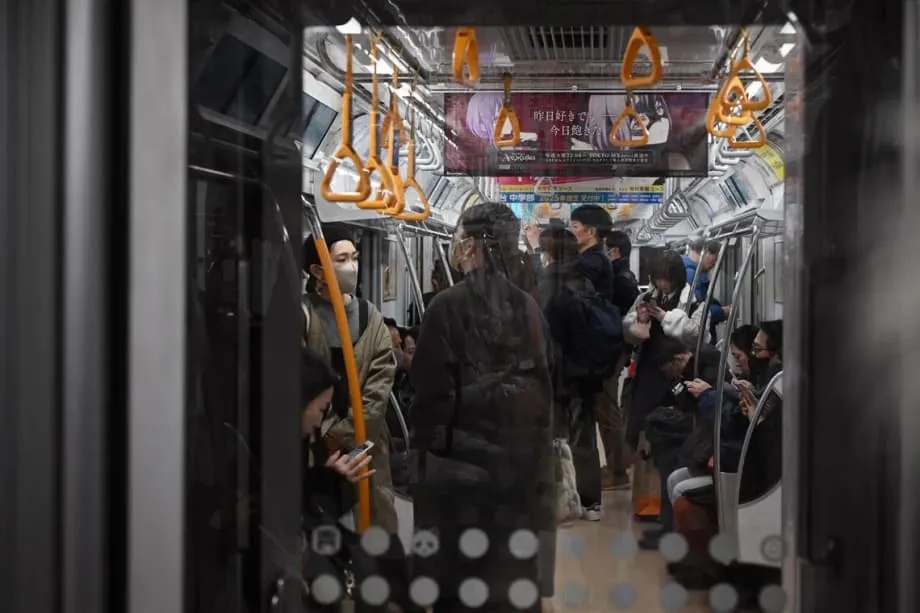
A 34.5 kilometer circle reaches a century
Tokyo's Yamanote Line will mark 100 years of full loop service on Nov. 1, 2025, celebrating a railway that connects 30 stations around the city center and carries around 970,000 people each day. Its 34.5 kilometer circuit takes about an hour, with trains arriving every three to four minutes during peak periods.
Contents
The anniversary marks the completion of the circle in 1925, rather than the opening of the line's first section. The railway began as a straight route serving freight and connecting other routes. Its development into a ring helped shape where people lived, where businesses gathered and how Tokyo expanded.
For commuters, the green trains are part of a daily routine. For visitors, the loop offers a way to understand a vast city through its stations and the neighborhoods surrounding them. For Tokyo itself, it connects districts with different purposes and identities, from business centers to shopping streets and university areas.
JR East is celebrating with two modern trains dressed to recall earlier generations of Yamanote rolling stock, the term for the trains used on a railway. Station events and a special anniversary ride will accompany the commemorative services. At the same time, the operator is preparing technology that will change how trains are driven and how stations are managed.
How a straight railway became a loop
The story began in 1885, when the Shinagawa Line opened between Shinagawa and Akabane. That route was a starting point for the railway that would eventually circle central Tokyo, although a complete loop was still decades away.
By 1909, it had been linked with the Toshima Line between Tabata and Ikebukuro. The combined route took the Yamanote Line name. One missing connection still prevented trains from completing a circuit: the stretch between Ueno and Tokyo stations.
The area between those stations was so densely built that constructing a through route seemed impossible. The Great Kanto Earthquake in 1923 changed the circumstances. Reconstruction created space for a new railway connection and brought political urgency to the project.
In 1925, an elevated section opened between Ueno and Tokyo, completing the loop. The circuit measured 34.5 kilometers, the same distance it covers today. Freight trains were common in the line's early years, but passenger travel gradually became its focus as Tokyo's population grew and everyday journeys changed.
The main steps in the line's development were:
- 1885: The Shinagawa Line opened between Shinagawa and Akabane.
- 1909: A connection with the Toshima Line between Tabata and Ikebukuro helped form the route named the Yamanote Line.
- 1923: Reconstruction after the Great Kanto Earthquake created an opportunity to build the missing connection.
- 1925: The elevated section between Ueno and Tokyo opened, completing the 34.5 kilometer loop.
- Nov. 1, 2025: The line will celebrate a century of full loop service.
The stations that helped Tokyo grow west
Shinjuku, Shibuya and Ikebukuro became magnets for growth as people moved away from Tokyo's traditional core toward its western suburbs in the early Showa era. The Showa era lasted from 1926 to 1989, covering much of the period in which the railway and the expanding city developed together.
Private railway companies connected their own lines to these stations. Those connections made the hubs places where journeys met, while shops, workplaces and other activity gathered nearby. Each station area developed its own identity, retail clusters and job centers.
Tokyo consequently grew as a city with several major centers, rather than one center around which everything else revolved. This is what a polycentric city means: different districts serve as important destinations, and transport connects them. The Yamanote became the ring joining those centers.
The railway also helped Tokyo grow upward around its stations. Its influence can still be seen in the way the loop brings together core business areas, old shopping streets, technology districts, university zones and nightlife neighborhoods. The route ties those different parts of urban life into a regular pattern of travel.
Modern trains recall two earlier generations
JR East has introduced two E235 series trains with exterior designs inspired by older Yamanote models. They retain the modern train underneath while using commemorative coverings to recall the appearance of earlier services.
One reproduces the all light green look of the 103 series, which served the line from the 1960s through the 1980s. The other recalls the 205 series, the first stainless steel train set used on the loop. Those trains carried a light green stripe and remained in service until the middle of the 2000s.
Both commemorative trains carry special anniversary logos and a headmark, a commemorative sign displayed at the front. Their designs connect the current E235 generation with trains that passengers knew during earlier decades of the line's history.
The two trains are scheduled to operate through Nov. 3. Each makes fewer than ten completed loops per day, and operating times vary by date. Their appearances therefore depend on the day's schedule, even though regular Yamanote services continue to provide the familiar frequent connections around the circuit.
An anniversary journey and station stops
On Nov. 1, a dedicated charter train is scheduled to complete one full loop, departing from and returning to Ikebukuro. The ticketed service is aimed at railway fans who want to travel around the line on the exact anniversary date.
The listed adult fare is between 2,500 and 3,000 yen. The attraction is the occasion as much as the route: passengers will make the full circuit on the day that marks a century since loop service began.
A stamp rally is also part of the celebrations, with selected stops including Tokyo, Ueno, Sugamo, Shinjuku, Harajuku and Takanawa Gateway. The activity takes the anniversary beyond the trains themselves and into stations spread around the line.
Station staff are engaging regular passengers and visitors through events and displays showing how the Yamanote has changed across the decades. These celebrations connect the railway's history with the places where people use it every day.
Osaki draws railway enthusiasts
Railway fans have already gathered beside the tracks and on platforms to photograph the commemorative trains arriving and departing. Osaki has been a particular focus for people hoping to capture the retro designs.
Masami Kitajima, Osaki Station's stationmaster, addressed enthusiasts and commuters who came to see the special trains. The gatherings bring together people making their usual journeys and visitors drawn by the anniversary liveries, the colors and designs on the trains' exteriors.
A historic railway prepares for new technology
JR East is looking beyond the anniversary celebrations toward changes in train operation and station management. The Yamanote is a platform for experiments in automation and sustainable energy, alongside its continuing role as a railway used by hundreds of thousands of passengers daily.
Automation concerns technology taking on tasks involved in operating the railway. The preparations described for the line would change how trains are driven and how stations are managed, although no introduction dates or detailed arrangements were given.
The anniversary brings those preparations into view beside a century of full loop service. A route that began with freight and connecting journeys became a passenger railway central to Tokyo's growth. Its next changes will take place within that same everyday network of commuters, visitors and station neighborhoods.
Key Points
- The Yamanote Line will mark 100 years of full loop service on Nov. 1, 2025.
- The 34.5 kilometer circuit connects 30 stations, takes about an hour and carries around 970,000 passengers daily.
- Trains run every three to four minutes at peak times.
- The loop was completed in 1925 with an elevated connection between Ueno and Tokyo.
- Two E235 trains recalling the 103 and 205 series are scheduled to operate through Nov. 3, with times varying by date.
- A charter train will make a full loop from Ikebukuro on Nov. 1, with the adult fare listed between 2,500 and 3,000 yen.
- Station celebrations include a stamp rally, events and historical displays.
- JR East is preparing changes to train operation and station management while the line serves as a platform for experiments in automation and sustainable energy.