A 1,035 kilometer route becomes a resource lifeline
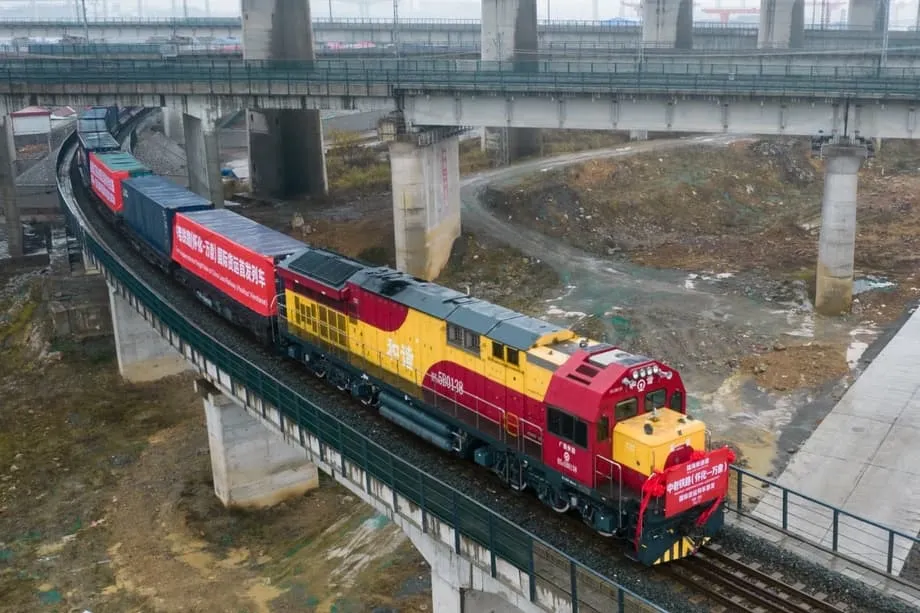
The 1,035 kilometer China Laos Railway, linking Kunming in southwest China with Vientiane, has become a strategic route for a mineral that helps feed 1.4 billion people. China holds less than 4 percent of global potassium reserves, and a new Chinese government study says the railway has become a crucial channel for potassium supplies, giving the country a nearby alternative to distant fertiliser producers.
Contents
- A 1,035 kilometer route becomes a resource lifeline
- Why potassium matters on the farm
- Supply shocks increase the value of a nearby route
- How the railway changes the journey
- Laos seeks more value from its deposits
- Debt and currency pressures complicate expansion
- Development gathers around stations
- Thailand plans a bridge between rail systems
- Malaysia adds a route toward the sea
- Water, land and communities face new pressures
- A stronger Chinese position, with commercial tests ahead
- Key Points
Four years after trains began running, the line is taking on a role beyond its original purpose of carrying passengers and freight at speeds of up to 200 kilometers per hour. Increasing shipments of potassium chloride from Laos connect the railway directly to Chinese food security, fertiliser costs and negotiations with overseas suppliers.
China grows vast quantities of rice, corn, vegetables and fruit, but its domestic potassium resources are limited. Most are held in salt lakes that are costly to exploit. Imports, primarily from North America and producers in Eastern Europe, have therefore been an essential part of the country's agricultural supply chain.
Laos offers another source, reached by land. Before the railway opened, minerals from central and southern Laos relied on trucks moving over mountain roads toward borders or ports. Rail now provides a more predictable route into China's network, reducing exposure to distant suppliers and maritime chokepoints.
The benefits extend beyond fertiliser. By mid 2024, the line had carried more than 10 million tons of goods worth roughly $5.7 billion. For Laos, it is the first true national railway. For China, it provides an entry point into Southeast Asia and access to mineral deposits that previously seemed too difficult to develop quickly at scale.
Why potassium matters on the farm
Potassium is one of the three main nutrients in the NPK group used in fertilisers, alongside nitrogen and phosphorus. It helps plants move water, activate enzymes and build stronger stalks. When crops lack potassium, they can become less resistant to disease and produce smaller harvests, particularly during heat or drought.
For China, a reliable supply helps protect farming against both difficult weather and interruptions in trade. A shortage of this single input can weaken the performance of crops across a much larger food system.
Most agricultural potash is potassium chloride, also called muriate of potash. Producers mine it as ore or extract it from underground brines, then process it into granules that farmers spread on fields or blend into compound fertilisers.
Other potassium products serve different needs. Some crops benefit from potassium sulfate, a premium product containing less chloride. Potassium hydroxide is used in chemicals, soaps and some batteries. The products differ, but each depends on a steady supply of potassium salts.
Supply shocks increase the value of a nearby route
Canada dominates global potash exports, while Russia and Belarus hold large reserves and have long been major suppliers. This concentration means disruptions affecting a small group of producing countries can travel quickly through the fertiliser market.
Sanctions and war in Eastern Europe tightened shipments and pushed up prices in recent years. Higher energy costs also increased production expenses. For China, which already lacked enough domestic potassium, those shocks exposed the risks of relying on long supply chains for a strategic farm input.
The Laos connection lowers logistics costs and can trim weeks from delivery schedules compared with ocean shipping. More potassium arriving from nearby deposits gives Chinese buyers another option when negotiating with North American producers and other suppliers.
Canadian output remains dominant, while Laos adds a credible alternative source. Greater choice can reduce the risk of sudden shortages and give Beijing more confidence in price negotiations. Because fertiliser price increases can feed through into food markets and household budgets, the effects reach beyond mines and trading companies.
How the railway changes the journey
Bulk commodities such as potash suit rail transport because they are heavy, relatively low in value per kilogram and moved in large quantities. The railway has high fixed costs, but the cost of carrying each tonne falls as traffic grows. Rail can move tens of thousands of tonnes over long distances in bulk train operations.
Before 2021, most minerals leaving Laos travelled by truck to borders or ports and then onward through sea routes. The newer logistics chain allows bulk rail cars to load near mine sites, transfer through the Thanaleng Dry Port outside Vientiane and continue into China's standard gauge network.
Standard gauge describes the distance between the rails. The matching track standard in China and on the China Laos Railway removes the need to change between different track widths at their border. Integrated customs processing further simplifies the movement of freight into Yunnan.
Predictable schedules matter as much as speed. Compared with mountain roads, rail services are less sensitive to weather, helping fertiliser plants plan deliveries. A more dependable journey can reduce the stock buyers need to keep in storage and smooth the flow of payments to sellers.
Cross border operations expanded after pandemic travel restrictions eased in 2023, with two daily passenger services alongside busy freight schedules. The main milestones show how quickly the line moved from a new transport project into a broader trade corridor:
- 2021: The railway opened, changing the transport options available to mineral exporters in Laos.
- 2023: The easing of pandemic travel restrictions supported an expansion of cross border operations.
- Mid 2024: Goods carried on the line exceeded 10 million tons, with a value of roughly $5.7 billion.
Laos seeks more value from its deposits
Laos wants to become a regional potash supplier, using the railway to turn its landlocked location into a position connecting surrounding markets. Chinese buyers have increasingly turned to Laos as sanctions constrained supplies from Eastern Europe, and exports of potassium chloride have climbed.
Industry claims point to very large deposits of potassium rich salts beneath Laotian soil. Authorities are promoting gradual increases in capacity as new mines open and existing projects expand. Faster transport makes those deposits more commercially attractive by connecting them to buyers at a larger scale.
Mining permissions and operating capacity remain uneven. Many companies have been authorised to mine and process potash, yet only about half have secured full licences and are active at scale. Capital requirements, gaps in technical knowledge and the work needed to meet regulations slow the expansion of output.
Authorities are also pressing for stronger mineral regulation and more processing inside Laos before products leave the country. The aim is to raise standards, retain more activity locally and collect more revenue from each tonne exported. For Laos, the financial return depends on how much value stays in the country as production grows.
Debt and currency pressures complicate expansion
The railway cost about $5.9 billion, with most financing coming from China. Laos is pursuing its mineral and logistics ambitions while carrying heavy public debt, facing a weaker currency and dealing with inflation that has strained household finances.
By 2023, roughly half of the government's external sovereign debt was owed to Chinese creditors. External sovereign debt is money the government owes to lenders outside the country. That exposure makes the terms of future investment and debt relief important to the pace of industrial development.
Potash exports and freight activity can bring new revenue, but Laos also needs room in its finances to support a competitive industry and benefits for local communities. Without clearer debt relief or stronger financial reserves, the country remains exposed to external shocks even as mineral and logistics income grows.
Chinese business involvement is also becoming more established. Chinese firms have opened more than twenty law offices in Laos in recent years to serve energy, infrastructure and mining clients. Those offices bring legal expertise and support for new deals, while the growing scale of Chinese engagement places greater demands on Laotian regulators and national decision making.
Development gathers around stations
Academic research using satellite images and trade data shows how railways can reduce trade costs, encourage urban activity near stations and attract investment into connected areas. In Laos, early evidence points to stronger development within a short distance of stations.
Logistics parks, warehouses and small factories are clustering around those transport connections. Cheaper movement of goods can make a business viable in a place where road transport previously made it too expensive or unreliable.
The gains are uneven. Local economic conditions and the capacity to develop new businesses affect how much each place benefits. A station offers access to a larger market, while nearby communities still need the investment and skills to turn that access into lasting activity.
Laos also faces a shortage of skilled workers for railway operations. Training and staffing will influence how effectively the network handles expanding traffic and how much employment connected to the railway can be filled locally.
Thailand plans a bridge between rail systems
Thailand is building its part of a fast rail network intended to connect Bangkok with Nong Khai, on the border with Laos. Construction on the first phase to Nakhon Ratchasima is moving ahead, and authorities have approved the extension to Nong Khai.
A logistics facility at Nong Khai is planned to connect Thailand's meter gauge tracks with the standard gauge used by the China Laos Railway. Because the two systems use different track widths, freight needs an organised transfer point to move between them efficiently.
Thai government spokesman Jirayu Houngsub described the planned facility at a recent briefing, explaining its role in bringing truck and train cargo into a common service:
It will offer a one stop service for cargo transfer and help link Thailands meter gauge network with the standard gauge used on the China Laos line.
The facility is intended to make freight handoffs smoother between the two networks. For miners and traders, the connection would expand access to Thai markets and support a wider set of routes beyond the direct journey north into China.
Malaysia adds a route toward the sea
Laos and Malaysia have agreed to cooperate on a route combining rail and sea transport, linking the Thanaleng Dry Port with Penang Port and other facilities on the Malay Peninsula. The aim is to give exporters in Laos and importers in China an efficient connection to deep water ports in the Strait of Malacca.
Sakhone Philangam, managing director of the Thanaleng Dry Port, explained why access to a larger network matters for an economy whose own cargo volumes are limited:
We do not have that volume, so this partnership will enable us to tap into a larger logistics network.
Higher throughput can help spread transport costs across more cargo. Linking Laos to established port networks is intended to make the route more useful to shippers while giving the dry port access to traffic beyond its domestic market.
Azman Shah Mohd Yusof, chief executive of MMC Port Holdings, described the expected benefits for regional trade:
This will reduce transit times and logistics costs, improve supply chain efficiency and support growth across ASEAN markets.
Once fully operational, the regional connections would give traders more choices. Potash could travel north into China, west toward Thai buyers or south to Malaysian ports for wider distribution. That flexibility strengthens the case for investment along the corridor. No completion dates were given for the Thai extension, the Nong Khai logistics facility or the full operation of the Malaysian route.
Water, land and communities face new pressures
Potash extraction can use solution mining, in which salts are recovered through underground brines, and large evaporation ponds. These methods require careful water management to prevent leaks or contamination.
Mine development can disturb land and bring heavy truck traffic into rural areas. The railway reduces pressure on roads, but stations and freight depots can create their own noise and dust problems for nearby residents.
Environmental monitoring and engagement with communities will help determine public support for further projects. The pace of mine approvals and processing investment also matters: more output brings greater responsibility for managing water, land and the transport activity surrounding each site.
For Laos, responsible growth means handling these pressures alongside the financial and technical demands of mining. The benefits of a larger export industry will be judged locally through jobs, public revenue and conditions around mines and transport hubs.
A stronger Chinese position, with commercial tests ahead
China's new supply route narrows a weakness created by its limited domestic potassium resources. More imports arriving by rail from a neighbouring country reduce exposure to distant shipping routes and strengthen its bargaining position with established suppliers.
For Western governments and commodity traders, the change reduces the pressure that interruptions in existing supply routes can place on China. A steadier flow from Laos can make Chinese agriculture more resilient and reduce points of friction in trade disputes involving fertiliser.
Future competitiveness will depend on both logistics and the world potash market. The pace of new mining licences and processing plants in Laos will shape production, while the Thai construction programme, Nong Khai facility and Malaysian port connections will determine how many practical routes traders can use.
Potash prices and any return of supplies from Russia and Belarus will also matter. If global volumes rise and prices fall, the cost savings from the Laos railway will become more important to keeping mines profitable and fertiliser affordable. Actual cargo shifts onto the new regional routes will show how much commercial value those connections deliver.
Key Points
- The 1,035 kilometer China Laos Railway has become a strategic route for potassium chloride shipments into China.
- China holds less than 4 percent of global potassium reserves and relies on imports to help supply its farms.
- By mid 2024, the railway had carried more than 10 million tons of goods worth roughly $5.7 billion.
- Rail reduces transport costs and improves delivery predictability compared with reliance on mountain roads and distant sea routes.
- Laos is expanding potash production while facing licensing gaps, technical needs, debt pressure and currency weakness.
- Thailand's planned Nong Khai facility would connect networks using different track widths.
- Cooperation with Malaysia aims to link the Thanaleng Dry Port to Penang Port and other maritime facilities.
- Environmental management, local benefits, transport costs and global potash prices will shape the corridor's success.