Satellite images show an unusual gas handover
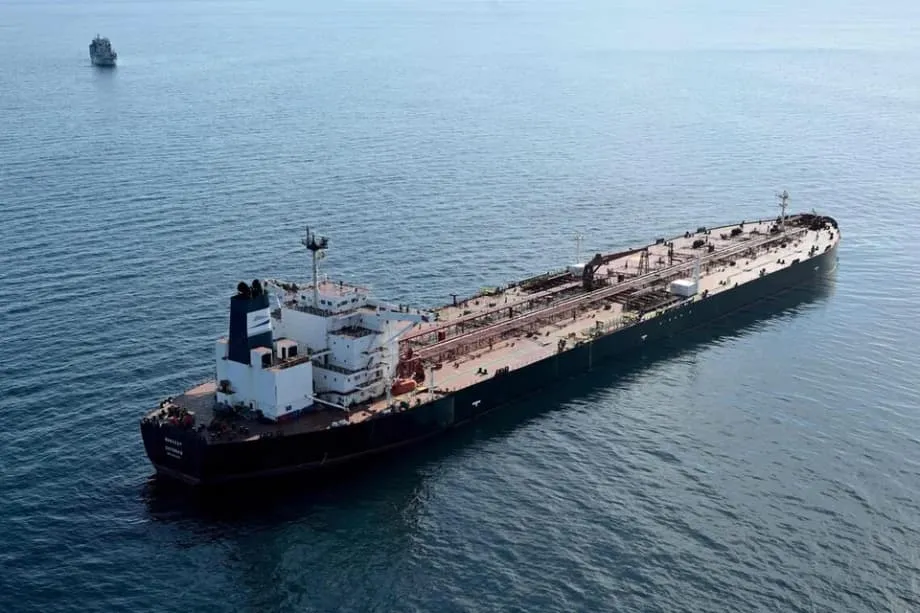
Satellite images taken on October 18, 2025, showed the sanctioned liquefied natural gas carrier Perle beside another gas carrier about 90 kilometers east of peninsular Malaysia, in an arrangement consistent with a transfer of cargo at sea. The Perle had loaded at Russia's Portovaya export plant in February before spending months without a clear destination and sailing toward Asia.
Contents
- Satellite images show an unusual gas handover
- A cargo that waited months to reach Asia
- The vessels and their ownership trail
- Why transferring LNG requires such precise control
- How dark shipping obscures a cargo's journey
- Malaysia tightens controls near its coast
- Western restrictions reach ships, plants and terminals
- Why China is the likely destination
- The safety and compensation risks offshore
- What to Know
Images from Europe's Sentinel 2 satellite, combined with ship tracking data from earlier in the voyage, showed the vessels aligned in parallel. Their spacing and position were consistent with a live transfer. Analysts described the operation as apparently the first documented attempt to hand over a Russian LNG cargo in waters off Malaysia.
The Perle, which came under United States sanctions earlier in 2025, had stopped broadcasting its position. Tracking specialists identified the likely receiving vessel as CCH Gas, an older LNG carrier managed from China. Satellite images and registry information supported that assessment, although the second vessel's location signals were spoofed. As of October 19, authorities had not officially confirmed its identity or the cargo's final destination.
Waters near Southeast Asia are already used for transfers of sanctioned crude oil. Moving LNG between ships is more unusual because the gas must remain at about minus 162 degrees Celsius, requiring specialized equipment and tightly controlled vessel movement.
The apparent handover shows how Russia's shadow fleet, a network of ships with opaque ownership and irregular tracking behavior, is adapting as Western restrictions tighten. Its location also matters: the vessels were far from regulated anchorages but still close to major shipping routes and potential Asian buyers. The timing, position and parallel drift suggested an operation arranged to avoid detection near busy anchorages and closer patrols.
A cargo that waited months to reach Asia
Maritime analytics data indicate that the Perle loaded LNG at Gazprom's Portovaya facility on Russia's Baltic coast in February 2025. The United States had sanctioned the plant in January, after which its exports to foreign buyers largely stopped.
The vessel then waited for months without a clear destination. Such delays have become a feature of sanctioned Russian energy trading, as sellers try to find buyers and routes that can accommodate restricted cargoes. In July, the Perle rounded the Cape of Good Hope and continued toward Asia.
The voyage was one of the first eastbound movements of Portovaya output in many months. By the time the two vessels appeared together off Malaysia, roughly eight months had passed since the Perle loaded its cargo.
- January 2025: The United States sanctioned Portovaya, and exports to foreign buyers largely halted afterward.
- February 2025: The Perle loaded LNG at the Baltic facility and subsequently waited for months without a clear destination.
- July 2025: The vessel rounded the Cape of Good Hope on its journey toward Asia.
- October 18, 2025: Sentinel 2 images showed the Perle alongside another gas carrier about 90 kilometers east of peninsular Malaysia.
The long journey helps explain the commercial pressure behind the apparent transfer. A cargo already loaded onto a sanctioned vessel needs both a willing buyer and a way to reach a receiving terminal. An offshore handover can put that cargo aboard a different ship for the final part of its journey.
The vessels and their ownership trail
CCH Gas, the suspected receiving ship, has an LNG capacity of 145,000 cubic meters. Built in 2006, it previously sailed under the name Condor LNG. It was sold in early 2025 to a firm based in Hong Kong and is reported to be managed from Shanghai.
Tracking specialists observed periods of signal silence or spoofing involving both the Perle and the second vessel. Silence removes a ship's reported position from tracking systems; spoofing supplies a false position. Both make it harder to reconstruct where a vessel went and which cargo it handled.
The Perle's technical and commercial management has been linked to Dreamer Shipmanagement LLC FZ. The company's registered address is the Meydan hotel in Dubai, an address also appearing in the corporate paperwork of several entities connected with the expanding fleet carrying sanctioned Russian energy.
Public databases list no working email address or telephone number for the manager. Limited contact information and layers of corporate ownership are common features of this trade, making it harder to identify the people responsible for a vessel's operation or to contact them when problems arise.
Why transferring LNG requires such precise control
LNG is methane cooled into liquid form at around minus 162 degrees Celsius. Moving it between two ships requires equipment that can handle extreme cold while both vessels move with the sea.
Oil transfers use sturdy hoses and procedures developed over decades. LNG transfers require tighter control of the ships' relative movement, their connections and the flow of cargo. Most take place at terminals or in sheltered waters, where movement is easier to manage and emergency assistance is closer.
Two LNG carriers must be secured alongside each other with heavy fenders and multiple mooring lines. Fenders cushion the vessels and keep their hulls apart. Crews then connect cryogenic transfer lines, designed for extremely cold liquids, and check an emergency shutdown connection between the ships.
Transfer lines and manifolds, the connection points through which the cargo flows, are purged with inert gas before and after the operation. Crews adjust the transfer rate to the sea conditions and vessel movement so that hoses and connections are not placed under excessive strain.
Low wind and swell help keep movement within tight limits. A small error can trip the emergency system and stop the flow rapidly. Crew training and exact procedures are therefore central to the operation, particularly when the transfer takes place away from a protected anchorage.
How dark shipping obscures a cargo's journey
Shadow fleet operators often use shell companies in jurisdictions with permissive rules, change vessel flags and names with little notice, and interrupt the automatic identification system, known as AIS. That system broadcasts a vessel's identity and position for navigation and safety.
Some vessels also send false coordinates, making them appear far from their actual operations. A transfer outside a port creates another break in the cargo's chain of custody, the record of who carried and handled it. Together, these practices make tracing gas or oil back to a sanctioned producer more difficult.
Satellites provide another way to follow the trade. Optical images and synthetic aperture radar, which uses radar signals to detect objects, can reveal two large carriers drifting in parallel with fenders deployed. Analysts compare those observations with earlier vessel tracks, registry records and changes in crews or ownership.
The investigation of the Perle's movements used that combination of evidence. Earlier tracking information helped connect the vessel's Baltic loading and long voyage with the satellite images off Malaysia, even after its position broadcasts stopped.
Southeast Asia is attractive to such operators because many tankers pass through the region on their way to China and other Asian markets. An offshore handover can move a cargo onto a vessel without a sanctions designation, reducing the visible connection between the buyer and a blacklisted ship.
Enforcement is also complicated in crowded international waters. Authorities can intervene more quickly in national anchorages and territorial seas. A rendezvous roughly 90 kilometers offshore places an operation farther from those immediate checks while keeping it close to established trade routes.
Malaysia tightens controls near its coast
Malaysian authorities have moved to restrict unauthorized transfers within national waters. Officials announced the closure of the East Outer Port Limits anchorage off the southern coast and warned that vessels conducting unauthorized transfers in Malaysian waters would face detention.
The measures aim to prevent designated anchorages from becoming informal hubs for sanctioned cargoes, with the safety and reputational risks that follow. Malaysia has also boarded and detained tankers suspected of improper transfers near busy anchorages during the past year.
The apparent LNG transfer took place about 90 kilometers from the coast, well beyond the territorial sea, which extends 12 nautical miles. It was still within Malaysia's exclusive economic zone, where the country has rights concerning resources and environmental protection.
Malaysia's authority to police foreign commercial shipping is less straightforward in that zone than within territorial waters, where control powers are strongest. Moving farther offshore therefore complicates rapid intervention and places greater weight on satellite monitoring and coordination with partners.
The rendezvous location suggests operators are adjusting to the new checks while staying near routes toward Chinese ports. For Malaysian authorities, the challenge extends beyond preventing unauthorized use of anchorages: hazardous activity may now take place farther from vessels and personnel able to respond quickly.
Western restrictions reach ships, plants and terminals
The United States increased pressure on Russian energy during 2025, including its January designation of Portovaya. It also flagged deceptive shipping practices, such as disabling AIS, by vessels serving sanctioned projects.
Arctic LNG 2, another blacklisted Russian project, has nevertheless moved cargoes to China since late August. Those shipments show Moscow's continuing effort to keep LNG exports moving despite restrictions on producers and the vessels carrying their output.
The latest European sanctions package adds more than 100 tankers believed to be connected with Russia's shadow fleet. For the first time, it also targets a ship registry that enabled vessels belonging to opaque owners to change flags.
European measures tighten enforcement of the oil price cap and expand financial restrictions on entities linked to energy revenues. The price cap framework is intended to restrict the revenue Russia receives from oil traded using services covered by the rules.
European Commission President Ursula von der Leyen expressed the European position in remarks on enforcing sanctions and responding to Russian aggression.
Strength is the only language Russia will understand.
The United Kingdom has also sanctioned a Chinese LNG terminal that handled Arctic LNG 2 cargoes. Targeting a receiving terminal extends the pressure beyond the Russian producer and its transport network to the place where a shipment completes its journey.
Russian LNG continues to reach buyers in Europe and Asia through existing contracts and intermediaries. Legislators are considering further limits on transshipments and stricter insurance documentation, while trying to avoid fresh disruption to energy security.
Why China is the likely destination
China remains the most likely destination for the Perle's cargo. Recent movements of crude oil and LNG illustrate a route in which sanctioned cargoes are transferred onto ships without sanctions designations before arriving at terminals operated by private companies.
Some Chinese port groups owned by the state have discouraged visits from vessels designated by the United States. That has pushed sanctioned trade toward privately managed berths that face fewer constraints from public guidance.
Chinese LNG buyers are also operating in a changed market. A 15 percent tariff on LNG imported from the United States took effect in February 2025. Chinese companies have increased their resale of contracted American cargoes to Europe.
Discounted Russian LNG can be attractive in those circumstances, even when a longer route and extra handling raise costs. Transferring it onto a ship without a sanctions designation can also make the final delivery easier to arrange.
A buyer receiving gas from such a vessel has more distance from the sanctioned carrier that first transported it. Sanctions risk continues through the transaction, but traders view the extra step as a way to reduce exposure to secondary measures. Those measures can target businesses involved in trade with sanctioned entities.
The apparent handover off Malaysia fits that trading pattern: a restricted cargo travels aboard a sanctioned vessel, then moves to another carrier closer to its likely market. Its commercial purpose is to connect Russian supply with buyers despite restrictions along the route.
The safety and compensation risks offshore
LNG escaping from transfer equipment can rapidly turn into extremely cold vapor that stays close to the surface before dispersing. A leak can cause cold damage to steel, brittle fractures in materials without suitable protection and a methane cloud that must disperse safely. Ignition sources must be strictly controlled.
Transfer systems use several layers of protection. An emergency shutdown signal between the ships triggers valves to close in milliseconds. Emergency release couplings can separate when placed under tension, helping prevent a major hose failure.
Those protections depend on maintained equipment, current testing and crews that rehearse the procedures. Seasonal monsoon winds east of peninsular Malaysia can bring squalls and cross currents that make keeping two ships securely alongside each other more difficult. Even minor contact can damage manifolds or cryogenic hoses.
The surrounding waters form one of the world's busiest shipping corridors. Large carriers engaged in a delicate transfer face collision risks when passing vessels fail to keep clear. Far from a regulated terminal, responders may also need more time to reach an incident.
Many ships in the shadow trade are older vessels with uncertain maintenance and insurance coverage. A maritime security research report warned that opaque trading practices create practical risks for coastal states and shipping lanes, as well as geopolitical concerns. It described the financial exposure in these terms:
The shadow fleet undermines established maritime insurance and compensation systems, leaving coastal states vulnerable to the financial and environmental costs of accidents.
Coastal responders can be left carrying the costs of an accident, while victims may have little access to a dependable insurer. Recovering money becomes harder when the registered owner is a shell company. LNG emergencies also require different equipment and expertise from oil spill response.
The apparent operation off Malaysia brings those issues together: an extremely cold cargo, vessels with obscured movements, exposed waters and limited nearby oversight. The consequences of an accident would reach crews, coastal responders and other ships using the same routes.
What to Know
- Sentinel 2 images on October 18, 2025, showed the sanctioned Perle beside another gas carrier about 90 kilometers east of peninsular Malaysia, consistent with an LNG transfer.
- Analysts described it as apparently the first documented attempt to transfer Russian LNG in waters off Malaysia.
- The Perle loaded at Gazprom's Portovaya plant in February, waited for months and rounded the Cape of Good Hope in July.
- The suspected receiving vessel is CCH Gas, a carrier built in 2006 with capacity for 145,000 cubic meters and reported management in Shanghai.
- The Perle's management has been linked to Dreamer Shipmanagement LLC FZ, registered at the Meydan hotel in Dubai.
- Malaysia closed the East Outer Port Limits anchorage and warned of detention for unauthorized transfers in national waters.
- The offshore location lies beyond Malaysia's territorial sea but within its exclusive economic zone.
- China is the likely destination as Western restrictions expand across Russian energy plants, vessels, registries and receiving terminals.
- LNG transfers require precise control, specialized equipment and emergency protection, while opaque ownership and insurance can complicate accident response and compensation.