More room, without a recline button
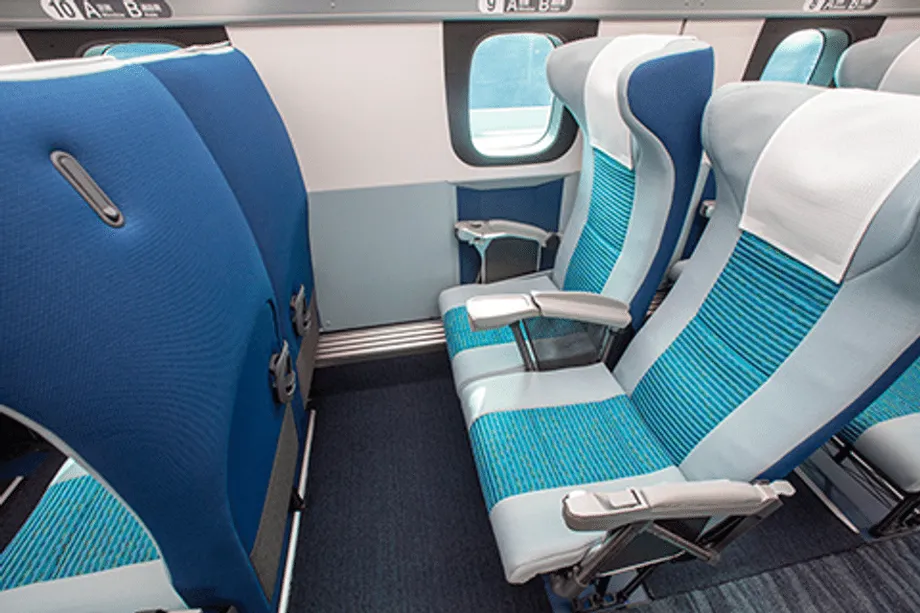
Central Japan Railway Company (JR Central) plans to fit its new Tokyo to Nagoya maglev trains entirely with nonreclining seats, fixing each seat back at a 15 degree angle. The decision is part of a cabin design built around a journey expected to take about 40 minutes at speeds of around 500 kilometers per hour.
Contents
- More room, without a recline button
- Why a short journey changes the seating calculation
- Where the extra space will go
- The M10 test car points toward the commercial train
- How the train rises above its guideway
- What passengers may feel at 500 kilometers per hour
- Why the opening has moved beyond 2027
- How the cabin compares with bullet trains and planes
- Simpler seats, expensive infrastructure
- Key Points
The operator says the fixed angle will preserve comfort while creating more legroom and space for luggage at passengers' feet. Thinner seat backs and the removal of reclining mechanisms will leave more usable room around each traveler, making a short journey feel less cramped.
JR Central also plans to use softer cushion materials than those on the Tokaido Shinkansen. The cushions are intended to spread body weight more evenly, helping passengers remain comfortable when they cannot change the angle of their seat backs.
The choice marks a change from earlier prototypes, which had conventional reclining seats. It also reflects the priorities of a service intended to connect two major cities in less than half the time taken by today's bullet trains on the same route: quick boarding, easy luggage storage, open space and efficient turnarounds.
Passengers will have to wait to experience the design in commercial service. JR Central once aimed to open the Tokyo to Nagoya section in 2027, but that target has been postponed. The operator has said the opening could slip to 2034 or later because of a construction dispute along the route. The commercial train's final specifications also remain subject to refinement and testing.
Why a short journey changes the seating calculation
A 40 minute trip gives JR Central a different design problem from a journey lasting several hours. Passengers may spend much of the ride reading, using a phone or looking out of the window. Deep recline becomes less central to the experience when the time between departure and arrival is so short.
The fixed 15 degree angle is intended to provide a relaxed posture without allowing one passenger to push a seat back into the space of the person behind. Every traveler gets the same seat angle, and nobody needs to negotiate with a neighbor over how far a backrest can move.
That arrangement could be especially useful when every seat is occupied. A passenger's knee room will not change because someone in the row ahead decides to recline. JR Central is exchanging the ability to adjust posture for a more consistent amount of personal space.
The cushions are an important part of that trade. Softer padding that distributes weight more evenly can reduce pressure around the hips and lower back. The firm but forgiving feel often associated with Japanese high speed rail seats is being adjusted for a shorter trip, with steady acceleration and deceleration that are not severe.
The fixed angle is also intended to help keep the head and torso in a consistent position while the train accelerates or brakes. JR Central's approach assumes that passengers on a journey of about 40 minutes will value space and a smooth ride enough to accept fewer seating adjustments.
Where the extra space will go
Thinner seat backs free up centimeters that can be used for legs and personal belongings. Removing the motors and heavy mechanisms found in traditional reclining seats also makes the new seats simpler and less bulky.
JR Central's interior plan anticipates more passengers keeping a bag small enough to carry on board at their feet, instead of depending on overhead shelves or racks at the ends of carriages. With more room near the floor, a small suitcase can be placed upright or sideways without blocking the aisle.
Keeping a bag close at hand could reduce the search for storage during boarding. At the destination, passengers would also have less need to retrieve belongings from a rack elsewhere in the carriage. The aim is to make settling into a seat and preparing to leave more straightforward.
The cabin concept combines assigned seating with a consistent backrest angle, clear space around the legs, easy movement through the aisle and clear sight lines. Stations serving dense urban hubs are expected to provide the usual ticketed access areas, waiting spaces and retail options.
For passengers, those details connect the interior to the service's wider purpose. A fast train saves less useful time if boarding is awkward or luggage takes too long to retrieve. JR Central is designing the cabin around a short ride in which getting on and off efficiently matters alongside comfort while seated.
The M10 test car points toward the commercial train
JR Central's latest test vehicle, designated M10, gave the first look at the new exterior and the nonreclining interior concept when it was shown to the media in July. Its fixed seats replace the conventional recliners used in earlier prototypes.
The change forms part of a broader effort to simplify the interior, save space, reduce weight and make maintenance easier. The M10 is helping shape the production blueprint, with the commercial train expected to be modeled on the prototype.
Further work will include ride quality checks, materials testing and feedback from evaluation runs. JR Central says it will settle the final specifications after additional refinement, adjusting the commercial design where testing identifies a clear benefit.
The project's main milestones show how the seating work sits within a much longer development and construction process:
- Earlier prototypes used conventional reclining seats.
- In July, JR Central showed the M10 test car's exterior and fixed seat interior concept to the media.
- The Tokyo to Nagoya service had been targeted to open in 2027.
- The operator has since said the opening could move to 2034 or later.
- The longer term plan is to extend the line to Osaka.
How the train rises above its guideway
Japan's maglev uses electrodynamic suspension, known as EDS. Powerful superconducting magnets on the train interact with coils in the guideway, the dedicated structure that directs and supports the service. At speed, repulsive magnetic forces lift the train several centimeters above the track.
The train still uses small wheels when moving at low speed. As its speed rises, it transitions to full levitation. During that faster part of the journey, magnetic forces take over the supporting role that wheels perform on a conventional railway.
Removing contact between wheels and rails eliminates rolling friction and allows the train to target speeds of around 500 kilometers per hour. At those speeds, pushing through the air becomes the dominant source of resistance.
The projected Tokyo to Nagoya journey is about 40 minutes, less than half the time of current bullet trains on the route. The planned extension to Osaka would bring a projected Tokyo to Osaka journey of about 67 minutes, using a design speed of 500 kilometers per hour.
Those travel times explain why JR Central is treating the interior differently from a conventional train used for longer journeys. Less time in the seat allows the operator to give greater priority to open space, movement and luggage storage rather than deep recline.
What passengers may feel at 500 kilometers per hour
Maglev removes a major source of vibration and rolling noise because the train is no longer running with wheels against rails at speed. Acceleration feels smooth and continuous, while aerodynamic sound becomes a more noticeable part of the cabin's sound environment.
Much of the route will pass through tunnels. Entering and leaving them at very high speed creates rapid changes in air pressure, which can make passengers' ears uncomfortable. The train's nose and pressure management systems are designed to handle those changes.
The design also aims to minimize micro pressure waves at tunnel exits. These are pressure disturbances associated with a train moving rapidly through a tunnel. Managing them is part of controlling the effects of very high speed travel on both passengers and the surroundings.
Within the cabin, the fixed seat angle is intended to support a stable position during acceleration and braking, reducing the need to readjust. JR Central believes the combination of a short trip, a smooth ride and extra space will make the seating compromise acceptable to riders.
Quietness still involves trade offs. Removing rolling noise changes the sources of sound rather than removing them all. Aerodynamic noise remains, and the route's barriers and alignment have a role in managing what nearby communities hear.
Why the opening has moved beyond 2027
JR Central's original 2027 opening target for Tokyo to Nagoya has been overtaken by construction delays. The operator has said service could begin in 2034 or later, citing a dispute affecting work along the route.
The line crosses mountainous terrain and requires extensive tunneling. In one key area of the corridor, local concerns about environmental effects and water resources have slowed approvals. Those concerns affect access needed to carry out the remaining heavy construction.
Until the dispute is settled and full access is granted, that work cannot be completed on the original schedule. The delay means the new interior is being developed while the infrastructure needed to carry commercial trains remains unfinished.
The longer term extension to Osaka would link major economic centers along Japan's Pacific coast with very fast service between city centers. A projected Tokyo to Osaka trip of about 67 minutes would change the time needed to travel between those hubs, but that benefit depends on completing the full route.
How the cabin compares with bullet trains and planes
The existing Tokaido Shinkansen between Tokyo and Nagoya uses reclining seats. On longer journeys, many passengers expect to be able to lean back further. The maglev's shorter planned journey shifts the balance toward foot space, simple storage and quick boarding.
A cabin with thinner backrests and fewer bulky mechanisms is also easier to clean and inspect between runs. Those practical details support a service intended to offer frequent departures, because maintenance and preparation have to fit into the time between journeys.
Airlines make a similar calculation on short flights, sometimes limiting or removing recline to prioritize legroom and speed of service. JR Central's maglev applies that logic to ground transport while keeping the advantages of stations in urban centers.
For many travelers, the decisive comparison will be the full journey rather than the seat alone. Train security and boarding are usually simpler than those for aircraft, and arrival in a city center removes a long transfer from an airport.
The planned 40 minute Tokyo to Nagoya ride could shift the balance between rail and flying when those other stages are included. Rail journey times are also not subject to air traffic or weather delays in the same way as flights, supporting the service's focus on predictable travel.
Simpler seats, expensive infrastructure
Nonreclining seats have fewer moving parts that can fail. That lowers the chance of a mechanical problem putting a seat or an entire row out of use. Standardized components and easier access for inspection can also help maintenance teams keep trains available.
Simpler frames tend to weigh less. Across hundreds of seats, those savings add up, and lower weight can reduce energy use and improve performance margins. The design also supports easier cleaning, inspection and preparation between services.
Maglev infrastructure avoids rail wear and wheel flats, two maintenance issues for conventional high speed railways. A wheel flat is a damaged, flattened area on a train wheel. At very high speed, however, air resistance rather than friction with the track drives much of the energy demand.
The system's efficiency gains therefore depend more on reducing mechanical losses and allowing suitable routing and gradients than on removing every major source of resistance. Aerodynamic sound also needs attention even when rolling noise is absent.
JR Central faces substantial costs in return for those operating benefits. Maglev needs dedicated guideways and cannot share existing railway tracks. Superconducting magnets and their supporting systems are expensive, while construction must meet strict standards for alignment and shielding.
The operator's calculation is that the benefits over years of operation and maintenance, together with the value of much faster journeys, will outweigh the initial expense. Attracting travelers from roads and short flights is part of that case.
For passengers, the most visible part of that calculation may be a seat without a recline button. Behind it is a wider plan to combine speed, reliability, luggage space and simple upkeep. The commercial interior will take its final form through testing, while the opening depends on progress along the route.
Key Points
- JR Central plans nonreclining seats fixed at a 15 degree angle throughout its Tokyo to Nagoya maglev trains.
- Thinner seat backs will provide more legroom and space for bags at passengers' feet.
- Softer cushions than those on the Tokaido Shinkansen are intended to spread body weight more evenly.
- The M10 test car carries the fixed seat concept, replacing recliners used in earlier prototypes.
- The planned Tokyo to Nagoya journey is about 40 minutes at speeds of around 500 kilometers per hour.
- The original 2027 opening target has been postponed, with JR Central saying service could start in 2034 or later.
- Environmental and water concerns have slowed approvals in a key part of the route.
- The planned Osaka extension would allow a projected Tokyo to Osaka journey of about 67 minutes.
- Final commercial train specifications will follow further testing and refinement.