384 Huawei processors show how China is challenging Nvidia
Huawei's CloudMatrix 384 brings together 384 Ascend 910C processors in a single computing system. Nvidia's competing GB200 NVL72 uses 72 B200 chips. The different designs capture China's approach to a difficult problem: how to build competitive artificial intelligence infrastructure when access to the most advanced American processors and manufacturing equipment is restricted.
Contents
- 384 Huawei processors show how China is challenging Nvidia
- DeepSeek brought software efficiency into focus
- Huawei is competing through the whole system
- Alibaba and smaller suppliers seek domestic buyers
- Export restrictions are narrowing access from both sides
- Why answering a question differs from training a model
- Software can make switching slow
- Factories, memory and packaging constrain supply
- Data centers must balance speed, power and dependable supply
- How far can China close the gap?
- Key Points
Huawei is connecting more processors so they can work together as one pool of computing power. The system, shown at the World Artificial Intelligence Conference in Shanghai, is already operating on Huawei's cloud. For Chinese customers, it offers a domestic option for training AI models and running them after training.
As of October 10, 2025, that effort reaches well beyond Huawei. Alibaba, MetaX, Cambricon, Tencent and Baidu are developing or supplying alternatives to Nvidia hardware. China is investing in research laboratories, chip factories and cloud infrastructure so advances in large language models, robotics and automation can run on domestic silicon.
The goal involves three connected tasks: producing advanced chips in large numbers, building software that makes good use of them and keeping essential computing capacity within China's reach. Progress is visible, but shortages of equipment, memory and manufacturing capacity still limit how quickly domestic suppliers can expand.
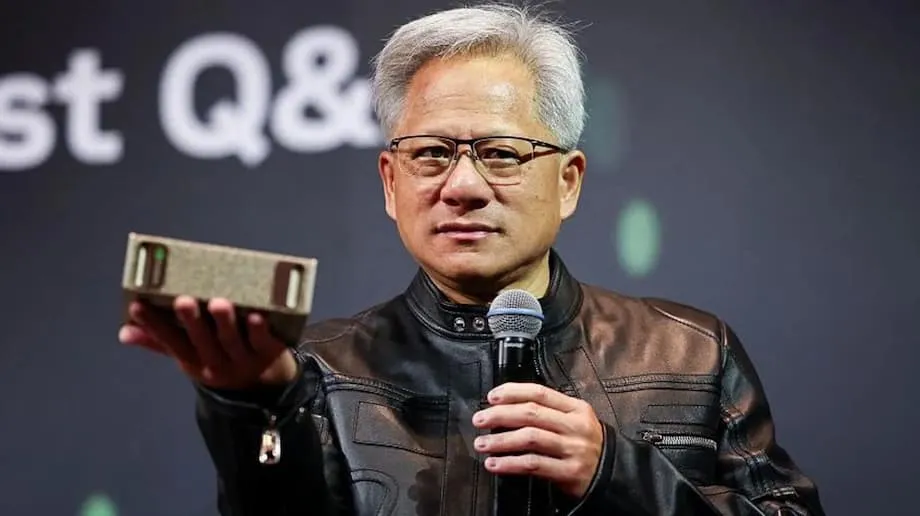
Nvidia chief executive Jensen Huang acknowledged the strength of China's engineers and intense domestic competition during a technology and business podcast in September. He described an industry that his company must take seriously.
This is a vibrant entrepreneurial, high tech, modern industry," he said. "We have to compete for our survival.
The competition is therefore about more than the speed of an individual processor. It also concerns the reliability of supply, the cost of operating data centers and the time developers need to move their software onto different hardware.
DeepSeek brought software efficiency into focus
DeepSeek gave China's ambitions a jolt in 2024 when the startup unveiled a conversational AI system that rivaled leading Western systems. The company said it trained the model using far fewer premium accelerators than its peers. Accelerators are processors designed to perform the large numbers of calculations that AI requires.
The launch briefly knocked Nvidia's market value and drew attention to the speed of Chinese development. It also highlighted a practical route around some hardware constraints: smarter software and more efficient training can reduce the computing resources needed for a particular result.
DeepSeek's widely discussed training effort still required substantial time. A final stage took between three and eight weeks, illustrating that efficient code can reduce the burden while leaving training a costly undertaking. Domestic developers also describe training runs that take weeks.
Chinese technology groups and chip designers have since announced plans to challenge Nvidia in domestic data centers. Their opportunity has grown as export restrictions make American hardware harder to obtain and buyers seek suppliers less exposed to changes in foreign policy.
The main stages of that shift span several years:
- Since 2022, Washington has imposed escalating restrictions on advanced AI chip sales to China.
- In 2024, DeepSeek unveiled a conversational AI system that drew attention to training efficiency and Chinese development.
- During 2025, Chinese suppliers expanded their chip and computing system plans while restrictions, customs checks and regulatory scrutiny reshaped the market.
- In September 2025, Huang publicly praised China's engineering momentum and urged Nvidia to compete.
Huawei is competing through the whole system
Huawei's CloudMatrix 384 uses a supernode connection design, linking hundreds of processors so they can function as a shared computing resource. Very fast connections allow the chips to exchange the information needed to work together.
Huawei aims to compensate for weaker performance from each chip by improving how the entire system operates. Adding processors only helps when they can communicate efficiently; otherwise, chips spend too much time waiting for data from one another.
Industry assessments suggest this approach can produce competitive results on particular workloads. CloudMatrix has been described as outperforming Nvidia's GB200 NVL72 on some measures, even though Huawei relies on older manufacturing processes. The results depend on the work being performed, rather than a single measure of speed.
CloudMatrix's availability through Huawei's cloud gives customers a way to use domestic computing capacity for both training and serving models. Training builds a model's capabilities, while serving means operating it so users can receive answers.
Huawei has also introduced new Ascend processors and a plan to support developers over three years. Its system strategy fits China's wider effort to work around export limits by improving the connections, software and organization of computing hardware, alongside the chips themselves.
Alibaba and smaller suppliers seek domestic buyers
Alibaba has announced an AI accelerator described as matching Nvidia's H20 while consuming less energy. The H20 was designed for China to comply with earlier American export limits. The performance and power claim gives Alibaba a potential selling point among operators balancing computing speed against electricity costs.
MetaX is supplying chips to China Unicom, while both MetaX and Cambricon are winning contracts with major enterprises. Cambricon's valuation has more than doubled in recent months as investors anticipate stronger domestic demand for AI accelerators.
Tencent and Baidu are designing custom chips for their own clouds. Tencent's work also targets its AI services. These efforts give large platforms more control over the hardware behind their products, while adding to the range of domestic processors available or under development.
Chinese buyers are moving workloads to local hardware where performance, availability and cost meet their needs. Suppliers share a straightforward pitch: domestic products can fill gaps left by restrictions on American equipment.
Chen Cheng, general manager for AI translation at iFlytek, described how her team responded to recent restrictions on American hardware by changing processors.
"Now our model is trained on Huawei chips, currently the best in China," she said.
Her account illustrates the practical change for developers. Choosing a domestic processor means finding a way to continue building and operating AI services when access to an established supplier becomes uncertain.
Export restrictions are narrowing access from both sides
Washington's restrictions have expanded since 2022, and the latest moves shut the door on Nvidia's H20. That chip had been developed to meet earlier export thresholds, showing how a product designed around one set of rules can lose access when those rules change.
American lawmakers have also advanced measures that would require chipmakers to prioritize domestic customers over foreign buyers. Companies warn that rigid rules could slow innovation and redirect demand toward other suppliers. Another recent policy would send a portion of revenue from certain AI chip sales in China to the United States government.
Those conditions reduce American suppliers' potential market in China, which purchases more chips than any other country. They also add costs and uncertainty for companies trying to design compliant products and maintain Chinese customer relationships.
Beijing is applying pressure of its own. Authorities have instructed major technology firms to pause orders for Nvidia accelerators and increased inspections at ports to intercept unlicensed or incorrectly declared shipments. The checks include products intended for China, such as the H20 and RTX 6000D.
Officials are investigating smuggling networks that brought advanced processors into Chinese data centers through indirect routes. Allegations involving refurbished or repurposed accelerators have also prompted closer checks at ports. Regulators have separately opened an antimonopoly inquiry into Nvidia, adding scrutiny of its business practices inside China.
These actions seek to tighten unofficial supply routes and move buyers toward domestic suppliers. Handel Jones, a longtime semiconductor consultant, warned that the combined effect could be severe for American companies that have depended on Chinese demand.
"For the US semiconductor industry, China is gone," he said.
Why answering a question differs from training a model
Public information about Chinese accelerator performance remains limited, and standardized tests are sparse. Results depend on the task, model size, connections between processors, memory design and the software that translates an application's demands into work for the chips.
Researchers who have worked with American and Chinese systems describe a narrowing gap in predictive tasks, such as completing a sentence or classifying an image. They still see a larger gap in complex analysis and training models at very large scale.
Jawad Haj Yahya, a computer scientist who has tested accelerators from both countries, said the difference varies by workload and will take time to close.
"The gap is clear and it is surely shrinking. I do not think it is something they will catch up on in the short term," he said.
Training is especially demanding because it requires enormous amounts of computation, rapid communication between processors and memory that supplies data fast enough to keep them working. Inference, the stage when a trained model answers a query, can place different demands on the hardware.
Assessments of Huawei's 910B describe it as capable for inference, while identifying limits in connections between chips and memory speeds that make it less attractive for large training runs. Nvidia's restricted H20 remains a preferred option for many Chinese users when they can obtain it.
Raghavendra Anjanappa, a semiconductor engineer, said domestic processors can meet many Chinese requirements while the most demanding training tasks continue to favor American hardware.
"Realistically, China can reduce its dependence on American chips in less advanced tools, but does not have the raw performance of US chips to train more complex AI systems," he said.
Software can make switching slow
Nvidia's advantage extends beyond silicon. The company has spent years developing tools, libraries and networking software that developers trust when operating large systems. Libraries provide reusable software functions, reducing the amount of code a team must build itself.
That collection of tools helps developers move from an experimental model to a service people can use. Familiar software also encourages teams to keep choosing Nvidia hardware, because changing processors can mean changing the way applications are built and checked.
Huawei is developing its own framework and has promised to open more designs and code to domestic developers. Adoption is increasing, but teams still need time to learn unfamiliar tools, rewrite code and validate that their models continue to work properly.
Chinese suppliers therefore face two tasks at once: making competitive processors and making them practical for customers to adopt. Even an available chip can take time to enter regular use when a company's software and staff are organized around another platform.
Factories, memory and packaging constrain supply
American and Dutch restrictions limit China's access to advanced lithography equipment, the machines used to create tiny patterns on silicon. Chinese factories must push older equipment further, including by repeating patterning steps to produce smaller features.
Repeated patterning is slower and more expensive, and it produces fewer working chips from each wafer, the circular slice of silicon on which chips are manufactured. Yield measures the share of chips that work well enough to use.
Manufacturing assessments this year describe yields for a new Huawei chip improving from roughly 20 percent to 40 percent. Leading factories abroad can approach about 60 percent for devices of similar size. China's improvement increases usable output, but a lower yield still raises costs and restricts the number of accelerators reaching customers.
Memory and packaging create further constraints. AI processors depend on high bandwidth memory, which moves large amounts of data quickly enough to feed thousands of computing cores. Advanced packaging connects and stacks components while helping remove the heat they generate.
Chinese teams can build these components, but shortages of the best memory and restrictions on access to tools limit output. Earlier assessments also identified problems with connections between chips and memory speeds, reducing the efficiency of training across many processors.
Resolving these constraints requires time, capital and a steady supply of specialized equipment. Stephen Wu, a former AI engineer who now runs an investment firm, described the strategic objective behind Beijing's sustained investment.
"China wants chips that policy cannot take away," he said.
Data centers must balance speed, power and dependable supply
Data center operators weigh three priorities: computing performance, energy consumption and confidence that equipment will be available. A domestic accelerator becomes attractive when it provides sufficient speed for a particular job at an acceptable power cost and can be supplied reliably.
The strongest current case for switching is in inference and training smaller models, where the design of a complete system can help compensate for weaker individual processors. Nvidia retains the lead in silicon and software for the largest training projects that push computing limits.
China is consequently developing a divided pattern of use. Domestic chips handle workloads they can perform effectively, while the most demanding projects continue to seek American hardware whenever policy permits access.
Import delays and tighter customs enforcement can slow data center expansion and send more work toward local suppliers. American efforts to give domestic customers priority for scarce chips, alongside conditions on revenue from Chinese sales, further complicate purchasing and investment decisions.
Huang has sought to preserve Nvidia's access by developing products that comply with regulations. During a visit with Chinese business leaders this year, the Nvidia chief executive described that commitment.
"We are going to continue to make significant effort to optimize our products that are compliant within the regulations and continue to serve China's market," he said.
How far can China close the gap?
Assessments of China's progress point to different timelines. Many analysts expect broad self sufficiency in midrange computing and inference within about five years. Matching the best American platforms for advanced training could take considerably longer.
Some assessments place a full match across processors, high bandwidth memory, advanced packaging, networking and software into the next decade. Those are forecasts rather than a fixed timetable, and the pace depends on progress across all those connected areas.
Huawei is increasing output, Alibaba is investing, and designers including MetaX and Cambricon are gaining customers. Strong government support and rising domestic demand for AI services give suppliers reasons to expand. Equipment restrictions, yields and the time needed to build a trusted software environment continue to limit progress at the most advanced end.
The likely immediate result is a more capable domestic industry handling a large share of China's AI requirements, alongside continued demand for foreign hardware for the biggest training runs whenever access is permitted.
Government direction can concentrate money and engineering effort on shared targets. It can also make experimentation harder when companies and researchers are encouraged to pursue similar goals. Chia Lin Yang, a computing professor who studies chip design, described that tension while recognizing China's depth of talent.
It can make it harder for disruptive ideas to break the mould," she said. "You cannot underestimate China's ability to catch up.
Key Points
- China is investing in chips, factories, software and cloud infrastructure to reduce reliance on imported AI processors.
- DeepSeek's 2024 launch highlighted how more efficient software can reduce the hardware needed to train AI.
- Huawei's CloudMatrix 384 connects 384 Ascend 910C processors; Nvidia's GB200 NVL72 uses 72 B200 chips.
- Alibaba, MetaX, Cambricon, Tencent and Baidu are expanding China's domestic chip options.
- American export restrictions and Chinese purchasing pressure, customs checks and regulatory scrutiny are narrowing Nvidia's access to China.
- Chinese accelerators are more competitive in inference than in the largest training workloads.
- Manufacturing yields, advanced equipment, memory, packaging and software remain major constraints.
- Many analysts expect broad domestic provision for midrange computing and inference within about five years, with the most advanced capabilities taking longer.