Ten days of service lead to a month of testing
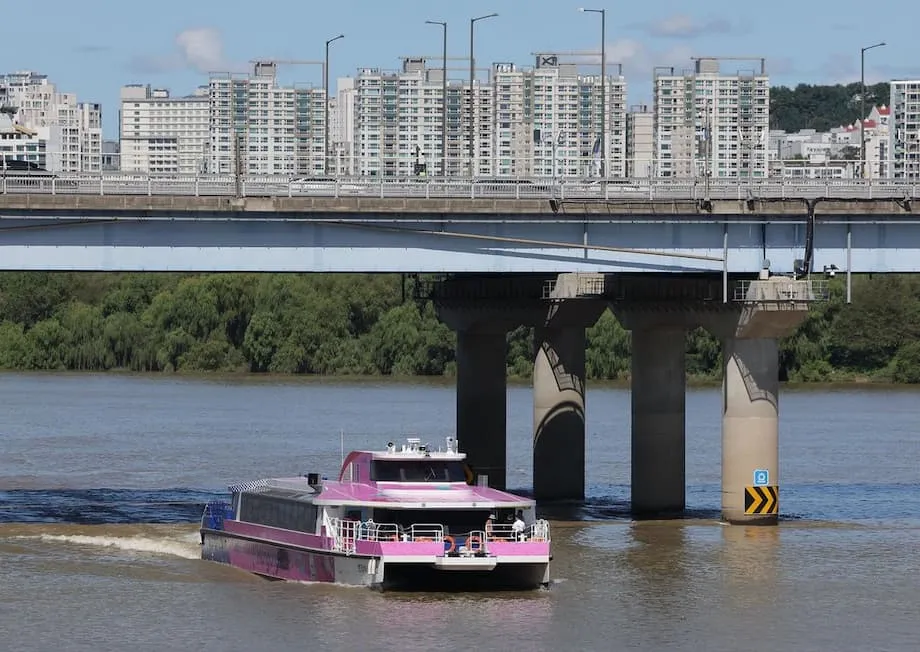
Seoul's Hangang river bus carried about 25,000 people in its first ten days before repeated breakdowns and safety concerns prompted a passenger service pause starting September 29, 2025. The Seoul Metropolitan Government plans about a month of operations without passengers and aims to resume public service by the end of October, provided the tests pass.
Contents
- Ten days of service lead to a month of testing
- What happened between launch and the pause?
- Steering and electrical faults disrupt journeys
- Safety equipment and passenger facilities need attention
- The river journey takes longer than promised
- What the service offers along seven piers
- Testing replaces the planned October expansion
- Political criticism brings demands for scrutiny
- Weather must be part of the operating plan
- A restart needs practical changes passengers can see
- Key Points
The project, funded at 150 billion won, about $105 million, opened on September 18 as a new way to commute along the Han River and see the city from the water. By October 10, the date originally set for a major increase in weekday services, its immediate task had become checking vessels, rehearsing emergency procedures and making sure repairs hold up through repeated use.
Two weekday rush hour journeys ended in emergency dockings after sudden rudder failures and electrical glitches. Each incident left more than 100 passengers waiting on board until crews reached the nearest pier and arranged refunds. Another vessel turned back within minutes because of a steering fault. Three mechanical incidents occurred during the first ten days.
Passengers also encountered problems outside the machinery spaces. Wheelchair and bicycle ramps obstructed access to infant life jacket cabinets on several boats, fire extinguishers lacked recent inspection tags, and a room containing sensitive electrical systems was left unlocked while passengers were aboard. Malfunctioning toilets and overflow added to complaints.
The pause affects a service intended to carry both daily commuters and tourists. Its appeal rests on a cleaner journey and a fresh view of Seoul, but its opening days exposed weaknesses in reliability, safety checks and travel time promises. The city says each early mechanical defect was corrected and that further testing will make the service safer and more dependable.
What happened between launch and the pause?
September 18 marked the opening of a route covering 28.9 kilometers between Magok and Jamsil, with seven piers and an initial schedule of 14 trips a day. That left limited room to absorb a breakdown without disrupting other journeys.
A launch ceremony attended by Mayor Oh Se hoon was interrupted by heavy rain and poor visibility. Service was suspended twice in the first four days, despite earlier assurances that stoppages would be rare. By the first weekend, two of the four vessels in operation were out of service for maintenance.
- September 18: Passenger service opened between Magok and Jamsil, initially offering 14 trips a day.
- First four days: Two service suspensions occurred, while heavy rain and low visibility also disrupted the launch ceremony.
- First weekend: Two of the four operating vessels were sidelined for maintenance.
- First ten days: About 25,000 people used the service, and three mechanical incidents disrupted journeys.
- September 29: A passenger service pause began, with about a month of testing planned.
- October 10: A planned increase to 30 weekday round trips was put on hold.
- End of October: Seoul aims to restore passenger service if testing is successful.
The sequence matters for passengers choosing a daily commute. A boat may offer a pleasant journey when it runs normally, but repeated interruptions make arrival times difficult to predict. The city now has to demonstrate that the vessels can complete their scheduled work consistently before pursuing the larger timetable.
Steering and electrical faults disrupt journeys
A vessel heading toward Jamsil stopped near Oksu after an electrical fault during the first week. Another traveling toward Magok stalled and had to return to port. Crews carried out emergency docking procedures, guided passengers onto the pier and issued refunds.
Rudders control a boat's direction. A failure can make steering slow or prevent a vessel from turning safely in a narrow channel. Electrical faults can stop the propulsion system, which moves the boat, or prevent a safe departure. River ferries depend on electrical and control systems working together, so a problem in one part can interrupt the whole journey.
Seoul officials described the early faults as minor and said technicians applied repairs quickly. They argued that these are the first environmentally friendly vessels to operate regular routes on the Han River, making tuning and adjustment part of the early operating period. The frequency of failures nevertheless put the amount of testing before launch under scrutiny.
Hybrid ferries combine conventional engines with battery systems. Fully electric vessels depend on batteries with substantial capacity and the electronics that control their power. Both arrangements need redundancy, meaning backup systems that allow essential functions to continue when a component fails.
Marine operators typically design emergency operating modes that let a vessel reach a pier at reduced speed. The emergency dockings showed that crews had practical ways to get passengers ashore. A dependable commuter service also needs breakdowns to be uncommon and systems to recover promptly after an alarm.
Safety equipment and passenger facilities need attention
Infant life jacket cabinets must be accessible quickly during an emergency. Ramps for wheelchairs and bicycles were placed in front of those cabinets on several boats, creating a conflict between equipment used for boarding and equipment needed for evacuation.
Accessibility and emergency readiness can be provided together. A review of where ramps are stored, how cabinets open and what crews check before departure would address the reported obstruction. Life jacket storage for both infants and adults should be visible, labeled and reachable without tools.
Fire extinguishers showed no recent inspection tags. Those tags record when equipment was checked and when replacement is due. Missing records leave passengers and managers without a ready way to confirm that routine checks were completed. Operators also need to keep rooms containing high voltage equipment locked to protect passengers and critical electrical systems.
Passengers described long waits during breakdowns, inconsistent announcements and uncertainty about where to go when a vessel docked somewhere other than its planned stop. Complaints about toilets and overflow further weakened the service's first impression. City officials said facilities were mostly sound and attributed some clogs and other problems to improper use.
Crews need procedures for more than getting a boat alongside a pier. Drills help them practice evacuation routes, deploy portable ramps and manage passengers moving onto the shore. Clear announcements and directions are especially useful when a journey ends unexpectedly and riders need to work out how to continue.
The river journey takes longer than promised
Seoul initially advertised a 75 minute journey for the local service between Magok and Jamsil and 54 minutes for the express service. Actual journeys were longer: the local trip stretched to 127 minutes, while the express took about 82 minutes.
The local journey therefore took 52 minutes more than advertised, using the stated figures of 127 and 75 minutes. The express took about 28 minutes more than its advertised 54 minutes. Those gaps matter to anyone who needs to reach work, school or an appointment at a fixed time.
The subway can complete the same corridor in as little as 54 minutes. River bus passengers also need time to reach a pier from their neighborhood or a subway station. The full journey involves both the boat ride and those connections, making a comparison based only on time aboard incomplete for a commuter planning a trip.
The ferries average about 17 knots, close to 31 kilometers an hour. A knot is a measure of speed used on the water. Even at that speed, frequent stops, bridge areas requiring caution and strong currents reduce how quickly a vessel can finish the route.
Pier operations add time too. Crews must bring the vessel into position, align ramps for bicycles and wheelchairs, and allow passengers to board and leave. Busy bridge areas require care when clearing the navigation channel. Several extra minutes at each stop can turn into a much longer journey across seven piers.
Reliable headways, the gaps between successive departures, depend on vessel performance and river conditions together. Published schedules need to reflect both, rather than just the speed a boat can reach on open water.
What the service offers along seven piers
The Hangang Bus route runs from Magok through Mangwon, Yeouido, Oksu, Apgujeong and Ttukseom to Jamsil. Each vessel can carry up to 199 passengers and has a cafeteria, Wi Fi, bicycle areas and space for wheelchairs.
A single journey costs 3,000 won and can be paid for with common transit cards. Climate Card holders can add unlimited river bus rides by paying 5,000 won on top of their monthly pass. These payment arrangements place the service alongside existing public transport options, even as its timetable and reliability are being reconsidered.
Shuttle buses connect some piers with nearby subway stations, and bicycle sharing docks are installed at the piers. Those connections help passengers complete the part of a journey between the river and their destination, although reaching the boat still adds travel time.
Seoul posts timetables and service notices on its official website and major mobility apps. Its Hangang Bus page provides official information about the service. During the pause, schedule notices and updates on testing are particularly relevant for people who had planned to travel by river.
Testing replaces the planned October expansion
Seoul plans to keep vessels operating without passengers for about a month from September 29. The testing follows the existing schedule order, with 14 round trips a day beginning in the late morning. Officials say it will gather system data under normal operating loads, rehearse contingency plans and check whether repairs remain effective through repeated use.
October 10 had been set for an increase to 30 weekday round trips, with express vessels departing every 15 minutes during peak periods. That expansion is on hold while four hybrid ferries and four electric ferries undergo testing. Another four hybrid vessels are awaiting delivery, bringing the planned fleet to 12.
Park Jin young, head of Seoul's Future Hangang Project Headquarters, apologized to passengers and said safety would guide the restart. He described the trial operations as a step toward a more comfortable and reliable service.
About 25,000 people have used the Hangang Bus over the past 10 days, and we apologize for the inconvenience caused by the unavoidable trial operation aimed at making the service safer and more comfortable.
We will conduct systematic and thorough trial runs to ensure the Hangang Bus becomes a safer and more reliable water transportation option representing Seoul.
The city says every fault identified in the first week has been fixed. The repeated runs are intended to verify those repairs over time, while crews practice responses to unexpected problems. The target remains a return by the end of October, subject to successful tests; an exact restart date has not been given.
Political criticism brings demands for scrutiny
The Democratic Party of Korea (DPK) called for a full suspension of service and promised a thorough review during the National Assembly audit. Its members on the Seoul Metropolitan Council argue that the project prioritized presentation over preparation.
Park Soo bin, spokesperson for the council's DPK members, accused the mayor's administration of pursuing a political achievement at passengers' expense.
It is a reckless project for mayoral achievement at the expense of public safety.
Mayor Oh Se hoon, a member of the People Power Party, rejected that criticism. He said opponents had distorted facts and used the launch problems as a political weapon, while defending the project as a way to create lasting public value for residents.
Oh cited the results of state audits in his response and directly challenged DPK lawmakers.
The project has already undergone state audits with no major violations found.
DPK lawmakers are running a factory of lies.
Accountability now depends on a detailed explanation of the technical causes of the failures and the decisions that left safety equipment obstructed or electrical rooms unlocked. Maintenance checklists, crew training, pier procedures and passenger communications are concrete areas where the city can show what has changed between the launch and the restart.
Weather must be part of the operating plan
Heavy rain and low visibility affected the service from its launch ceremony. Weather is an operating limit alongside the condition of the vessels: rain reduces what crews can see and increases collision risks near bridge supports and smaller craft.
Changes in river levels also affect current speed, the angle at which a boat approaches a pier and the clearance beneath bridges. A timetable therefore has to allow for conditions that can change how safely and quickly a vessel travels or docks.
Many river bus systems restrict operations when visibility falls below defined limits or when strong current advisories are issued. Seoul's early suspensions show why passenger expectations and service promises need to account for weather interruptions. The river's condition can determine whether a departure goes ahead, regardless of what is printed on a timetable.
Crews also need to practice how to handle those interruptions. Contingency rehearsals during the testing period can address decisions about docking, stopping a journey and directing passengers ashore. Clear notices help riders arrange another route when river conditions interrupt service.
A restart needs practical changes passengers can see
Passengers returning to the Hangang Bus will need dependable departures, accessible emergency equipment and clear instructions. A published list of corrective actions would explain which faults were repaired, what caused them and how the revised checks work.
Practical measures include keeping all emergency equipment clear, locking electrical rooms, updating inspection records and giving safety briefings before departure. A review of vessel layouts can make sure ramps remain available without obstructing life jackets. Training can address both emergency docking and the confusion passengers experienced after leaving a disrupted journey.
Travel time promises also need to reflect currents, bridge areas and the time spent at busy piers. A staged return, accompanied by frequent updates, would let the city set more realistic expectations as service resumes. A larger fleet and more departures will be useful only if vessels can complete their journeys reliably.
The river bus can still serve scenic commutes and leisure trips even when the subway is faster. Its strongest role may be as a dependable option for particular routes and times, rather than a substitute for every journey. For the city, the immediate priority is turning the repairs and testing into operations that passengers can trust.
Key Points
- Passenger service paused on September 29 for about a month of testing without passengers.
- About 25,000 people rode the Hangang Bus during its first ten days, when three mechanical incidents disrupted journeys.
- Safety concerns included obstructed infant life jacket cabinets, missing recent fire extinguisher inspection tags and an unlocked electrical equipment room.
- The local journey took 127 minutes against an advertised 75; the express took about 82 minutes against 54.
- The 28.9 kilometer route serves seven piers, with fares of 3,000 won and capacity for up to 199 passengers per vessel.
- The October 10 expansion to 30 weekday round trips is on hold, and the planned fleet totals 12 vessels.
- DPK politicians demand scrutiny, while Mayor Oh cites state audits and rejects their criticism.
- Seoul aims to resume passenger service by the end of October if testing is successful.