Japan's mountain accident figures reveal the cost of climbing alone
Japan recorded 2,946 mountain incidents involving 3,357 people in 2024, including 300 who died or went missing and 1,390 who were injured. Solo hikers accounted for about 39.1 percent of those involved, according to National Police Agency data, and faced a higher share of fatal outcomes than people traveling in groups.
Contents
- Japan's mountain accident figures reveal the cost of climbing alone
- Why hikers choose solitude
- Maria's near miss changed her approach
- What the figures say about solo outcomes
- Age, location and the most common causes
- Mount Fuji's accessibility can conceal its demands
- When small problems become harder to escape
- Research connects risk with time, weather and the climber
- Preparation starts before reaching the trail
- Equipment and decisions that provide a margin for error
- Key Points
The figures followed a record in 2023, when 3,126 incidents involved 3,568 people. Of those, 335 died or went missing and 1,400 were injured. Although the totals eased in 2024, mountain accidents remained at high levels amid a wider outdoor boom and a continuing stream of preventable incidents.
Mount Fuji illustrates the danger. Shizuoka prefectural police reported four deaths within the first week after trails on the mountain's south side opened for the 2024 season. All four people were believed to have been climbing alone. Officials urged visitors to bring at least one partner who could quickly call for help.
Solo climbing has meanwhile moved from a niche pursuit toward the mainstream. Social media feeds filled with sunrise summit videos, equipment walkthroughs and quiet campsite scenes celebrate the freedom of being alone. Many hikers value choosing their own pace, concentrating on the landscape and relying on their own judgment.
The central challenge is practical: when a person alone becomes injured, exhausted or lost, there may be nobody beside them to raise the alarm or provide immediate care. Police figures, rescue experience and research into accident patterns help explain where that danger grows and how preparation can reduce it.
Why hikers choose solitude
Many people head into Japan's mountains for quiet and flexibility. Traveling alone allows them to set their pace, change a plan without debate and spend time with their thoughts. Some find that solitude restorative; others see it as a test of skill and judgment.
The pandemic encouraged interest in outdoor activities that limited close contact, introducing more newcomers to hills near cities and along commuter rail lines. A parallel boom in visits to lower mountains made short summit walks, ridge traverses and forest loops increasingly attractive. For these walkers, the journey can matter more than reaching a summit at any cost.
Social media gives those experiences a wider audience. A peaceful campsite or a sunrise above the clouds can convey the satisfaction of a solo outing in seconds. Preparation, difficult decisions and the possibility of turning back are less visible unless the person making the video chooses to show them.
Maria's near miss changed her approach
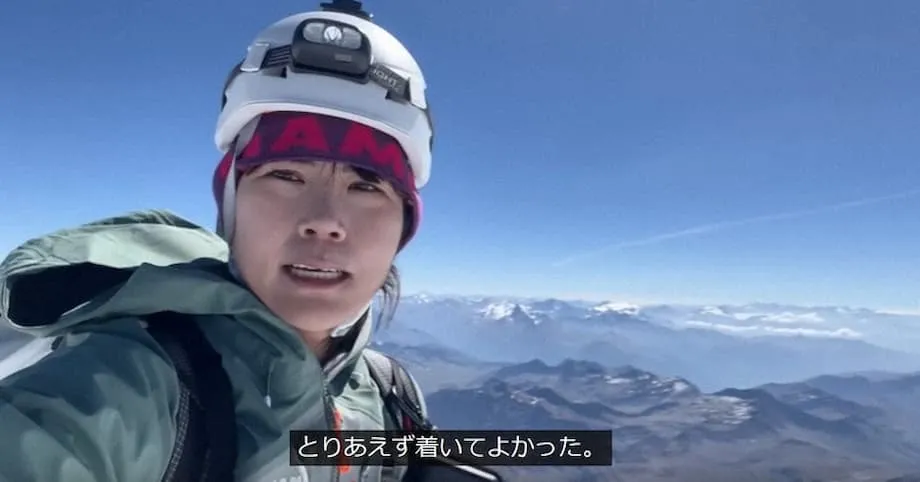
Maria, a Japanese creator with about 250,000 subscribers, is a prominent face of this movement. She documents solo outings in Japan's Northern Alps and on major peaks overseas, including Mont Blanc.
A near miss in Guatemala prompted her to reconsider how easily small mistakes can accumulate. She now plans methodically, carries supplies for an unplanned night outside and treats each outing as a survival exercise.
Maria shares fear alongside satisfaction in her videos and writing. Her checklists cover equipment, weather, route finding and decision making. Her message centers on preparing carefully, noticing early warnings from the body and the weather, and turning around before retreat becomes too difficult.
Her approach also points to a responsibility for other creators. Clips that leave out preparation can make demanding routes look casual. Maria and a growing number of Japanese solo hikers publish checklists, weather walkthroughs and accounts of mistakes as well as successes. Brands, tourism offices and creators can support that approach by including clear safety information with destination posts and discouraging shortcuts taken for dramatic photographs.
What the figures say about solo outcomes
National Police Agency figures from 2019 provide a direct comparison among people who got into distress. Of those traveling in groups, 6.5 percent died or went missing. Among people traveling alone, the share was 16.1 percent, about two and a half times the group figure.
Those percentages describe outcomes among people already in distress. The absolute numbers have changed since 2019, while the pattern of worse outcomes for solo hikers has remained similar.
A partner can call for help, prevent an injured person from becoming dangerously cold, stop bleeding or check the route while the other person concentrates on staying calm. This extra layer of help is often described as redundancy: having another person or another system available when the first option fails.
Cocoheli, a membership locator service whose devices are carried by climbers and used in rescues, reports that more than 76 percent of its search calls involve people who went out alone. That is more than three quarters of calls to locate someone lost or injured.
Solo hikers have to build that backup into their route choices, equipment and communication plans. A locator, shared itinerary or spare navigation method can support a rescue or prevent an error from growing. Choosing a less demanding objective also leaves more room to cope when something goes wrong.
Age, location and the most common causes
People in their sixties and seventies make up the largest share of those in mountain distress each year. More than 70 percent of people who die or go missing are 60 or older.
Balance, reaction time and the ability to recover can decline with age. A route familiar from younger years may feel routine even when it contains exposed sections. A small slip can become a serious fall on steep or slippery ground. Matching an outing to current fitness and technique, while avoiding pressure to keep to a tight schedule, helps hikers of any age.
Nagano recorded the most mountain incidents in 2024, with 321. Hokkaido followed with 189, while Tokyo and Kanagawa each recorded 183.
Losing the way was the leading cause, accounting for 30.4 percent of cases. Falling down accounted for 20.0 percent, slipping for 17.2 percent, fatigue for 10.2 percent and illness for 7.6 percent. Navigation errors therefore represented a larger share than any of the other individual categories.
Popular tourist mountains also saw substantial increases against their averages over five years. Mount Fuji had 83 people involved in incidents in 2024, an increase of 62 percent. Mount Takao had 131, an increase of 52 percent.
International visitors appeared more often in the accident data as well. In 2024, 135 visitors were involved in 99 incidents, including seven people who died or went missing.
Mount Fuji's accessibility can conceal its demands
Mount Fuji's fame and accessibility attract many visitors who have never climbed above the treeline. Its slopes can feel straightforward in good weather, yet the ascent is long and rocky, altitude increases rapidly, and wind and temperature can change within minutes.
The four deaths reported by Shizuoka prefectural police early in the 2024 season brought the risks of going alone into sharp focus. Local officials stressed that a companion can summon assistance quickly when a climber gets into trouble.
The official Mount Fuji climbing information site warns visitors about attempting the mountain without sufficient strength or knowledge:
Mt. Fuji is a high mountain. If you lack physical strength or climbing knowledge, avoid solo climbing.
The same official site cautions against overnight pushes to reach the summit for sunrise, a practice known as bullet climbing:
Bullet climbing is not recommended.
For visitors hoping to see dawn from the summit, staying in a mountain lodge offers an alternative to an uninterrupted ascent through the night. The site's guidance also recommends traveling in daylight and remaining on marked trails to reduce the likelihood of injury or getting lost.
Fuji's surface consists of loose layers of lapillus, the volcanic material described in the climbing guidance. Rocks can come loose beneath a climber's feet or fall from above, leaving many sections exposed to rockfall.
The official advice is to wear a helmet and choose resting places with as little exposure to falling rocks as possible. Anyone who sees or triggers rockfall should shout "raku," meaning falling rocks, or "rocks" to warn others.
When small problems become harder to escape
Solo risk increases when mistakes become more likely and help takes longer to arrive. Sudden weather changes, navigation errors and slips on wet rock can leave a lone hiker with several problems to solve at once. Carrying all the equipment that a group might otherwise share can add fatigue.
Afternoons and weekends bring more incidents, when paths are busy and hikers may feel pressed for time. Fog and snow make navigation harder. A short wrong turn can become a long struggle away from the trail, using up energy and daylight.
Routes far from trailheads or mountain huts require especially early decisions about turning back. Waiting until exhaustion or deteriorating weather makes the choice unavoidable leaves fewer options for getting down safely.
The sequence of the figures and research shows how the issue has developed:
- 2019: Among people in distress, 16.1 percent of solo hikers died or went missing, compared with 6.5 percent of people in groups.
- 2023: Japan recorded a record 3,126 mountain incidents involving 3,568 people.
- 2024: Incidents fell to 2,946, involving 3,357 people. Four deaths were reported during the first week after Mount Fuji's southern trails opened.
- 2025: Sophia University researchers developed a model using 2,596 accidents in Nagano from 2014 to 2023 to predict types of mountain accidents.
Research connects risk with time, weather and the climber
Sophia University's researchers trained a language model on the Nagano accident records to examine whether information available before a climb could help predict the kind of trouble a person might encounter.
The model sorts risk into four categories: falls from height, falls at ground level, fatigue and disorientation. Its inputs include the time of day, mountain location, weather and the climber's profile.
Falls from height and disorientation were predicted with accuracy above 60 percent. The strongest predictors were understandable in practical terms: falls from height were more common in morning hours and on particular peaks, while falls at ground level clustered around midday in some mountain ranges.
Fatigue had stronger links with older climbers and late afternoons. Disorientation was more closely associated with poor visibility and hiking alone. Together, those findings connect route choice and timing with the conditions a person may face during the walk.
The researchers believe the approach could support tools that give people a personal risk check while planning. Training and judgment remain essential parts of making those decisions. The research points toward apps that could flag a risky combination of route, weather and personal circumstances before it becomes a rescue call.
Preparation starts before reaching the trail
A safer solo outing begins with an objective that fits present fitness and skills. Shorter routes and simpler terrain provide a way to build experience before attempting complex traverses or long days. Remote or technical routes may be better approached with a partner or small group.
A route plan should go to a family member or friend, including the intended route and expected return time. Paper plans can also be left in trailhead post boxes where they are available. Sharing a location with a trusted contact adds another way for someone to notice a problem.
Weather checks need to cover wind, temperature and cloud base, meaning the height at which clouds begin. A firm turnaround time helps prevent a schedule from pushing a hiker into worsening conditions. Starting early and prioritizing daylight reduce exposure to fatigue and navigation mistakes late in the day.
Night ascents require suitable experience and equipment. At Fuji, avoiding an overnight push and booking a lodge instead can keep the sunrise goal from becoming a demand to continue regardless of tiredness.
Mountain clubs and guide services offer instruction in navigation, movement on steep ground and risk assessment. For people who prefer solitude, conservative objectives give those skills time to develop.
Equipment and decisions that provide a margin for error
Solo hikers need equipment for the planned route and for a longer delay than expected. Clothing, navigation, communication and emergency supplies each address a different point at which a manageable problem can become serious.
- Carry insulating layers, a waterproof outer layer, gloves and a hat. Choose footwear suited to the ground and season.
- Take a headlamp and spare batteries, a map and compass, a charged phone, a power bank and a GPS app with maps downloaded for use without a connection.
- Pack a whistle, basic first aid supplies and a helmet on routes exposed to falling rocks.
- Bring more food and water than the expected duration requires. A light emergency shelter can make an extended wait more manageable.
- Consider a locator or beacon such as Cocoheli, or a satellite messenger in areas with weak mobile phone coverage, as backup communication.
Marked trails and frequent position checks help stop a small navigation error from becoming a large one. Snow, ice and heavy rain can change the character of a route, even on a low mountain, so seasonal hazards need to be considered before departure.
Headache, nausea and dizziness are warning signs to watch for at altitude. Slowing down, drinking water and descending when symptoms develop are part of the response. Rapidly building wind and cloud are also reasons to reconsider continuing.
Turning around is a skill rather than a failed outing. Careful planning, modest goals and backup systems can prevent many incidents. A partner supplies another layer of help, while someone choosing to travel alone needs enough time, energy and equipment to cope with a change of plan.
Key Points
- Japan recorded 2,946 mountain incidents involving 3,357 people in 2024, after a record 3,126 incidents in 2023.
- Solo hikers accounted for about 39.1 percent of people involved in mountain accidents in 2024 and experienced worse outcomes than people in groups.
- Getting lost was the leading cause of incidents, at 30.4 percent. More than 70 percent of people who died or went missing were 60 or older.
- Mount Fuji and Mount Takao recorded increases against their averages over five years. Four people believed to be climbing alone died early in Fuji's 2024 season.
- Official Fuji guidance warns against solo climbing without sufficient strength or knowledge and discourages bullet climbing.
- Sophia University's research linked disorientation with poor visibility and solo hiking, and fatigue with older climbers and late afternoons.
- Shared plans, daylight travel, suitable equipment, backup navigation and communication, and early decisions to turn back provide practical protection.