Formation rehearsal ends in fire in northeast China
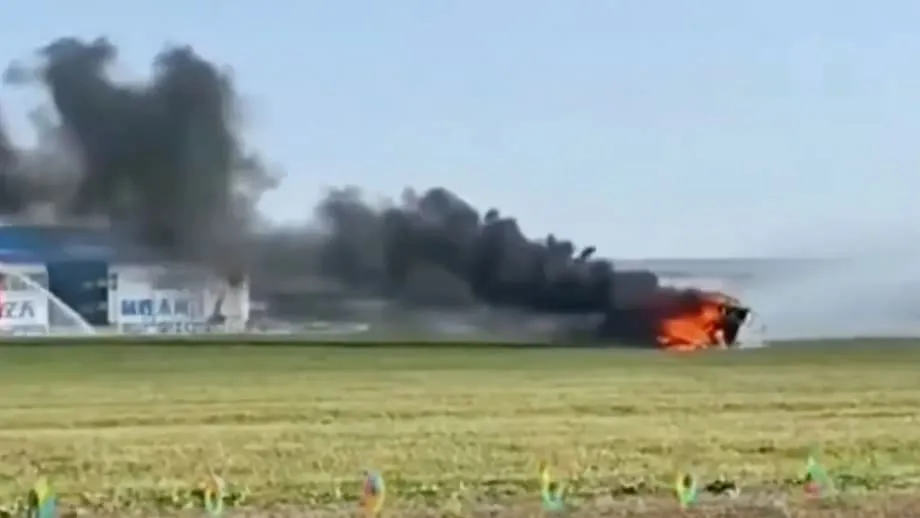
Two Xpeng AeroHT flying cars collided in the air during a rehearsal for the Changchun air show in Jilin Province on Tuesday afternoon, leaving one aircraft burning after it landed. The other aircraft returned to the ground without catching fire.
Contents
- Formation rehearsal ends in fire in northeast China
- What happened during the flight?
- What investigators will examine
- Why formation flying requires precise coordination
- What Xpeng AeroHT is trying to sell
- China's wider push into low altitude aviation
- What passenger aircraft must demonstrate
- Training and sharing the air above cities
- Business pressure ahead of the air show
- What to Know
Xpeng AeroHT, the aviation unit of Chinese electric vehicle maker Xpeng, said the aircraft flew too close together during a formation exercise. It identified insufficient spacing as the immediate cause and began an internal investigation. One company employee said a pilot suffered minor injuries, while the manufacturer said all personnel at the scene were safe.
Emergency crews extinguished the flames, and local officials cordoned off part of the field and cleared the area. Videos posted on Chinese social platforms showed dark smoke rising from a grassy area, with fire engines surrounding the damaged aircraft.
The demonstration was intended to showcase a new class of personal aircraft ahead of the air show, which was scheduled to open later in the week in northeast China. Instead, the collision brought safety procedures into focus during what had been planned as one of the company's most prominent demonstrations.
The incident also came at a sensitive point for Xpeng AeroHT's commercial plans. The company has discussed a price of about 2 million yuan, roughly $280,000 to $300,000, and deliveries of a modular flying vehicle system in 2026, subject to approvals and production readiness. For prospective buyers, the immediate issue is how the company will explain the collision and adjust its demonstration procedures.
What happened during the flight?
Early descriptions placed the collision during a formation drill involving two aircraft. The vehicles clipped each other, and Xpeng AeroHT said damage to one aircraft's fuselage, its main body, led to a fire after landing.
The company said emergency teams responded quickly and the site was secured within minutes. Authorities completed the response, according to the manufacturer. The sequence described by the company puts the contact in the air before the fire on the ground.
Xpeng AeroHT addressed the condition of those present and the next step in a written statement:
All personnel at the scene are safe. An investigation is underway.
The company's broad assurance about personnel came alongside the employee's account of a pilot with minor injuries. A final investigation finding and a date for its release had not been announced as of September 17, 2025.
The main events and scheduled milestones were:
- Tuesday afternoon: Two aircraft collided during a formation rehearsal for the Changchun air show.
- After landing: One damaged aircraft caught fire, emergency crews extinguished it, and officials secured the area.
- Later that week: The Changchun air show was scheduled to open.
- 2026: Xpeng AeroHT planned to begin deliveries of its modular system, subject to approvals and production readiness.
What investigators will examine
Investigators will reconstruct the flight using flight logs, radio calls, spectator videos and telemetry recorded on board. Telemetry is information collected by an aircraft's sensors and systems that helps show how it was behaving during flight.
Modern electric aircraft prototypes can stream substantial amounts of information during testing. Relevant measurements include rotor speed, battery status, acceleration and GPS tracks. Together, those records can help establish where each aircraft was and how its movement changed before contact.
The investigation will also examine the formation briefing, the distance between the aircraft, wind conditions and whether automated stability features activated as the vehicles approached each other. These details will help the team assess human factors, technical problems or a combination of both.
Xpeng AeroHT's initial explanation centers on separation. The wider investigation will need to trace the sequence that brought the aircraft too close and how the damage developed into a fire after landing.
Why formation flying requires precise coordination
Formation flying places aircraft closer together than they would normally operate. A small change in speed, altitude or direction can quickly narrow the gap, leaving pilots little time to respond when they are flying low and near another aircraft.
Rotor wash, the moving air pushed by rotating blades, and turbulence from one aircraft can also disturb another. Pilots manage these risks by assigning roles, agreeing on precise distances and keeping constant visual references.
Rehearsals may involve repeating maneuvers several times. Each attempt requires a shared plan before takeoff, careful timing and coordination throughout the flight. The Changchun exercise involved exactly this kind of close formation work.
For Xpeng AeroHT, the collision could lead to revised demonstration rules, wider spacing between aircraft and further training for formation routines. Local regulators may also give public flights additional scrutiny before the show opens.
What Xpeng AeroHT is trying to sell
Xpeng AeroHT is a subsidiary of Xpeng focused on aerial mobility. It describes itself as Asia's largest flying car developer and has promoted the technology for years, including demonstration flights in several Chinese cities intended to build public familiarity.
The aircraft are electric vertical takeoff and landing vehicles, usually shortened to eVTOL. Multiple electric rotors allow them to rise from and descend onto a landing area without a conventional runway. They are designed for short journeys at low altitude, including trips within cities.
Depending on the design, these vehicles can be flown by a pilot or operate with varying levels of automation. Automation means that aircraft systems carry out some flight tasks, while the precise balance between those systems and a human operator can differ.
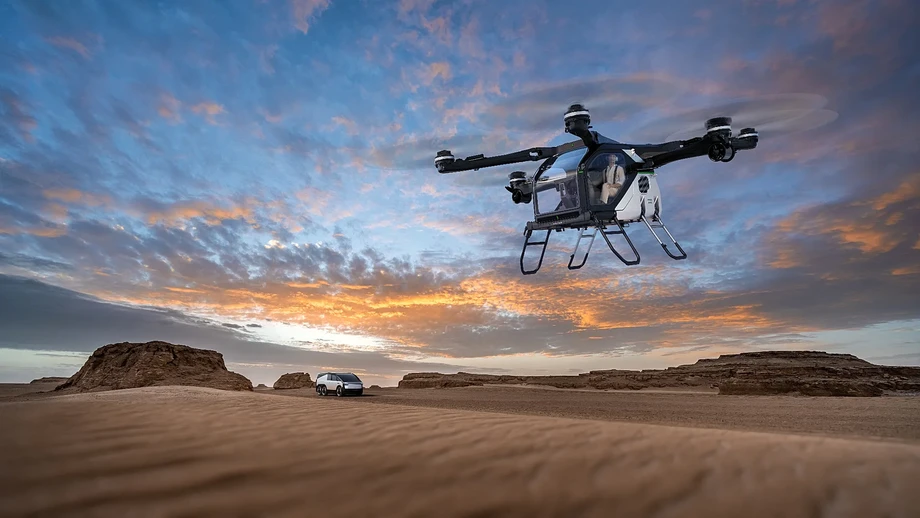
Xpeng AeroHT has shown two main concepts. One is a self contained electric aircraft with two seats. The other is a modular system called the Land Aircraft Carrier, which pairs a road vehicle with a separate aerial module.
The road vehicle is designed to store, recharge and transport the flying module. That arrangement makes the ground vehicle part of the product, allowing the aircraft to be carried to a suitable place for flight.
As of January, Xpeng said it had about 3,000 orders for its flying vehicle line. Its proposed price of around 2 million yuan places the first models near expensive luxury cars. The 2026 delivery plan depends on both regulatory approvals and the company's readiness to manufacture the system.
The company has also promoted a network of flying camps. These would provide dedicated takeoff and landing areas and controlled airspace, with opportunities for training and supervised flights.
China's wider push into low altitude aviation
Beijing has made the low altitude economy a priority. The term covers activities below roughly 3,000 meters, ranging from parcel deliveries and medical supply flights to aerial sightseeing and short urban journeys.
China has more than 2,000 drone manufacturers and over 20,000 companies operating unmanned aircraft. Several cities already run pilot programs involving routine deliveries and emergency support with drones.
China's civil aviation regulator has projected a domestic market approaching $206 billion by 2025 and about $482 billion by 2035. The later forecast is more than twice the earlier figure, showing the scale of growth anticipated across this broad group of aviation activities.
Manufacturers including Xpeng AeroHT want to supply aircraft for tourism, logistics, agriculture and disaster relief. Passenger vehicles are one part of that wider ambition, alongside machines that move goods or support public services.
The Changchun air show forms part of the effort to make these services visible to the public and demonstrate confidence in commercialization in the near future. A successful display can help people understand an unfamiliar vehicle; Tuesday's collision instead put operational safety at the center of attention.
What passenger aircraft must demonstrate
Electric aircraft promise quieter flight and lower maintenance requirements. Before routine passenger operations, however, manufacturers must demonstrate reliable performance in varied weather, crowded urban airspace and repeated daily use.
Established aviation approval processes require extensive testing and detailed maintenance programs. For electric aircraft, regulators will demand evidence about battery performance, backup arrangements for motors and controllers, and the resilience of flight control software.
Backup arrangements, often called redundancy, allow other components to keep performing essential tasks if one part fails. Flight control software helps manage the aircraft's movements, making its reliability another central part of the safety assessment.
Passenger airworthiness certification is complex. Airworthiness means that an aircraft meets the safety requirements for flight. Agencies in the United States and Europe have created approval pathways tailored to eVTOL aircraft, while China is developing its own framework.
Initial commercial approvals in any country would likely restrict routes, altitudes and weather conditions. Those limits would define where and when an aircraft could operate as services begin.
The Changchun collision adds urgency to the practical questions surrounding demonstrations, training and reliability at an early stage of the sector's development. The investigation will provide the company's next opportunity to explain the event in detail.
Training and sharing the air above cities
Urban airspace already accommodates helicopters, medical flights and drones. Adding new passenger aircraft requires reliable traffic management, clearance procedures and strict rules on separation.
Geofencing is another tool involved in managing that airspace. It uses a digital boundary to help keep an aircraft within an approved area or away from a restricted one. Such controls sit alongside procedures governing permission to fly and coordination with other aircraft.
Training remains necessary even when much of a flight is automated. Operators and safety pilots need clear procedures, recurrent checks and consistent standards so they can carry out their responsibilities during normal flights and unexpected situations.
Xpeng AeroHT's proposed flying camps connect its sales plans with that need for controlled operating areas and instruction. Dedicated sites could give users a place to train and experience supervised flights before wider use.
The Changchun rehearsal involved test pilots conducting a demanding display maneuver. Safe everyday operations will also depend on disciplined spacing and coordination, particularly as different kinds of aircraft share the same areas.
Business pressure ahead of the air show
Xpeng's aviation ambitions come during intense competition in Chinese electric transport. The company is already a major electric car manufacturer, has expanded into Europe and has presented flying vehicles as a next frontier for mobility.
The aircraft incident also follows a recent recall of Xpeng P7 Plus sedans over a steering fault. Potential flying vehicle buyers and investors will be watching for information about safety measures, development milestones and any changes to the public flight schedule.
Preparations for the Changchun event reportedly continued after the crash site was cleared. The air show remained scheduled to open later in the week, while Xpeng AeroHT said its investigation was underway.
The company's immediate tasks are concrete: establish how the two aircraft came into contact, assess the fire that followed landing, and review the procedures used for public demonstrations. Its longer commercial timetable still depends on approvals and production readiness before the planned deliveries in 2026.
What to Know
- Two Xpeng AeroHT aircraft collided during a formation rehearsal for the Changchun air show in Jilin Province on Tuesday afternoon.
- One aircraft caught fire after landing; the other landed without igniting.
- The company said personnel were safe, while an employee said one pilot suffered minor injuries.
- Xpeng AeroHT cited insufficient spacing as the immediate cause and began an internal investigation.
- Emergency crews extinguished the fire, and officials secured the site.
- The company has discussed pricing near 2 million yuan and reported about 3,000 orders as of January.
- Deliveries of its modular Land Aircraft Carrier system were planned for 2026, subject to approvals and production readiness.
- Certification, training and airspace coordination remain central requirements for commercial passenger operations.