Burned bone fragments deepen the search for answers
A white sack and a plastic bag recovered from Lake Taal contained fragments that appeared to be burned human bones, giving Philippine investigators a new lead in the disappearance of at least 34 cockfighting enthusiasts. The men vanished between April 2021 and January 2022, leaving families waiting for answers about alleged abductions, killings and the involvement of police officers and powerful gambling figures.
Contents
- Burned bone fragments deepen the search for answers
- Who disappeared, and when?
- The witness account and the people he accused
- Why 15 police officers are under investigation
- How online cockfighting became a vast betting business
- A volcanic lake complicates every dive
- How investigators hope to identify the remains
- Families seek court action and transparent updates
- Investigators examine a possible drug war connection
- What to Know
As of September 16, 2025, forensic examinations and DNA testing were underway to determine whether the material was human and whether it could be matched to the missing. Animal remains were also found in the search area. For relatives, identifying the fragments could mean finally learning what happened and recovering remains for burial.
The Department of Justice confirmed the discoveries during a search of the volcanic crater lake south of Manila. Justice Secretary Jesus Crispin Remulla has directed an operation involving the Philippine National Police, the Philippine Coast Guard and outside specialists. Investigators are also examining 15 police officers over suspected involvement in the disappearances.
The search gained momentum after a detained suspect began cooperating as a witness and described where victims had allegedly been dumped. His account brought investigators to a lake covering roughly 230 square kilometers, with depths exceeding 170 meters, or about 560 feet, in places.
Lake Taal, known for its beauty, presents a difficult setting for recovering evidence. Dark water, sudden currents and changing depths complicate diving. Authorities have asked Japan for technical assistance with mapping the lake bed and supporting the operation, while families press for confirmation, accountability and the return of their loved ones.
Who disappeared, and when?
The missing men are known as sabungeros, a local term for people who work in or around cockfighting. They included organizers, bettors, agents and security staff connected to a boom in livestreamed wagering during pandemic restrictions on events held in person.
Several were last seen at or near major cockfighting venues in Metro Manila and neighboring provinces. Their disappearances followed allegations of cheating and match fixing, including claims that participants diverted online wagers to sham betting portals or manipulated contests behind the scenes.
Investigators gradually assembled evidence from different places and incidents. Abandoned cars were found, cash withdrawals appeared on accounts linked to the missing, and witnesses described men being forced into vans and driven away. Security personnel from a Manila arena became early suspects and were later charged in connection with kidnappings.
The case developed across several years:
- April 2021 to January 2022: The 34 missing person cases occurred, involving men connected to cockfighting and online betting.
- 2022: A Senate inquiry examined the scale of online cockfighting, and then president Rodrigo Duterte ordered the activity halted amid concerns about addiction and crime.
- By mid 2025: A whistleblower offered to cooperate and described alleged killings and disposal of victims in Lake Taal, shifting the investigation toward the lake.
- September 16, 2025: The search, forensic work and investigations into civilian suspects and police officers remained active.
Families organized vigils and repeated public appeals as leads grew cold. Their campaign kept the disappearances in public view even before the witness account brought renewed attention to the case.
The witness account and the people he accused
Julie "Dondon" Patidongan, also known as "Totoy," is a security guard who was previously among those accused in the kidnappings. He went on national television and later met investigators to describe what he said was a murder scheme involving himself and others.
Patidongan alleged that victims were strangled with wire, sealed in sacks, weighted with sandbags and dumped into Lake Taal. He accused businessman Charlie "Atong" Ang, a prominent figure in licensed gambling and online cockfight streaming, of ordering the killings. He also mentioned actress and businesswoman Gretchen Barretto as an investor in Ang's operations.
Ang and Barretto have publicly denied the allegations. Ang has filed a defamation complaint against Patidongan. Prosecutors say the claims will be tested in court, and no court has yet determined who ordered the crimes or how many people were killed.
Patidongan said in an interview that the missing men would not be found alive. The security guard, who had begun cooperating with investigators, described their alleged fate in these words:
How can they survive when they were already buried in Taal Lake?
Patidongan also claimed that far more than 34 victims might be in the lake. He described the killings as part of a broader underworld economy tied to online betting and said he would cooperate with families to identify those responsible.
Authorities say parts of his testimony align with evidence collected across multiple scenes and dates. Investigators have filed or prepared criminal complaints against several suspects, including people identified by Patidongan, while seeking further witnesses, physical evidence and corroboration. Forensic identification remains a central part of that work.
Why 15 police officers are under investigation
National police leaders have acknowledged an active investigation into officers suspected of moonlighting for gambling interests. Officials said 15 officers were under investigation and on restricted duty in connection with the disappearances.
Investigators are reviewing phone records, movements, vehicles and equipment to determine whether police officers acted as hired abductors and executioners for an operator earning money from livestreamed cockfights. Evidence and witness statements have raised suspicions that rogue lawmen took part in the abductions and killings.
National Police Chief Gen. Nicolas Torre III condemned the conduct described by the witness and said the force would pursue any member implicated by evidence. He called it:
Savage and unacceptable.
Internal affairs investigators and prosecutors are working in parallel. The internal process examines the conduct of police personnel, while prosecutors build criminal cases. Both require evidence to be protected as proceedings that could last months or years move forward.
The alleged involvement of officers echoes longstanding concerns about criminal syndicates recruiting or coercing members of law enforcement. For families, the investigation also carries a concrete demand: officers found complicit should be removed, and everyone responsible should face charges.
How online cockfighting became a vast betting business
Cockfighting, or sabong, has deep cultural roots in the Philippines and remains legal in its traditional form under local rules. During pandemic lockdowns, operators moved contests online, allowing people to watch livestreams and place wagers without attending an arena.
Online sabong, also known as e sabong, attracted large audiences and an even larger pool of bettors. A Senate inquiry in 2022 heard that daily bets ran into billions of pesos and that license fees generated around 620 million pesos a month for the government.
Mobile apps and third party agents moved wagers in real time. The speed and reach of the business helped it grow, while investigators, whistleblowers and insiders described ways that money or results could be manipulated.
One scenario raised by authorities involved diverting wagers from legitimate sites to copycat portals. Those imitation sites could capture bets without paying the licensed operator or the winners. Another alleged method involved weakening a favored rooster or tampering with fight arrangements so insiders could bet against it.
Officials said the missing sabungeros had been suspected of some form of cheating by rival groups. Those suspicions form part of the account investigators are examining as they reconstruct the separate disappearances.
Public pressure over the missing men reached the presidential palace. Duterte ordered a halt to e sabong in 2022, citing the social costs of addiction and crime. Unlicensed online streams continued, but the decision sharply curtailed the legal industry.
Traditional cockfighting resumed in arenas. Gambling remained a political flashpoint in the predominantly Catholic Philippines, where church leaders have denounced online betting as a social ill. The disappearance cases brought the industry's money, alleged cheating and suspected violence into the same investigation.
A volcanic lake complicates every dive
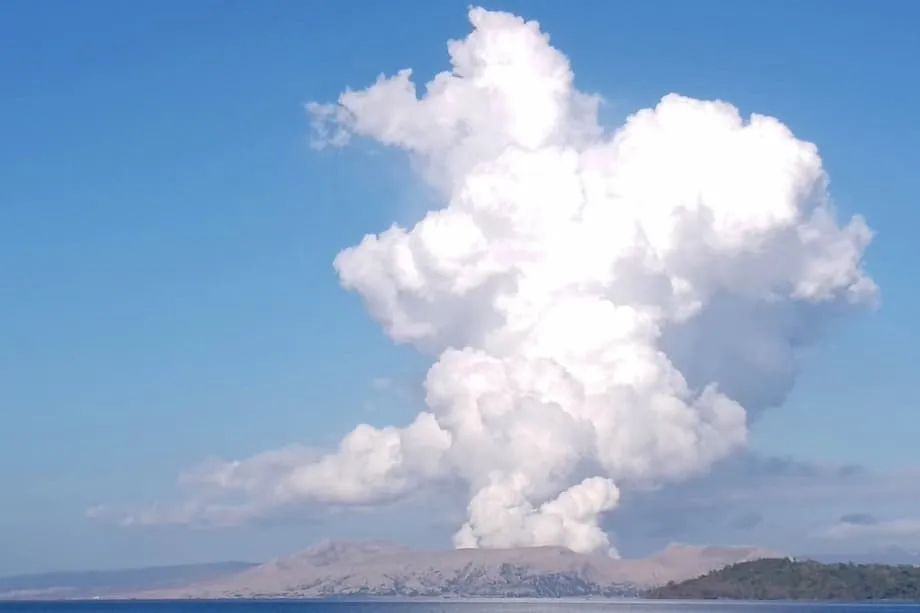
Lake Taal is a demanding crime scene because of its size, depth and volcanic setting. Wind and rain can change currents, visibility can fall to nearly zero, and water conditions can shift suddenly. The lake's chemistry near the volcano can also complicate the preservation of remains.
Earthquakes and ash emissions are further risks in the area. They can interrupt fieldwork and foul equipment, while approaching typhoon season adds urgency because storms can stir sediment and scatter potential evidence.
The Philippine Coast Guard has deployed technical wreck divers for the search. Local units have completed initial site assessments to prepare for longer and deeper dives when weather conditions allow and equipment is ready.
Remulla said the government would use methods based on science and outside assistance to survey the lake floor, identify priority locations and recover material safely. The justice secretary explained why specialist divers were needed to check the witness account:
We will need technical divers to determine the veracity of the information.
Authorities have requested Japanese assistance for mapping the lake bed in high resolution and for related technologies. Remote mapping tools can survey large areas for unusual features, helping teams decide where to concentrate difficult underwater searches.
Remulla also urged people with knowledge of the case to help the search for truth and accountability. The justice secretary framed that appeal in moral terms:
Our very soul as Filipinos is at stake here. We must not allow money to become the only master of the Filipino people.
How investigators hope to identify the remains
Forensic teams must first determine which recovered samples are human. They will then attempt to extract DNA and compare it with samples from relatives of the missing. A matching profile would allow authorities to associate remains with a particular person.
The white sack and plastic bag containing apparent burned bone fragments are among the leads being examined. Investigators are also separating the assessment of those fragments from the animal remains found nearby.
Water, silt and the passage of time degrade tissue and bone. Fire, if used before disposal, makes identification more difficult. Those conditions mean the examination involves several stages before families can receive a confirmed identification.
Patidongan's allegation that victims were sealed in sacks and weighted to sink shapes what search teams are looking for. Divers must mark recovery sites, carefully collect material and record where each item was found.
Cataloging locations and keeping track of recovered material are essential parts of preserving evidence for court. Authorities say remains identified through DNA could support criminal cases and allow families to claim their dead for burial.
Families seek court action and transparent updates
Relatives have sustained a public campaign through prayer rallies, vigils and appeals for updates. Many believe their loved ones were punished for petty cheating while powerful people escaped consequences.
Their demands extend beyond the lake search. Families want perpetrators charged, complicit police officers removed and industry figures who enabled the crimes named in court records. They also want transparent reports on the recovery operation and a clear plan for the custody and identification of evidence.
Justice Department spokesman Dominic Clavano said the investigation was advancing on multiple fronts and would continue even if the current lead went cold. The disappearances appear to involve many separate abduction events, giving investigators different incidents to examine alongside the underwater search.
The Court of Appeals has nullified a lower court decision that granted bail to some suspects. Families welcomed the move, arguing that too many people involved in the abductions had remained free.
For relatives, court proceedings and forensic work serve related needs. Criminal cases offer a route to accountability, while identification offers the possibility of recovering a loved one and arranging a proper burial after years of uncertainty.
Investigators examine a possible drug war connection
Remulla has raised the possibility that organized groups involved in extrajudicial killings during the anti drug campaign also performed criminal work for gambling operators. Investigators are examining whether squads accustomed to contract killings were hired to silence people suspected of cheating in online betting.
Human rights advocates have pointed to forced disappearances and the alleged involvement of law enforcers as patterns resembling abuses documented during the previous administration's drug war. The International Criminal Court continues to scrutinize those years, while Philippine authorities conduct their own inquiries.
Investigators are focused first on locating remains and building cases that can withstand court scrutiny. The proposed connection to killings during the anti drug campaign remains a theory under examination.
A confirmed connection would give authorities a reason to examine gambling crimes and organized violence together, including whether the same groups carried out killings in different settings. For now, the work at Lake Taal continues alongside inquiries into the missing men, the accused civilians and the police officers under scrutiny.
What to Know
- At least 34 cockfighting enthusiasts disappeared between April 2021 and January 2022, with several last seen near venues in Metro Manila and neighboring provinces.
- Julie "Dondon" Patidongan, also known as "Totoy," alleges that victims were strangled with wire, placed in sacks, weighted with sandbags and dumped in Lake Taal.
- Charlie "Atong" Ang and Gretchen Barretto deny the allegations. Ang has filed a defamation complaint against Patidongan.
- Fifteen police officers are under investigation and on restricted duty over suspected involvement in the disappearances.
- A white sack and a plastic bag contained apparent burned human bone fragments. Forensic examinations and DNA testing are underway.
- The government requested Japanese technical help to map the lake bed and assist a search complicated by depth, poor visibility, currents and volcanic conditions.
- A 2022 Senate inquiry heard that online cockfighting drew billions of pesos in daily bets and generated around 620 million pesos a month in government license fees.
- Duterte halted e sabong in 2022. Unlicensed streams persisted, while traditional cockfighting resumed in arenas.
- The Court of Appeals nullified a decision granting bail to some suspects. Families continue to seek accountability, transparent updates and remains for burial.
- Investigators are examining a possible connection to groups involved in killings during the anti drug campaign.