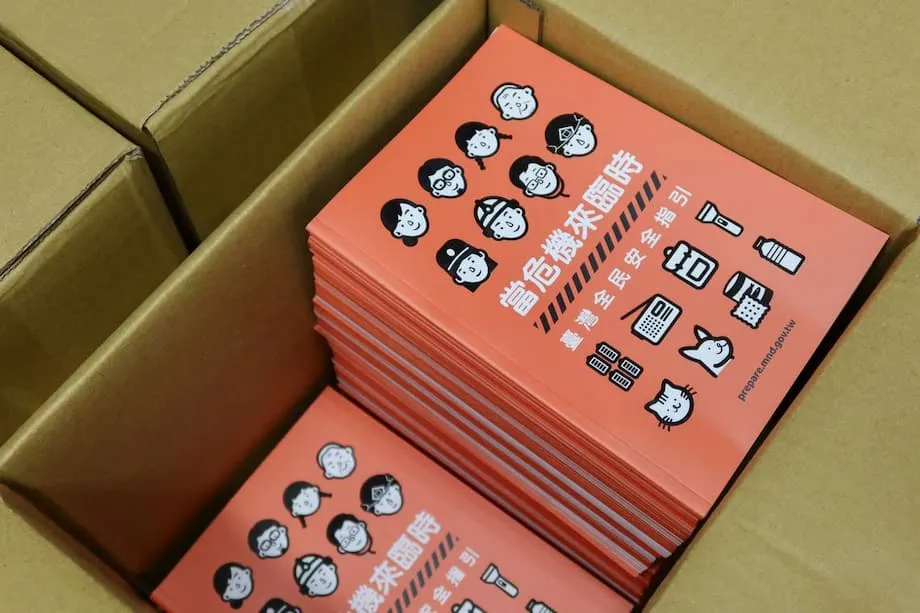
A 29 page guide for emergencies and conflict
Taiwan will issue an updated civil defence handbook next week, adding instructions for civilians who encounter enemy soldiers and a firm warning about wartime misinformation: any claim that the government has surrendered should be treated as false.
Contents
- A 29 page guide for emergencies and conflict
- What to do if enemy soldiers appear
- False surrender claims and fabricated orders
- Why Ukraine and European guides matter
- Exercises test preparations beyond the handbook
- Warnings about apps and connected devices
- Five areas for keeping society functioning
- Community groups build practical skills
- What households can prepare now
- Preparing for disruption at different levels
- What to Know
The bright red orange guide, described ahead of its release on September 13, 2025, runs to 29 pages. It brings together preparations for earthquakes, typhoons and a potential conflict with China, with advice on finding shelters, packing emergency supplies and protecting children and pets.
Beijing claims Taiwan as its territory and has not renounced the use of force. Taiwan's elected leaders reject that claim and say only the island's people can decide their future. More frequent military exercises, coast guard patrols and increasingly complex maneuvers around Taiwan have increased the value of clear instructions that civilians can follow under pressure.
The handbook builds on a first edition released in 2022. Its expanded wartime guidance covers threats ranging from sabotage of undersea communications cables and cyber attacks to hostile inspections of Taiwanese vessels that could precede a blockade, and a full scale invasion.
Readers of different ages are meant to be able to use the guide. Alongside smartphone tools for locating bomb shelters, it explains how to prepare a basic emergency kit for each family member, including pets. Its wider message asks communities to look after one another and safeguard their shared home.
Officials present civilian readiness as part of Taiwan's defence. Families who know where to shelter, how to obtain reliable information and which actions could expose military movements can help reduce confusion while emergency services respond.
What to do if enemy soldiers appear
Civilians who detect an enemy presence are instructed to leave the area promptly when it is safe. If leaving is unsafe, the handbook tells them to take cover in a secure place away from windows.
The guide also asks residents to avoid taking or uploading photographs and videos that could reveal troop locations, checkpoints or police movements. Posting a familiar street scene during a crisis could give an adversary useful information about people, positions or routes.
Shen Wei chih, a director at the Taiwan military's All out Defence Mobilisation Agency, explained why ordinary citizens keeping their cameras down matters to defensive operations.
That could compromise military movements, which is detrimental to our defensive operations.
Operational security means keeping information about military activity from reaching an opponent. In the handbook's instructions, that responsibility extends beyond soldiers to civilians who might otherwise record and share what they see.
Residents are also urged to avoid sharing the locations or routes of emergency responders. Suspicious activity should be reported through local hotlines or police without taking personal risks. The practical direction is to seek safety and pass concerns to the authorities.
False surrender claims and fabricated orders
The handbook warns that hostile actors will try to divide society through false narratives, including deepfake videos and rumors spread more widely by local collaborators. Its central instruction is that claims of surrender or defeat during an invasion should be considered false.
False orders and fake announcements may also circulate online. Residents are told to rely on verified government alerts and trusted broadcasters for instructions, and to treat unexpected messages about surrender or a ceasefire as suspect until confirmed through official channels.
Foreign actors and their proxies could flood social networks with doctored audio, fabricated clips and other messages designed to confuse people, cause alarm or weaken morale. Such activity can create panic, disrupt the movement of supplies and distract emergency responders.
Deepfakes use artificial intelligence to alter audio or video so that someone appears to say or do something that never happened. A convincing fabrication can travel through social networks faster than a correction, particularly when people are frightened and looking for immediate answers.
The guide advises readers to check where a message came from, compare it with multiple official outlets and look for inconsistencies in lighting or the way a speaker's lips match the sound. Sensational claims, especially those concerning surrender or a ceasefire, require caution and confirmation from authorities.
Taiwan has invested in digital literacy programs, while civic groups teach basic verification skills. The handbook connects those everyday habits to national security: sharing an unverified clip can help an adversary spread confusion.
Why Ukraine and European guides matter
Russia's invasion of Ukraine has shaped Taiwan's approach to public readiness. It showed how quickly critical services and communications can become targets, and how community training, first aid skills and clear guidance can help prevent chaos.
Lin Fei fan, deputy secretary general of the National Security Council, oversaw the handbook's update. Taiwan studied guides prepared by fellow democracies, including the Czech Republic and France, to find approaches suited to local needs and culture.
Lin described developments in Europe and the Indo Pacific as immediate concerns for Taiwan, reflecting Taipei's view that authoritarian expansion is a global challenge.
The global situation, whether in Europe or the Indo Pacific region, is not a distant concern. It is right at our doorstep.
Lin also said the handbook was intended to give people practical ways to manage danger, rather than leave them feeling helpless or frightened.
The goal is not to make everyone feel afraid. Rather, the information is intended to help people develop better coping strategies when a real crisis occurs.
Taiwan's leaders see civil readiness as part of deterrence. Maintaining services, communicating reliably and helping communities withstand pressure support the island's ability to respond to a crisis.
Exercises test preparations beyond the handbook
Taiwan held its longest Han Kuang military drills to date in 2025. The exercises tested the defence of ports and airports, responses to coastal landings and coordination across emergency services.
Authorities highlighted new deliveries of equipment, maritime drones used for surveillance, and adjustments to logistics and medical evacuation. Those activities connect military preparations with the movement of supplies and the treatment and transport of injured people.
The handbook belongs to a longer sequence of work on civilian preparedness:
- 2022: Taiwan released the first version of its civil defence handbook.
- 2025: Taiwan staged its longest Han Kuang drills to date, including tests involving ports, airports, coastal landings and emergency services.
- September 13, 2025: The updated handbook was described ahead of its planned release the following week.
Regular exercises also test arrangements for essential services and expose gaps requiring further work. Officials acknowledge that coordination across agencies can be difficult. Practicing together helps volunteers, emergency workers and other professionals understand their responsibilities before an actual emergency.
Warnings about apps and connected devices
The updated handbook flags potential security risks involving hardware and software made in China. It names WeChat, TikTok and the artificial intelligence service DeepSeek AI, along with networked cameras and other smart devices.
The concern is that these tools could be exploited during a crisis to track users, collect sensitive data or deliver targeted disinformation. Connected devices can create a digital record of activity and movement that hostile operators might use.
Authorities advise caution with such equipment during emergencies. Depending on official alerts, people may be asked to limit app permissions, log out of services they do not need or switch off particular devices.
The purpose is to reduce digital footprints that could help hostile operators map movements or disrupt critical communications. These instructions sit alongside the warning against posting sensitive photographs: both address information that civilians may release through routine use of their phones and other devices.
Five areas for keeping society functioning
President Lai Ching te has championed a wider campaign to strengthen resilience across society. The handbook forms one part of that effort, combining civilian training, strategic stockpiles, infrastructure protection and secure communications so essential services can continue through disasters or conflict.
Government planners describe five areas of preparation:
- Civilian training: Prepare people for emergency response, supply distribution and support for victims, with a goal of training hundreds of thousands of volunteers across neighborhoods and workplaces.
- Strategic stockpiles: Store food, fuel and medical supplies, with arrangements to move them quickly to the places that need them.
- Critical infrastructure: Protect electricity and water services through reserves and upgrades to grid security.
- Social welfare and medical support: Use local relief and evacuation centers that can rapidly expand their work, including preparations for medical care.
- Information and communications: Maintain backup networks, satellite links and cloud backups so public alerts and services can keep operating.
Ministries, city governments and private partners are building local coordination hubs and apps that track supplies and shelter capacity. The aim is to connect the resources available with the places and people needing help.
The Ministry of Digital Affairs is expanding backup communications so alerts can continue if undersea cables are cut or mobile phone towers are damaged. Redundant communications means having alternative ways to send information when a usual connection fails.
Taiwan also maintains a large network of public air raid shelters. Many schools and community buildings are designated for relief and evacuation during emergencies, giving residents places to seek support beyond their homes.
Electricity, water, medical care and reliable alerts are practical necessities for households as well as public institutions. The wider campaign brings these preparations together so a disruption in one area does not leave communities without a coordinated response.
Community groups build practical skills
Forward Alliance and Kuma Academy are among the grassroots organizations complementing official programs. Their workshops cover trauma care, evacuation planning, media literacy and basic cybersecurity.
Interest increased after the war in Ukraine, and courses often fill quickly as residents seek practical ways to help their communities. The training addresses needs that can arise during both natural disasters and conflict.
These groups work alongside local firefighters, medics and reserve units. Volunteers learn to control bleeding, organize supplies in a shelter, check information before sharing it and support vulnerable neighbors.
The community approach also runs through the handbook's guidance for families. Preparing one household helps its members, while checking on others and understanding local arrangements can help a neighborhood manage a wider emergency.
What households can prepare now
Families are encouraged to make preparations in peacetime, when they have time to find supplies, discuss responsibilities and learn where to go. The handbook combines advice about physical safety with plans for communication and emotional support.
Children need calm, clear explanations suited to their age. Parents are encouraged to practice simple routines, give children manageable tasks that build confidence and preserve familiar comforts to reduce stress.
The practical household checklist covers several needs:
- Find the nearest public shelter through official map apps and keep a paper map in case networks fail.
- Prepare a go bag for each family member containing water, snacks, essential medication, copies of identification, cash, a flashlight, a portable charger and a small radio.
- Keep contact lists with emergency supplies so important numbers remain available.
- Pack pet food, water, a carrier, vaccination records and comfort items.
- Choose two family meeting points, one near home and another farther away, and agree on a way to check in if phone networks are disrupted.
- Learn basic first aid and bleeding control, and keep a small medical kit at home and at work.
- Avoid filming or posting troop movements, checkpoints, police activity or emergency responders and their routes.
- Follow official alerts and check unexpected surrender or ceasefire messages through official channels.
- Limit device permissions or switch off equipment when instructed by official alerts.
- Report suspicious activity to local hotlines or police without taking personal risks.
Preparing for disruption at different levels
Taipei's preparations cover a range of possible crises. Sabotage of undersea cables could interrupt communications, while cyber attacks could disrupt hospitals or electricity. Inspections of Taiwanese vessels by a foreign force could escalate into a blockade. A direct assault represents another contingency addressed by the expanded guidance.
A blockade would place pressure on the movement of goods and supplies. Stockpiles and arrangements for distributing them are therefore part of the same preparations as shelters, medical support and backup communications.
Taiwan is working more closely with partners on emergency management, infrastructure security and communications. External expertise in cyber defence, satellite networking and stockpile management can support these preparations.
A population able to prepare, communicate and withstand disruption raises the cost of coercion for an aggressor and helps Taiwan sustain services during prolonged stress. For residents, the handbook translates that aim into concrete tasks: know where to shelter, keep essential supplies ready, protect sensitive information and help others stay safe.
What to Know
- Taiwan plans to release an updated 29 page civil defence handbook in the week after September 13, 2025.
- The guide says claims of government surrender or defeat during an invasion should be treated as false.
- Civilians encountering enemy soldiers should leave if safe or take cover away from windows.
- Residents are urged not to film or share military movements, checkpoints or sensitive emergency activity.
- The handbook warns about deepfakes, fabricated announcements and potential risks involving apps and connected devices made in China.
- Household preparations include shelter locations, emergency bags, communication plans and supplies for children and pets.
- The wider resilience campaign combines volunteer training, stockpiles, infrastructure protection, medical support and backup communications.
- Community organizations are expanding practical training in first aid, evacuation, information checking and cybersecurity.