A Kyoto ramen bowl brings a wider problem into view
A dead cockroach in a bowl of ramen in Kyoto led Tenchi Foods, the owner of the Tenkaippin chain, to suspend two outlets and order inspections across its network. Kyoto health officials found no major hygiene breaches at the restaurant, but identified delays in keeping pest control records. The company also faced criticism for waiting ten days before publicly acknowledging the incident.
Contents
- A Kyoto ramen bowl brings a wider problem into view
- Why this species is difficult to contain
- What happened at the Tenkaippin outlets
- Sukiya shows how far a closure can reach
- Closures beyond Japan show the regulatory stakes
- How cockroaches can carry contamination
- Why spraying alone can fall short
- A practical control plan for restaurants
- What diners can do after a sighting
- At a Glance
The episode exposed a problem extending beyond one kitchen. American cockroaches, long established in Okinawa and Japan's southern islands, are being reported more frequently in major cities and even in cooler regions. Pest managers describe an insect that is larger than familiar domestic species, difficult to reach inside buildings and increasingly resistant to products previously used to control it.
Restaurants face two connected pressures: preventing insects from reaching food and showing customers that any failure has been dealt with quickly. The Kyoto case brought both into focus. Emergency treatment can remove an immediate problem, while inspection records and clear communication help explain what happened and what the operator has changed.
Masaya Adachi, president of the Tokyo extermination company 808 City, has observed a shift in the insects encountered during pest control work. He describes American cockroaches as solitary insects that reproduce quickly. A single sighting can soon become several, creating the impression of swarms and alarming restaurant operators already trying to contain costs while keeping dining rooms spotless.
Tenchi Foods responded with emergency treatment, a review of pest logs and closer oversight of stores. For customers, the concern was straightforward: an insect had reached a meal, and the public explanation arrived later than many expected.
Why this species is difficult to contain
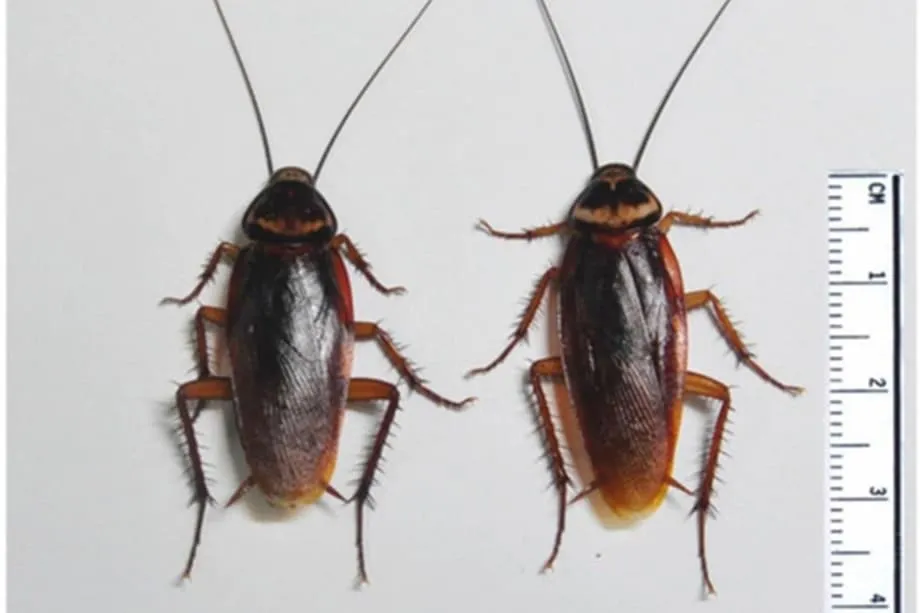
American cockroaches, scientifically named Periplaneta americana, are glossy reddish brown insects that can grow to more than 4 centimeters. They often have a pale band near the shield behind the head. Their size makes a sighting conspicuous, but their preferred hiding places make an infestation difficult to locate.
Floor drains, basements, service shafts and sewer lines offer the warmth and moisture they favor. From those spaces, the insects can enter kitchens searching for food and water. Their mobility, long lifespan and high reproductive rate allow populations to persist when treatment reaches only the places staff can easily see.
German cockroaches, the smaller species many Tokyo restaurants have learned to manage, tend to gather in concealed spaces near equipment such as stoves and dishwashers. American cockroaches move through a building's vertical spaces, including shafts and service routes. Pest control firms say this makes them more stubborn to eliminate.
American cockroaches are strong runners and can glide over short distances. Their food sources include grease, crumbs, cardboard and soap. They also tolerate a wider range of environments than many domestic species, giving them several ways to survive inside a building even when obvious food scraps have been removed.
Young cockroaches, called nymphs, mature over several months. Females deposit egg cases containing multiple offspring, allowing numbers to rise during warm months. Control therefore has to address hidden insects and egg cases as well as the adults seen on a kitchen floor.
What happened at the Tenkaippin outlets
Tenchi Foods said the store manager brought in a professional exterminator soon after the ramen incident. City health officials were informed three days later. Their inspection found no widespread hygiene failures, but pest control measures had not been recorded promptly.
The company's response involved suspending operations at two Tenkaippin outlets in Kyoto and arranging inspections across Japan. Public criticism centered on the ten day interval before the chain acknowledged the incident. The case put the timing of treatment, notification and public communication under scrutiny.
The reported sequence was:
- A customer found a dead cockroach in a bowl of ramen at a Kyoto outlet.
- The store manager arranged professional extermination soon afterward.
- City health officials were informed three days later and identified delays in pest control record keeping.
- Tenchi Foods publicly acknowledged the incident after ten days, suspended two Kyoto outlets and ordered inspections across the chain.
Dense urban neighborhoods can connect restaurants to aging pipes, shared walls and service corridors. Even a kitchen that is cleaned carefully can face insects entering through those routes. A response therefore needs to cover the surrounding building as well as the food preparation area.
Preventive logs, treatment maps and checks on suppliers give managers a practical record of what was found and corrected. They also allow health officers and customers to see when action was taken. In Kyoto, the criticism over delayed disclosure showed how communication can become part of the crisis alongside the original contamination.
Sukiya shows how far a closure can reach
Sukiya, one of Japan's largest beef bowl brands, took a broader step after two separate pest incidents. A rat was discovered in miso soup at a regional branch in January, and an insect was found at a Tokyo store in late March. The chain temporarily closed most of its nearly two thousand outlets for deep cleaning and inspection.
Stores were scheduled to close between March 31 and April 4. The work was intended to prevent pests entering from outside and to address infestation inside restaurants. Sukiya said it repaired a crack that had allowed a rodent into a refrigerator and committed to checking buildings for gaps across its network.
The company also introduced stricter measures, including refrigerating rubbish before collection. That step targeted the conditions around waste storage, while repairs and building checks addressed possible entry routes. Together, the measures showed how a food contamination incident can require changes beyond wiping down a kitchen.
A failure at one location can affect an entire franchise system. Sales and share prices can become unsettled, staff morale can suffer, and landlords and suppliers can ask tougher questions. Operators that act quickly, document repairs and seek verification from local authorities are better placed to rebuild confidence than those that minimize a problem or communicate late.
Closures beyond Japan show the regulatory stakes
Calgary health inspectors ordered three food court restaurants to close in February 2025 after finding evidence of cockroaches. In California, county officials regularly close venues until operators correct problems involving vermin, refrigeration or sanitation.
Police in Madrid also closed a restaurant after discovering a kitchen infested with cockroaches and other severe violations. The cases varied in cause and seriousness, but each showed how pest findings can interrupt restaurant operations and require corrective work before business can continue.
Japan's restaurant incidents fit into that wider pattern of inspection and risk control. A pest problem can move rapidly from a maintenance concern to a food safety issue, an enforced or voluntary closure and a public test of the operator's response.
How cockroaches can carry contamination
Cockroaches moving through sewers and utility tunnels can pick up grime and microbes on their legs and body surfaces. When they enter food preparation areas, they can carry that contamination onto surfaces or stored food. This is why their movement between dirty spaces and kitchens matters for diners and staff.
A peer reviewed study of cockroaches caught in food environments in Pudong, China, found genetic material from several intestinal pathogens in their digestive tracts. The organisms detected included sapovirus, shiga toxin producing Escherichia coli and Blastocystis. These represent viruses, bacteria and parasites, respectively.
Nymphs carried pathogens more often than adults in the study's sample. Kitchens and catering sites also had higher trap counts than other locations examined. Those findings connect the insects' presence in food environments with the need to monitor both young cockroaches and adults.
The researchers who conducted the Pudong study described cockroaches as mechanical transmitters, meaning they can transport disease agents between places. They stated:
Cockroaches are recognized as mechanical transmitters of infectious diseases, posing threats to human health.
The practical concern is the route from drains, dumpsters and floors to food contact areas. Cleaning, sealing entry points and removing hiding places interrupt that route. Traps and targeted baits support those measures, while records allow managers to follow whether activity is declining.
Why spraying alone can fall short
Traditional sprays often fail to reach the deep voids where American cockroaches hide. Some populations also show reduced sensitivity to common active ingredients after repeated exposure. A product applied to a visible surface may therefore leave insects elsewhere in the building untouched.
Baits can still work when placed correctly, but their performance suffers when poor sanitation leaves other food available. Grease, crumbs and waste compete with the bait. Removing those food sources is part of treatment rather than a separate housekeeping task.
Heat treatment, vacuuming and insect growth regulators can reduce populations. Insect growth regulators interfere with development, helping control insects as they mature. Lasting results also require building repairs and strict cleaning to remove the conditions that attract and sustain cockroaches.
Rentokil, a global pest management firm, explains the consequences for food businesses in direct terms:
Cockroaches spread harmful pathogens, contaminate food, and can lead to fines or closure.
A video showing an insect on a bowl can damage a reputation built over years. Restaurants that invest in inspection, exclusion and record keeping can show customers and regulators what they did, when they did it and what action follows. Pest control guidance therefore centers on integrated pest management, a method that corrects the environment and adds targeted products when needed.
A practical control plan for restaurants
Integrated pest management, often shortened to IPM, combines inspection, cleaning, repairs, monitoring and carefully placed treatments. For kitchens facing American cockroaches, the aim is to remove food, moisture and shelter while preventing insects from entering or moving through the building. Chemicals are used in the smallest amount needed for the job.
Restaurant teams can organize that work around the following tasks:
- Identify the species and map activity with sticky traps and inspections at night. Adjust treatment to the insects found.
- Seal food in containers, remove grease films daily and clean beneath and behind equipment. Wash floors and leave them dry at closing.
- Repair leaks, insulate pipes that collect condensation, drain and dry sinks, improve ventilation and empty mop buckets.
- Seal cracks, install door sweeps, screen vents and fit drain covers. Maintain trap primers in floor drains so the water barrier that helps block sewer gases and insects stays in place.
- Reduce clutter, store goods above the floor, rotate stock and inspect deliveries for pest signs before moving them into storage.
- Place gel baits in concealed areas, use insect growth regulators in hiding places and vacuum live insects and egg cases. Consider heat treatment for severe infestations.
- Avoid foggers and broad sprays that can scatter insects and contaminate surfaces.
- Record sightings, trap counts and service visits. Train employees to report activity promptly, and review the logs during manager inspections.
- Work with licensed professionals on complex sites. Buildings with multiple units, shared walls or connections to sewers benefit from coordinated service schedules.
Routine monitoring closes the loop. Trap counts and sighting records tell managers where activity continues and whether measures need adjusting. Building repairs, cleaning and treatment then become a continuing process aimed at stopping a few insects from developing into a larger population.
What diners can do after a sighting
Customers can help a restaurant or public health office respond by reporting exactly what they observed. The time, location and circumstances of a sighting give staff something concrete to investigate. A manager's response, including the action taken and the explanation offered, helps diners judge how the venue handles risk.
Visible cleanliness also provides useful information. Clean floors, tidy waste stations and covered bins indicate everyday discipline. Inspection grades or reports, where available, give customers another way to assess a restaurant before choosing where to eat.
- Notify staff calmly if you see a pest and ask to speak with a manager. Describe the time, the location in the dining room and what you saw.
- Keep receipts. If necessary, contact the local public health office through its hotline or website and provide a factual account without exaggeration.
- Check published inspection information where it is available.
- Avoid circulating unverified images that could identify a harmless insect incorrectly or give the wrong restaurant location.
Restaurant operators have a corresponding responsibility to make their actions understandable. Prompt treatment, accurate records and transparent communication address different parts of the same problem: protecting food and rebuilding confidence after an incident.
At a Glance
- American cockroaches, long established in Okinawa and southern Japan, are being reported more frequently in major cities and cooler regions.
- A dead cockroach in Kyoto ramen prompted Tenchi Foods to suspend two Tenkaippin outlets and order inspections across Japan.
- Kyoto inspectors found no major hygiene failures but identified delays in pest control records. The company faced criticism for acknowledging the incident after ten days.
- Sukiya temporarily closed most of nearly two thousand outlets after separate rat and insect incidents, with closures scheduled from March 31 to April 4.
- American cockroaches hide in deep building spaces, reproduce quickly and can be difficult to control with conventional sprays.
- The Pudong study detected genetic material from viruses, bacteria and parasites in cockroaches collected in food environments.
- Integrated pest management combines sanitation, moisture control, building repairs, monitoring and targeted treatment.
- Diners can report sightings calmly and consult inspection information. Restaurants can support recovery through prompt action, reliable records and clear communication.