A collision in deep space with consequences closer to Earth
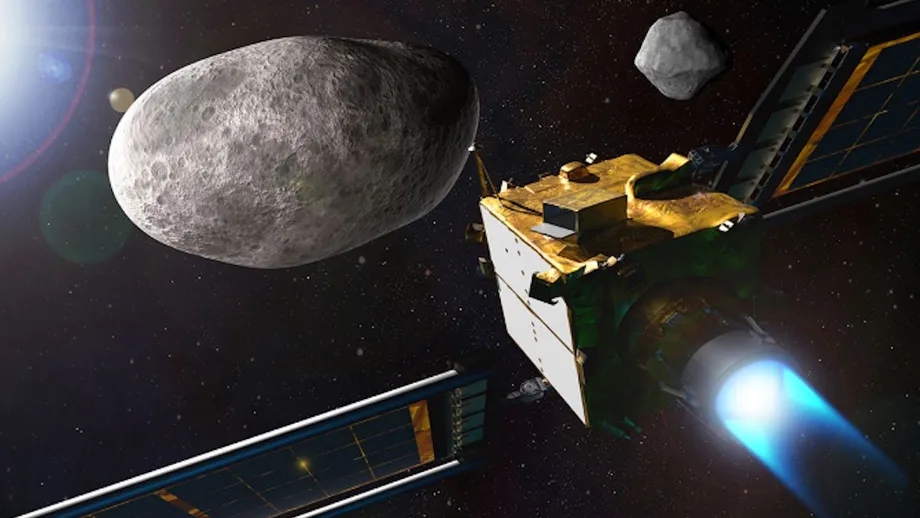
China plans to strike a near Earth asteroid by 2030 with a mission involving two spacecraft: one to crash into the target and another to observe the collision and measure its effects. Chinese officials describe the demonstration as a step toward planetary defense and the future use of asteroid resources. The same technologies are also drawing attention because they could improve capabilities used to threaten satellites.
Contents
- A collision in deep space with consequences closer to Earth
- Why China wants an impactor and an observer
- The milestones stretching from 2030 to 2045
- What DART showed about changing an asteroid's motion
- Why the final approach must be autonomous
- Where planetary defense and satellite interception overlap
- Past satellite destruction explains the debris concern
- China's larger fleet supplies the technical backbone
- Warnings, rejection and a message of cooperation
- Why asteroid resources feature in the same plan
- What could build confidence before 2030
- The Bottom Line
The plan extends beyond a single impact. China envisages a propulsion based deflection test by 2035, followed by mastery of asteroid orbit technology by 2045. Together, those milestones connect the protection of Earth with ambitions for a deep space economy, where resources and infrastructure in space could support longer journeys and reduce dependence on supplies launched from the ground.
As of September 11, 2025, the asteroid target has not been publicly identified, and specific spacecraft designs have not been released. Beijing has invited more than 40 countries and organizations to participate in research and monitoring linked to the mission, while expanding radar and telescope projects that could help find and study near Earth objects.
NASA's successful DART collision in September 2022 provides the scientific starting point. It demonstrated that a spacecraft can change an asteroid's motion through a direct impact. Analysts following China's space program say the precision tracking, autonomous guidance and interception skills required for such a mission also have military applications. Washington and several allied capitals are therefore watching the proposed experiment within a wider debate about technologies that serve both civilian and military purposes.
China's officials and state media reject accusations that the program is a military threat. They present it as an effort supporting space safety, science and development. The central issue is the overlap between the equipment needed to protect Earth from an asteroid and the equipment that could be used against spacecraft.
Why China wants an impactor and an observer
China's proposed impactor will approach a small near Earth asteroid at high speed and deliberately collide with it. The companion spacecraft will document the approach, the impact and the aftermath, giving scientists a close view of how the target responds.
The observer is intended to track changes in the asteroid's motion and image both the crater and material thrown out by the collision. Those measurements would help researchers understand momentum transfer, the process through which the moving spacecraft changes the asteroid's movement. A future mission to redirect a dangerous object would need reliable estimates of that effect.
Senior scientists associated with China's planetary defense work have described the demonstration as a national effort with global benefits. Its scientific value depends partly on learning how a real asteroid behaves, rather than relying entirely on calculations or experiments conducted on Earth.
NASA's DART mission used a small cubesat to capture brief images of its collision, with Europe's Hera spacecraft due to examine the target years later. China intends to obtain more measurements in the immediate aftermath by sending a dedicated observer alongside the impactor. That arrangement could connect the collision itself with the resulting crater, debris and change in motion.
The milestones stretching from 2030 to 2045
China's proposed sequence moves from a sudden impact to a slower and more controlled change in an asteroid's orbit. Commentaries, including those in Asia Times, have described the phased schedule as linking planetary defense with the development of a deep space economy.
- 2030: A kinetic impact demonstration involving an impactor and an observing spacecraft at a near Earth asteroid.
- 2035: A propulsion based deflection test involving a rendezvous with a small body and a gentle change in its orbit using thrusters.
- 2045: Mastery of asteroid orbit technology intended to support planetary defense and resource utilization.
- Ongoing: Invitations to more than 40 countries and organizations for research and observation, alongside expanded detection networks using radar and telescopes.
The 2035 stage would require a spacecraft to meet an asteroid and apply controlled thrust over time. Instead of delivering one sudden blow, it would gradually alter the object's movement. The later goal of mastering asteroid orbit technology would extend those capabilities toward both managing potential hazards and working with resources in space.
Chinese planners connect this schedule with infrastructure that could make exploration less dependent on repeated launches from Earth. The mission therefore carries scientific, economic and security significance beyond the immediate collision experiment.
What DART showed about changing an asteroid's motion
NASA's DART spacecraft struck Dimorphos, a small moon of the asteroid Didymos, in September 2022. The collision shortened Dimorphos's orbital period by more than half an hour, exceeding the mission's minimum success threshold by a wide margin.
A kinetic impactor works by transferring momentum. Its collision at several kilometers per second gives the target a push. Material spraying out of the crater carries momentum in the opposite direction, giving the asteroid an extra kick and increasing the effect of the spacecraft's impact.
The immediate change in an asteroid's velocity can be small. Over months or years, however, that difference can accumulate into a much larger change in where the object travels along its orbit. This is why measuring the strength of the push matters for planning a future deflection mission.
DART's result showed that ejected debris can greatly increase the total deflection. Europe's Hera spacecraft will map the crater and help refine models of the impact physics. China's observing companion aims to gather many comparable measurements immediately after its own collision.
Researchers need to understand the target's porosity, internal structure and surface cohesion. Porosity describes how much empty space exists within the material, while cohesion concerns how strongly that material holds together. Those properties affect how the asteroid absorbs an impact and how much debris escapes, shaping the outcome of a deflection attempt.
Why the final approach must be autonomous
The impactor's hardest navigation task comes near the end of its journey. The asteroid will appear as a dim point until late in the approach, leaving the spacecraft to identify its target and adjust its course during the final minutes.
Radio signals take too long to travel between Earth and the spacecraft for someone on the ground to steer it like a remote controlled vehicle. Optical navigation and rapid imaging must therefore allow the impactor to guide itself.
Its guidance, navigation and control software will need to remain locked onto the target despite glare, motion blur and uncertainty about the asteroid's shape. The spacecraft must turn those images into accurate course corrections while closing in at high speed.
The observer faces a related coordination problem. Its trajectory and timing must keep it safe while placing it close enough to record the collision and its aftermath. Together, the spacecraft will test autonomous interception, precise navigation and operations near another object, skills with applications across civilian and military space missions.
Where planetary defense and satellite interception overlap
Analysts watching China's space sector identify several shared capabilities between striking an asteroid and striking a satellite. Both tasks require accurate tracking of a moving object, autonomous guidance during the final approach and the ability to make contact at high relative speed. The mission arrangements differ, but some of the underlying technical work serves both purposes.
Powerful ground radars and optical networks also improve the ability to locate, follow and model objects in space. China's Compound Eye radar concept is among the projects associated with its growing detection and tracking toolkit, which has expanded since the mid 2000s.
- Autonomous guidance algorithms can track small objects and direct a spacecraft toward them.
- Optical navigation and precise imaging can support the final approach to a target.
- Kinetic vehicle design must preserve the vehicle's ability to function until the instant of impact.
- Proximity operations planning can keep an observer safe while it flies near a target.
- Ground radar and optical networks can improve detection and tracking accuracy.
- Detailed modeling and mission rehearsal tools can shorten development work for civilian and military missions.
Space powers develop these capabilities for different purposes. Once the technology exists, its uses are difficult to divide neatly into civilian and military categories. The concern surrounding China's asteroid mission is that it will strengthen capabilities that can be applied to satellites as well as to deep space targets.
Non destructive counterspace activities widen that security debate. They include jamming, cyber intrusions, lasers that dazzle or damage sensors, and close approaches by other spacecraft. These methods can affect a satellite's operation without relying on a collision.
Past satellite destruction explains the debris concern
The United States, China, India and Russia have all conducted satellite interceptions. Destructive tests can leave fragments that threaten other satellites and crewed missions for years, particularly when the collision occurs at a higher orbit.
- 1985: The United States shot down a satellite using a missile launched from an aircraft.
- 2007: China destroyed the Fengyun 1C weather satellite in a direct ascent test, creating thousands of trackable fragments that lingered for years.
- 2008: The United States intercepted a failed satellite using a missile fired from a ship.
- 2019: India conducted its Mission Shakti interception.
- 2021: Russia destroyed Kosmos 1408, generating a debris cloud that forced astronauts on the International Space Station to take shelter.
Many governments and the United Nations have pressed for a halt to missile tests that destroy satellites and create debris. A growing group of countries has pledged not to conduct such tests.
Those pledges address one damaging form of counterspace activity. Jamming, cyber operations, sensor interference and proximity maneuvers remain part of the wider security picture. For satellite operators and crews in orbit, the practical concern is both the continued operation of spacecraft and the risk of encountering debris from destructive events.
China's larger fleet supplies the technical backbone
By July 2025, open source tallies placed China's operational satellite fleet at more than 1,060 spacecraft, second only to the United States. The fleet includes navigation and timing systems, weather satellites, Earth observation platforms, broadband and data relay systems, and a substantial number of imaging and electronic intelligence payloads.
More than 150 satellites were designated for military use, with many hundreds more described as having both civilian and military applications. The rapid expansion gives China a broader infrastructure base for communications, observation, tracking and future deep space operations.
The Yaogan series supplies optical, radar and electronic intelligence data for the People's Liberation Army. Gaofen and Jilin imaging networks, described as civilian or commercial systems, produce high resolution pictures with military applications. China's civil military integration policy allows technology and data to move between sectors, making the boundaries between their functions difficult for outside observers to draw.
Commercial constellations such as Thousand Sails and G60 are adding hundreds of spacecraft that can support civilian connectivity and government communications. Large broadband constellations under construction in low Earth orbit could eventually expand to thousands of satellites.
Chinese research groups have also publicized the Compound Eye radar effort and new telescopes for finding near Earth objects. Reports during 2025 described some Chinese satellites rehearsing close approach maneuvers, indicating advances in rendezvous skills. Those skills support asteroid rendezvous, debris removal experiments and inspection missions, as well as potential offensive proximity operations.
The combination of a larger fleet, stronger tracking networks and improving navigation skills forms the technical backbone for the asteroid impact mission. It also shapes how other governments assess China's wider space capabilities.
Warnings, rejection and a message of cooperation
US officials warn that China's space expansion includes counterspace programs and proximity capabilities that could threaten critical services. Analysts and commentaries in Western media and defense circles have connected the asteroid mission with those concerns while acknowledging the value of stronger planetary defense.
Chinese officials and state media argue that the United States is overstating the risks to justify its own military expansion in space. Global Times, a state run newspaper, described the asteroid mission as responsible scientific work and accused Washington of trying to control the narrative.
The newspaper's editorial writers framed the dispute around hegemony rather than scientific safety, arguing:
The outer space belongs to no single nation, and there certainly is no room for hegemony.
Public cooperation also appears alongside competition. After India's space agency completed an orbital docking test between two satellites, Yu Jing, a Chinese spokesperson in India, offered congratulations:
Congratulations to India ISRO for successful docking of satellites under the SpaDeX mission!
That message reflects how Asian space programs can compete in some areas while exchanging public praise and data in others. Supporters of the asteroid experiment argue that having more countries practice deflection strengthens global safety. Critics worry about the growing overlap between protective missions and offensive capabilities in orbit.
Why asteroid resources feature in the same plan
Asteroids are potential sources of useful material as well as potential hazards. Many contain water that can support life support systems or be split into oxygen and hydrogen for propellant. Some contain metals that could be processed for manufacturing in space.
Spacecraft able to reach, work on and move small bodies could support supply depots, repairs and construction away from Earth. Such activities could reduce dependence on material carried upward by rockets and help sustain longer journeys.
China's proposed propulsion based deflection experiment by the mid 2030s connects directly with that ambition. An extended rendezvous and controlled thrusting would develop skills also needed to position equipment on or near an asteroid for extraction or construction.
The goal of mastering asteroid orbit technology by 2045 fits expectations that commercial transport, refueling and manufacturing services in space will mature. Chinese planners therefore present the collision demonstration as both a planetary defense experiment and an early investment in economic activity in deep space.
What could build confidence before 2030
Clear target selection, early publication of mission geometry and defined safety margins would give other countries more information about China's planned experiment. An observer sharing data in real time with international partners could strengthen confidence while expanding the mission's scientific value.
An explicit commitment to avoid satellite tests that create debris, supported by public backing for United Nations efforts to curb them, would address a major security concern. Governments can test interception technologies at high speed against targets outside orbit or inert masses on escape trajectories, keeping debris away from spacecraft operating around Earth.
The International Asteroid Warning Network and the Space Mission Planning Advisory Group coordinate asteroid discovery, risk assessment and mission concepts. Greater sharing of Chinese data and design details through those bodies, with other major space powers reciprocating, could improve both preparedness and confidence.
Before 2030, several developments will help show how the mission is taking shape:
- Identification of the target asteroid, including its size, rotation and composition.
- Design reviews or disclosures covering the impactor's guidance and imaging systems and the observer's instruments.
- Demonstrations of autonomous navigation and final approach guidance on other deep space missions or technology flights.
- Construction updates on Chinese radar and telescope projects connected with near Earth object detection.
- Statements on data sharing, safety constraints and collaboration with international planetary defense networks.
- Progress on heavy lift launch vehicles in the Long March family capable of carrying deep space payloads.
- Moves by major space powers on pledges against destructive satellite tests and on space traffic coordination.
These developments will affect how governments judge the mission and how much useful information scientists can obtain from it. The outcome will influence planetary defense readiness, prospects for asteroid resource use and the balance of space capabilities.
The Bottom Line
- China plans an asteroid impact demonstration by 2030 using an impactor and a dedicated observing spacecraft.
- The proposed schedule includes propulsion based deflection by 2035 and mastery of asteroid orbit technology by 2045.
- The mission follows NASA's September 2022 DART collision, which shortened Dimorphos's orbital period by more than half an hour.
- Precision tracking, autonomous guidance and interception skills have applications in planetary defense and satellite operations.
- China had more than 1,060 operational satellites by July 2025, including over 150 designated for military use.
- Beijing has invited more than 40 countries and organizations to participate in related research and monitoring.
- US officials warn about counterspace risks, while Chinese officials and state media describe the mission as supporting science, development and global safety.
- Target details, spacecraft designs, international data sharing and commitments against tests that create orbital debris are key developments to watch.