School photographs become tools for abuse
More than 100 consultations and reports about fake sexual images of minors have reached police across Japan in the past year, including 17 cases involving pictures taken from school events or graduation albums. The National Police Agency is examining roughly 10 image generation websites and apps popular among junior high and high school students as authorities confront abuse that often begins between classmates.
Contents
- School photographs become tools for abuse
- How ordinary photos become convincing fakes
- What Japanese police are investigating
- Why national law leaves difficult cases
- Local action and the limits of existing offenses
- Why detection and removal are difficult
- Children change their behavior as fear spreads
- How other countries are responding
- International police confront fully artificial material
- What schools and families can do now
- What technology companies are being asked to change
- Key Points
As of September 8, 2025, the cases are exposing a gap between what artificial intelligence can produce and how Japanese law protects children. A photograph shared to remember a school event can become the starting point for a convincing sexual forgery, while investigators may have to pursue defamation or a local ordinance rather than the national law governing child sexual images.
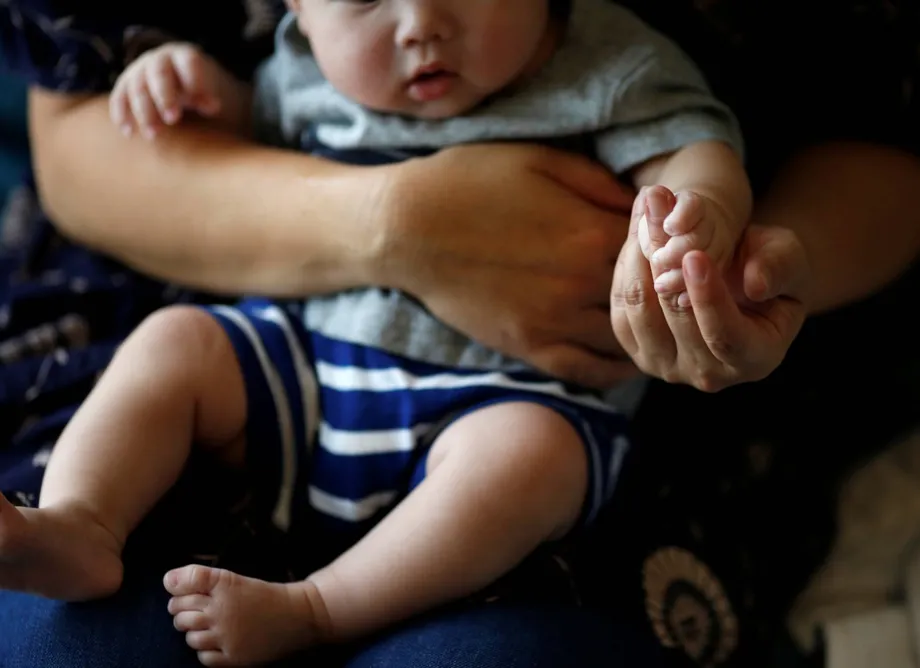
Junior high and high school students make up most of the known victims, although elementary school children have also been targeted. Some perpetrators are minors who use smartphone apps or image generation sites, then circulate the results among friends or in private group chats.
Victims often suspect someone they know. Police have also documented harassment against peers of the same sex, with humiliation or bullying, rather than sexual gratification, driving the abuse. In the Tokai region of central Japan, a male junior high school student was referred to prosecutors on suspicion of defamation after creating a fake nude image of a female classmate and sharing it with friends.
The consequences reach beyond the image itself. Children face fear, shame and a loss of control over how others see them, while schools must deal with spreading rumors, bullying, distressed families and decisions about contacting police.
How ordinary photos become convincing fakes
School albums, event photographs, social media profiles and private chats give offenders access to images of children who may never have agreed to wider circulation. Tools that once required specialist knowledge can now accept an uploaded face, a written instruction or a request to fabricate nudity from a clothed photograph.
Some apps attempt to remove clothing by inventing a body beneath it. Face swap tools align a person's face with an existing photograph or video, including material featuring an adult performer. Other systems generate an entire explicit image from a text prompt and use reference photographs to make it resemble a particular child.
These tools rely on machine learning models that learn patterns from large collections of images and use those patterns to create new ones. Text to image systems, often called diffusion models, can produce a picture from a written description. Some offenders further train, or fine tune, a model on a handful of photographs taken from a social media account or school album to make the result look more like their target.
Some systems can run on consumer devices. That accessibility, combined with the volume of personal photographs children share, makes misuse easier and leaves schools, families and police struggling to recognize and contain it.
A U.S. security firm tracked at least 95,820 deepfake videos online in 2023 and reported that 98 percent involved pornography. In Japan's school cases, the same broad ability to fabricate sexual material is colliding with peer pressure, bullying and private messaging networks.
What Japanese police are investigating
The National Police Agency's examination of roughly 10 websites and apps is intended to help criminal investigations and guide education for young people. Police plan to use the findings in delinquency prevention classes explaining that creating or sharing these images can harm classmates and may constitute a crime.
A senior police official reviewing recent complaints warned that known incidents likely represent only a small fraction of the activity because many victims do not come forward. The count of more than 100 consultations and reports therefore describes cases brought to police attention, with underreporting remaining a concern.
The investigation also has to account for different motives and methods. A student may create an image to bully someone, distribute it within a small circle or pass along material made by another person. Each case requires police to examine the image, its circulation and the laws that may apply.
No completion date was given for the agency's examination. Its stated purposes connect enforcement with prevention: understanding the tools students use and explaining the consequences before more images spread.
Why national law leaves difficult cases
Japan's Act on Regulation and Punishment of Acts Relating to Child Prostitution and Child Pornography was written to protect real children captured in real images. AI changes that situation by allowing a child's face or likeness to appear in a fabricated scene.
Legal scholars say a deepfake may fall outside the national framework if prosecutors cannot show that a real child was depicted or can be clearly identified. A picture may be synthetic while still attaching an identifiable child's face or name to explicit material circulating among classmates or online.
Police have responded by using other legal routes, including defamation and certain local ordinances. The Tokai case illustrates that approach. Enforcement remains piecemeal, placing pressure on children and families to discover the abuse and file complaints quickly.
Takashi Nagase, a lawyer and professor at Kanazawa University who has advised on internet policy, says generative AI has disrupted the distinction underlying the law:
The current law was designed to protect real children, but generative AI has blurred the line between real and fake.
Masaki Ueda, an associate professor of criminal law at Kanagawa University who studies obscenity regulations, argues that privacy and psychological harm should guide the legal response:
If sophisticated fake images spread online, it violates the privacy of the children whose photos are misused, even if they are fake. The psychological burden is significant, so deepfake images should be treated similarly to child pornography and legal regulations should be considered.
Local action and the limits of existing offenses
Tottori Prefecture revised its ordinance in 2024 to explicitly prohibit creating sexually explicit fake images using photographs of children. Advocates welcome that step while calling for national legislation so protection does not vary by jurisdiction or weaken when images are shared anonymously or stored on foreign servers.
A central government working group has discussed young people's internet use and possible measures against AI abuse, although progress has been slow. Scholars and child protection groups want explicit national rules covering sexual depictions of minors made with AI, whether they use real photographs or are entirely synthetic.
Japan has also seen its first arrests connected to the sale of AI generated obscene posters depicting fictitious adult women through online auctions. One suspect reportedly earned about 10 million yen over a year. Those arrests show that existing obscenity laws can reach some AI material, while cases involving children raise additional legal difficulties.
Why detection and removal are difficult
An entirely synthetic image may have no original photograph against which investigators can compare it. Watermarks and AI detection filters exist, but they are inconsistent, and watermarks can be removed. Police and moderators must work through growing volumes of material while trying to determine how images were made and who distributed them.
The Internet Watch Foundation found more than 20,000 AI generated images posted to a single dark web forum during one month in 2023. Thousands broke UK law. Later updates warned that the material was increasingly appearing on the clear web, meaning publicly accessible forums and image galleries where victims and other users may encounter it.
The foundation says some of the most convincing images are visually indistinguishable from real abuse. That similarity increases the risk of renewed harm to victims and adds to the workload facing moderators and law enforcement. Its research on AI abuse calls for urgent legal and technical countermeasures.
The challenge is therefore both technical and human. Investigators need methods suited to fabricated material, while children whose likenesses are misused need images removed and harassment stopped.
Children change their behavior as fear spreads
A child can suffer serious damage to reputation and mental health even when classmates know an image is fabricated. Seeing a familiar face attached to explicit content can fuel rumors and bullying, leaving the targeted student afraid of who has seen it or where it will appear next.
Girls in England have described changing how they use the internet because of this risk. The children's commissioner reported that some teenagers had stopped posting photographs out of fear that tools fabricating nudity could turn their pictures into sexual images.
Dame Rachel de Souza, England's children's commissioner, has urged lawmakers to ban apps that create explicit deepfakes of children:
Tools using deepfake technology to create naked images of children should not be legal and I am calling on the government to take decisive action to ban them. They have no place in our society.
Lawyers in Japan say they are seeing more cases involving teenage boys investigated for sexual offenses connected to deepfakes or explicit material shared in group chats. Specialists caution that many adolescents do not understand the legal consequences or the harm to classmates until police arrive or a school disciplinary process begins.
Schools face several responsibilities at once: protecting the targeted student, responding to parents, dealing with misconduct and deciding how to work with police. Clear rules, education about AI and safeguards on platforms are intended to address the gap before a child is harmed.
How other countries are responding
South Korea, the United States, the United Kingdom and Australia have moved to regulate AI generated sexual images through measures including new offenses and requirements for faster removal. The approaches described in South Korea and the United States address different stages of the abuse, from possession to publication and takedown.
South Korea passed a bill in September 2024 criminalizing the creation of deepfake sexual images of minors as well as viewing or possessing them. In the United States, a federal law enacted in May 2025 makes posting sexually explicit images or videos without the subject's consent illegal and requires platforms to remove such material within 48 hours of a victim's request.
Many U.S. states have also updated their laws so that depictions of minors engaged in sexual conduct can qualify as illegal child sexual abuse material when created or modified with AI, even where no real child was present during the depicted act. That activity responds to earlier U.S. court rulings that treated purely virtual content differently from images made using real children.
The sequence of developments shows how governments and investigators have been responding:
- 2023: A U.S. security firm tracked at least 95,820 deepfake videos online, while the Internet Watch Foundation recorded more than 20,000 AI generated images on one dark web forum in a month.
- 2024: Tottori Prefecture revised its ordinance to explicitly prohibit sexually explicit fake images made using photographs of children.
- September 2024: South Korea passed legislation addressing the creation, viewing and possession of deepfake sexual images of minors.
- May 2025: The United States enacted a federal law addressing publication without consent and requiring removal within 48 hours of a victim's request.
Japan's debate brings together the same practical issues: which images the law covers, which actions are offenses and how quickly victims can obtain help once material begins circulating.
International police confront fully artificial material
Europol coordinated Operation Cumberland, one of the first global crackdowns connected to AI generated child sexual abuse material. With support from 19 countries, police identified hundreds of suspects, made dozens of arrests and searched homes while targeting a platform distributing fully artificial images of minors.
Investigators warned that people with limited technical skills can now produce large volumes of abuse material. Traditional methods for tracing an original image or identifying a victim can fail when a scene has been generated rather than photographed.
Catherine De Bolle, Europol's executive director, described the pressure this creates for investigators:
AI generated images can be created easily by individuals with criminal intent, which increases the volume of abuse material and makes it harder to identify offenders or victims.
Operation Cumberland highlights why cross border cooperation matters alongside domestic law. Platforms and users can operate across several jurisdictions, while police need investigative methods suited to images that may have no original scene or directly identifiable victim.
What schools and families can do now
Schools and families can act on access to photographs, reporting and support while national reforms are debated. The practical measures focus on limiting circulation, teaching consent and helping a targeted child without making that child responsible for confronting the people involved.
- Restrict school albums and event galleries to verified guardians. Use links that expire, watermark images leaving official channels and set limits on redistribution.
- Teach AI and media literacy in homeroom or technology classes, including consent, privacy and the harm caused by creating or sharing sexual fabrications.
- Set clear rules for student club and class chats, with defined consequences for distributing explicit or harassing material.
- Make it easy for students to tell a trusted adult, contact the school and report an image to the platform. Faster reporting reduces the time available for further circulation.
- Contact police even when the legal route is uncertain so officers can advise on defamation, privacy or applicable local ordinances.
- Use platform tools to report sexual imagery shared without consent and request removal. Keep records of links, timestamps and usernames.
- Offer confidential counseling, involve guardians promptly and avoid requiring the victim to confront peers to prove an image is fake.
- Encourage private social media accounts, review older posts and limit photographs with highly detailed faces linked to school or location information.
- Use wider views and fewer close views of faces when sharing team or class photographs, alongside restrictions on further sharing.
Teachers also need to connect these measures with the realities of student relationships. Abuse can begin inside a familiar group, and a photograph intended for a limited audience can quickly move beyond it.
Support for the victim must continue alongside any police or disciplinary process. Removing an image, addressing bullying and providing counseling respond to different parts of the harm.
What technology companies are being asked to change
Technology companies face calls for stronger filters on prompts and uploaded images, default blocks on tools that fabricate nudity, strong age verification and rapid removal channels that work across their products. These safeguards address both the creation of abusive material and its continued circulation.
Transparency about known failures and documented fixes can help rebuild trust. A recent controversy involving a mainstream chatbot that produced sexualized images of a celebrity aged 16 led to regulatory warnings and public backlash, showing how a design gap can quickly become a child safety issue.
Japan's police investigation, local legal changes and debate over national legislation address connected parts of the same problem. Children need protection when their photographs are misused, investigators need workable offenses, and platforms need systems that respond before an abusive image spreads further.
Key Points
- Japanese police received more than 100 consultations and reports about fake sexual images of minors in the past year, including 17 cases involving school events or graduation albums.
- The National Police Agency is examining roughly 10 image generation websites and apps to support investigations and youth education.
- Victims include elementary school children, while some perpetrators are classmates using the images for bullying or humiliation.
- Japan's national law focuses on real child imagery, leaving police to use defamation and some local ordinances in certain deepfake cases.
- Tottori Prefecture changed its ordinance in 2024, while scholars and child protection groups want explicit national rules.
- South Korea and the United States have adopted measures covering deepfake sexual material, and Europol's Operation Cumberland brought cooperation from 19 countries.
- Schools, families and platforms can respond through restricted photo access, education about consent, prompt reporting, removal requests and confidential support.