Music, crafts and local food take to the rails
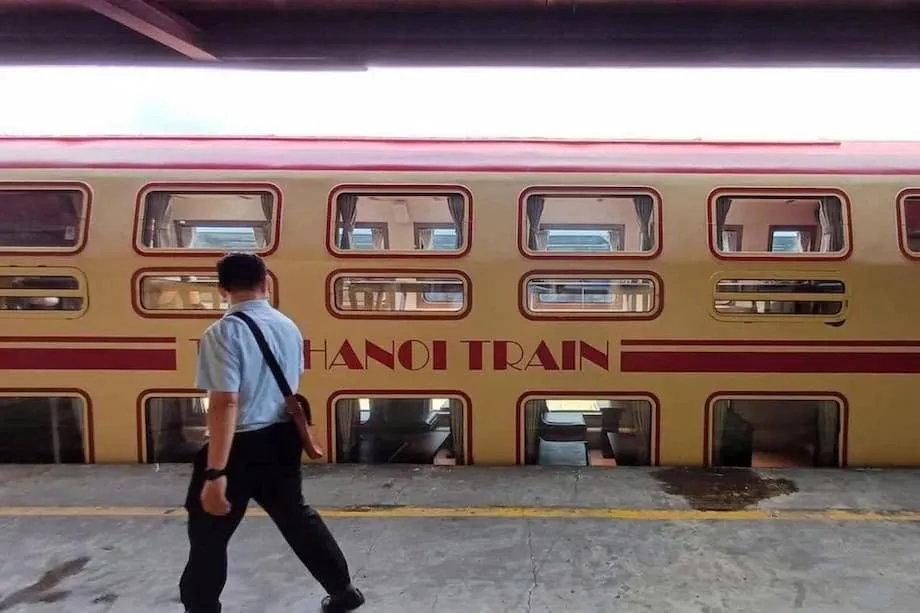
Hanoi began a new cultural railway service on September 6, 2025, connecting Hanoi Station with Tu Son in Bac Ninh Province. Called the Hanoi Train, the attraction combines travel in double decker carriages with live traditional music, craft demonstrations and food associated with the capital and the Kinh Bac cultural region.
Contents
- Music, crafts and local food take to the rails
- What the launch timetable means for a day trip
- Four musical traditions share the carriage
- Dong Ho prints, wedding cakes and seasonal tastes
- Hanoi's five gates shape the interior
- From the Red River to Do Temple
- Booking a seat and planning the visit
- A wider plan for cultural railway routes
- Identity checks are changing at Hanoi Station
- A different encounter with Hanoi's rail culture
- Quick Facts
The project brings together Vietnam Railway Corporation and BHL Tourism Service Trading Joint Stock Company. Its purpose reaches beyond carrying passengers between two stations: it aims to reconnect the railway with city life and introduce visitors to traditions that helped shape northern Vietnam.
Two daily departures from Hanoi form the launch service, travelling through Gia Lam and Yen Vien before reaching Tu Son and returning to the capital. Tickets range from 550,000 to 750,000 Vietnamese dong per passenger, depending on seating and service tier, with discounts or promotions for children and groups.
Five double decker seating carriages and two additional carriages used for check in and photographs make up the service. Each seating carriage accommodates between 40 and 60 guests. Panoramic windows, themed interiors and comfortable seats give passengers space to watch both the performances and the changing surroundings.
The journey links Thang Long, the historic capital at the heart of modern Hanoi, with Kinh Bac, a region whose music, crafts and religious sites feature throughout the experience. Visitors encounter that connection through carriage names, songs, seasonal snacks and the opportunity to continue from Tu Son to Do Temple.
What the launch timetable means for a day trip
Hanoi departures are scheduled for 8:00 AM and 1:30 PM, arriving at Tu Son at 8:41 AM and 2:32 PM respectively. Trains leave Tu Son at 10:30 AM and 4:20 PM, reaching Hanoi Station at 11:33 AM and 5:00 PM.
The published times give journey lengths ranging from 40 to 63 minutes. The morning outward trip takes 41 minutes, while the afternoon outward trip takes 62 minutes. In the return direction, the morning service takes 63 minutes and the afternoon service 40 minutes. Passengers planning activities at either end should use the times for their chosen departure.
These short journeys leave room for a compact program of performances, demonstrations and tastings. They also allow visitors to build a trip around Tu Son and nearby heritage attractions, rather than spending an entire day travelling.
Passengers are encouraged to check in at least 30 minutes before departure. Allowing 30 to 45 minutes provides time to complete the process and enjoy activities before boarding.
City and operator communications also describe an expanded plan with three departures a day, including a special evening service looping around Hanoi with views after dark. Some visitor guides describe a longer scenic itinerary and a route crossing Long Bien Bridge. The route and time on board can vary with the operating phase, so travellers should confirm the itinerary attached to their booking.
The key dates and departure times are:
- August 19, 2025: Hanoi Station began operating a biometric ticket control system.
- September 6, 2025: The Hanoi Train began official service between Hanoi and Tu Son.
- Daily launch departures from Hanoi: 8:00 AM and 1:30 PM, arriving at 8:41 AM and 2:32 PM.
- Daily launch departures from Tu Son: 10:30 AM and 4:20 PM, arriving in Hanoi at 11:33 AM and 5:00 PM.
Four musical traditions share the carriage
Performers introduce passengers to quan ho, cheo, ca tru and xam through short segments. Each tradition has a different sound and setting, giving visitors several ways to encounter northern Vietnam's musical culture during a brief journey.
Quan ho, rooted in Bac Ninh, is a tradition of love duet folk singing. Paired singers exchange musical phrases in a call and response pattern, sharing harmonies. Its presence on the train connects the performance directly with the destination.
Cheo combines singing and theatre, using gestures and performance practices that predate modern stage forms. Ca tru is a more intimate tradition of ceremonial chamber singing, with a female lead vocalist accompanied by a lute and rhythmic clappers. It once flourished in royal and scholarly circles.
Xam grew from street performance and is associated with blind buskers. Its ballad tradition brings a direct and vivid style to the program, contrasting with the other forms passengers hear.
The short performances make room for each tradition without requiring visitors to arrive with specialist knowledge. As the train moves from city streets toward the Red River corridor and Bac Ninh's heritage sites, the carriage becomes a small performance space.
Dong Ho prints, wedding cakes and seasonal tastes
Craft activities give passengers something to watch and try between musical performances. These include making elements of Dong Ho folk painting, a tradition from a village near Bac Ninh known for woodblock prints made with bright natural colours.
Quick demonstrations also introduce Phu The cakes, sometimes called husband and wife cakes. The ceremonial sweet is associated with weddings in the region, adding another connection between the journey and local customs.
Food on board draws on Hanoi's seasonal tastes. Com, or green young sticky rice, is served alongside lotus scented tea. Light snacks change with the harvest, making the menu another part of the train's introduction to place.
The combination builds on Vietnam's tradition of social, unhurried rail travel. Passengers can hear music, watch an artist work and sample local food while the scenery changes outside, bringing some of the atmosphere of a festival into a short railway journey.
Hanoi's five gates shape the interior
The carriage design takes inspiration from Thang Long and the gates associated with the old capital. Five carriages carry the names O Cau Den, O Quan Chuong, O Cau Giay, O Cho Dua and O Dong Mac.
O Quan Chuong still stands on the eastern edge of the Old Quarter, recognisable by its arched entrance. O Cau Giay and O Dong Mac evoke the outer approaches to the citadel, while O Cho Dua and O Cau Den recall busy market districts and everyday life around the ancient walls.
Patterned tiles, wooden surfaces and classic signage reinterpret those associations inside the train. Stylised references to Long Bien Bridge and the Red River extend the theme, linking the capital's architecture and waterways with the journey beyond it.
The design aims to prompt recognition and curiosity while retaining modern comfort. Dedicated spaces for photographs reflect the popularity of taking travel pictures, while broad windows offer views toward the Red River banks and rice fields.
The visual theme continues from platform to platform. Travellers encounter the capital's historic identity inside the carriage, then look outside toward the Kinh Bac countryside whose traditions are being performed on board.
From the Red River to Do Temple
Long Bien Bridge is one of the landmarks associated with rail travel out of Hanoi. The historic cantilever bridge, designed at the start of the twentieth century, carries rail and road traffic across the Red River and remains a symbol of the city's resilience.
Certain runs and planned evening loops pair the cultural program with river views. The quick change from city streets to farmland is part of the experience, although passengers should check whether their particular itinerary includes the bridge.
Tu Son provides access to a different part of the story. Bac Ninh is the homeland of quan ho and a centre of Kinh Bac culture. A short transfer from the station takes visitors to Do Temple, a complex dedicated to eight kings of the Ly dynasty.
The Ly dynasty moved the capital to Thang Long in 1010, helping establish the city that became modern Hanoi. A visit to the temple connects the train's historical themes with a place where visitors can learn about the influence of court culture, Buddhism and river trade.
Many tours combine Do Temple with craft villages and pagodas. This makes the railway journey one part of a compact excursion that can fit within a wider Hanoi itinerary.
Quan ho also belongs to the spring festival life of the Kinh Bac countryside. Hearing it on the train and then visiting the region gives passengers a connection between a performance and the places that nurtured it.
Booking a seat and planning the visit
Tickets are available through Vietnam Railways counters at Hanoi Station, partner travel agencies and online channels, including the Hanoi Train website. The published range is 550,000 to 750,000 Vietnamese dong, with the final price depending on the seat and service tier.
Seats are arranged in themed sections. Upper deck window seats are especially attractive to photographers, and morning departures are popular with visitors planning sightseeing in Tu Son and at Do Temple.
Confirming the schedule matters because the launch service, proposed evening loop and longer scenic descriptions involve different amounts of time on the rails. Travellers should plan around the departure they actually select.
A few practical preparations can help make the trip run smoothly:
- Book early for a morning journey if the plan includes Tu Son and Do Temple.
- Arrive 30 to 45 minutes before departure for check in and activities at the platform.
- Choose an upper deck window seat when photography is a priority, and keep a camera ready along the Red River corridor.
- Bring small bills for snacks and crafts, and try seasonal com and lotus scented tea.
- Give the short performances time and attention so that each musical tradition can be heard.
- Check whether the booking covers a Tu Son journey or an evening city loop.
- Allow time for Do Temple and nearby craft villages; a guided tour can help when the schedule is tight.
A wider plan for cultural railway routes
Hanoi's Department of Tourism and Vietnam Railways have surveyed routes linking inner city and suburban heritage sites. Stations considered in that work include Hanoi, Long Bien, Gia Lam and Co Loa.
Ideas include using stations for performances and exhibitions, coordinating stops with museum opening hours and creating a railway museum at the Gia Lam Train Factory. Together, these proposals would make stations part of a cultural visit rather than simply places to board or leave a train.
The Hanoi Train also appears among the headline attractions in 80 Golden Experiences in Hanoi, a program packaging activities for the festival season. The railway service sits alongside another transport based experience, the Metro Green Journey.
That journey uses the Cat Linh to Ha Dong urban railway and pairs metro travel with stops at Van Phuc Silk Village and the Temple of Literature. It also includes a depot visit with an interactive train simulation.
The shared idea is to make public transport part of the itinerary. A train or metro ride becomes an experience connected to cultural destinations, instead of serving only as the means of reaching them.
Identity checks are changing at Hanoi Station
Hanoi Station began operating a biometric ticket control system on August 19. The system checks a traveller's identity through the national ID database, bringing a technological change to the same station hosting the new cultural service.
Early trials reduced verification times to a few seconds per passenger and improved accuracy. Integration with the VNeID app is planned so that a phone can be used for identity verification.
The planned phone connection forms part of the railway sector's effort to improve service quality. Alongside the heritage train's performances and themed carriages, the ticket control changes address the practical experience of passing through a station.
A different encounter with Hanoi's rail culture
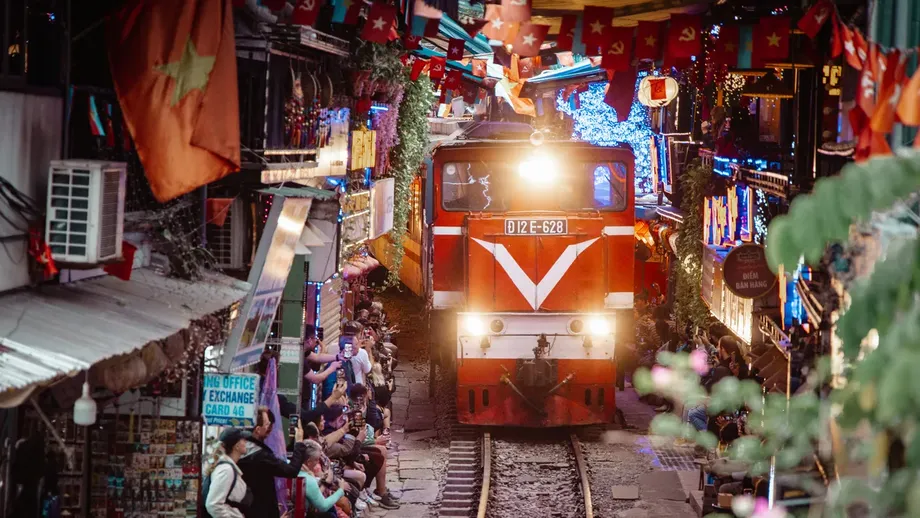
Hanoi Train Street is already familiar to many visitors: a narrow stretch of track running past cafes and homes in the Old Quarter. Watching a locomotive pass slowly through that setting has become a popular attraction.
Its popularity has also brought safety concerns and periodic closures by city authorities. Businesses and visitors are urged to follow instructions from guards, use only sections open to the public and stay behind safety lines.
The heritage train offers a structured, ticketed setting for experiencing railway culture. Its focus is on songs, crafts, food and views from inside the carriage, providing a controlled alternative to standing beside an active track.
Elsewhere in Vietnam, longer railway journeys already make travel part of a holiday. Services often called the Reunification Express connect Ho Chi Minh City and Hanoi through coastal plains, passes and rice fields.
Dining cars, snack trolleys and conversations beside a seat contribute to that social rhythm. The Hanoi Train brings a compact version of it to the specific traditions of Thang Long and Kinh Bac, connecting a short ride with performances and places that explain the region.
Quick Facts
- The Hanoi Train began official service on September 6, 2025, linking Hanoi Station and Tu Son through Gia Lam and Yen Vien.
- Vietnam Railway Corporation and BHL Tourism Service Trading Joint Stock Company jointly developed the attraction.
- Hanoi departures are at 8:00 AM and 1:30 PM; Tu Son returns leave at 10:30 AM and 4:20 PM.
- Tickets cost 550,000 to 750,000 Vietnamese dong, with discounts or promotions for children and groups.
- Five double decker seating carriages carry the names of Hanoi's historic gates, alongside two carriages used for check in and photographs.
- Activities include quan ho, cheo, ca tru and xam performances, Dong Ho painting activities, Phu The cake demonstrations and seasonal Hanoi food.
- Do Temple near Tu Son honours eight Ly dynasty kings and connects the destination with Thang Long's history.
- Expanded services and evening journeys are planned; passengers should confirm their selected route and timetable when booking.
- Hanoi Station began biometric ticket checks on August 19, with VNeID integration planned.