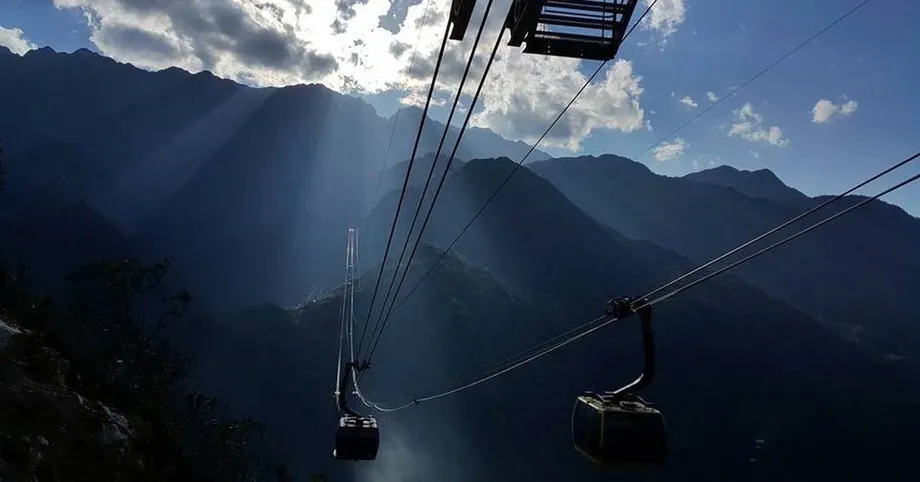
A short ride built through more than 800 days of work
Fansipan's cable car crosses 6,292.5 metres of mountain terrain and climbs 1,410 metres between stations in about 15 to 20 minutes. Building that journey required more than 800 days of construction, thousands of engineers and workers at different stages, and, according to Sun World, about 35,000 tonnes of materials transported manually up the mountain.
Contents
- A short ride built through more than 800 days of work
- How the system crosses the mountain
- Why materials went up by hand
- The workers behind the mountain power line
- From construction to a decade of operation
- Why Fansipan has two familiar height figures
- The cable car is one part of reaching the summit
- Sa Pa's tourism growth in numbers
- Local jobs and the responsibility to protect the mountain
- Key Points
The system opened on February 2, 2016, in Lao Cai Province, connecting the Muong Hoa valley with an area near Vietnam's highest summit. Sun Group invested about VND4.4 trillion in the project's first phase, with consulting and design by cable manufacturer Doppelmayr Garaventa. The route became Vietnam's first modern, nonstop cable car system using three ropes.
Before its opening, reaching Fansipan generally meant one or two days of demanding hiking, depending on the route and conditions. The cable car made the mountain accessible to many older visitors, families with young children and people unable to undertake that climb. From the upper station, passengers still continue toward the summit on foot or by mountain railway.
The change was dramatic for visitors. For the people who built the line, however, the central challenge was moving heavy equipment through steep forest without the vehicle access normally associated with a major construction site. Some loads weighed 40 kilograms per person. Steel beams weighing up to 200 kilograms needed groups of workers to carry them along hazardous paths.
How the system crosses the mountain
The Fansipan route has six main towers and 33 cabins, each accommodating about 30 to 35 passengers. Its designed transport capacity is up to 2,000 people per hour. That figure describes how many passengers the system was designed to move during an hour of operation.
A system using three ropes separates two jobs: supporting the cabins and pulling them along the route. Two ropes provide support, while another moves the cabins. This arrangement provides stability on a long mountain crossing, where wind and changes in terrain are major engineering concerns.
The route's 1,410 metres of elevation gain measures the difference in height between its departure and arrival stations. Its 6,292.5 metres of length measures the distance travelled along the cable route. Together, those figures explain the project's scale: the cabins had to travel more than six kilometres while gaining well over a kilometre in height.
At the inauguration, Guinness World Records recognized Fansipan for the longest nonstop cable car route using three ropes and the greatest elevation difference between stations in that category. Another project later surpassed its length record. The two awards remain part of the history of its opening in 2016.
Why materials went up by hand
Sun Group chose manual transport rather than opening a road for motor vehicles, citing the need to limit effects on the Hoang Lien ecosystem. That decision placed a large share of the transport burden on engineers, construction crews and local residents.
Survey teams entering the mountain in 2013 crossed old forest, steep slopes and cliffs to identify suitable tower locations. Trips could last about two weeks. Before crews could erect the permanent system, they needed to establish where its supports could stand and how workers and materials could reach them.
Many construction locations were inaccessible to vehicles. Sun World's account puts the project's material total at about 35,000 tonnes, moved manually through the mountain terrain. The scale of that task helps explain why the construction story extends far beyond installing cabins and cables.
Workers also carried cable coils weighing around 70 kilograms to secure and position temporary cable towers. Those temporary structures formed part of the construction process that allowed the permanent transport system to take shape. Every stage depended on getting equipment into position before the finished cable car could do the work of carrying people uphill.
The workers behind the mountain power line
Hundreds of workers, mainly Hmong, Dao and Thai people from Sa Pa and Lai Chau, helped build the 35 kV electricity line supplying the mountain station. A cable car needs power at its facilities, so the electricity connection was another major mountain construction task alongside the passenger route.
Workers gathered at Tram Ton before carrying loads through the forest. Individual loads were around 40 kilograms, while some steel beams weighed as much as 200 kilograms and required coordinated lifting and carrying. At peak periods, as many as 500 people took part in the power line work.
Project records put the quantity of material transported for the power line at about 15,000 tonnes. The broader project material figure was about 35,000 tonnes. Both figures describe the substantial logistics behind a journey passengers now complete in minutes.
Living conditions added to the difficulty. Workers sometimes collected rainwater for cooking and slept in cramped bamboo shelters. During heavy snowfall, they cleared snow from tent roofs. Weather affected both the physical work and the basic routines needed to keep crews on the mountain.
From construction to a decade of operation
Construction began in November 2013, with the project chronology giving November 2 as the starting date. The line entered service on February 2, 2016, after more than 800 days and nights of work. Its tenth anniversary fell in February 2026.
The key dates show how construction, changing measurements and visitor growth unfolded:
- November 2, 2013: Construction began on the Fansipan tourism complex.
- February 2, 2016: The cable car opened and received two Guinness World Records certifications.
- June 2019: Vietnam's mapping department disclosed a new summit measurement of 3,147.3 metres.
- 2025: Sa Pa recorded more than 4.3 million tourist visits and about VND19 trillion in tourism revenue.
- June 20, 2026: Sun World Fansipan Legend announced its 10 millionth visitor since 2016.
The 10 million milestone is a cumulative count of visits to the attraction since it began operating. Sa Pa's annual visitor figures cover the wider destination. Keeping those measures separate makes the scale of both the attraction and the surrounding tourism economy easier to understand.
Why Fansipan has two familiar height figures
Vietnam's Department of Survey, Mapping and Geographic Information put Fansipan's highest point at 3,147.3 metres in its 2019 measurement announcement. Descriptions published around the cable car's opening used 3,143 metres, the figure derived from a French measurement in 1909. The difference is 4.3 metres.
The results were presented at a meeting in Hanoi on June 26, 2019. Phan Duc Hieu, then head of the department, said this was the first Vietnamese measurement of the peak since the French measurement in 1909.
Phan Duc Hieu, then head of the department, explained that the newer survey used GNSS, a system that uses signals from navigation satellites to determine position. Surveyors linked their measurements to reference points in India, Australia and South Korea, as well as points in Dien Bien, Lao Cai and Hanoi.
The survey combined GNSS with elevation data from national satellite positioning stations and leveling. Tran Doan Manh, director of the department's Survey and Mapping Data Investigation and Processing Centre, which carried out the measurement, said GNSS combined with a local Geoid model provided a rigorous and accurate solution. The centre proposed that the appraisal council approve a summit elevation of 3,147.3 metres in the national height system, at coordinates N 22°18′14.9″, E 103°46′24.1″ in the national coordinate system.
Measurements continued for 24 hours, followed by processing of the collected data. The earlier French survey used barometers at the mountain's top and base, estimating elevation from differences in air pressure. The newer method gave surveyors a more precise basis for establishing the summit's position and height.
Hieu identified limitations in the older technology and possible uplift of the Hoang Lien Son range, which he put at two to three centimetres a year, as possible explanations for the difference. The department planned continued monitoring to identify the cause more precisely. At the time, it was also seeking approval to update textbooks and reference materials.
The cable car is one part of reaching the summit
Visitors travelling from central Sa Pa can reach the cable car departure station by taxi, motorcycle taxi or the Muong Hoa mountain railway. The railway runs about 1.7 kilometres and takes roughly six minutes, connecting the town centre with the cable car complex.
The cable car then carries passengers toward the upper mountain. From its arrival station, the onward journey involves about 600 steps or a ride on the Fansipan mountain railway. The advertised journey of about 15 minutes refers to the main cable car crossing; travellers also need time for these other stages.
The visitor route includes the Great Amitabha Buddha statue, Kim Son Bao Thang Tu temple and the Nine Storey Waterfall. These attractions form part of the cultural and spiritual complex developed around the mountain transport system.
Sun Group also expanded the wider visitor experience through Ban May and Hotel de la Coupole. The combination of transport, accommodation and places to visit allows travellers to organize a longer stay around the mountain rather than treating the cable car as their only stop.
Sa Pa's tourism growth in numbers
Sa Pa received around 600,000 to 700,000 tourist visits annually before 2016, according to figures attributed to the Ministry of Culture, Sports and Tourism's information portal. The total reached about 970,000 in 2016 and exceeded 4.3 million in 2025.
Using the 2016 and 2025 figures, annual visits grew to more than 4.4 times their level in the cable car's opening year. Compared with the earlier range of 600,000 to 700,000, the 2025 total was more than six times as large. Tourism revenue in 2025 was about VND19 trillion.
The cable car's opening brought expectations of annual visitor growth of 30 to 40 percent and a possible total of three million visitors by 2020. The later figures show how large Sa Pa's tourism market became, while the development of rail connections, hotels and other attractions describes the wider expansion taking place around it.
For local businesses, more visitors create demand for rooms, meals, transport and goods. The cable car expanded the range of people able to visit the upper mountain, while the additional attractions gave those visitors more places to spend time during a trip to Sa Pa.
Local jobs and the responsibility to protect the mountain
Sun World Fansipan Legend employs more than 400 local workers, according to reported employment figures. Ethnic minority workers account for more than 60 percent of the tourism site's workforce. Local participation has therefore continued beyond the construction crews who carried equipment and built the electricity connection.
Ban May, at the cable car departure area, presents weaving, incense making, beeswax painting and aspects of highland community life. These activities create opportunities for residents to earn income from skills and cultural knowledge, alongside employment in the operation of the visitor complex.
Deputy Prime Minister Hoang Trung Hai addressed the relationship between tourism and conservation at the 2016 inauguration. He praised the investor, contractors and Lao Cai authorities for the project's schedule, quality and safety, while calling for environmental protection and preservation of indigenous cultures during operation.
Dang Minh Truong, Sun Group's general director at the opening, described Fansipan as a further step in the company's tourism development strategy after its Ba Na Hills cable car in Da Nang. At Fansipan, the lasting responsibilities are concrete: operating transport in demanding mountain conditions, managing a busy visitor destination and protecting the natural and cultural setting that draws people there.
The passenger experience now compresses a demanding mountain approach into a short ride. Behind that convenience are the workers who crossed the forest with heavy loads, the engineers who planned a route across steep terrain and the local communities whose work remains part of the destination.
Key Points
- Fansipan's cable car opened on February 2, 2016, after more than 800 days of construction.
- The route is 6,292.5 metres long, gains 1,410 metres between stations and takes about 15 to 20 minutes.
- Sun World puts the project's manually transported material total at about 35,000 tonnes.
- The system received two Guinness World Records certifications at opening; its length record was later surpassed.
- Vietnam's mapping department measured the summit at 3,147.3 metres in 2019, replacing the familiar 3,143 metre figure.
- Sun World Fansipan Legend announced its 10 millionth visitor on June 20, 2026.
- Sa Pa recorded more than 4.3 million tourist visits in 2025, while the Fansipan attraction employs more than 400 local workers.