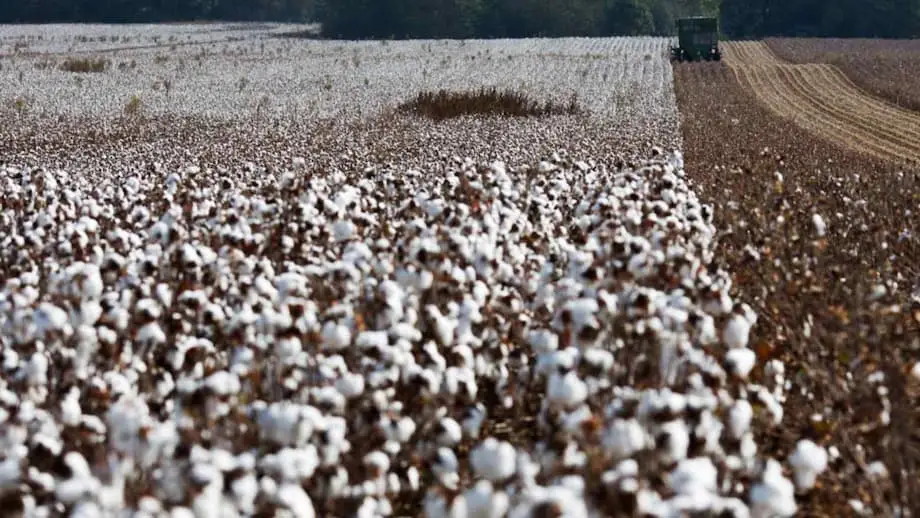
American cotton takes a different route through Asia
US cotton shipments to China fell about 90 percent in the first six months of 2025, while Vietnam's purchases nearly tripled, marking a sharp change in where American fiber enters the global clothing supply chain. Pakistan and Turkey also bought more as apparel production shifted toward competing manufacturing centers.
Contents
- American cotton takes a different route through Asia
- What changed between 2024 and August 2025?
- Tariffs push brands to reconsider factory locations
- China's import rules favor domestic cotton
- Xinjiang rules change sourcing decisions
- How a US bale can still reach China through yarn
- Vietnam gains orders but still relies on imported materials
- Bangladesh, Pakistan and Turkey take more US fiber
- Brazil competes on price as mills weigh quality
- Factories, ports and growers adjust to new routes
- Key Points
The reversal connects cotton farms in the United States with decisions being made by clothing brands, spinning mills and garment factories across Asia. Higher US tariffs on finished clothing from China and, more recently, India have encouraged buyers to move orders. China's restrictions on raw cotton imports and US rules covering cotton from Xinjiang also influence where fiber is processed.
The United States supplies roughly one third of global cotton exports and is the world's leading exporter by volume, according to the US Department of Agriculture's Economic Research Service, or ERS. China, Bangladesh and Vietnam are normally among the largest importers of raw cotton. Their importance continues, but the routes taken by US bales are changing.
USDA's August 2025 Cotton: World Markets and Trade update described a surge in American exports to markets outside China as apparel sourcing migrated. The agency pointed to weaker Chinese consumption and the continued movement of US buyer orders toward alternative manufacturing centers.
For growers and merchants, the change means fewer bales going directly to Chinese ports and more heading to Vietnam, Pakistan, Bangladesh and Turkey. For factories in those countries, new clothing orders create demand for the fiber and yarn needed to keep production moving.
What changed between 2024 and August 2025?
Vietnam entered 2025 with a large manufacturing base already in place. Its textile and garment exports were estimated at $44 billion in 2024, giving its mills and factories a substantial need for imported materials before the latest trade changes accelerated.
The sequence shows how an established shift in clothing production gained speed during a year of changing tariffs:
- 2024: Vietnam exported an estimated $44 billion in textiles and garments.
- March 2025: Federal Reserve Chair Jerome Powell discussed how tariffs can weaken growth while increasing price pressures.
- First half of 2025: US cotton shipments to China fell about 90 percent, while Vietnam's purchases nearly tripled. US apparel imports from Bangladesh rose about 25 percent.
- August 2025: USDA's Cotton: World Markets and Trade update highlighted stronger US cotton exports outside China as apparel sourcing moved.
The first half also brought a change in the American clothing market: Vietnam moved ahead of China in US apparel imports by value. Bangladesh gained ground too, reaching roughly 10 percent of US apparel imports.
Raw cotton and finished clothing move at different stages of production, but the connection is straightforward. A factory receiving more garment orders needs fabric. Fabric producers need yarn, and spinning mills need cotton. Moving sewing orders can therefore move demand for American bales, sometimes through several countries.
Tariffs push brands to reconsider factory locations
The 2025 US reciprocal tariff framework left Vietnam and Bangladesh facing an additional tariff of 20 percent, while China carried a higher total rate. For many Indian apparel products, the effective tariff rose to about 50 percent after an extra 25 percent was added.
A tariff is a tax charged when goods enter a country. For clothing buyers, a higher duty changes the cost of obtaining a garment from a particular factory, even when the garment itself has not changed. Differences between countries can make an existing factory elsewhere more attractive.
Pearl Global, a large Indian garment exporter, told clients it could move orders to its factories in Bangladesh, Indonesia, Vietnam or Guatemala to avoid the higher US duties on India. Some American buyers also asked Indian suppliers to pause shipments or absorb the added costs.
Chinese producers faced similar pressure to adjust. More cutting and sewing work has been directed toward Southeast Asia, with Vietnam benefiting from its established position as a supplier to major brands.
Federal Reserve Chair Jerome Powell addressed the broader economic effects in March 2025 while discussing interest rates and consumer spending. He cautioned against reading too much into short term figures and described the direction in which trade taxes tend to push the economy:
Tariffs tend to bring growth down, and they tend to bring inflation up.
Clothing brands have been spreading orders among Vietnam, Bangladesh and Indonesia while assessing the effect on demand. Their decisions redistribute raw cotton purchases toward the countries where spinning and sewing take place.
China's import rules favor domestic cotton
China's cotton industry is shaped by both geography and government policy. In recent years, nearly 90 percent of its cotton has been grown in Xinjiang, thousands of miles from the main textile manufacturing clusters along the coast.
ERS research describes a tariff rate quota allowing 894,000 metric tons of raw cotton to enter China each year at a tariff of 1 percent. A tariff rate quota permits a specified quantity to enter at a lower duty, while purchases outside that allowance face higher charges.
China sometimes permits additional imports under a sliding scale quota, but those volumes vary. Imports beyond the quota arrangements face high duties, encouraging many mills to use domestic Xinjiang cotton instead of imported American bales.
Weaker Chinese consumption adds to those constraints. USDA's August assessment linked the changing export pattern to both softer demand in China and the movement of apparel orders elsewhere. Chinese mills therefore face a different purchasing environment from factories in countries gaining new business.
For US sellers, access to a large textile industry does not automatically translate into direct raw cotton sales. The form in which cotton crosses China's border matters, creating a role for spinning mills elsewhere in Asia.
Xinjiang rules change sourcing decisions
The Uyghur Forced Labor Prevention Act bars US imports of cotton and cotton products produced in Xinjiang, including products made from that cotton. US and allied policies have made the origin of textile materials a central concern for suppliers serving those markets.
China's heavy reliance on Xinjiang means a large share of apparel cut and sewn in the country comes under scrutiny at US ports. That makes direct shipments of US cotton to Chinese mills less appealing for some supply chains producing garments for American buyers.
Manufacturers have adapted partly by importing more yarn rather than raw fiber. Yarn is cotton that has already been spun into the threads used to make fabric. China places no quota on yarn imports, allowing companies to buy it from Vietnam, Pakistan or Bangladesh, where spinning mills may use American cotton.
Imported yarn or fabric can reduce the share of Xinjiang fiber used in production intended for markets with forced labor regulations. Exporters use these materials to lower compliance risks for shipments bound for the United States and Europe, a task that has become part of the work of compliance teams at many large suppliers.
The effect reaches beyond the location where a garment is sewn. Buyers and manufacturers must also follow the origin and movement of the fiber, yarn and fabric used to make it.
How a US bale can still reach China through yarn
A bale grown in the United States can be shipped to Vietnam, spun into yarn and then exported to China for weaving. The same yarn could instead be knitted and sewn into garments in Vietnam or Bangladesh before the finished clothing reaches American retailers.
China's raw cotton quota helps explain this route. The annual allowance of 894,000 metric tons at a 1 percent tariff applies to raw fiber, while yarn and fabric imports are not capped in the same way. Buying material after it has been spun gives Chinese manufacturers another source of textile inputs.
This route has been part of China's textile trade for years. It also helps explain why countries specializing in spinning can buy more US cotton while direct American shipments to China fall.
Vietnam, Pakistan and Bangladesh can serve different customers at once: factories making garments locally and Chinese manufacturers buying yarn. When apparel orders rise in these manufacturing centers, additional US bales can supply either route.
Vietnam gains orders but still relies on imported materials
Vietnam is the world's third largest exporter of textiles and garments by value, behind China and the European Union. Its position rests on a dense factory network, improving logistics and a workforce experienced in apparel production.
The estimated $44 billion in textile and garment exports in 2024 illustrates the scale of that industry. Stronger orders and tariff advantages for some finished products have increased Vietnam's standing in the US apparel market, helping drive the near tripling of its American cotton purchases in early 2025.
Vietnam still sources around 65 percent of its textile materials from China. Its growing role in garment assembly therefore exists alongside a substantial dependence on Chinese inputs.
Vietnamese suppliers are seeking more cotton and yarn from India and the United States to diversify supplies. Favorable trade agreements can reduce costs, while a broader supplier base can cushion changes in trade policy.
Chinese producers have also invested in Vietnam or subcontracted work there to serve US and European buyers. Factory owners in Guangzhou's garment industry have considered moving to Vietnam or to provinces within China where wages are lower as they respond to higher US tariffs.
Moving cutting, sewing and finishing capacity creates demand for more material in Vietnam and supports the expansion of local spinning. Adding spinning and weaving near major coastal cities would let manufacturers complete more stages of production before exporting finished goods.
American brands look for quick turnarounds, consistent quality and greater certainty about tariffs. Vietnam can provide those attributes across many products, particularly knitwear, outerwear and athletic clothing. Suppliers are pursuing joint ventures and more stable access to inputs outside China, including US cotton and Indian yarn, to support that business.
Bangladesh, Pakistan and Turkey take more US fiber
Vietnam is part of a wider redistribution. USDA's global trade assessments indicate that Vietnam, Pakistan, Bangladesh and Turkey have increased purchases of American fiber during periods of strong apparel orders, absorbing supplies when Chinese demand weakens.
Bangladesh's US apparel shipments rose about 25 percent in the first half of 2025, bringing its share of the American import market to roughly 10 percent. Industry leaders there expect more orders as buyers move business away from China and India under the new tariff framework.
Dhaka is arranging greater use of US cotton and support for warehouse capacity to improve supplies for mills. Broader trade steps also aim to deepen Bangladesh's ties with American agricultural suppliers.
Continued growth in clothing orders would draw more American bales into Bangladesh's spinning industry, particularly for knitwear requiring consistent fiber quality. Warehousing can support that flow by making cotton more readily available to mills.
Pakistan and Turkey have also increased US cotton purchases. Together with Vietnam and Bangladesh, they provide alternative destinations for American exporters facing the sharp decline in direct Chinese demand.
The changing pattern keeps Asia central to the American cotton trade. What changes is the distribution of business among the mills that spin fiber and the factories that turn it into clothing.
Brazil competes on price as mills weigh quality
Brazil has become a strong competitor to the United States in Asian cotton markets. Its growing crop and attractive prices have helped exporters win sales, including purchases by Indian mills when Brazilian fiber costs less than comparable American grades.
Velmurugan Shanmugam, a general manager at Jayalakshmi Textiles in India, described how mills weigh the price of imported cotton against its performance:
Balancing the cost and quality of imported cotton is a critical activity while making decisions on purchasing imported cotton. While Brazilian cotton comes out to be economical, United States cotton is still better in terms of nep counts.
Nep counts measure small knots or tangles in cotton fibers, a quality consideration when mills choose material for spinning. Shanmugam's comparison captures a purchasing decision in which a lower price and a preferred fiber characteristic may point toward different suppliers.
American merchants must justify any premium through consistent quality specifications, reliable delivery and support after a sale. Contamination control is another part of their effort to retain customers.
Freight charges and currency movements can narrow or widen the price difference between competing origins. Financing costs also influence mill purchases, particularly where margins are thin. Stronger demand in Vietnam or Bangladesh therefore still leaves American sellers competing for each order.
Factories, ports and growers adjust to new routes
Large apparel buyers are allocating production across several countries to manage risk, and the 2025 tariff changes have accelerated that approach. Established supplier networks in Vietnam and Bangladesh make it easier for global brands to transfer volume.
Moves typically begin with core clothing styles that factories can reproduce more readily. More complex garments follow as local suppliers expand their capabilities. Buyers are tracking tariffs, compliance requirements and delivery times more closely as they decide where to place orders.
Vietnam's gains also create demands beyond the factory floor. Ports in Ho Chi Minh City and Haiphong, along with the inland trucking networks supplying spinning mills, must handle the movement of materials and finished goods.
Chinese suppliers remain involved even when assembly moves across the border. Investment in Southeast Asian operations, automation and production of goods with greater value provide ways to retain customers. Relocation to Vietnam can preserve access to US buyers while keeping Chinese companies involved in the wider apparel network.
USDA expects American cotton exports to remain concentrated in Asia, with a smaller share going directly to China than during the 2010s. Soft Chinese demand, import restrictions and buyer diversification support a larger role for Vietnam, Pakistan, Bangladesh and Turkey, where US and European clothing orders sustain demand.
Vietnam and Bangladesh also need dependable inputs. Interest in deeper textile cooperation between Vietnam and India could expand access to cotton, yarn and fabric and marginally reduce material costs under regional trade agreements. Higher grade American cotton can support efficient spinning and dyeing.
Growers and merchants face a market in which the destination on a shipping document increasingly reflects several decisions at once: where clothing orders have moved, where cotton can enter at an acceptable cost and where mills can obtain the right fiber. Brazil's price competition, freight, exchange rates and financing costs will continue to shape those choices.
Key Points
- US cotton shipments to China fell about 90 percent in the first half of 2025, while Vietnam's purchases nearly tripled.
- Vietnam moved ahead of China in US apparel imports by value during the same period.
- Bangladesh's apparel shipments to the United States rose about 25 percent, lifting its market share to roughly 10 percent.
- Additional US tariffs of 20 percent on Vietnam and Bangladesh compared with an effective rate of about 50 percent for many Indian apparel products helped redirect orders.
- China's raw cotton quotas and restrictions involving Xinjiang influence where manufacturers obtain and process fiber.
- US cotton can reach Chinese manufacturers as yarn spun in Vietnam, Pakistan or Bangladesh.
- Brazil competes on price, while American suppliers seek to retain buyers through fiber quality, contamination control and reliable delivery.