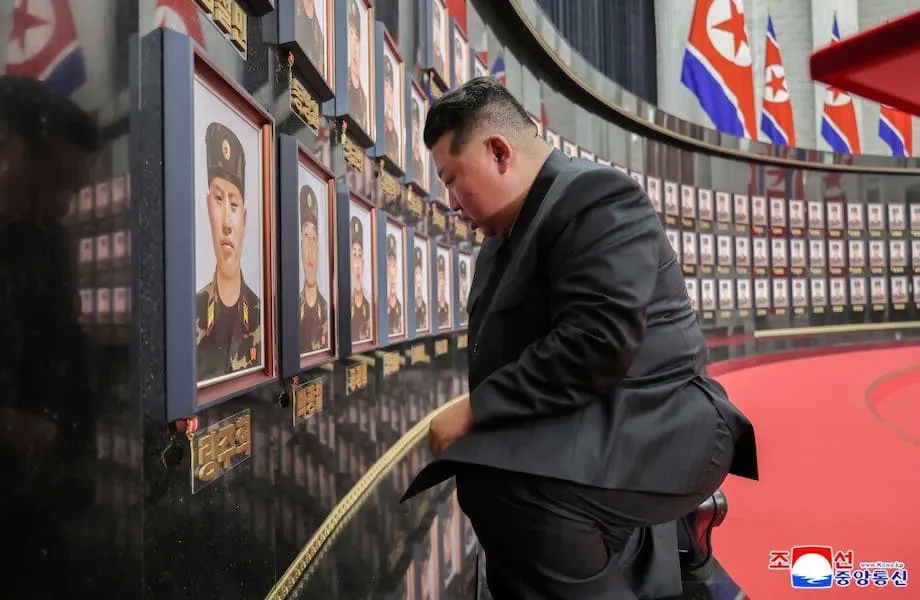
A Public Tribute to Soldiers Sent Far From Home
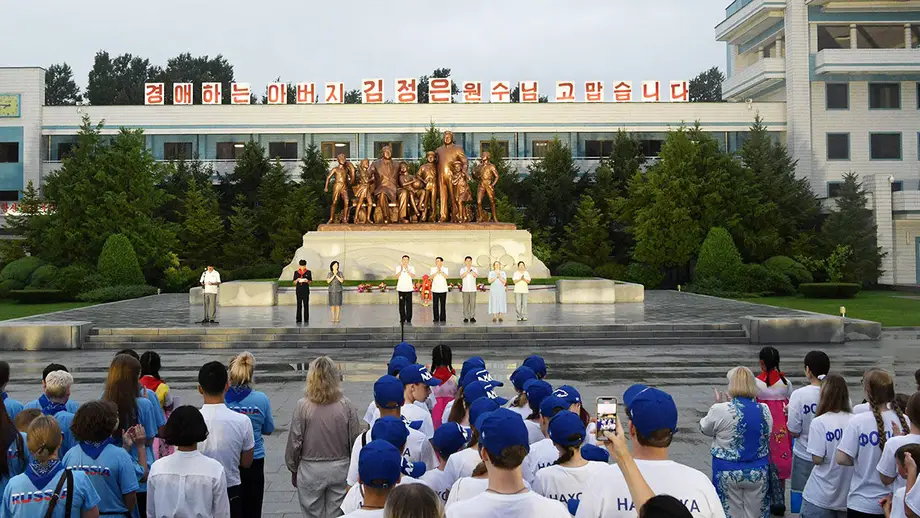
North Korean leader Kim Jong Un knelt before portraits of 101 soldiers killed fighting for Russia, pinned medals to their photographs and embraced grieving relatives at a ceremony in Pyongyang. The unusually public mourning exposed a human cost of North Korea's growing role in the war against Ukraine, a deployment that South Korean intelligence estimates has left at least 600 North Korean soldiers dead and thousands wounded.
Contents
- A Public Tribute to Soldiers Sent Far From Home
- How the Deployment Followed a Defense Treaty
- Thousands Deployed, Hundreds Reported Killed
- Why the Fighting Has Been So Costly
- Why Pyongyang Made the Mourning Public
- Combat Experience That Could Return to Korea
- What Each Government Gains From the Alliance
- Concern in Seoul, Washington and Ukraine
- State Television Changes the Public Story
- Key Points
Before bereaved families and returning soldiers, Kim expressed grief and pride. He regretted his inability to protect the nation's "precious sons" and honored those who had died for "great victory and glory." Living soldiers received commendations, while portraits of the dead became the focus of a ceremony broadcast by state media.
Kim, North Korea's leader, described the pain of encountering the fallen through their photographs:
My heart aches and is bitter as I face the reality that I only get to meet the noble figures who gave up their precious lives for great victory and glory through photos on the memorial wall,
North Korea usually keeps military operations and losses secret. The ceremony instead placed soldiers and their families at the center of a national account of sacrifice, loyalty and victory. Returning troops were also honored with concerts and banquets.
As of August 25, 2025, the tribute reflected a wider change in the relationship between Pyongyang and Moscow. North Korea had supplied troops, artillery shells, missiles and other military equipment to Russia. In return, it was believed to be seeking economic support, diplomatic backing and access to more advanced military technology.
How the Deployment Followed a Defense Treaty
North Korea began deploying troops in late 2024, following prominent meetings between Kim and Russian President Vladimir Putin. Both governments, increasingly isolated internationally, have found common ground in opposing Western influence and seeking practical benefits from closer cooperation.
Pyongyang and Moscow say the deployment took place under a mutual defense treaty signed in June 2024. Such an agreement commits countries to help defend one another under its terms. Both governments presented North Korea's participation as assistance to an ally.
North Korean state media described the intervention as a response to a Russian request for help in "liberating" the Kursk region from Ukrainian forces. Kursk is in Russia, although the fighting there forms part of Russia's wider war against Ukraine. Pyongyang portrayed its involvement as an act of justice and solidarity.
Kim called the soldiers "heroes and representatives of the honour of the motherland." Putin and Russian Chief of Staff Valery Gerasimov publicly praised the North Korean troops, using descriptions including "heroism" and "significant assistance." Those statements placed the deployment within the two governments' public account of their military partnership.
The main stages of that partnership and its public recognition are:
- June 2024: North Korea and Russia signed a mutual defense treaty.
- Late 2024: North Korea began sending troops to support Russia.
- By August 25, 2025: Pyongyang had publicly honored returning soldiers and troops killed in the fighting, following an initial reluctance to acknowledge losses.
Thousands Deployed, Hundreds Reported Killed
Western and South Korean intelligence estimates put the number of North Korean soldiers deployed at between 11,000 and 15,000, mainly in the Kursk region. The forces are believed to include members of elite formations such as the Storm Corps, known for discipline and ideological indoctrination.
South Korean intelligence estimates that at least 600 North Korean soldiers have been killed and thousands more wounded. Some estimates place total casualties at as many as 4,700. Casualties means the combined number killed and wounded, rather than deaths alone. Ukrainian and United States officials have given similar figures.
The 101 portraits displayed at the Pyongyang ceremony gave individual faces to the losses, while the intelligence estimates described a much larger toll across the deployment. North Korea's initial reluctance to acknowledge its dead gave way to public recognition as the scale of casualties became harder to conceal.
Reports also indicated that Pyongyang might send another 25,000 to 30,000 troops to reinforce Russian positions in the coming months. The accounts described preparations for a possible deployment, with no confirmed timetable given.
For the soldiers already sent abroad, the assignment meant entering a demanding battlefield far from home. For their families, the ceremony brought official recognition of deaths in a foreign war, alongside honors and promises of support from the state.
Why the Fighting Has Been So Costly
North Korean troops entered the conflict with little experience of modern warfare on this scale. Their military had not engaged in large scale fighting since the Korean War ended in 1953. The deployment brought them into combat shaped by drones, artillery and electronic warfare.
Drones can help forces find and attack opposing troops. Electronic warfare involves using electronic signals and countermeasures to disrupt an opponent's equipment or communications. Unfamiliarity with these methods, together with the intensity of the fighting, has been linked to the heavy North Korean losses.
Early in the deployment, North Korean units reportedly advanced in large, disciplined groups using outdated tactics. Concentrating soldiers in this way made them vulnerable to Ukrainian artillery and drone strikes. Discipline alone offered little protection when an opposing force could locate and attack a formation from a distance.
Ukrainian commanders have also described rapid adaptation. North Korean soldiers learned to use drones and electronic countermeasures, became better at avoiding detection by drones and improved their ability to shoot them down. Accounts from the battlefield described troops willing to risk their lives to recover fallen comrades.
Ukrainian soldiers characterized the North Koreans as physically fit, disciplined and highly motivated. Some recounted soldiers detonating grenades to avoid capture, while others described troops removing protective equipment so they could move faster during attacks. Those accounts show the severe risks soldiers accepted as they adjusted to the fighting.
Why Pyongyang Made the Mourning Public
North Korea's ceremony was unusual both for its openness and its emotional intensity. State media showed Kim kneeling before the portraits, attaching medals and comforting families. The images placed the leader alongside people bearing the direct cost of a decision to send troops overseas.
Analysts interpreted the ceremony as an attempt to raise morale, justify the deployment and reassure a domestic audience increasingly aware of the war's toll through social media and unofficial channels. Public recognition allowed the government to present deaths through a story of national honor and sacrifice.
Bereaved families were publicly acknowledged and comforted, while returning troops received concerts and banquets. The government also promised a monument in Pyongyang to commemorate the fallen, giving their service a lasting place in the capital and elevating them to the status of martyrs from earlier wars.
Families of soldiers killed in the fighting have received special privileges, including the right to move to Pyongyang. The benefits form part of the government's effort to soothe discontent and prevent unrest while demonstrating that the state will recognize a soldier's sacrifice.
Kim's public mourning served several purposes at once: honoring the dead, showing concern for their relatives and seeking continued support for involvement in the conflict. The ceremony's grief and its political message were closely connected.
Combat Experience That Could Return to Korea
North Korea's deployment gives its military an opportunity to gain practical experience, test weapons and learn how modern battles are fought. Supporting Russia also allows soldiers to encounter equipment and tactics that are difficult to understand through training alone.
Experience with drones, electronic countermeasures and battlefield survival could be carried back to North Korea. Soldiers who have learned to avoid detection, respond to drone attacks or coordinate under fire may later teach those skills to other units.
Military experts warn that these lessons could make North Korea's army more formidable. South Korea and its allies are particularly concerned that returning veterans will train others, spreading knowledge beyond the relatively small share of the military that has served alongside Russian forces.
The concern extends to future fighting on the Korean Peninsula. Knowledge gained in the war against Ukraine could be used in a conflict with South Korea or other adversaries, potentially changing the military balance there.
North Korean troops' reported adjustment from vulnerable early formations to more effective use of drones and countermeasures helps explain that concern. The deployment is giving Pyongyang a chance to modernize its forces while exposing its soldiers to substantial losses.
What Each Government Gains From the Alliance
North Korea is believed to be receiving oil, food and advanced military technology in exchange for troops and military supplies. For a heavily sanctioned and economically isolated country, those resources could support both the economy and the armed forces.
United States and South Korean officials have expressed concern that Russia may provide technology connected to missiles, drones, space systems and satellites. Such transfers could strengthen capabilities associated with North Korea's nuclear and ballistic missile programs. The precise rewards and technology transfers remain uncertain.
Pyongyang is also seeking financial aid and opportunities to send workers to Russia. Thousands of North Korean workers have reportedly been sent there, often under harsh conditions, to earn hard currency for the government. Hard currency means money that can be used for international purchases and payments.
International sanctions prohibit these labor practices, yet the war has created a new avenue for cooperation. Labor exports, economic assistance and military exchanges give the relationship a wider reach than the troop deployment alone.
Russia gains personnel and supplies to help sustain its campaign against Ukraine. North Korean artillery shells, missiles and other equipment help Moscow offset shortages linked to Western sanctions and battlefield losses, while troops help ease pressure on manpower.
Both governments also see political value in the partnership. Their cooperation provides a counterweight to Western influence and supports their shared effort to challenge the international order led by the United States. The alliance combines immediate wartime needs with longer ambitions for military and diplomatic support.
Concern in Seoul, Washington and Ukraine
The United States and its allies have condemned North Korea's involvement, accusing Pyongyang of prolonging the war and violating international sanctions. Public acknowledgment that North Korean soldiers are fighting and dying has made the country's participation more visible.
South Korea is especially concerned about the prospect of a neighboring military gaining both combat experience and more advanced technology. The deployment has also complicated efforts to restart diplomatic talks intended to reduce tensions on the Korean Peninsula.
Human rights organizations have raised concerns about North Korean labor overseas and the treatment of soldiers and their families. Those concerns extend beyond the battlefield to the conditions under which workers earn money for the government and the circumstances facing people connected to the deployment.
Ukraine faces the immediate military consequences. Its commanders have acknowledged the challenge of confronting additional foreign troops described as disciplined and highly motivated while continuing to resist Russian advances.
Closer cooperation between Moscow and Pyongyang has also increased fears about transfers of sensitive technology. For South Korea and its allies, the central concern is that assistance exchanged during this war could strengthen North Korea's military capabilities well beyond the conflict in Europe.
State Television Changes the Public Story
North Korean state television aired extensive footage of its troops fighting in the war against Ukraine for the first time, showing them using mortars, rockets, drones and other weapons. The broadcasts widened public recognition of a military role previously surrounded by secrecy.
Unofficial information, images circulating on social media and publicly available accounts from captured North Korean prisoners of war have contributed to awareness of the deployment. The greater openness in state coverage was partly a response to that flow of information.
Pyongyang's message centers on heroism and sacrifice. Medals, public mourning, recognition for families and the promised monument all reinforce the government's claim that participation in the war is justified and honorable.
The ceremony therefore marked a change in how North Korea presents its involvement, as well as an acknowledgment of its losses. Soldiers once deployed with little public explanation are now being placed within an official story of duty to the nation and solidarity with Russia.
Key Points
- Kim Jong Un honored soldiers killed fighting for Russia at a public ceremony in Pyongyang, including a tribute before portraits of 101 fallen troops.
- Western and South Korean intelligence estimates put the deployment at 11,000 to 15,000 troops, mainly in Russia's Kursk region.
- South Korean intelligence estimates at least 600 deaths and thousands wounded; some estimates put combined casualties as high as 4,700.
- Pyongyang and Moscow link the deployment, which began in late 2024, to their mutual defense treaty signed in June 2024.
- Reports indicate preparations for a possible additional deployment of 25,000 to 30,000 soldiers.
- North Korean troops have reportedly adapted to drones and electronic warfare, creating concern about skills returning to the Korean Peninsula.
- North Korea is believed to be seeking oil, food, financial support and military technology while supplying Russia with troops and weapons.
- Public honors, family privileges and a promised monument form part of Pyongyang's effort to recognize losses and maintain support for the deployment.