Chinese Brands Take the Lead in a Changing Car Market
Chinese brands accounted for more than 70% of electric vehicles sold in Southeast Asia in 2024, with BYD alone taking nearly half the market, according to figures attributed to Counterpoint Research. In Thailand, the region's largest EV market, Chinese brands held about 80% of sales.
Contents
- Chinese Brands Take the Lead in a Changing Car Market
- Why Southeast Asia Became a Priority
- BYD Expands From Sales to Manufacturing
- What Makes Chinese Electric Cars Cheaper?
- Governments Compete for Factories and Buyers
- Charging Access Remains Uneven
- Can Factory Investment Bring More Local Expertise?
- Local Brands Seek Their Own Place
- More Entrants Put Established Carmakers Under Pressure
- Electric Cars Begin to Change Fuel Demand
- Milestones From Rapid Growth to the Next Targets
- Key Points
By August 24, 2025, that expansion was changing how people bought cars and where manufacturers invested. BYD, Chery and Geely were challenging established Japanese, American and European manufacturers through lower prices, local partnerships and new production plants. Governments were helping with tax breaks and subsidies, hoping to turn rising sales into factories, jobs and technical skills.
Malaysian buyer Vincent Hor's decision to purchase a BYD Atto 3 illustrated the shift. Chinese electric cars, once a niche choice, were becoming mainstream in Thailand, Malaysia, Indonesia and Singapore. Buyers were weighing purchase prices, battery technology and possible fuel savings against concerns about charging access, quality and the future value of their vehicles.
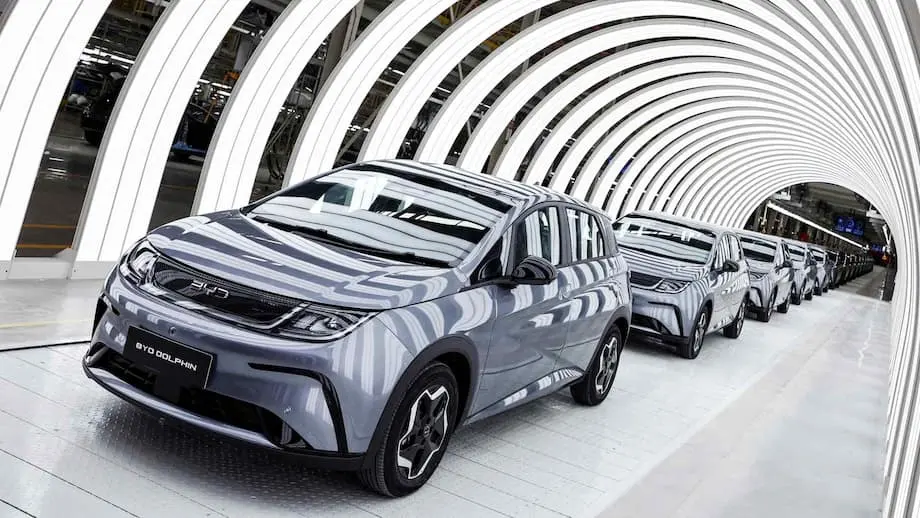
BYD's new factory in Rayong, Thailand, was completed in 16 months and was expected to produce 150,000 vehicles annually, creating thousands of jobs. In Malaysia, the company sold more than 5,400 vehicles in the first half of 2025, leading the EV market ahead of local and Western competitors.
Southeast Asia's larger challenge extended beyond selling more electric cars. Much of the new industrial activity involved assembling imported components. Governments wanted a greater share of the technology, research and battery production behind those cars, while manufacturers faced questions about whether aggressive pricing could last as competition grew and incentives expired.
Why Southeast Asia Became a Priority
China's manufacturers were expanding abroad while facing excess production capacity and fierce competition at home. Excess capacity means factories can make more vehicles than buyers are purchasing, increasing pressure on companies to find new customers.
Southeast Asia offered a market of about 600 million people and a growing middle class. Rising fuel prices and the global push toward cleaner transport supported demand, while tariffs and restrictions in Western markets encouraged Chinese brands to direct more attention to the region.
Regional EV sales more than doubled in the first quarter of 2024 compared with the same period a year earlier. Sales of traditional gasoline cars fell by 7%. Electric cars were growing quickly even as the established market weakened.
Chinese companies combined several approaches. They priced vehicles below many Japanese and Western rivals, worked with local conglomerates and committed billions of dollars to factories in Thailand, Indonesia and Malaysia. Government purchase subsidies, lower import duties and tax breaks helped make those investments and vehicles more attractive.
Partnerships also gave manufacturers access to local distribution and business networks. BYD and Geely followed an approach similar to that used by Japanese carmakers decades earlier: combine foreign manufacturing expertise with local commercial relationships.
BYD Expands From Sales to Manufacturing
BYD, China's leading EV manufacturer by sales, became the strongest Chinese competitor in Southeast Asia. Its Rayong factory placed manufacturing capacity inside the region, alongside a sales network extending through Thailand, Malaysia, Singapore, Indonesia, Vietnam and the Philippines.
The Thai plant's expected annual output of 150,000 vehicles showed the scale of its ambitions. Completing construction in 16 months also illustrated how quickly the company was building a regional production base. The investment was expected to create thousands of jobs.
Malaysia offered another measure of BYD's progress. Its sales of more than 5,400 vehicles during the first half of 2025 put it ahead of local and Western competitors in the country's EV market. Across the region, the company combined local distributors, a broad vehicle range, competitive pricing and advanced battery technology.
The Philippines formed part of that strategy, with value pricing and a wide product selection supporting expansion. BYD's reach across several national markets gave it opportunities to grow beyond any single country's incentives or consumer preferences.
What Makes Chinese Electric Cars Cheaper?
China's production scale was a central advantage. Its domestic market accounted for nearly 60% of global electric car sales. Producing vehicles in large numbers spreads factory, development and equipment costs across more cars, helping reduce the cost of each one.
Years of Chinese government subsidies, research grants and policy support also helped manufacturers invest in technology and production. Those investments supported the factories, batteries and supply networks used in their overseas expansion.
Many Chinese companies controlled several stages of production, from batteries to final vehicle assembly. This approach, known as vertical integration, lets a manufacturer coordinate more of its own supply chain and reduce costs instead of buying every major component from outside suppliers.
Chinese brands also advanced lithium iron phosphate batteries, commonly called LFP batteries. LFP is a type of lithium ion battery whose chemistry offers lower costs and safety advantages compared with other lithium ion chemistries. Battery choices matter because the battery is a major part of an electric car's cost.
Those advantages allowed manufacturers to offer competitive driving range and features while undercutting rivals on price. For Southeast Asian buyers, potential fuel savings of up to 35% compared with gasoline cars added to the appeal, particularly as governments phased out fuel subsidies.
Cheap gasoline still complicated the calculation in some markets. Malaysia and Indonesia had large populations of gasoline cars and motorcycles, and inexpensive fuel could make switching to an EV less financially attractive. Purchase prices and running costs therefore pulled buyers in different directions.
Governments Compete for Factories and Buyers
Thailand aimed for vehicles producing no exhaust emissions to account for at least 30% of its automobile output by 2030. Its support included tax holidays, reduced import duties, lower excise taxes and purchase subsidies. Together, those measures sought to attract manufacturers and encourage drivers to switch.
Indonesia was using its vast nickel reserves to pursue a role as a regional battery hub. Nickel is a material used in some EV batteries. The government introduced tax incentives for EV imports and worked with Chinese companies on factories and the local supply chain.
Malaysia extended import tax and duty exemptions for fully built imported EVs until 2025. It was also investing in local manufacturing to prepare for the end of those incentives. The policy linked immediate access to imported cars with a longer ambition to produce more vehicles locally.
Vietnam took a different approach by promoting its own manufacturer, VinFast. Competitive pricing and national pride helped the company become the country's leading car brand by sales. The government also subsidized electricity prices for EV charging stations and was considering direct subsidies for buyers.
Across these markets, incentives served two purposes: lowering the cost of electric cars today and attracting industrial investment for the years ahead. Whether companies established deeper production capabilities locally would shape how much of that investment stayed in the region.
Charging Access Remains Uneven
Charging infrastructure remained a practical concern for buyers. Stations were increasing, especially in cities, but rural coverage was still limited. Governments and private companies were expanding networks at different speeds across the region.
Range anxiety describes a driver's concern that a vehicle may run out of battery power before reaching a charger. A competitively priced car with an attractive driving range can still be a difficult purchase for someone whose regular journeys pass through places with few charging points.
Chinese brands also faced resistance linked to concerns about quality, data privacy and national security. Vietnam presented a particularly difficult market because VinFast enjoyed strong domestic support, while Chinese manufacturers struggled to gain traction.
Price competition carried risks of its own. Manufacturers had to sustain their businesses while offering deep discounts and funding expansion. As government incentives ended and more brands entered, maintaining low prices could become harder.
Can Factory Investment Bring More Local Expertise?
Most new EV factories in Southeast Asia concentrated on assembling imported components, particularly battery packs. Building battery cells or developing proprietary technology would give the region a different role, with more opportunities to retain technical knowledge, intellectual property and valuable specialist jobs.
A battery cell is an individual unit that stores energy. A battery pack combines many cells into a larger system for a vehicle. A country can assemble packs or complete cars while still importing the cells and much of the technology that determine their value.
The China-Global South Project identified the central test as whether Southeast Asia could move beyond assembly into EV design, innovation and battery manufacturing. The concern echoed earlier patterns during the expansion of Japanese manufacturers in the 1980s and 1990s, when local production did not necessarily bring control of the most valuable technology.
Vocational training, technical education, research centers and zones dedicated to advanced technology were among the investments needed. Governments also faced choices over negotiating technology transfer and commitments to local research and development from foreign investors.
Imported battery cells and technology meant much of the value generated by the EV boom flowed back to China. More local engineering, research and component production would allow Southeast Asian economies to retain a greater share of the benefits alongside assembly jobs.
Local Brands Seek Their Own Place
VinFast was the region's most ambitious local EV manufacturer, with its own battery cell and pack production. Its domestic success gave Vietnam a national competitor, although the company faced strong Chinese competition and difficulties expanding internationally.
Malaysia's Proton chose a partnership with China's Geely to introduce a competitively priced EV. Foreign expertise offered a way to lower costs and accelerate development while keeping a local brand in the market. Other countries were exploring similar partnerships and investing in research and development.
Branding in Asia identified coordinated government support as necessary for Southeast Asia to take on more valuable parts of EV production. Thailand's existing manufacturing base and Indonesia's nickel resources offered different strengths that could support a regional industry.
Regional cooperation could help countries avoid duplicating policies while building complementary capabilities. The ambition was to develop competitive EV brands serving domestic demand and reduce dependence on Chinese and Western manufacturers.
Local marketing, foreign technology partnerships and sustained government support were recurring elements in the cases described. National brands still had to compete on price and products while developing the knowledge needed to stand on their own.
More Entrants Put Established Carmakers Under Pressure
Nio planned to enter Singapore in 2026 with its compact Firefly hatchback. Its plans potentially included battery swapping, which replaces a depleted battery with a charged one instead of requiring the driver to wait while the installed battery charges. Deployment of that technology remained a possibility rather than a confirmed part of the launch.
JMEV and Avatr were also entering the regional market, while BYD continued expanding its product range and presence. More competitors meant buyers could gain additional choices, but manufacturers would face greater pressure on prices and sales.
Japanese manufacturers, long dominant in Southeast Asia, were losing ground because of their slower response to the EV shift. American and European brands had a limited presence, although Tesla had made some inroads. Local manufacturers were responding with new models and partnerships.
Protectionism was another business risk. Western restrictions had already encouraged Chinese manufacturers to seek growth in Southeast Asia. Similar measures could emerge within the region if local industries felt threatened by the speed and scale of Chinese expansion.
Consumer support for domestic manufacturers, changing incentives and the financial demands of low pricing would all shape competition. Manufacturers needed both buyers and a durable business model to turn rapid entry into a lasting presence.
Electric Cars Begin to Change Fuel Demand
Kpler's projections showed Southeast Asian gasoline demand growth slowing from an earlier estimate of 3.1% a year to 2.6% annually between 2021 and 2030 because of increasing EV adoption. That represented a reduction of 0.5 percentage points in the expected annual growth rate.
By 2030, EVs were expected to displace about 100,000 barrels of gasoline demand each day, equivalent to roughly 6% of projected consumption. The forecast described gasoline use growing more slowly as electric cars took over journeys that would otherwise require fuel.
Electric vehicles still represented only 0.6% of Southeast Asia's total passenger car fleet. That small share explained why fast growth in new EV sales could coexist with continued dominance by gasoline vehicles. New purchases change the fleet gradually as older vehicles remain on the road.
Gasoline cars and motorcycles therefore continued to shape the region's energy use. The environmental benefits of switching vehicles would take time to develop, even as a growing number of buyers reduced their direct reliance on gasoline.
Milestones From Rapid Growth to the Next Targets
The expansion stretched across several periods, from the acceleration in sales during 2024 to manufacturers' announced plans and government targets later in the decade.
- First quarter of 2024: Southeast Asian EV sales more than doubled from a year earlier, while traditional gasoline car sales declined by 7%.
- 2024: Chinese brands accounted for more than 70% of regional EV sales, with BYD taking nearly half the market.
- First half of 2025: BYD sold more than 5,400 vehicles in Malaysia and led its EV market.
- 2025: Malaysia's extended import tax and duty exemptions for fully built EVs reached their stated final year.
- 2026: Nio planned to launch its Firefly hatchback in Singapore, potentially bringing battery swapping technology.
- 2030: Thailand targeted at least 30% of automobile output from vehicles producing no exhaust emissions, while regional EV adoption was projected to displace about 100,000 barrels of gasoline demand a day.
For Southeast Asia, the next decade would test two connected ambitions: making electric cars affordable enough for more households and building an industry that retained more of the technology and income behind them. Factory construction was already advancing. Local innovation, charging coverage and sustainable competition remained central challenges.
Key Points
- Chinese brands held more than 70% of Southeast Asian EV sales in 2024, while BYD accounted for nearly half the market.
- Lower prices, local partnerships, government incentives and manufacturing investment drove expansion.
- BYD's Rayong factory was expected to produce 150,000 vehicles annually and create thousands of jobs.
- Thailand, Indonesia, Malaysia and Vietnam pursued different combinations of production incentives, battery investment and support for domestic brands.
- Limited rural charging, concerns about Chinese brands and the eventual withdrawal of incentives complicated further growth.
- EVs represented just 0.6% of the passenger car fleet, but were projected to displace about 100,000 barrels of daily gasoline demand by 2030.
- Retaining more economic value depended on developing battery cells, engineering, research and local technology alongside vehicle assembly.