Three Remaining Strongholds Carry Stakes Beyond Rakhine
The Arakan Army (AA) controls 14 of Rakhine State's 17 townships as of August 23, 2025, leaving Myanmar's military junta holding a handful of fortified positions on the country's western frontier. The remaining strongholds include the state capital, Sittwe, the strategic port of Kyaukphyu and Manaung. Their fate matters to residents facing hunger and violence, and to China, India and Bangladesh, whose investments, borders and refugee policies are tied to Rakhine.
Contents
- Three Remaining Strongholds Carry Stakes Beyond Rakhine
- How the AA Built Its Position
- Why the Advance Has Slowed
- Blockades Push Civilians Toward Hunger
- Rohingya Face Renewed Violence
- China's Investments Shape the Battle for Kyaukphyu
- India Weighs Connectivity and Security
- Bangladesh Faces a New Border Authority
- Governing Territory Brings New Tests
- Myanmar's Fragmentation Reaches Beyond Its Borders
- Key Points
The AA's advance has brought the armed group close to full control of a state bordering Bangladesh. Since late 2023, it has captured towns, military bases and border crossings, turning from a peripheral ethnic armed group into the region's most powerful force outside the state military. Its growing authority is changing both the battlefield and the way neighbouring countries deal with Myanmar.
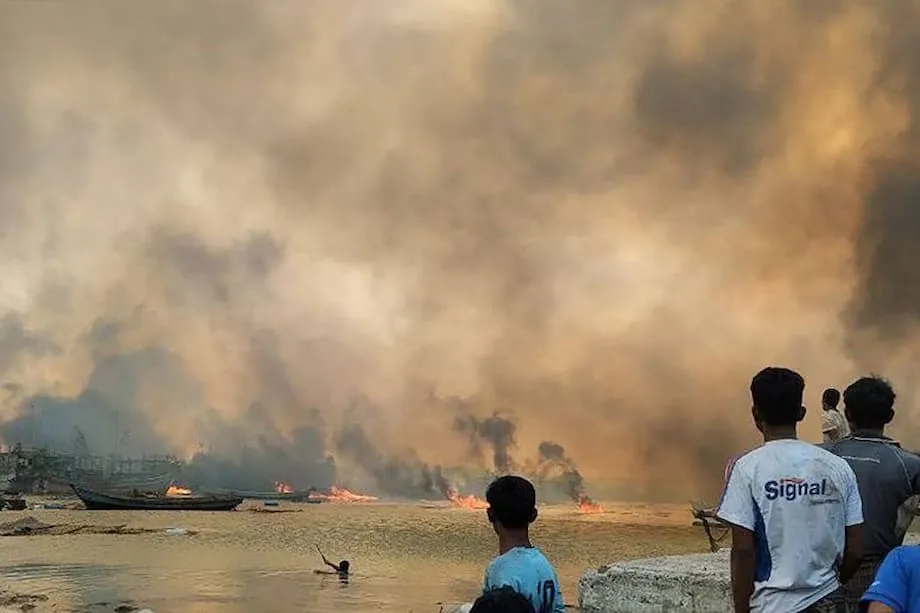
The Myanmar military, known as the Tatmadaw, has answered the advance with blockades and airstrikes. More than two million people face the risk of starvation as restrictions disrupt supplies, food and fuel prices rise, and insecurity spreads. For the Rohingya, a Muslim minority already subjected to years of persecution, the fighting has brought renewed displacement, forced recruitment and allegations of atrocities.
The AA has nevertheless held back from full assaults on the three remaining towns. Chinese infrastructure at Kyaukphyu and Indian interests at Sittwe make those battles especially sensitive. The group is also trying to administer the territory it has taken while conserving resources and preventing military counterattacks. Its next decisions will affect who governs Rakhine and whether civilians can obtain food, security and basic services.
How the AA Built Its Position
The Arakan Army was founded in 2009 to seek greater autonomy for the Rakhine people, who have long felt marginalised by Myanmar's central government. Autonomy would give the region more power to manage its own affairs. Over the years, the AA built a fighting force, developed alliances with other ethnic armies and established a political wing, the United League of Arakan (ULA).
The military coup in 2021 plunged Myanmar into wider turmoil and opened space for the AA to expand. Its military gains have been accompanied by the growth of institutions intended to govern territory under its control. The group now commands a force estimated at 10,000 fighters, while the junta's presence in Rakhine has contracted to a small number of defended towns.
The AA belongs to the Three Brotherhood Alliance alongside the Myanmar National Democratic Alliance Army and the Ta'ang National Liberation Army. Their cooperation has helped expose weaknesses in the junta's forces and supported the AA's expansion in Rakhine.
The sequence of developments described in the conflict runs across several years:
- 2009: The AA was founded with the aim of securing greater autonomy for the Rakhine people.
- 2021: The military coup deepened Myanmar's crisis, after which the AA expanded its influence rapidly.
- Late 2023: The AA began the series of advances that brought key towns, bases and border crossings under its control.
- Late 2024: The Three Brotherhood Alliance's Operation 1027 marked a turning point, exposing junta weaknesses and helping the AA capture large areas, including Ann.
- August 23, 2025: The AA controls 14 of Rakhine's 17 townships, with Sittwe, Kyaukphyu and Manaung remaining under junta control.
Ann was an especially important capture because it housed the Myanmar military's Western Command headquarters. Taking that position weakened the military's regional command structure and demonstrated the scale of the AA's advance.
Why the Advance Has Slowed
Sittwe, Kyaukphyu and Manaung remain outside the AA's control despite its rapid gains elsewhere. The group has surrounded the remaining strongholds and sought to pressure the junta into negotiating a withdrawal, rather than immediately committing to major assaults.
Foreign investments are one reason for that approach. Kyaukphyu contains major Chinese projects, while Sittwe is central to an Indian transport project. Fighting that damaged infrastructure or harmed foreign nationals could strain the AA's relations with Beijing and New Delhi at a time when both countries have interests in the territory it increasingly controls.
The AA also faces the demands of governing its expanded territory. Building trust among local communities, including ethnic minorities and the Rohingya, takes resources that would otherwise support further offensives. Its authority depends partly on whether residents see improvements in daily life.
Military limits remain another concern. Sustained attacks could stretch the AA's forces and supplies too far, leaving it vulnerable to counterattacks. The junta still controls the airspace and key supply routes. The AA is therefore also working to block military advances from neighbouring regions and prevent the junta from recovering lost ground.
Blockades Push Civilians Toward Hunger
More than two million people in Rakhine are at risk of starvation as the military blockade restricts supplies. Food and fuel prices have soared, making necessities harder to obtain even where goods remain available. Humanitarian organisations warn of catastrophe unless aid reaches people in need.
Sittwe shows how military isolation affects everyday life. The capital is accessible only by sea and air, leaving residents dependent on a narrow set of supply routes. Reports of crime and insecurity are widespread, while law and order have deteriorated in the besieged city.
The struggle for territory has therefore become a struggle over access to essentials. Control of a town or road affects whether food, fuel and assistance can move. Airstrikes add another danger for communities already coping with shortages and displacement.
Humanitarian access is also tied to the larger political problem. The junta retains military capabilities despite losing territory, while the AA exercises authority across much of the state. Civilians need assistance across these competing areas of control, even as fighting and blockades continue.
Rohingya Face Renewed Violence
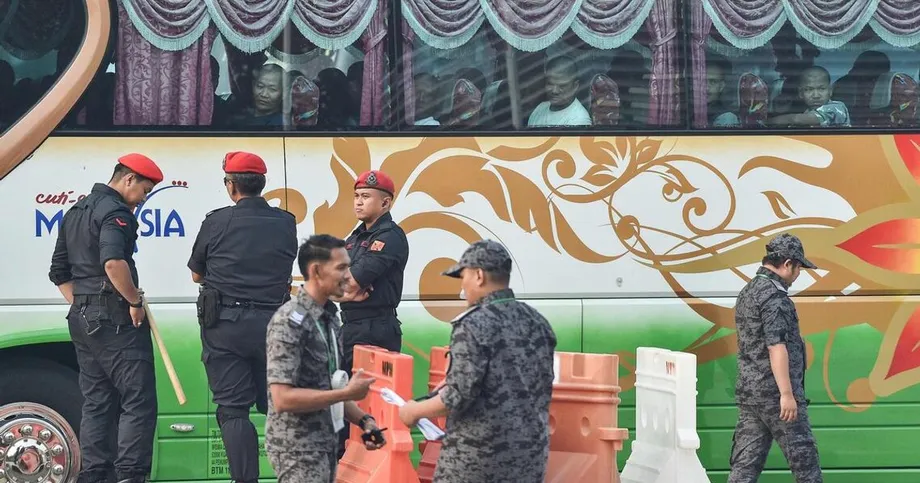
The Rohingya have been caught between the military and the AA as control of Rakhine changes. A military crackdown in 2017 forced more than 730,000 Rohingya to flee into Bangladesh. Nearly a million now live in crowded refugee camps there, while those still in Rakhine face renewed violence, forced conscription and displacement.
Both the AA and the military have been accused of abuses against Rohingya civilians. Amnesty International and other rights watchdogs have described large scale arson, killings and forced recruitment involving both sides. The military has armed some Rohingya to fight the AA, while Rohingya armed groups in Bangladesh are mobilising against the rebels.
Amnesty International, the human rights organisation, has warned that the renewed violence recalls the atrocities of 2017 and has also raised allegations against the advancing AA:
Increasing deadly attacks against Rohingya people in Myanmar's Rakhine State bear a terrifying resemblance to the atrocities of August 2017... The Arakan Army, as it advances and captures more territory, also faces allegations of atrocities.
The AA denies targeting Rohingya civilians. For Rohingya families, however, the immediate dangers include violence, recruitment by armed actors and further loss of their homes. Many remain stateless and dispossessed, leaving them vulnerable to exploitation as military and political authority shifts around them.
China's Investments Shape the Battle for Kyaukphyu
Kyaukphyu is central to China's interests in Rakhine. Its deep sea port and oil and gas pipelines form part of the Belt and Road Initiative and connect China to the Indian Ocean. Those projects give Beijing a direct stake in what happens as the AA tightens its position around the town.
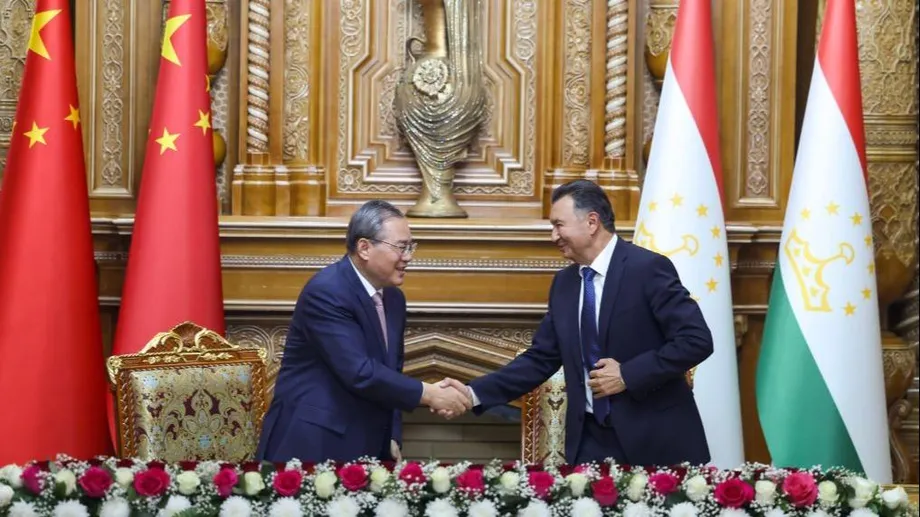
China has supported Myanmar's military to protect its investments. The AA's growing control presents Beijing with a difficult choice: continue relying on the junta, or accept AA authority if Chinese assets can be safeguarded.
Thousands of Chinese workers and private security personnel are present in Kyaukphyu. Their presence increases the risks of a direct assault. Damage to the projects or casualties among foreign personnel could turn a local military operation into a wider diplomatic confrontation.
The AA has instead opted for a siege, seeking a negotiated junta withdrawal without damaging Chinese interests. Its approach reflects the limits that foreign infrastructure can place on battlefield decisions. Capturing territory is one objective; maintaining workable relations with a powerful neighbour is another.
India Weighs Connectivity and Security
India's main interest in Rakhine centres on the Kaladan Multi-Modal Transit Transport Project, which connects Sittwe port to India's northeast. The project is intended to improve regional transport links and has security importance for New Delhi, but the conflict threatens its completion.
India has maintained contacts with both the junta and the AA. It describes its development projects as grants intended to benefit Myanmar's people. Indian officials have also relocated personnel from Sittwe to Yangon for safety as the security situation has worsened.
An Indian Ministry of External Affairs spokesperson set out New Delhi's position on development assistance and a political settlement:
India continues to support several grant-based developmental projects in Myanmar intended to benefit its people... Our position has been consistent in calling for an end to violence, peace, stability, and a resolution of ethnic issues through a genuine federal democracy.
A federal democracy would divide authority between a national government and regional governments, giving ethnic communities a role in managing their affairs. India's call links an end to fighting with a political arrangement addressing the ethnic disputes that have shaped the conflict.
New Delhi is also wary of pushing the junta closer to China. It is monitoring the AA's expansion near India's northeastern border while trying to protect its transport project and maintain relationships with the competing authorities.
Bangladesh Faces a New Border Authority
Bangladesh shares a 271 kilometre border with Rakhine. The AA's capture of Maungdaw and other border towns has given it control of the entire frontier, bringing Bangladesh into direct contact with an armed group that increasingly performs the functions of a government.
Dhaka has begun cautious dialogue with the AA while carrying the burden of hosting nearly a million Rohingya refugees. Cox's Bazar contains the world's largest refugee camp, where crowded conditions, declining international aid and growing security concerns make prolonged displacement increasingly difficult.
Bangladesh has called for refugees to return safely and voluntarily. It has also proposed a safe zone in Rakhine to support humanitarian access and refugee returns, alongside recognising AA authority in exchange for cooperation on the Rohingya issue.
Those proposals require careful diplomacy. Bangladesh must weigh the views of regional powers, its own security and the risk of further instability inside Myanmar. Continued violence and fragmented governance leave the prospect of safe, voluntary return remote.
Governing Territory Brings New Tests
The AA has established the Arakan People's Revolutionary Government (APRG) to administer daily affairs in areas under its control. Its responsibilities include basic services, security and justice. Together with the ULA, these institutions reflect the group's shift from fighting for territory to exercising practical authority over it.
Some residents report improved security and freedoms under AA rule. Others criticise restrictions on speech, forced conscription and controversial nationalisation of property. Resource shortages and continuing conflict add to the difficulty of providing services and maintaining order.
The AA's claim to be a credible governing authority will depend on how it treats the different communities living in Rakhine. Winning local trust, including among ethnic minorities and the Rohingya, remains a central challenge as it consolidates control.
Neighbouring governments have practical reasons to deal with whoever controls borders, roads and infrastructure. That gives the AA growing influence beyond the battlefield, even while its conduct and ability to govern remain under scrutiny.
Myanmar's Fragmentation Reaches Beyond Its Borders
The central government's weakening authority is allowing armed groups such as the AA to gain practical recognition from neighbouring countries. China and India are cautiously engaging with the group to protect strategic projects, while Bangladesh seeks cooperation on border security and the Rohingya crisis.
Rakhine's changing administration points toward a possible Myanmar made up of multiple autonomous regions, each with its own institutions and external relationships, rather than a strongly centralised union. The AA's experience illustrates both the reach of an ethnic armed organisation and the difficulties it faces once it takes responsibility for governing.
International diplomatic efforts have produced little progress. The United Nations and rights organisations have urged investigations into alleged war crimes and called for suspension of aviation fuel imports used by the military for airstrikes. Aid deliveries and outside pressure have remained insufficient to change the conflict's direction.
For the Rohingya, regional competition offers little immediate relief. An unnamed analyst writing in the Georgetown Journal of International Affairs described how their prospects are tied to the priorities of neighbouring powers:
The future of the Rohingya is entangled in the strategies of regional powers, as China and India prioritize their goals over humanitarian concerns. The promise of repatriation seems increasingly hollow.
Rohingya refugees remain in limbo as Bangladesh balances humanitarian responsibilities with national security. Inside Rakhine, continuing violence and the absence of a unified authority keep safe return distant. No timetable has been given for a negotiated military withdrawal from the remaining strongholds, implementation of the proposed safe zone or refugee repatriation.
Key Points
- The AA controls 14 of Rakhine's 17 townships, while the junta retains Sittwe, Kyaukphyu and Manaung.
- Military blockades, rising prices and continuing attacks have left more than two million people at risk of starvation.
- Rohingya civilians face renewed violence, displacement and forced recruitment, with allegations of abuses against both the military and the AA.
- Chinese projects at Kyaukphyu and India's transport project at Sittwe influence the AA's military calculations.
- Bangladesh is engaging cautiously with the AA after the group gained control of the shared frontier.
- The AA is building governing institutions while facing criticism over speech restrictions, conscription and property nationalisation.
- Nearly a million Rohingya remain in Bangladesh, with safe and voluntary return still remote.