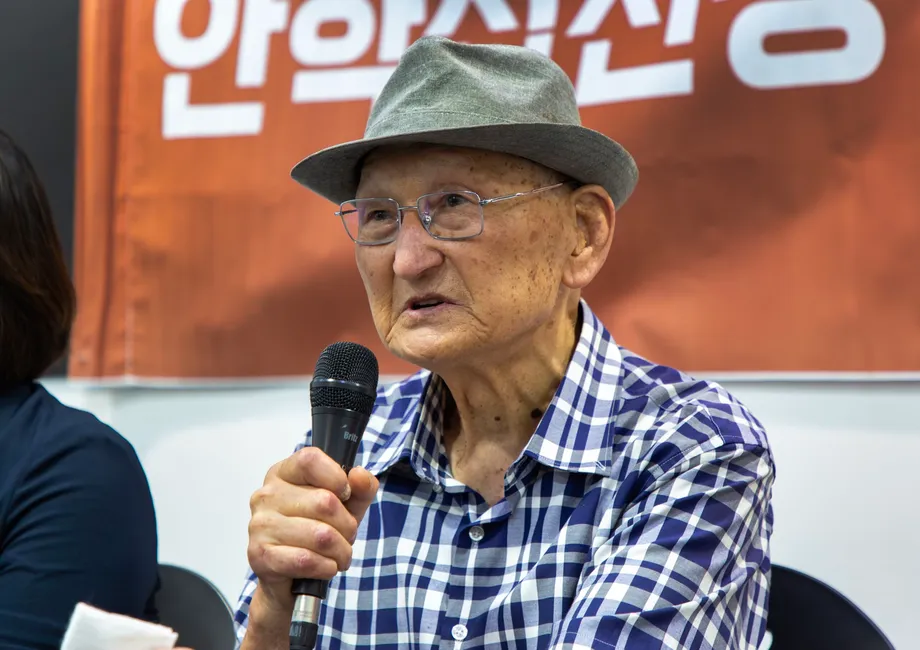
A Final Journey Stopped at the Border
Ahn Hak-sop, a 95-year-old former North Korean soldier who spent 42 years and six months in South Korean prisons, wants to cross the border one last time. His wish is to return to North Korea and be buried alongside his fallen comrades. South Korean authorities have refused to let him cross, citing national security laws and the absence of an agreement with Pyongyang.
Contents
- A Final Journey Stopped at the Border
- From Ganghwa Island to a Divided Korea
- Prison and the Pressure to Renounce His Beliefs
- Why Ahn Stayed When 63 Prisoners Returned
- The Dates Behind His Long Wait
- A Humanitarian Request Meets Security Law
- Why the Border Cannot Simply Be Crossed
- A Home Close to the North, but Still Out of Reach
- A Personal Appeal in a Continuing Political Conflict
- Key Points
On a recent Wednesday, the frail, wheelchair-bound Ahn travelled to the Unification Bridge in Paju, near the Demilitarized Zone (DMZ) separating North and South Korea. Holding a North Korean flag, he appealed to be allowed through. Supporters and security personnel surrounded him before authorities escorted him away in an ambulance.
Ahn, who was captured by South Korean forces in 1953, described his longing to return:
I miss the North, it's unbearable. I want to be buried in the free land.
As of August 21, 2025, Ahn is one of six surviving prisoners in South Korea described as "unconverted": former North Korean soldiers and spies who refused to renounce their beliefs despite decades behind bars. Most are in their 80s and 90s. All have recently petitioned the South Korean government for repatriation, meaning permission and arrangements to return to the country they regard as home.
Their requests bring an old wartime dispute into an urgent personal setting. South Korea's Unification Ministry says it is reviewing the matter from a humanitarian perspective, but a return would require cooperation from North Korea. Pyongyang has not responded to recent inquiries about accepting Ahn or the others, and no date has been given for a possible transfer.
From Ganghwa Island to a Divided Korea
Ahn was born in 1930 on Ganghwa Island, when Korea was under Japanese colonial rule. His family was torn apart by forced conscription into the Japanese army. Before he became a soldier himself, military service imposed by a colonial power had already disrupted his childhood.
The end of World War II in 1945 brought another turning point. A proclamation by Gen. Douglas MacArthur placed Korea south of the 38th parallel under American military control. The parallel is a line of latitude that became a dividing line across the peninsula.
Ahn regarded that arrangement as a betrayal of Korean independence. For him, the end of Japanese rule did not deliver the liberation he had expected. His resentment of American control helped shape the political beliefs that would guide his decisions during the war and throughout his imprisonment.
When the Korean War erupted in 1950, Ahn was a middle school student in Kaesong, a city near the new border. He soon joined the North Korean People's Army and served in intelligence. In 1953, he was captured during a dangerous mission behind enemy lines. Of the 10 men in his unit, he was the only survivor.
Prison and the Pressure to Renounce His Beliefs
South Korean law offered captured North Korean soldiers a chance at parole if they renounced communism and pledged allegiance to the South. For Ahn, the route to possible release required abandoning the convictions he had carried into the war.
Ahn refused. He remained in prison for 42 years and six months, one of the longest periods of imprisonment endured by any North Korean prisoner of war in South Korea. He described persistent psychological and physical pressure, including torture, intended to make him change his beliefs.
Ahn recalled how the efforts to secure his conversion developed:
At first, they tried to convert me through conversation. When that didn't work, they started torturing me.
His family also made emotional appeals for him to renounce his ideology. Ahn continued to resist, and his political choices eventually left him estranged from relatives. His refusal became the defining feature of a prison term that stretched across more than four decades.
His release in 1995 ended his confinement inside prison walls, but he said it did not bring a sense of freedom. Under close surveillance and ostracized by his family because he remained committed to his ideology, Ahn felt he had moved from a small prison into a larger one.
For Ahn, imprisonment and life after release were connected by the same unresolved conflict: he remained loyal to the North while living in the South. That loyalty also shaped a decision that would later make his current request more difficult to fulfil.
Why Ahn Stayed When 63 Prisoners Returned
In 2000, a brief improvement in relations between the two Koreas allowed 63 unconverted prisoners to return to North Korea through Panmunjom, the truce village at the border. Those who returned were welcomed as heroes in the North.
Ahn chose to stay in South Korea. He believed his mission was unfinished and wanted to continue opposing the American presence from the South. Explaining that decision, the former prisoner said:
If I am to shout, 'US out,' I must do it from here, not the North. That's why I didn't return. I was determined to die after witnessing the Americans leave this land.
No further repatriations of this group have taken place since the 2000 transfer. Twenty-five years later, Ahn's wish is to return before his death, but the cooperation that made the earlier journey possible is absent.
The remaining six prisoners belong to a dwindling generation whose lives were shaped by war, ideological commitment and long imprisonment. Their recent petitions seek another opportunity to leave, while their ages make delays increasingly consequential.
The Dates Behind His Long Wait
Ahn's request follows a life spanning colonial rule, the division of Korea, war and decades of confinement. The main dates show how a young soldier's capture became a dispute lasting into old age:
- 1930: Ahn was born on Ganghwa Island during Japanese colonial rule.
- 1945: World War II ended, and MacArthur's proclamation placed Korea south of the 38th parallel under American military control.
- 1950: The Korean War began while Ahn was studying in Kaesong. He subsequently joined the North Korean People's Army.
- 1953: South Korean forces captured Ahn during a mission behind enemy lines. The war ended in an armistice rather than a peace treaty.
- 1995: Ahn was released after 42 years and six months in South Korean prisons.
- 2000: South Korea sent 63 unconverted prisoners to the North through Panmunjom. Ahn chose to remain.
- 2023: North Korea suspended official communications with South Korea.
- August 2025: Ahn and the five other surviving unconverted prisoners were seeking repatriation.
The 2000 transfer gave dozens of prisoners a route home. Ahn's appeal now depends on reopening a process that has not produced another transfer since then.
A Humanitarian Request Meets Security Law
Ahn's supporters argue that his status as a prisoner of war gives him a right to repatriation under international humanitarian law, specifically the Geneva Convention. They point to the rule that prisoners of war are entitled to return after hostilities end.
The Korean War, fought from 1950 to 1953, concluded with an armistice, an agreement to stop fighting, rather than a peace treaty formally settling the conflict. The two Koreas remain technically at war. That unfinished settlement forms the legal and political setting for Ahn's request.
South Korean authorities maintain that unauthorized contact with North Korea is illegal under the National Security Law. The DMZ is also closed to civilians without special permission from the South Korean military and the United Nations Command.
Human rights groups have expressed sympathy for Ahn and the other unconverted prisoners, but few expect the government to make an exception. Civic groups continue to campaign for their return, arguing that their rights under international law have been ignored.
The Unification Ministry's humanitarian review offers a route for considering their circumstances, but South Korea cannot arrange a completed transfer alone. North Korea would also have to agree to receive them. The lack of an arrangement with Pyongyang was one of the reasons authorities gave for stopping Ahn at the bridge.
Why the Border Cannot Simply Be Crossed
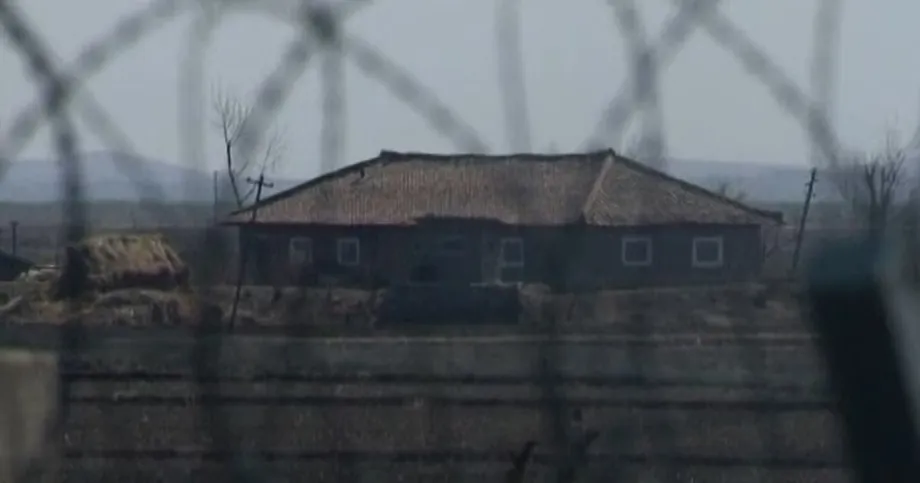
The Unification Bridge in Paju is a ceremonial crossing point near the DMZ. Reaching it brought Ahn close to the dividing line, but beyond it lies one of the world's most heavily fortified borders.
Barbed wire, landmines and armed guards make the DMZ a dangerous and tightly controlled area. A civilian crossing requires approval from both Koreas and the United Nations Command. Ahn's desire to leave therefore requires an organized handover, with permissions on both sides.
North Korea's suspension of official communications with the South in 2023 has stalled even humanitarian discussions. With those channels closed, arranging acceptance, access and a transfer has become more difficult.
The authorities' response at Paju showed how those restrictions operate in practice. Ahn arrived with supporters and a North Korean flag, asked to pass and was taken away in an ambulance after permission was refused. His final wish remained subject to decisions by governments and military authorities on both sides of the border.
A Home Close to the North, but Still Out of Reach
Ahn lives in a modest home in Yonggang-ri, about a mile from the North Korean border. North Korean memorabilia decorate its walls, and a US flag serves as his doormat. The flag reflects his continuing opposition to what he calls the "American occupation" of South Korea.
Shunned by his family, Ahn relies on government benefits and help from acquaintances. His release from prison did not restore family ties or end his attachment to the North. Old age has now narrowed his wish to the place where he hopes to spend his final days and be buried.
Ahn explained why burial in South Korea would be painful to him:
It would be too much of a resentment to be buried in a colony even after death.
His description reflects his own political convictions. Those beliefs have remained firm through imprisonment, surveillance and social isolation. They also explain why a home so close to the border offers little comfort: the destination he wants is nearby, but access depends on an agreement he cannot make himself.
A Personal Appeal in a Continuing Political Conflict
Ahn's case has stirred debate in South Korea. Some regard him as a remnant of an earlier ideological struggle; others see an elderly former prisoner whose final request deserves a humanitarian response. The government remains cautious about security risks and political fallout.
Allowing his return could be presented by Pyongyang as a propaganda victory and a symbolic defeat for the South. Refusing it risks criticism from human rights advocates and international observers who regard the request as a humanitarian matter rather than a security threat.
The Korean War left millions dead or separated from their families. Its unresolved aftermath remains present in the lives of divided families, prisoners who have not returned and people living with the threat of renewed conflict. The DMZ marks both the physical division and the continuing political confrontation.
Occasional family reunions during rare periods of improved relations have offered some Koreans brief opportunities to see relatives again. Many others carry the pain of separation to the end of their lives. Ahn's circumstances are different, but his shrinking opportunity to return belongs to that wider history of interrupted lives.
The surviving unconverted prisoners have also become disputed symbols. Their persistence is celebrated by some and condemned by others, with judgments about conviction and fanaticism shaped by the peninsula's opposing political histories. Behind those judgments are elderly people who spent decades in prison and are now seeking permission to leave.
Ahn's appeal brings those competing pressures into one concrete decision: whether governments that no longer maintain official communications can agree on the return of a frail man who wants to be buried with his comrades. His request remains unresolved, alongside those of the five other surviving prisoners.
Key Points
- Ahn Hak-sop, 95, spent 42 years and six months in South Korean prisons after his capture in 1953.
- He wants to return to North Korea and be buried alongside his fallen comrades.
- Authorities stopped his attempted crossing at the Unification Bridge in Paju, citing security laws and the lack of an agreement with Pyongyang.
- Ahn is one of six surviving unconverted prisoners who have recently petitioned for repatriation.
- He chose to stay in South Korea when 63 prisoners returned to the North in 2000. No further transfers have followed.
- The Unification Ministry is considering the matter on humanitarian grounds, but North Korean cooperation is required.
- North Korea suspended official communications with the South in 2023 and has not responded to recent inquiries about accepting the prisoners.