A Cottage in Zhejiang Offers More Than a Place to Stay
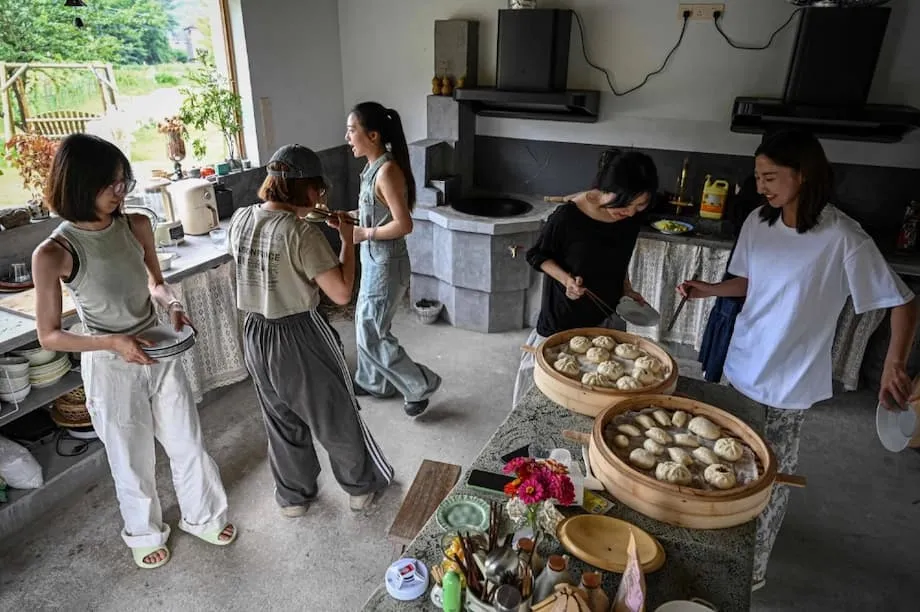
At Keke's Imaginative Space in Lin'an, a suburb of Hangzhou, women can stay for 30 yuan a night, about $4.15, with the rate rising to 80 yuan after the fourth day. They cook together, play board games, share coffee and talk. The accommodation offers something its founder, Chen Yani, once struggled to find at work: a place where she can feel relaxed and safe.
Contents
- A Cottage in Zhejiang Offers More Than a Place to Stay
- Why Safety Can Mean Everyday Freedom
- How Keke Built a Shared Home
- Her Space Offers Somewhere to Turn
- Beijing's Half the Sky Addresses a Social Gap
- Education, Income and Rednote Widen the Choices
- Companionship Now, and the Possibility of Growing Old Together
- Founders Answer Criticism About Exclusion
- Demand Meets the Cost of Keeping the Doors Open
- Key Points
Known as Keke, Chen created the space after experiencing harassment from men in the workplace. Her project is part of a growing movement across China, where women are seeking places to live, gather and support one another without the pressures they associate with mixed company, family expectations or the male gaze, the feeling of being watched and judged by men.
From cottages in the rolling hills of Zhejiang province to cultural venues in Beijing, these communities take different forms. Some provide overnight accommodation. Others operate as membership clubs or places to meet. Women come for companionship, relief from harassment, a break from city life or simply the freedom to focus on themselves.
Their growth also reflects changes in women's choices. Greater access to education, careers and financial independence is allowing more women to decide how, and with whom, they spend their time. Social media helps them find others looking for the same thing.
Yet the communities face practical questions about money and criticism over whether spaces reserved for women deepen divisions between women and men. Their founders describe a more immediate purpose: meeting needs that women say are too often overlooked in everyday life.
Why Safety Can Mean Everyday Freedom
Zhang Wenjing, 43, describes the appeal of being among women in direct terms:
An all-women environment makes me feel safe.
Chen Fangyan, 28, points to a smaller, everyday choice that captures the relief some participants feel:
Not being forced to wear a bra is already a kind of freedom.
For these women, comfort includes being able to dress casually, discuss intimate subjects and stop worrying about expectations of femininity or proper behaviour. The attraction lies as much in what they can set aside as in the activities they share.
Family gatherings can bring intrusive questions about marriage and children. Workplaces can expose women to harassment and discrimination. At home, women may be expected to care for grandparents and children, manage household chores and keep up with paid work. Those overlapping responsibilities can leave little room for their own needs.
A temporary stay among other women offers a pause from those roles. Participants can share experiences with people who recognise the pressures, while choosing how to spend their days. For some, that means conversation and mutual support. For others, it means rest.
How Keke Built a Shared Home
Chen Yani began by renovating a house in Lin'an and inviting women to stay over Chinese New Year. She used Xiaohongshu, also known as Rednote, to spread the invitation. Twelve women attended the first gathering, drawn by reasons ranging from a change of scenery to an escape from family pressure.
Chen, the founder of Keke's Imaginative Space, explains how her experiences at work led her to imagine a different environment:
I encountered various degrees of harassment from men, to the point where I often found myself unable to work normally. I started thinking about what a safe and relaxed work environment would look like—a place where I wouldn't feel apprehensive.
The result is a shared setting built around ordinary activities. Women prepare food, play games and talk freely, offering support through personal difficulties. The nightly fee starts at 30 yuan and rises to 80 yuan after the fourth day, an increase of 50 yuan.
Keke's model gives women a way to try communal living through a short visit. They can step away from familiar pressures, meet other women and then return to their usual routines. The attraction is the combination of affordable accommodation and a community shaped around their comfort.
Her Space Offers Somewhere to Turn
In Xiuxi village, also in Zhejiang, Yang Yun has created Her Space as a spiritual haven for women. Rustic furniture and calligraphy on the walls give the property the feel of a boutique hotel, while its purpose centres on belonging and emotional support.
More than 120 women have paid the membership fee of 3,980 yuan to join the club. Yang places less weight on how often members attend than on the reassurance they gain from knowing the place is there.
Yang, the founder of Her Space, describes the circumstances in which a member might need that reassurance:
If a woman loses her job, her parents, has an argument with her husband, or feels exhausted by city life, she knows she can come here and find some warmth.
Her Space and Keke's Imaginative Space use different payment models. One charges a membership fee; the other charges for overnight stays. Both put companionship at the centre of the experience, offering a place where women can turn during difficult periods or when they need distance from daily demands.
For a woman dealing with bereavement, an argument or exhaustion, the value Yang describes is the knowledge that she has somewhere to go. Membership connects the physical property with a wider sense of support, even when a woman is not staying there.
Beijing's Half the Sky Addresses a Social Gap
In Beijing, Lilith Jiang founded Half the Sky as a cultural space for women. She sees a gap in opportunities to socialise: men have many places to meet, whether over drinks or exercise, while women often lack comparable settings.
Jiang believes facilities built around community can support women's wellbeing and social development. Half the Sky extends the idea beyond a rural retreat, showing how women are also seeking places to gather within a major city.
Demand reaches other kinds of businesses, too. Bars, gyms, hostels and places to share a working environment are increasingly setting aside space for women alone. Across these settings, women are using greater economic independence to seek physical safety and peace of mind.
The activities vary, but the appeal is related: a chance to meet, work, exercise or relax in surroundings where women feel more at ease. Shared accommodation is one part of this wider search for spaces that respond to women's experiences.
Education, Income and Rednote Widen the Choices
China's rapid economic development has opened more opportunities for women to pursue higher education and careers. Greater financial autonomy gives them more say over how they live and the communities they join.
Yuan Xiaoqian, 29, a participant in one such community, connects those opportunities with women's growing ability to recognise and act on their own needs:
Women's increasing economic independence and educational opportunities mean a wider scope of options. They can focus more on themselves and on new needs.
Money matters in concrete ways. Paying for a stay or joining a club makes it possible to spend time outside the family home and usual social circles. Women can choose companionship and surroundings that suit them, instead of organising every decision around expectations about marriage, work or care.
Rednote helps turn that freedom into connections. Women use the platform to share experiences, organise events and find people interested in alternative ways of living. Chen's invitation to the first Chinese New Year gathering shows how an online post can lead to a shared experience in a physical home.
These exchanges also help women support one another beyond a single visit. Someone looking for a break can discover a community through another woman's account, while organisers can reach people who might otherwise never hear of their space. Social media has helped make these choices more visible and easier to explore.
Companionship Now, and the Possibility of Growing Old Together
Single women and those worried about ageing alone have another reason to seek these communities: the prospect of lasting companionship. A shared home can suggest a different answer to the familiar expectation that marriage is the main route to support in later life.
Lilith Jiang, the founder of Half the Sky, describes the pressure women face and the possibility she sees in living together:
Women are constantly told: If you don't get married, what will become of you when you get older? But long-term, all-female shared co-living spaces where women can grow old together could be a solution.
Many participants currently stay only temporarily. They use the time to rest, reflect and build supportive networks before returning to everyday life. The possibility Jiang raises would take that companionship further, allowing women to imagine ageing with friends and a community around them.
As more women delay marriage or choose to remain single, advocates expect demand for alternative living arrangements to grow. For participants concerned about the future, the attraction is both emotional and practical: knowing other women, sharing daily life and having people to turn to.
Founders Answer Criticism About Exclusion
Critics argue that communities reserved for women can encourage antagonism between women and men and deepen social divisions. Some also worry that they represent a withdrawal from wider efforts to achieve gender equality.
Founders and participants reject the idea that hostility towards men is their purpose. They describe the communities as places built around empathy, shared experiences and needs that can be difficult to discuss elsewhere.
Chen Yani, the founder of Keke's Imaginative Space, explains why she believes women can find particular understanding among one another:
Women constitute a social group with shared life trajectories and problems. It's often easier for them to understand each other and show empathy.
For women who visit briefly, the community offers time to recover before resuming their responsibilities. Supporters see the existence of such places as a sign that women's needs and experiences are receiving greater recognition and respect.
The disagreement centres on how to respond to pressures women describe in workplaces, homes and social life. Critics focus on the risk of separation. Participants focus on the relief and support they find when they can speak openly with other women.
Demand Meets the Cost of Keeping the Doors Open
Many of these communities are not yet profitable. Popularity and a strong sense of purpose still leave founders with the task of keeping a property running and sustaining the community around it.
Chen Yani says financial gain is not her main motivation. The founder of Keke's Imaginative Space states her commitment simply:
As long as there's demand, this place will continue to exist.
The ventures described here have different approaches to charging, from Keke's nightly rates to the membership fee at Her Space. Financial sustainability remains a challenge, and no timetable is given for when the communities operating at a loss expect to become profitable.
Their growth brings together two changes in women's lives. More women have the income, education and visibility to make independent choices. Harassment, family pressure and unequal expectations about care continue to shape the choices they need to make.
For participants, the immediate change can be modest but meaningful: an evening without intrusive questions, a conversation about an intimate concern, a shared meal or somewhere welcoming after a difficult event. Through those everyday experiences, women are testing ways of living that give more room to autonomy, safety and connection.
Key Points
- Women in China are seeking shared homes and social spaces for safety, companionship and relief from family and workplace pressures.
- Chen Yani founded Keke's Imaginative Space in Lin'an after experiencing workplace harassment. Its first Chinese New Year gathering brought together 12 women.
- Keke's charges 30 yuan a night, about $4.15, rising to 80 yuan after the fourth day.
- More than 120 women have paid a membership fee of 3,980 yuan to join Yang Yun's Her Space in Xiuxi village, Zhejiang.
- Lilith Jiang's Half the Sky in Beijing provides a cultural setting for women to meet and build community.
- Education, financial independence and Rednote are helping women discover and create alternative living arrangements.
- Critics warn of greater social division, while founders describe their purpose as empathy and mutual support.
- Many communities are not yet profitable. Some advocates also see shared living as a possible source of companionship for women as they grow older.