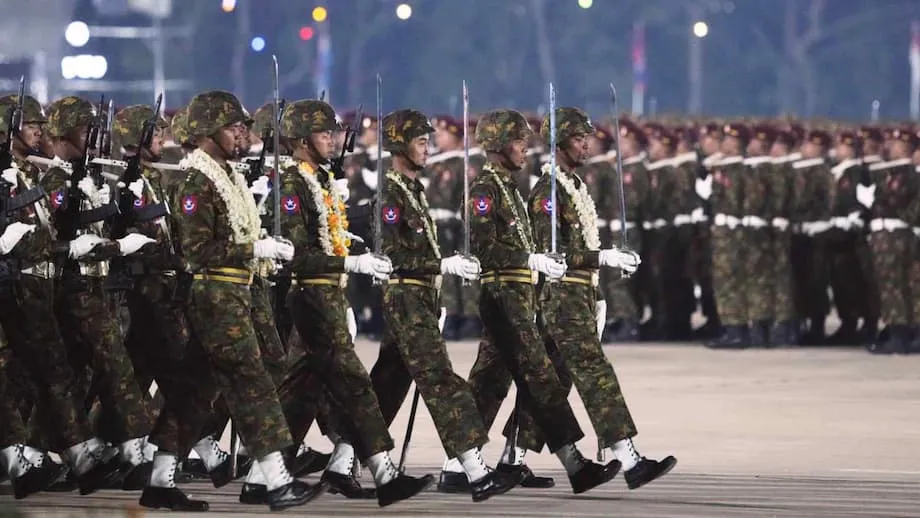
New Election Rules Extend Military Control
Myanmar's military regime has introduced penalties reaching the death sentence for election obstruction, suspended key privacy protections and imposed martial law in 63 of the country's 330 townships as it prepares for elections planned for late 2025. As of August 9, 2025, the preparations are advancing amid civil war, mass displacement and resistance to a vote that opponents say is intended to entrench military rule.
Contents
- New Election Rules Extend Military Control
- How the Coup Led to the Election Crisis
- What the New Laws Allow
- Martial Law Where Military Control Is Weakest
- Why the Census Has Become Contentious
- Which Parties Can Compete?
- Foreign Governments Take Different Approaches
- The Human Cost Surrounding the Vote
- What Remains Unresolved Before Late 2025
- Key Points
The measures reach from people's homes to the institutions that will administer the election. Authorities can conduct warrantless arrests, raids and surveillance, while changes to election administration allow government employees, many of them former military officers, to chair electoral bodies at every level.
The military has also narrowed the field of political competitors. Aung San Suu Kyi's National League for Democracy (NLD) and dozens of other parties have been dissolved after refusing to register under restrictive rules. The military's proxy party, the Union Solidarity and Development Party (USDP), is positioned to benefit from the changes.
Territorial control presents another obstacle. The military controls less than half the country, while resistance forces hold substantial rural and border areas. In many places where martial law has been declared, the regime lacks the control needed to organize voting.
Pro-democracy groups, international observers and human rights organizations have condemned the crackdown. Their central concern is concrete: people are being asked to participate in an election while opposition parties are excluded, political expression carries severe risks and armed conflict prevents ordinary civic life across much of Myanmar.
How the Coup Led to the Election Crisis
Myanmar's current conflict began on February 1, 2021, when the military, led by Senior General Min Aung Hlaing, removed the elected government of Aung San Suu Kyi's NLD. The military alleged widespread fraud in the 2020 elections, claims dismissed by domestic and international observers.
Mass demonstrations and a Civil Disobedience Movement followed. Resistance later developed into a nationwide armed struggle, bringing newly formed resistance groups into a conflict that also involves ethnic armed organizations. Millions of civilians have been displaced.
The National Unity Government (NUG), formed by ousted lawmakers and activists, became the political face of the resistance. Ethnic armed organizations and newer resistance groups have taken control of substantial territory, especially outside major urban centers and along Myanmar's borders.
The main developments leading to the planned vote include:
- February 1, 2021: The military seized power from the elected government.
- January 2024: A new political party registration law imposed demanding membership and financial requirements.
- 2024: The regime pursued a nationwide census intended to help prepare voter lists.
- July 2025: A new electoral law introduced severe penalties for obstructing or disrupting the election.
- By August 9, 2025: The regime had lifted the state of emergency, reinstated repressive legal measures and continued preparations for elections planned for late 2025.
The lifting of the state of emergency met a constitutional requirement for holding elections. Its removal was quickly followed by renewed restrictions, leaving the military's extensive powers over citizens in place as preparations continued.
What the New Laws Allow
The electoral law passed in July 2025 provides punishments ranging from three years in prison to life imprisonment for conduct defined as obstructing or disrupting the election. Actions resulting in death can carry the death penalty.
The law's broad definitions can expose activities such as organizing protests, distributing leaflets or speaking against the election to prosecution. For citizens, the danger extends beyond interference with polling stations to public expression about whether the vote should take place.
The regime has also reinstated the suspension of key provisions of the Law Protecting the Privacy and Security of Citizens. The change allows warrantless arrests, home raids and surveillance, removing important protections against state intrusion.
A judge who joined the Civil Disobedience Movement after the coup described the suspension of three provisions in comments to The Irrawaddy:
The regime has already violated human and citizenship rights as it pleases and has now officially suspended those three provisions to lend fake legitimacy to its rights violations.
Legal experts and opposition figures have condemned the measures as attacks on basic rights. The NUG has urged citizens not to cooperate with the regime's initiatives and warned that people who assist the military could face punishment from resistance forces.
Amendments to the Union Election Commission Law add another layer of control. Allowing government staff, including many former military officers, to chair election bodies places responsibility for administering the vote in institutions closely tied to the regime.
Martial Law Where Military Control Is Weakest
Martial law covers 63 of Myanmar's 330 townships, or about 19 percent. It gives the military extensive powers to arrest and detain people and to try civilians in military courts, bypassing civilian judicial oversight.
Many of the affected townships are opposition strongholds. According to The Irrawaddy, 46 of the 63 are entirely under anti-regime control, while the military controls only the towns in another 16. Those figures place 62 of the 63 townships in areas where the regime's authority is either absent or geographically limited.
Declaring martial law gives commanders legal powers, but organizing a vote also requires physical access to communities. Continuing clashes make elections in these areas unlikely unless the military regains control.
Resistance groups have vowed to disrupt the polls, and some have already attacked officials involved in census work and voter list preparations. The regime has responded with intensified repression, including warrantless arrests, home raids and blanket surveillance.
The Assistance Association for Political Prisoners estimates that around 30,000 opponents have been imprisoned and more than 7,000 civilians killed by the regime since the coup. Those figures describe the scale of repression surrounding an election process that requires citizens to interact with authorities.
Opposition groups have said attacks on military targets will continue. They have also said civilians participating in the election will not be targeted, while warning that collaborators may face punishment. Those statements leave people involved in local administration and election preparations facing pressure from both the military and resistance forces.
Why the Census Has Become Contentious
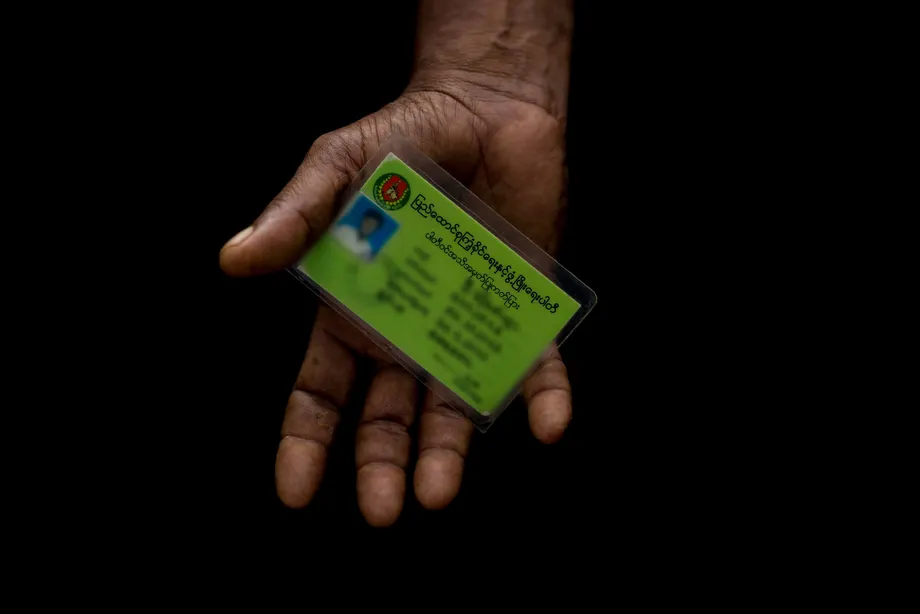
The regime is using a nationwide census to compile voter lists. Enumerators, often schoolteachers and local administrators, have gone from door to door accompanied by soldiers and police.
Authorities describe the census as essential to free and fair elections. Opposition groups and many residents see it as another means of consolidating military control, particularly because households are being asked to provide information in the presence of security forces.
Citizens fear their details could be used for surveillance, forced recruitment or reprisals against people involved in resistance activities. AP News described residents actively avoiding the survey because of those concerns.
Critics say participation is often coerced and question the reliability of the resulting data. A voter list depends on knowing who lives where and who is eligible to vote. Displacement, avoidance of enumerators and the military's limited territorial access complicate that task.
The United Nations Population Fund, which supported Myanmar's previous census in 2014, withdrew support for the 2024 effort, citing political strife. China pledged technical assistance, reflecting the regime's continued diplomatic engagement with some regional powers.
The census therefore brings together two parts of the election dispute: the practical task of identifying voters and the fear that information collected for voting could also be used against them. For teachers, administrators and households, participation has become a matter of personal security as well as electoral preparation.
Which Parties Can Compete?
The political party registration law enacted in January 2024 requires large membership numbers and substantial financial resources. Most opposition parties cannot meet those demands, while parties refusing to recognize the process have lost their legal status.
Of 50 parties that applied, 47 were registered. Most were small or weak organizations with little electoral success. The NLD and 40 other parties, many with substantial public support, refused to register and were dissolved.
Registered parties are often viewed as sympathetic to the military or as participating because they fear reprisals. Party leaders and analysts say the rules favor the USDP and push genuine opposition further out of formal politics.
The regime has also shifted from First-Past-The-Post voting to Proportional Representation. Under the first system, the candidate with the most votes in a constituency wins. Proportional Representation distributes seats according to parties' shares of the vote. Critics see the change in Myanmar as a way to dilute opposition influence and strengthen military dominance.
A Stimson Center report describes deep doubts among political parties that the military will permit genuine democracy or a peaceful resolution to the conflict. Many see armed resistance as the only way to pressure the regime.
Some parties have shifted their attention from electoral politics to humanitarian assistance as the space for opposition activity has contracted. That change reflects the immediate needs of communities living with conflict, displacement and economic hardship, alongside the exclusion of major political forces from the election.
Foreign Governments Take Different Approaches
Western governments, including the United States, have dismissed the military's planned elections as illegitimate and called for pressure on the regime to stop its repressive tactics.
The Association of Southeast Asian Nations (ASEAN) has advised that peace should come before elections. Its position addresses a basic problem with the proposed timetable: large parts of Myanmar remain at war while the authorities prepare to organize voting.
China, Thailand, Cambodia and India have nevertheless engaged diplomatically with the regime's election body. Such contacts can lend credibility to the process at a time when the military is seeking acceptance for its political plans.
Election experts and human rights organizations describe the proposed vote as a facade intended to legitimize military rule rather than restore democracy. Their objections concern the conditions in which the election would be held, including the exclusion of opposition parties, restrictions on political activity and violence against civilians.
The Asian Network for Free Elections says Myanmar's democratic performance has fallen sharply since the 2021 coup, with scores dropping to zero in most measures of representation. Those measures concern whether people can have a meaningful voice through political institutions.
The Human Cost Surrounding the Vote
The United Nations Human Rights Council reported more than 2,400 civilian deaths between April 2023 and June 2024, alongside displacement exceeding three million people. That period captures part of the violence that has continued through the election preparations.
Media censorship, mass arrests and widespread violence against civilians severely restrict civic life. People deciding whether to speak publicly, join a political organization or take part in election work must weigh those choices against the risks of detention and attack.
Ethnic and religious minorities face further barriers. Rohingya people, in particular, experience entrenched discrimination and disenfranchisement, meaning they are denied a political voice through voting.
Economic decline, forced labor and human trafficking have added to the crisis. Half the population has been pushed below the poverty line, while more than 18 million people need humanitarian assistance.
For displaced families, election participation involves practical difficulties as well as political concerns. The census and voter list preparations are taking place while millions have been forced from their homes and many communities remain beyond the military's control.
The scale of need also helps explain why some political parties have turned toward humanitarian work. Food, safety and support for displaced people have become immediate priorities in places where conventional political organizing is severely restricted.
What Remains Unresolved Before Late 2025
The military remains determined to proceed, while resistance groups and the NUG have vowed to disrupt the polls and called for international rejection of the election as a sham. No exact polling date had been given in the account available on August 9, 2025; the stated plan was for late 2025.
The regime's limited territorial control leaves the reach of any election uncertain. Authorities would need access to communities, election staff, voter lists and functioning polling arrangements in areas where armed opponents hold territory or continue to fight.
For many opponents of military rule, the goal is a federal democratic union without military involvement. That would mean a political system in which different parts of the country share power within a democratic union, rather than a return to institutions controlled by the armed forces.
A political observer described the direction of the crisis this way:
The junta's actions have failed to create conditions for free and fair elections, pushing Myanmar closer to a failed state.
The combination of continued fighting, restrictions on opposition and demands for electoral participation points toward further violence, repression and instability in the coming months. A vote held under these conditions would leave the central conflict over military rule unresolved, along with the humanitarian emergency affecting millions of people.
Key Points
- Myanmar's military planned elections for late 2025 while controlling less than half the country.
- A July 2025 law introduced prison terms for election obstruction and the death penalty for actions resulting in death.
- Suspended privacy protections permit warrantless arrests, home raids and surveillance.
- Martial law covers 63 of 330 townships, including many areas controlled wholly or partly by resistance forces.
- The NLD and 40 other parties were dissolved after refusing to register under restrictive rules.
- Census work under armed guard has prompted fears about surveillance, forced recruitment and reprisals.
- ASEAN has urged peace before elections, while Western governments have rejected the planned vote as illegitimate.
- More than 18 million people need humanitarian assistance, and the conflict continues to obstruct political participation.