Nine months of easier entry to support tourism recovery
South Korea will allow Chinese tourists visiting in organised groups to enter without a visa from September 29, 2025, to June 30, 2026, seeking to rebuild a major source of tourism spending while improving ties with China. The temporary programme will begin just before China's National Day holiday, which runs from October 1 to 7, and a month before the Asia-Pacific Economic Cooperation summit in Gyeongju.
Contents
- Nine months of easier entry to support tourism recovery
- Who can travel without a visa?
- How far has Chinese tourism recovered?
- The dates shaping the policy
- What more visitors could mean for the economy
- Retailers, hotels and casinos see an opening
- A diplomatic opening after years of friction
- Why the Gyeongju summit matters
- Conference visitors and medical tourists get other changes
- What will determine the programme's success?
- Key Points
The measure represents South Korea's most substantial easing of entry restrictions for Chinese tourists since the COVID-19 pandemic. It follows China's decision in November 2024 to allow South Korean citizens to enter without a visa, giving the two neighbours another way to rebuild travel and personal exchanges after years of diplomatic tension and disrupted journeys.
Chinese visitors remain central to South Korea's tourism recovery. Their numbers reached 8 million in 2016, before a dispute over a missile defence system and the pandemic sharply reduced travel. In 2024, South Korea received 4.6 million Chinese visitors, accounting for 28.1% of all international arrivals. The government is targeting 5.36 million Chinese arrivals in 2025.
Prime Minister Kim Min-seok has linked the new entry policy to spending beyond the best known tourist destinations. Explaining the government's economic expectations, he said it would:
generate further demand for inbound travel and have a major effect on boosting domestic consumption, including stimulation of regional economies.
For hotels, shops, restaurants and travel agencies, the immediate opportunity is a simpler booking process for eligible groups. For the government, the programme combines an attempt to bring more visitor spending into the economy with a visible gesture of openness ahead of a major international gathering.
Who can travel without a visa?
The waiver applies to Chinese tourists travelling in organised groups arranged by accredited travel agencies. Accreditation means an agency has the approval required to arrange travel under the programme. The policy is directed at these organised trips, while the government's wider tourism campaigns also seek to attract people who prefer travelling independently.
Eligible groups will be able to enter through any South Korean port of entry and travel nationwide. That expands access beyond the earlier arrangement allowing Chinese group visitors to enter Jeju Island without a visa for stays of up to 30 days.
The government has not yet announced the maximum length of stay under the new nationwide programme. Its stated aim is to simplify travel procedures and encourage more spontaneous and flexible visits. Retail and tourism businesses also expect easier entry to encourage longer stays.
The Ministry of Culture, Sports, and Tourism is developing campaigns aimed at solo travellers aged 20 to 30 from major Chinese cities, including Beijing and Shanghai. It also plans to promote themed group trips from smaller cities, with itineraries built around sports, gastronomy, beauty, religion and cultural experiences.
These campaigns address different kinds of demand. A traveller interested in food or beauty treatments may want a different itinerary from a group visiting religious or cultural sites. The ministry's approach is to give visitors reasons to travel beyond a standard shopping trip, while the visa waiver makes the paperwork easier for eligible groups.
How far has Chinese tourism recovered?
South Korea welcomed 2.53 million Chinese tourists in the first half of 2025, an increase of 13.9% from the same period a year earlier. The growth shows that travel is returning, although arrivals remain below the 8 million peak recorded in 2016.
The government's target of 5.36 million Chinese arrivals in 2025 would be 760,000 above the 4.6 million recorded in 2024. That would represent an increase of about 16.5%, calculated from those two figures. Even at the target, arrivals would remain 660,000 below the 6.02 million recorded in 2019.
The 2024 total was also only 57.5% of the 2016 peak. Those figures explain why a market that already supplies more than a quarter of South Korea's international visitors remains a focus for recovery efforts.
Chinese tourists were South Korea's largest source of foreign visitors before the disruption caused by the 2017 THAAD dispute and COVID-19. Restoring that business matters to companies that built their services around Chinese demand, from travel organisers and hotels to shops and casinos.
The waiver's September start gives the industry access to a major holiday period during the final months of 2025. Its continuation through June 2026 gives businesses a longer period in which to develop tours and attract bookings, rather than limiting the programme to the autumn holidays.
The dates shaping the policy
South Korea's announcement fits into a sequence of tourism growth, political friction and renewed travel. The key dates show why the government is treating easier entry as both an economic measure and a diplomatic opening.
- 2016: Chinese visitor numbers reached 8 million, their peak before subsequent disruptions.
- 2017: The THAAD missile defence dispute led to unofficial Chinese restrictions on group travel to South Korea and pressure on Korean businesses.
- 2019: South Korea recorded 6.02 million Chinese arrivals, before the pandemic further disrupted international travel.
- November 2024: China granted visa-free entry to South Korean citizens.
- First half of 2025: Chinese arrivals in South Korea reached 2.53 million, up 13.9% from a year earlier.
- September 29, 2025: South Korea's temporary waiver for eligible Chinese tourist groups begins.
- October 1 to 7, 2025: China's National Day holiday creates an immediate opportunity for holiday travel.
- October 31 to November 1, 2025: Gyeongju hosts the APEC summit.
- June 30, 2026: The temporary group tourism waiver is scheduled to end.
The dates bring together two different streams of visitors: holidaymakers travelling from China and delegates attending an international summit. Both are part of the government's effort to increase tourism and spending, although they travel for different reasons and use different entry arrangements.
What more visitors could mean for the economy
The Bank of Korea estimates that each additional million Chinese tourists could lift South Korea's gross domestic product by up to 0.08 percentage points. Gross domestic product, or GDP, measures the value of goods and services produced in an economy. Visitor spending contributes when travellers pay for accommodation, meals, transport, shopping and entertainment.
Foreign visitors spent a record 9.26 trillion won, about $6.9 billion, in South Korea in 2024, an increase of 43% from the previous year. The World Travel & Tourism Council put tourism's share of the country's economy at 4.3%.
Those figures give the policy an economic purpose beyond increasing arrival numbers. More tourists can mean additional customers for local businesses, and the prime minister has specifically pointed to the potential to stimulate regional economies.
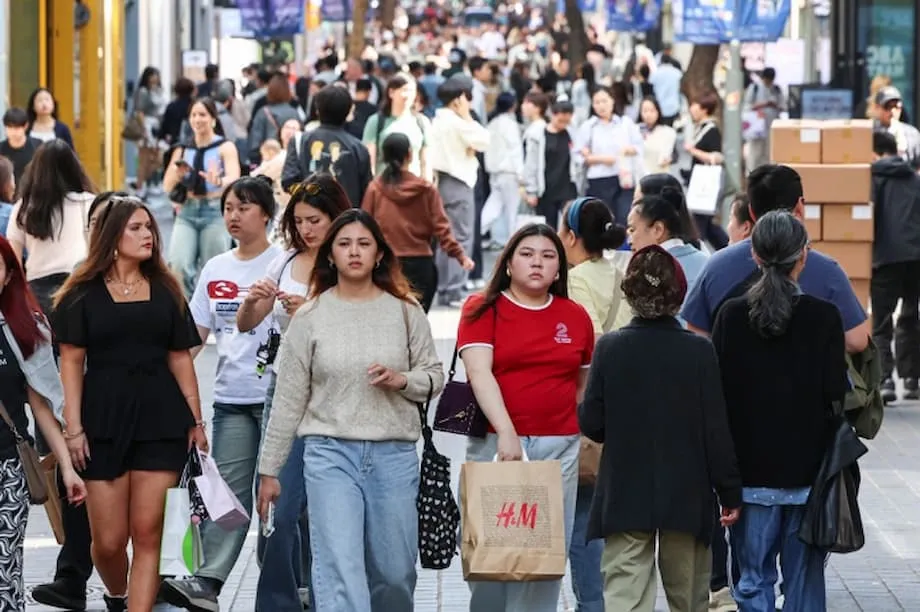
Chinese visitors are known for spending heavily on shopping, dining and entertainment. Easier travel is expected to benefit retail stores, shops selling goods without certain taxes to eligible travellers, and restaurants, alongside hotels and tour operators. The government's themed tourism campaigns also seek to spread demand across different activities and destinations.
Travel companies have already seen a quick response. Trip.com Group reported a surge in searches and bookings for group tours to South Korea. Qunar.com recorded a 70% increase in searches for Seoul within half an hour of the policy announcement.
Retailers, hotels and casinos see an opening
South Korean shares rose as investors anticipated stronger Chinese demand. Hyundai Department Store gained 7.1%, Hotel Shilla rose 4.8%, casino operator Paradise climbed 2.9%, and Hankook Cosmetics increased 9.9% following the news.
The range of companies reflects how tourist spending moves through the economy. Department stores and cosmetics makers benefit from shopping, hotels receive accommodation bookings, and casinos attract visitors seeking entertainment.
Casinos restricted to foreign customers have already recorded stronger revenue. Paradise Co, South Korea's largest operator of such casinos, reported casino revenue of 81 billion won, about $58 million, in March 2025. That was more than 50% above the same month a year earlier.
These casinos rely heavily on Chinese customers who gamble large amounts. Their recent revenue growth gives tourism businesses another reason to expect benefits from a policy designed to make group visits easier.
Travel agencies, hotels and retailers are preparing products and services suited to Chinese visitors' tastes and preferences. Their preparations include new travel products alongside the government's interest in food, beauty, sports, religion and cultural tourism.
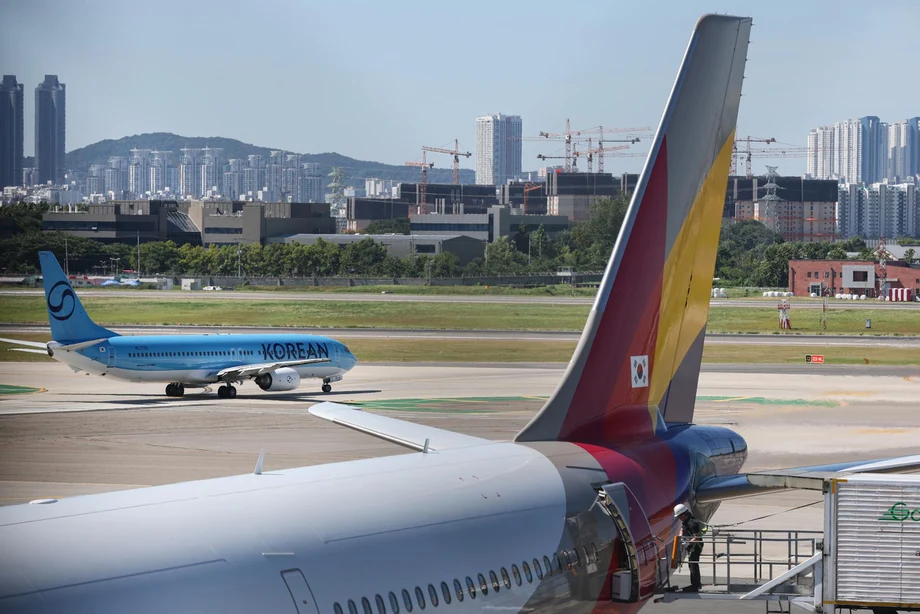
Korean Air, Asiana and the low cost carrier Jeju Air are increasing flights to China to meet anticipated demand. More flight capacity is part of the industry's response to the expected rise in bookings.
A diplomatic opening after years of friction
China and South Korea have faced strained relations since the deployment of the United States' THAAD missile defence system in South Korea in 2017. THAAD is a system designed to intercept incoming missiles. The dispute led to unofficial Chinese sanctions affecting Korean businesses and a sharp decline in Chinese tourism.
Pandemic travel restrictions later added another barrier to exchanges. The reciprocal visa measures now offer a practical way for the neighbours to rebuild contact between their people and support economic cooperation.
The election of liberal President Lee Jae Myung has brought hopes of improved relations. China's November 2024 waiver for South Korean citizens and South Korea's forthcoming waiver for Chinese tourist groups reflect a mutual interest in restoring exchanges, although the Korean programme is specifically directed at organised groups.
Dai Bing, China's ambassador to South Korea, welcomed the decision and pointed to rapid growth in bilateral exchanges since China introduced its own visa waiver. He described South Korea's announcement as:
good news for Chinese travelers
The Chinese Embassy in Seoul also expressed support for closer relations, stating:
strengthening friendly cooperation is in the best interests of both countries and their peoples.
Why the Gyeongju summit matters
Gyeongju will host the APEC summit from October 31 to November 1, 2025. Leaders from 21 economies, including China's Xi Jinping and the United States president, are expected to attend. APEC is the Asia-Pacific Economic Cooperation forum, which brings those economies together to discuss economic cooperation.
The summit is expected to draw thousands of delegates, journalists and business leaders. That gives South Korea a prominent opportunity to demonstrate its hospitality and international engagement while drawing attention to its tourism destinations.
Prime Minister Kim Min-seok described the summit's role in the tourism push, calling it:
an important opportunity to boost tourism
The government also views the gathering as a chance to showcase South Korea's openness to the world. Beginning the Chinese group waiver before both the National Day holiday and the summit places the programme alongside two events expected to generate substantial international travel.
The holiday offers an immediate market for leisure trips. The summit brings official, business and media visitors to Gyeongju, linking South Korea's tourism ambitions with its role as the host of a major diplomatic event.
Conference visitors and medical tourists get other changes
South Korea is also introducing a trial system for faster immigration processing for foreign visitors attending international conferences. The minimum size of an event eligible for expedited clearance will fall from 500 international participants to 300.
That is a reduction of 200 participants, or 40% of the previous threshold. Smaller international gatherings will therefore be able to qualify for the faster entry process, making it easier for business and academic visitors to arrive.
The measure forms part of South Korea's strategy for meetings, incentives, conferences and exhibitions, a tourism category often shortened to MICE. Incentive travel refers to trips used as rewards, while the other categories cover organised professional gatherings and events.
The government is also easing requirements for institutions seeking certification to attract foreign medical tourists. Medical tourism involves travelling to another country for treatment. Agencies referring 500 or more foreign patients will be able to handle electronic visas, simplifying the visa process for those patients.
These changes extend the tourism push beyond holiday groups. Conference participants and patients have different reasons to visit, but both can bring demand for accommodation, transport and other services alongside their main activities.
South Korea's broader strategy includes simplifying entry inspections for all foreign visitors starting in 2026 and expanding the list of countries eligible for visa exemptions. More than 100 countries currently have some form of visa-free access, with permitted stays ranging from 30 days to six months depending on the country.
What will determine the programme's success?
Independent travellers are an increasingly important part of China's outbound tourism market. The new waiver's focus on organised groups may limit its appeal to those who prefer arranging their own journeys, even as the tourism ministry develops campaigns for younger solo visitors.
Global economic uncertainty, possible geopolitical tensions and the lingering effects of the pandemic could also influence travel demand. The government and tourism industry remain optimistic that easier entry will accelerate recovery and support closer ties with China.
Industry experts have described the policy as a:
reciprocal and mutually beneficial measure
They expect it to support deeper tourism cooperation between the two countries. Agencies, hotels and retailers are preparing for more visitors, while airlines are adding capacity and travel platforms are seeing increased interest.
Some observers have cautioned that delivery will depend on effective implementation, clear communication with travel agencies, and continued attention to visitors' safety and satisfaction. The government has pledged to monitor the programme closely and adjust it using feedback from travellers and businesses.
The central task is practical: turn easier entry and increased interest into completed trips that bring spending to destinations across South Korea. The temporary programme gives the government and industry until June 30, 2026, to pursue that recovery.
Key Points
- Eligible Chinese tourist groups will receive visa-free entry from September 29, 2025, to June 30, 2026.
- Trips must be arranged by accredited agencies. Groups can enter through any port of entry and travel nationwide.
- South Korea recorded 4.6 million Chinese visitors in 2024 and is targeting 5.36 million in 2025, below the 8 million peak in 2016.
- The policy follows China's November 2024 visa waiver for South Korean citizens and precedes the National Day holiday and Gyeongju APEC summit.
- Retailers, hotels, restaurants, casinos and airlines expect additional demand. Travel platforms have already recorded increased interest.
- Other measures include faster conference entry, easier arrangements for medical tourism and broader entry reforms planned for 2026.
- The government will monitor the temporary programme and adjust it using feedback from travellers and tourism businesses.