July 31 Decision Clears the Way for a Contested Vote
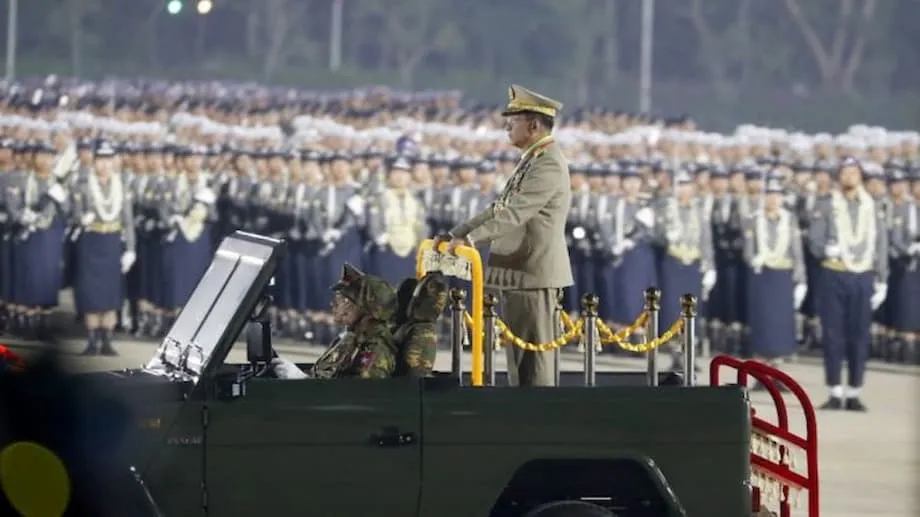
Myanmar's military government ended the nationwide state of emergency on July 31, 2025, clearing a legal obstacle to elections planned for December 2025 and January 2026. Senior General Min Aung Hlaing, however, retains ultimate decision making power as acting president, while emergency rule and martial law will remain in more than 60 townships across nine regions.
Contents
- July 31 Decision Clears the Way for a Contested Vote
- From the 2020 Election to Civil War
- New Institutions, the Same Leader
- Who Can Compete in the Election?
- Prison Threats and Continued Local Emergency Rule
- A Census Gap Affecting Millions
- Why the Military Wants an Election Now
- China, Western Governments and ASEAN
- War and Displacement Continue Beyond the Announcement
- The Bottom Line
The decision comes four and a half years after the military seized power from the elected government of Aung San Suu Kyi in February 2021. Since then, more than 7,000 people have been killed and nearly 30,000 arrested, according to human rights groups. Over 3.5 million people have been displaced within Myanmar as a civil war has spread across the country.
The military presents the change as a necessary step toward restoring multiparty democracy. Opposition groups, international observers and many citizens see a different purpose: reshaping the government so that military rule can continue with the appearance of electoral approval.
The central problem is concrete. The party that won the last general election has been dissolved, its leaders remain detained, independent media face severe restrictions, and the military cannot hold a vote across the whole country. Millions of people living beyond its control may have no opportunity to participate.
For families affected by fighting, displacement and arrests, the announcement offers a promise of elections without an accompanying end to the conditions that have driven the crisis. The change concerns the legal form of military government; the generals remain in charge of the institutions preparing the vote.
From the 2020 Election to Civil War
Aung San Suu Kyi's National League for Democracy, known as the NLD, won the 2020 general election in a landslide. Myanmar's armed forces, known as the Tatmadaw, subsequently alleged widespread electoral fraud. Independent observers and international monitors dismissed that allegation.
The military overthrew the civilian government in February 2021 and imposed emergency rule. Large protests followed across Myanmar. Security forces responded with mass arrests and lethal force against demonstrators, turning demands for the restoration of the elected government into a wider confrontation.
Opposition groups and ethnic armed organizations formed People's Defense Forces, or PDFs, as peaceful resistance met violence. Armed rebellion developed into a prolonged civil war, with the military losing control of large areas, particularly along the country's borders.
The main stages leading to the planned election are:
- 2020: The NLD won the general election in a landslide. The military alleged fraud, a claim dismissed by independent observers and international monitors.
- February 2021: The military seized power from the elected government and imposed a nationwide state of emergency.
- 2024: A census intended to help prepare for elections failed to collect information from 19 million of Myanmar's 51 million people, largely because of security restrictions.
- July 31, 2025: The military ended nationwide emergency rule and reorganized its governing institutions.
- December 2025 and January 2026: The military plans to conduct elections in stages because of security concerns.
The military still controls the capital, Naypyidaw, and much of central Myanmar. Across the country as a whole, however, it controls less than half the territory. That uneven reach shapes both the fighting and the limits of the planned vote.
New Institutions, the Same Leader
Myanmar's 2008 constitution prevents elections from taking place during a state of emergency. Ending the nationwide decree therefore meets a legal requirement for proceeding with the polls. It also changes the formal route through which state authority is exercised.
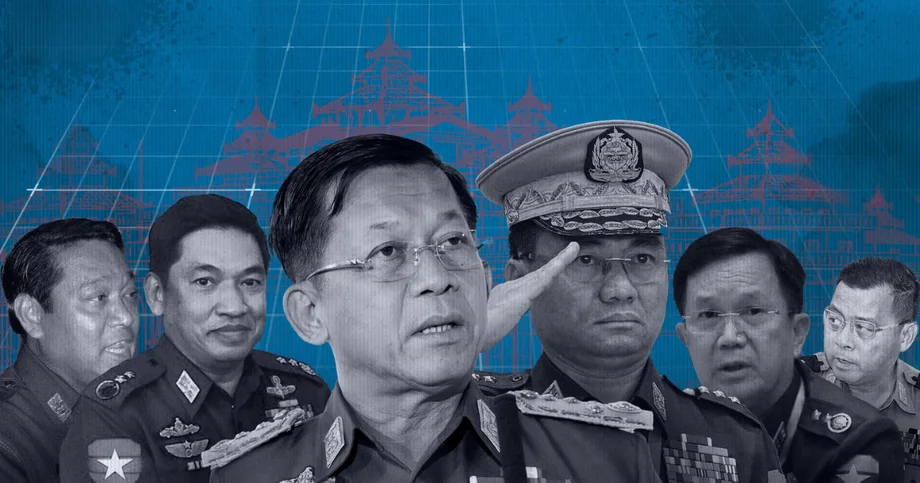
Min Aung Hlaing signed the order cancelling the emergency arrangement that had given him sweeping powers as armed forces chief. Authority returns to the head of state, but he now holds that position as acting president. The person at the top remains the same.
The military has dissolved the State Administration Council, or SAC, which governed during the emergency. A National Defense and Security Council dominated by military figures replaces it. A new commission with 11 members, also led by Min Aung Hlaing, will supervise the election.
David Mathieson, an independent Myanmar analyst, described the restructuring as a change in presentation rather than in the conduct of those governing the country:
They are just rearranging the same pieces and calling the regime a new name. Those in charge will continue to be abusive and repressive.
The caretaker administration is widely viewed by critics as a facade, with the same generals retaining real authority. For voters, the practical issue is who controls decisions about political participation and the election itself. Both remain under institutions dominated by the military.
Who Can Compete in the Election?
The military government is registering political parties and has begun training sessions on electronic voting machines. Those preparations are taking place while the main party from the previous election is excluded and many opponents refuse to participate.
The NLD has been dissolved by the military. Its leaders, including Aung San Suu Kyi, remain imprisoned or under house arrest. The party that received a landslide mandate in 2020 therefore cannot contest the coming vote under its former organization and leadership.
The National Unity Government, or NUG, is among the opposition groups pledging a boycott. It is a shadow government formed by lawmakers removed from office and activists. Along with ethnic armed organizations and other opponents, it regards the election as an illegitimate process that cannot deliver democracy while opposition leaders remain jailed.
Independent media have been shut down or forced into exile. That restricts the information people can obtain about political choices, conditions in different regions and the way the election is being organized.
United Nations experts have rejected the planned vote as a means of giving continued military rule electoral approval. One UN expert, whose name was not given, described its purpose in these words:
This is a fraud designed to legitimize the military's continuing rule.
A boycott means opponents refuse to take part rather than compete under the rules being offered. Here, their objection concerns the conditions of the contest: detained leaders, excluded parties, restricted media and military control of the process.
Prison Threats and Continued Local Emergency Rule
A new law threatens up to 10 years in prison for anyone who protests against or disrupts the electoral process. The threat extends the risks facing people who publicly challenge an election the military says will restore political participation.
Emergency rule and martial law will continue in more than 60 townships across nine regions, especially where ethnic armed groups and the PDFs are resisting the military. The nationwide announcement therefore leaves substantial areas under exceptional security measures.
Martial law places an area under military authority. Keeping it in place where resistance is strongest means the election timetable will run alongside continued military measures in communities affected by fighting.
Resistance groups have vowed to disrupt the vote, describing it as a process that cannot produce genuine democracy while opposition leaders are imprisoned and the media is silenced. Analysts expect rebel offensives to intensify around the election period as a demonstration of opposition.
Those conditions leave residents facing several pressures at once: restrictions imposed by the authorities, the danger of armed conflict and the possibility of retaliation surrounding election activities. Ending the nationwide emergency has not ended those local risks.
A Census Gap Affecting Millions
The 2024 census, conducted as preparation for the election, could not collect data from 19 million of Myanmar's 51 million people, largely because of security constraints. That is about 37% of the population, or more than one person in three.
A census counts people and records information about where they live. For election planning, those details help authorities understand the population they need to serve. A gap of this size shows how far conflict has restricted the government's ability to carry out basic preparations.
The military has acknowledged that it cannot conduct a nationwide vote. Elections will instead take place only in areas under its control, leaving millions of citizens potentially unable to participate. The limited reach of the census and the territorial limits of the election both reflect the same practical problem: authorities cannot operate freely across Myanmar.
December 2025 and January 2026 are the announced election windows, with voting planned in stages because of security concerns. No exact polling dates or complete list of participating areas has been given. People outside military control therefore face uncertainty about whether they will have a vote at all.
Why the Military Wants an Election Now
The military presents the end of emergency rule as preparation for a return to civilian government and multiparty democracy. Critics see the planned vote as a way to secure legitimacy at home and abroad while keeping control over Myanmar's political future.
An election could give the authorities a basis for presenting the government as chosen through a political process, even if much of the opposition boycotts it and voting takes place only in military controlled areas. That is why the composition of the institutions overseeing the vote matters alongside the voting itself.
Some analysts believe the military also wants to normalize relations with foreign governments, particularly those in the region. Diplomatic engagement could become easier if those governments accept the election as a step toward a more regular political arrangement.
Most observers expect Min Aung Hlaing to retain power after the election, either as president or as armed forces chief. The reorganization of government bodies and the commission he leads are viewed as arrangements for consolidating his authority rather than handing it to genuinely civilian leaders.
The military has also begun offering cash rewards to resistance fighters who lay down their weapons and "return to the legal fold". The offer is part of its effort to reduce armed opposition before polling, and has been viewed as a sign of desperation to bring the rebellion under control.
China, Western Governments and ASEAN
China has expressed support for Myanmar's "steady advancement of its domestic political agenda" and urged differences to be resolved through political means. It has also reiterated support for Myanmar's sovereignty and called for the parties to settle their differences peacefully.
Western governments have dismissed the election plan as a sham. The United States, European Union and United Kingdom have imposed sanctions on Myanmar's military leaders and called for political prisoners to be released. Human rights organizations also argue that the current conditions cannot support a free and fair contest.
Regional powers have taken a more pragmatic approach. The Association of Southeast Asian Nations, or ASEAN, has struggled to mediate the crisis, with little success so far. Its difficulties reflect the persistence of both the political confrontation and the armed conflict.
Some analysts warn that even a limited election could encourage certain countries to reengage diplomatically with the authorities. That could leave opposition and resistance groups more isolated internationally. Other observers argue that a vote marked by boycotts and violence would deepen the political crisis.
The immediate disagreement is therefore about what the election would change. The military seeks recognition of a return to ordinary political government; its opponents argue that military authority would continue beneath a different institutional structure.
War and Displacement Continue Beyond the Announcement
More than 7,000 people have been killed and nearly 30,000 arrested since the coup, according to human rights groups. Over 3.5 million people have been internally displaced, meaning they have been forced to leave their homes but remain inside Myanmar.
The United Nations and rights groups have documented widespread atrocities, including arbitrary arrests, torture and attacks targeting civilians. The military denies those allegations and dismisses them as Western disinformation, despite the extensive evidence documented against it.
The civil war shows no sign of abating. Military control remains limited, resistance groups remain committed to challenging its rule, and the humanitarian crisis continues to deepen. A change in the legal status of the government offers little immediate relief to people who cannot safely return home.
For those communities, the most direct measures of change are safety, freedom from arrest, access to their homes and a meaningful chance to take part in political life. The election preparations are proceeding while those needs remain unmet for millions.
As of August 1, 2025, the nationwide emergency has ended, but the military remains in charge and the planned election is expected to be tightly managed in its favor. Opposition resistance and the civil war are expected to continue regardless of the result.
The Bottom Line
- Myanmar ended nationwide emergency rule on July 31, 2025, ahead of elections planned for December 2025 and January 2026.
- Min Aung Hlaing remains acting president and leads a new commission with 11 members that will supervise the vote.
- Emergency rule and martial law will remain in more than 60 townships across nine regions.
- The NLD has been dissolved, its leaders remain detained, and the NUG and other opposition groups have pledged a boycott.
- A new law threatens up to 10 years in prison for protesting against or disrupting the election.
- The 2024 census missed 19 million of Myanmar's 51 million people, about 37% of the population.
- The military controls less than half the country and plans to hold voting only in areas under its authority.
- Human rights groups report more than 7,000 deaths and nearly 30,000 arrests since the coup; over 3.5 million people are internally displaced.
- China supports advancement of Myanmar's political agenda, while Western governments and UN experts reject the planned election as a route to legitimate democratic rule.