A First World Championship on Mongolian Ground
Mongolia will host the 17th World Horseback Archery Championship for the first time from August 21 to 24, 2025, at Taij Khairkhan in the Nalaikh district of Ulaanbaatar. More than 170 elite archers from approximately 30 countries across four continents are expected to take part, bringing an international competition to a country where riding and archery have shaped nomadic life for centuries.
Contents
- A First World Championship on Mongolian Ground
- What Riders Must Bring to the Contest
- Ball Hunting Joins the Championship
- A Festival Built Around Living Heritage
- Who Is Expected to Compete?
- Training Extends Beyond the Competition
- Passing Traditions to the Next Generation
- Olympic Ambitions and a Growing International Sport
- What Visitors Can Expect at Taij Khairkhan
- A National Showcase With International Reach
- Key Points
The championship will take place alongside the annual Nomads World Cultural Festival. Together, the events will combine competition, traditional sports, cultural performances and opportunities for participants to exchange knowledge. Admission will be free, and the public will be able to watch international athletes compete in a setting closely connected to Mongolia's equestrian heritage.
As of July 6, more than 70 archers from 15 countries had registered. The final list of participants is due to be confirmed by July 20, 2025. Mongolia plans to field 15 of its leading archers, giving the host country a place in the contest for the world title.
The Mongolian National Horseback Archery Federation is organizing the championship with support from the World Horseback Archery Federation. Internationally accredited judges will oversee the competition, while officials from UNESCO and other cultural organizations are expected to attend.
A traditional Mongolian discipline, Bumbug Namnaa, or Ball Hunting, will become an official championship category for the first time. Its inclusion will bring techniques passed down through generations of Mongolian archers into the international competition. Alongside the races and shooting, a program of judge training, seminars and masterclasses is intended to strengthen the sport's development in Mongolia.
What Riders Must Bring to the Contest
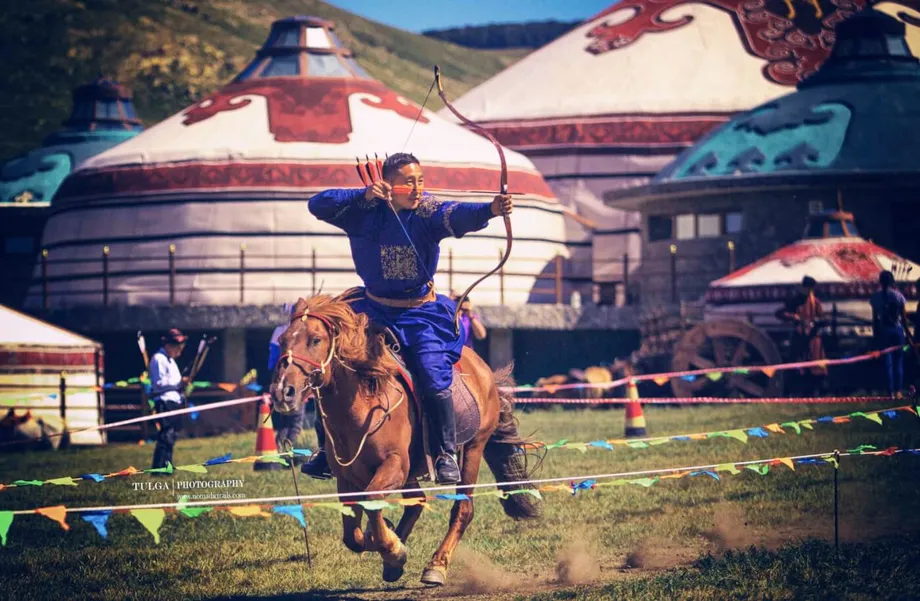
Horseback archery combines two demanding skills: controlling a horse and shooting a bow accurately while riding. A competitor must coordinate movement, balance and timing while aiming at a target. The sport draws on an ancient martial practice that was especially important to nomadic peoples.
Mongol warriors were renowned for their ability to shoot accurately while riding at full gallop. That skill helped the rise of the Mongol Empire, which became the largest contiguous land empire in history under Genghis Khan. Contiguous means that its territory formed one connected expanse of land.
In modern Mongolia, horseback archery is both a competitive sport and a living cultural tradition. It brings together discipline, agility and a close relationship with horses and the land. Its appeal is also reaching younger people, with 11 active horseback archery clubs operating across the country.
Kim Yong-sol, identified as president of the World Archery Federation, described the sport as a cultural practice as well as an athletic challenge:
Horseback archery is not just a sport, it is a form of cultural expression that requires great skill and patience. We are proud to help bring this tradition, which is deeply rooted in Mongolian history and culture, to the world stage.
The championship will put that combination of skill and heritage in front of an international audience. Mongolian competitors will have the opportunity to test their abilities against visiting riders, while spectators will see a tradition associated with the country's history practiced as a modern sport.
Ball Hunting Joins the Championship
Bumbug Namnaa will give the 17th championship a distinct Mongolian element. Known in English as Ball Hunting, the traditional archery discipline will be included as an official category for the first time.
The event showcases historical techniques and skills handed down through generations of Mongolian archers. Bringing it into the championship gives competitors and visitors a chance to encounter a local practice within a contest that draws athletes from many countries.
The category also connects the sporting program with the cultural festival around it. Mongolia will be presenting a tradition through active competition, alongside performances, crafts and other expressions of nomadic heritage. For local practitioners, the championship provides an international setting in which to demonstrate skills developed within their own cultural tradition.
A Festival Built Around Living Heritage
The Nomads World Cultural Festival, now in its fourth year, is intended to promote and safeguard the intangible cultural heritage of Mongolia and other nomadic societies. A government resolution in 2024 established its annual staging.
Intangible cultural heritage means traditions, knowledge and skills that people practice and pass to others, rather than physical monuments or objects alone. At Taij Khairkhan Mountain, that heritage will be presented through cultural performances, artistic programs and traditional sports, with the horseback archery championship serving as a major attraction.
The festival has previously brought together thousands of participants and visitors from around the world. In 2023, more than 1,100 nomads from more than ten countries gathered for the event. Participants included people from Inner Mongolia, Buryatia, Kalmykia, Sakha, Tuva, Hungary, Kazakhstan, South Korea and Türkiye.
That gathering drew attention from UNESCO and other international organizations. The 2025 championship and festival will build on the event's role as a meeting place for people who share nomadic traditions, while allowing visitors to experience practices that remain part of everyday cultural identity.
Nomin Chinbat, Mongolia's minister of culture, sports, tourism and youth, explained the festival's mission and its connection to the country's development policies:
Countries with a nomadic culture are invited to participate in the 'Nomads' World Cultural Festival. The Festival aims at promoting the intangible cultural heritage of the Mongols and transmitting it to future generations. We believe this will significantly contribute to the realization of goals outlined in Mongolia's long- and short-term development policy. Additionally, the Festival will foster the creation of internationally competitive cultural events demonstrating a nomadic culture of Mongolia, thereby attracting more tourists to Mongolia each year.
Who Is Expected to Compete?
The championship's expected field of more than 170 archers from approximately 30 countries would bring riders from four continents to Mongolia. More than 70 archers from 15 countries had registered by the July 6 announcement, with confirmation of the final participant list scheduled for July 20.
Mongolia's delegation will consist of 15 leading archers. Competing at home gives those athletes an opportunity to represent their country while sharing the program with international peers. The gathering is also intended to support cultural exchange and cooperation among athletes, officials and cultural representatives.
The World Horseback Archery Federation has 38 member countries across four continents. The expected attendance from approximately 30 countries shows the broad international reach planned for the championship, while the July registration deadline will establish the final field.
Internationally accredited judges will supervise the sporting contest. UNESCO officials and representatives of other cultural organizations are expected to attend, connecting the event's competitive program with its wider purpose of presenting and preserving nomadic traditions.
Training Extends Beyond the Competition
The championship's opening day will include a professional judge training program. The initiative is intended to raise judging standards in Mongolia and support fair competition in line with international best practices.
Judges are responsible for applying the rules consistently, making their training an important part of developing the sport. The program is presented as a milestone for Mongolian horseback archery, alongside the country's first experience of hosting this world championship.
Seminars, masterclasses and workshops to develop skills will also be organized for local and international participants. The sessions will cover training methods, judging systems and recent developments in the sport, creating opportunities for participants to share practical knowledge.
Mongolian archers will be able to learn from international specialists and improve their skills. Visiting participants will also have opportunities to exchange experience with local practitioners. The educational program gives the gathering a purpose beyond awarding a world title: it can help strengthen the knowledge used in training and competition after the event ends.
Passing Traditions to the Next Generation
The championship and festival are part of Mongolia's efforts to protect and promote intangible cultural heritage. Their organization supports implementation of the UNESCO Convention for the Safeguarding of the Intangible Cultural Heritage, alongside Mongolia's own laws and policies for preserving traditions.
Safeguarding a living tradition involves keeping its skills and knowledge in use and passing them to future generations. The championship brings experienced practitioners together, while the festival presents cultural practices to a wider public. Workshops and competition provide ways for people to learn through participation as well as observation.
Mongolia's approach combines preservation with international exchange. Hosting riders and cultural representatives from different countries gives participants opportunities to share their traditions and develop mutual understanding and respect.
The events are also connected to tourism and economic development. International visitors will encounter Mongolian equestrian sports, performances, crafts and food in one setting. The government's stated ambition is to build cultural events that can compete for international attention and attract more tourists each year.
Olympic Ambitions and a Growing International Sport
Horseback archery's international growth is reflected in the World Horseback Archery Federation's membership of 38 countries across four continents. The championship in Mongolia will bring that network into contact with traditions from a country strongly associated with the sport's history.
Supporters are working toward horseback archery's inclusion in the Olympic Games. They argue that it combines athletic ability with cultural expression and reflects the Olympic values of excellence, respect and friendship. Olympic inclusion is an ambition, and no date for a decision was given.
The campaign could bring the sport greater visibility and support if it succeeds. For practitioners and spectators, wider recognition would provide a larger international audience for a discipline that demands both horsemanship and archery skills.
The inclusion of Bumbug Namnaa also shows the variety within horseback archery. The world championship can serve as a shared competitive setting while making room for techniques linked to a particular country's traditions.
What Visitors Can Expect at Taij Khairkhan
Taij Khairkhan is in the 3rd khoroo of Nalaikh district, just outside Ulaanbaatar. A khoroo is a local administrative subdivision. The venue is described as easily accessible from the capital and offers a mountain setting with natural beauty and cultural significance.
The championship and festival will be open to the public free of charge. The program is intended to welcome families and people of all ages, including sports fans, visitors interested in culture and those encountering Mongolian traditions for the first time.
Visitors can expect several kinds of activity across the combined event:
- Horseback archery competitions involving leading athletes from around the world.
- Traditional Mongolian archery, including Bumbug Namnaa's debut as an official championship category.
- Music, dance, cultural performances and celebratory events focused on nomadic heritage.
- Seminars, masterclasses and workshops for archers and enthusiasts.
- Displays of traditional crafts, food and clothing, offering a view of Mongolian cuisine and nomadic life.
The main dates and earlier milestones are:
- 2023: More than 1,100 nomads from more than ten countries participated in the cultural festival.
- 2024: A government resolution established the festival's annual staging.
- July 6, 2025: More than 70 archers from 15 countries had registered for the championship.
- July 20, 2025: The final participant list is due to be confirmed.
- August 21 to 24, 2025: Mongolia is scheduled to host the 17th World Horseback Archery Championship at Taij Khairkhan, alongside the Nomads World Cultural Festival.
A National Showcase With International Reach
Mongolia's first hosting of the championship provides an opportunity to present both its athletes and the traditions behind their sport. The event affirms the country's role in preserving ancient equestrian practices and participating in the international revival of horseback archery.
The combined program will bring athletes, officials and cultural representatives from diverse backgrounds together. Competition, training and performances will offer different ways to exchange knowledge, while the festival gives international guests a closer view of traditions that continue to shape Mongolian identity.
For Mongolia, the gathering is also a chance to strengthen its position as a destination for international sporting and cultural events. For participants from other countries, it offers a shared setting in which to celebrate horseback archery's history, its continuing practice and the values associated with it.
Key Points
- Mongolia will host the 17th World Horseback Archery Championship for the first time from August 21 to 24, 2025.
- The venue is Taij Khairkhan, in the 3rd khoroo of Ulaanbaatar's Nalaikh district.
- More than 170 archers from approximately 30 countries are expected, including 15 representing Mongolia.
- More than 70 archers from 15 countries had registered by July 6. The final list is due on July 20.
- Bumbug Namnaa, or Ball Hunting, will become an official championship category for the first time.
- The event will coincide with the Nomads World Cultural Festival, with free public admission.
- Judge training, seminars, masterclasses and cultural programs will support skills exchange and the preservation of living traditions.
- Supporters are seeking Olympic inclusion for horseback archery, whose world federation has 38 member countries across four continents.