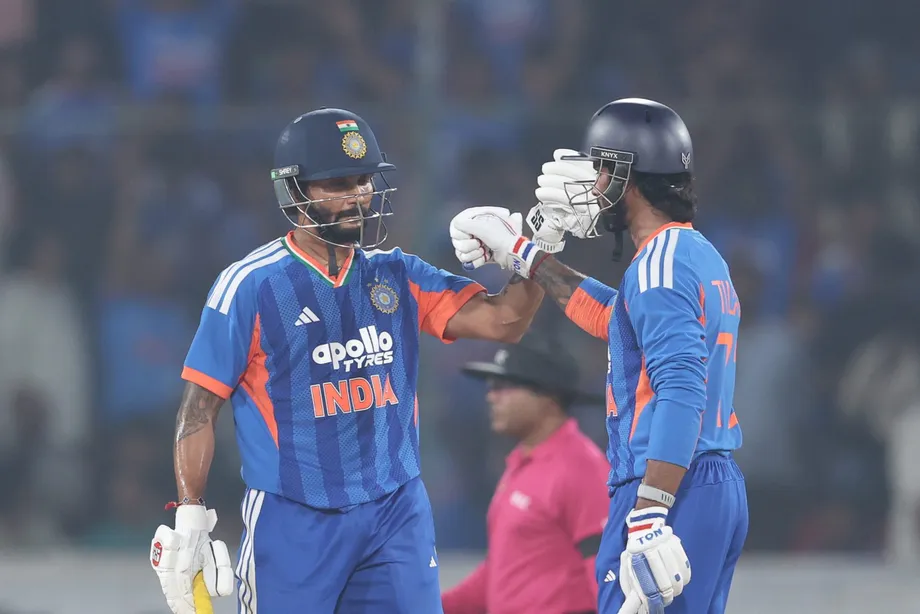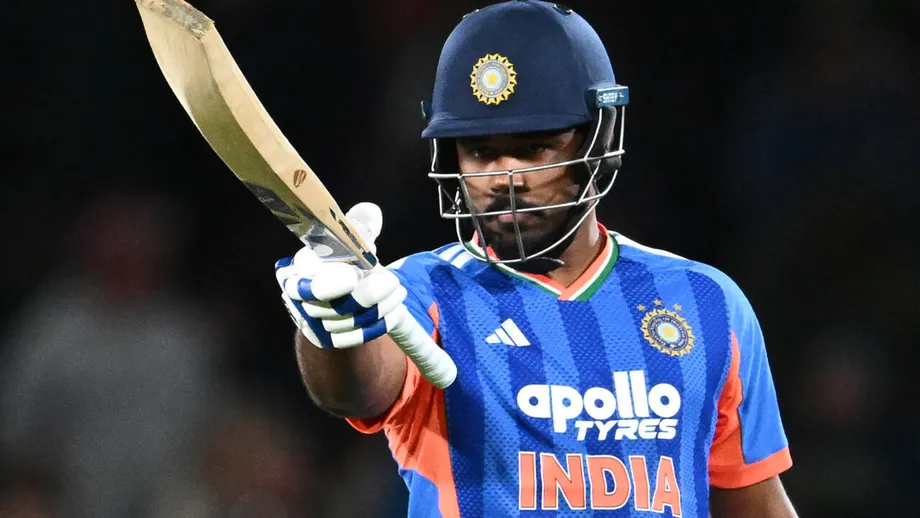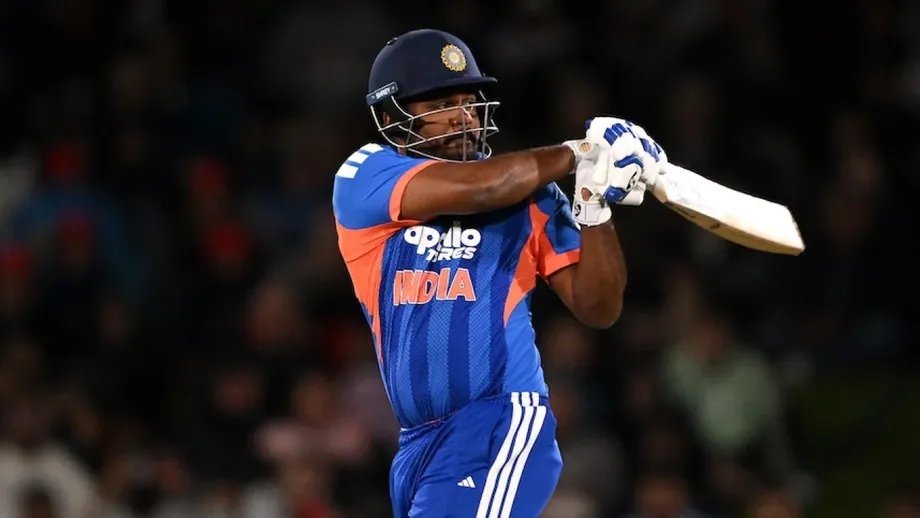
A six off Matt Henry takes Abhishek clear
Abhishek Sharma needed only one delivery to claim a men's Twenty20 international record at Hagley Oval in Christchurch. Facing Matt Henry on the last ball of India's opening over, the left-handed opener drove a full delivery over cover for six, becoming the first batter to hit the first ball of an innings for six on seven occasions in the format.
Contents
- A six off Matt Henry takes Abhishek clear
- What the record measures
- Samson turns the opening stand into a launchpad
- Phillips gives New Zealand a formidable total
- New Zealand's spinners reverse the momentum
- Iyer, Axar and Dhir carry India through
- Phillips describes the pressure of bowling to the openers
- How the match unfolded
- Key Points
The milestone moved him ahead of Afghanistan's Shafiqullah Shinwari, who had achieved the feat six times. It came during a demanding pursuit of 226 against New Zealand in the opening match of a series comprising five T20 internationals, dated Thursday, October 22, 2026.
India completed the chase with four wickets and two balls remaining to take a 1-0 series lead. Sanju Samson's 67 from 33 deliveries supplied the biggest individual contribution to the chase, while Naman Dhir's unbeaten finish settled a contest that swung back toward New Zealand after the opening partnership.
Abhishek contributed 29 from 12 balls, including three sixes and two fours. His record came from the first of those boundaries, but the innings around it mattered too: he and Samson added 93 in just 35 deliveries, giving India a substantial early advantage before New Zealand's spinners brought the match back into balance.
What the record measures
Abhishek's achievement counts how often a batter has struck the first delivery he personally faces for six in a men's T20 international innings. On this occasion, that delivery happened to be the final ball of the opening over, after Samson had taken most of the early strike.
Henry offered a full ball outside off stump. Abhishek reached it with a lofted drive over the cover boundary, the area on the off side where fielders usually try to stop attacking drives. A shot that clears the boundary without bouncing earns six runs.
The leading totals now stand at:
- Abhishek Sharma, India: seven innings beginning with a six.
- Shafiqullah Shinwari, Afghanistan: six.
- Suryakumar Yadav, India: five.
- Paul Stirling, Ireland: four.
- Colin Munro, New Zealand: four.
- Mohammad Naveed, United Arab Emirates: four.
Abhishek therefore leads Shinwari by one such start and Suryakumar by two. The record captures a particularly aggressive decision: attempting a boundary before spending even one delivery watching the bowler from the striker's end.
Samson turns the opening stand into a launchpad
Samson did most of the scoring during the opening partnership. After three overs, India were 42 without loss, with Samson on 28 from 15 balls and Abhishek on seven from three. Abhishek then accelerated to finish with 29 from 12, a strike rate of 241.67, meaning he scored at the equivalent of about 242 runs per 100 deliveries.
The pair's 93 runs in 5.5 overs came at almost 16 runs an over. In cricket notation, 5.5 overs means five completed overs plus five legal deliveries, or 35 balls. Their partnership accounted for just over 41 percent of the 226 runs India needed.
Michael Bracewell ended the stand by dismissing Abhishek with the first delivery he bowled to him. Abhishek tried to create room for a shot through the off side but was caught at short third, a close fielding position behind the batter on that side.
India reached 94 in the opening six overs, the powerplay, when fielding restrictions limit how many players can patrol the boundary. New Zealand had made 65 for one in the same period, giving India a 29-run advantage at that checkpoint.
Samson and Abhishek also registered their fifth opening partnership of at least 50 runs in 2026. That equalled the Indian calendar year record held by KL Rahul and Rohit Sharma in 2021, and Abhishek and Shubman Gill in 2025. Shikhar Dhawan and Rohit had four such stands in 2018.
Phillips gives New Zealand a formidable total
Glenn Phillips had earlier made an unbeaten 82 from 40 balls to carry New Zealand to 225. His innings included eight fours and three sixes, with a reverse sweep for four off Bhuvneshwar Kumar helping complete the innings.
Finn Allen supplied 45 from 24 deliveries, including five fours and two sixes. Bevon Jacobs added 31 from 16 balls, striking three sixes. New Zealand scored 67 in the final five overs, almost 30 percent of their total, forcing India to sustain a scoring rate above 11 runs an over to win.
The wicket tally is inconsistent: New Zealand are listed as finishing on both 225/4 and 225/8. The total of 225 and India's winning target of 226 are consistent. The result gave India their highest successful chase in men's T20 internationals.
India's bowling figures show how widely New Zealand spread the pressure. Axar Patel conceded 51 runs in four overs, Bhuvneshwar 49, Arshdeep Singh 45, and Mayank Yadav and Nitish Kumar Reddy 40 each. It was the first men's T20 international innings in which five Indian bowlers each conceded at least 40 runs.
Bhuvneshwar was returning to the international side after four years, while Jasprit Bumrah was absent from the squad. Nitish completed his four overs without a wicket, using deliveries directed into the pitch through the middle of the innings before attempting yorkers, balls aimed near the batter's feet, late on.
New Zealand's spinners reverse the momentum
Bracewell's dismissal of Abhishek gave New Zealand an opening just before the powerplay ended. Mitchell Santner then removed Samson for 67 from 33 balls, an innings containing eight fours and four sixes. Samson attempted an attacking shot on the off side but dragged the ball onto his stumps.
Tilak Varma, promoted to number three, struggled to get moving against spin. He scored six from his first ten deliveries before attempting to hit Bracewell over the leg side and being caught at deep midwicket.
Santner also dismissed Ishan Kishan, who failed to clear the same boundary area. Bracewell and Santner had taken two wickets each, turning India's commanding start into a more delicate position at 122 for four.
New Zealand's recovery showed why the opening stand alone could not settle the chase. Once the powerplay ended, more fielders could protect the boundary. India's next batters had to find runs against spin while managing the growing cost of losing wickets.
Iyer, Axar and Dhir carry India through
Shreyas Iyer and Axar restored India's momentum with a partnership of 45 from 24 deliveries. Axar, batting at number six, made 24 from 14 balls, including three fours and a six, before Lockie Ferguson dismissed him in the 15th over.
Axar's departure left India needing 59 from 33 balls. Dhir entered at number seven and joined Iyer, whose 42 from 28 deliveries helped hold the chase together through its most uncertain phase.
New Zealand missed chances to tighten their grip. Santner dropped a difficult opportunity when Axar was on 13, while Allen put down Iyer at long-on when he had 28. Those reprieves allowed India to keep experienced batting at the crease while the required rate remained demanding.
Dhir and Iyer attacked Santner's final over for 19 runs, reducing the requirement to 29 from 18 balls. Santner had conceded only 20 in his first three overs, making that last over an important change in the contest.
Adam Milne dismissed Iyer with India on 210 for six, leaving 16 needed from 11 deliveries. Dhir stayed to complete the chase. His finishing innings is listed as 42 not out from 15 balls in the completed match summaries, while the live match narrative gives 36 not out from 14. Both place the winning stroke with two deliveries remaining.
Dew added to the bowlers' difficulties late in the chase, with several full tosses offering scoring chances. A wet ball is harder to grip, making it more difficult to control deliveries intended to land near the batter's feet.
Phillips describes the pressure of bowling to the openers
Phillips, New Zealand's leading scorer in the match, praised Samson and Abhishek after the defeat. He described the range of plans needed against two batters prepared to attack immediately:
They are obviously fantastic. You got to have Plan C, D, E, F, G, H, I. You have got to have every plan under the sun with guys like that, as they offer such small room for error.
Samson and Abhishek's opening partnership figures put that pressure into perspective. Together they had accumulated 1,218 runs in 39 innings, averaging 31.23, with one century partnership and seven partnerships of at least 50 but below 100.
Their latest stand combined Samson's sustained scoring with Abhishek's brief burst of boundaries. Abhishek scored 26 of his 29 runs through two fours and three sixes, while Samson continued beyond the powerplay to make the largest Indian score of the match.
How the match unfolded
The Christchurch contest moved through several distinct phases, from Phillips' late acceleration to India's opening assault and New Zealand's recovery through spin:
- New Zealand innings: Phillips finished unbeaten on 82 from 40 balls as the hosts reached 225.
- First over of India's chase: Abhishek hit Henry's final delivery for six to set the record.
- After 5.5 overs: Bracewell dismissed Abhishek for 29, ending an opening stand of 93.
- Middle overs: Bracewell and Santner took the first four wickets, leaving India at 122 for four.
- After Axar's dismissal: India needed 59 from 33 deliveries.
- Final over: Dhir completed the chase with two balls remaining, securing a four-wicket victory.
India's 1-0 lead came from contributions across the batting order rather than a single dominant innings. The openers created room for a slowdown, Iyer and Axar repaired the damage, and Dhir supplied the final acceleration. No date for the second match is given.
Key Points
- Abhishek Sharma became the first man to begin seven T20 international innings with a six.
- His record shot came off Matt Henry at Hagley Oval in Christchurch.
- Abhishek scored 29 from 12 balls and shared an opening partnership of 93 with Sanju Samson.
- Samson made 67 from 33 deliveries, while Glenn Phillips scored an unbeaten 82 from 40 for New Zealand.
- India chased 226 with four wickets and two balls remaining to lead the series 1-0.
- New Zealand's wicket tally and Naman Dhir's final individual score contain conflicting figures.