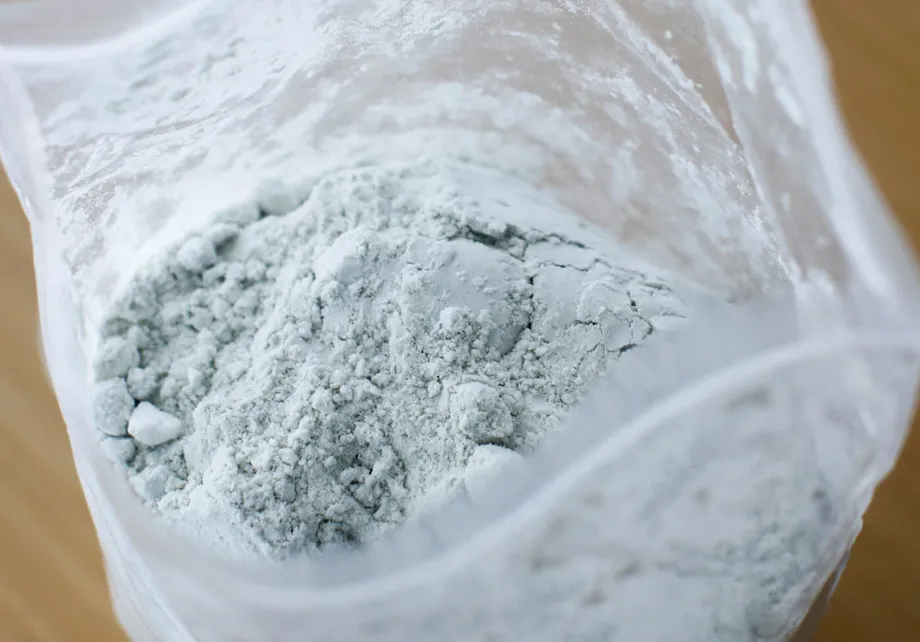
Three Drug Families Under Sweeping Controls
China has extended controls across three major families of synthetic drugs: fentanyl, synthetic cannabinoids and nitazenes. The measures, introduced in stages in 2019, 2021 and 2024, target a central weakness in drug regulation: manufacturers can change a chemical slightly and sell a new version before authorities have banned it by name.
Contents
- Three Drug Families Under Sweeping Controls
- What These Drugs Do
- How China's Category Controls Developed
- Why Nitazenes Are Difficult to Detect
- What China's Domestic Figures Show
- Fentanyl Routes Shift Toward Mexico
- Europe Faces a Growing Nitazene Market
- Online Sales Complicate Enforcement
- Treatment Must Keep Pace With Supply
- What China's Model Changes
- Key Points
By June 30, 2025, the policy had become part of a wider international struggle over powerful drugs that can travel in small packages, appear in counterfeit medicines and cause fatal overdoses before users know what they have taken. China placed all nitazenes and 12 other new psychoactive substances on its controlled drug list in 2024, following earlier controls covering fentanyl and synthetic cannabinoids.
Wu Tingfang, head of the Precursor and New Psychoactive Substance Control Division of China's Ministry of Public Security, said China was the first country to introduce controls covering the whole category for all three drug families. Wu described the measures as a response to emerging threats to public health.
an important measure to prevent the harm posed by new types of drugs and protect people's health.
China's actions reach beyond its borders because the country is the world's largest producer of chemicals and pharmaceuticals. Its businesses supply legitimate medicines and industrial materials, while some suppliers have also provided finished synthetic drugs or the chemicals used to manufacture them elsewhere.
The results span several different developments. Chinese authorities report falling numbers of registered drug users. Direct fentanyl shipments to the United States declined after the 2019 controls, while trafficking shifted toward chemicals sent to Mexico. In Europe, nitazenes have brought another threat, with suppliers using online advertising and new chemical variants to reach buyers.
What These Drugs Do
Fentanyl is a synthetic opioid, a drug made through chemical processes that can relieve severe pain. It is approximately 100 times more potent than morphine and has legitimate medical uses, particularly for patients with cancer. Illicitly manufactured fentanyl and related substances have spread through illegal markets, especially in North America, where they cause tens of thousands of overdose deaths each year. A tiny amount can be fatal.
Synthetic cannabis, also called synthetic cannabinoids, consists of manufactured chemicals designed to imitate THC, the substance responsible for the intoxicating effects of marijuana. Sellers often spray these chemicals onto plant material and market them as "herbal incense" or "spice." Their effects can be much stronger and less predictable than those of natural cannabis, including psychosis, seizures and death.
Nitazenes are another family of synthetic opioids. The Swiss pharmaceutical company CIBA first developed them in the 1950s, but they were never approved for medical use because of their extreme potency. They have since reappeared in illegal drug markets, mixed into heroin, counterfeit pills and other street drugs.
Some nitazene variants can be up to 40 times stronger than fentanyl and hundreds of times more potent than heroin. The danger grows when a person buys one drug but receives a mixture containing a much stronger opioid. Without knowing what is inside, the person has little chance to judge the risk.
How China's Category Controls Developed
Drug laws have traditionally listed individual substances. That approach leaves authorities chasing new versions: once one chemical is controlled, a manufacturer may alter its structure to produce a related substance outside the existing list.
China's model regulates whole families of substances according to their chemical structure or effects. The aim is to cover related compounds together, reducing the opportunity to escape restrictions through small changes.
The main steps unfolded over several years:
- 2019: China became the first country to impose controls covering all fentanyl related substances, despite having no large scale domestic fentanyl abuse problem.
- 2021: China extended the category approach to synthetic cannabinoids.
- Late 2023: China and the United States resumed counternarcotics cooperation after a period without cooperation.
- 2024: China added all nitazenes and 12 other new psychoactive substances to its controlled drug list.
The 2019 decision followed international pressure, particularly from the United States, which was confronting an opioid crisis fueled by fentanyl imports. Subsequent cooperation included a US-China Counternarcotics Working Group and Chinese scheduling of additional fentanyl precursors as well as nitazenes. Precursors are chemicals used to make another substance, in this case an illegal drug.
Why Nitazenes Are Difficult to Detect
Nitazenes combine very high potency with a practical advantage for traffickers: unlike heroin, which comes from poppies, they can be manufactured wherever producers have access to the necessary chemicals. Production is therefore less tied to a particular farming region.
Dr. Christopher Holstege, director of the Blue Ridge Poison Center at the University of Virginia, described the substances and the strength of some variants:
Nitazenes are psychoactive substances, or "designer drugs," that aren't controlled by any laws or conventions but pose significant health risk to the public. Some nitazenes could be hundreds to thousands of times more potent than morphine and 10 to 40 times stronger than fentanyl.
China's subsequent category controls address the legal gap described in that account. The health danger remains acute because nitazenes can be mixed into other drugs or pressed into pills that look like legitimate medicines. Consumers frequently do not know they are taking them.
Hundreds of deaths in Europe and North America have been attributed to nitazenes since 2019. Detecting the compounds requires specialized laboratory testing, and standard fentanyl test strips do not identify nitazene analogues, meaning chemically related versions. A person checking for fentanyl may therefore still be unaware that a different powerful opioid is present.
Health services also face limits in testing samples for these substances. Where laboratories cannot identify them, deaths and other poisoning cases may go uncounted as nitazene cases, making the scale of the problem harder to measure.
What China's Domestic Figures Show
The Office of China National Narcotics Control Commission said the number of registered drug users had declined for seven consecutive years. By the end of 2024, the number had fallen by 16.7% from the previous year and represented 0.054% of the population.
Chinese authorities also describe a changing pattern of drug use. Use of traditional drugs, including opioids and methamphetamine, is decreasing, while abuse involving nontraditional and unregulated substances has become more prominent. New substances therefore remain an enforcement concern even as the registered total falls.
Crackdowns on the illegal processing and trafficking of synthetic cannabis have brought substantial declines in cases, arrests and quantities seized. The category controls form part of that response, alongside police action against production and distribution.
China's Ministry of Public Security, National Health Commission and National Medical Products Administration have coordinated the controls with the aim of preserving legitimate medical, industrial and research uses. Exceptions can be made for substances with lawful purposes, and authorities may remove a substance from the controlled list when warranted.
Fentanyl Routes Shift Toward Mexico
The United States has long accused China of being the main source of illicit fentanyl and its precursors, linking those supplies to the worst drug crisis in American history. More than 70,000 US deaths were attributed to fentanyl in 2022 alone, and synthetic opioids have become the leading cause of drug overdose deaths in the country.
China's 2019 controls reduced direct shipments of finished fentanyl to the United States. Traffickers adapted by sending precursor chemicals to Mexico, where cartels manufacture fentanyl and smuggle it across the US border.
The change moved a key stage of production rather than removing the market. Finished drugs and ingredients require different enforcement responses: authorities must track chemicals that may move through commercial supply chains as well as the final illegal product.
US-China cooperation has repeatedly depended on the broader diplomatic relationship. The reopening of cooperation in late 2023 created room for joint work and additional chemical controls, but disputes including US "fentanyl tariffs" have strained those efforts.
Chinese officials have repeatedly described the fentanyl crisis as primarily a US domestic issue. They point to China's low rates of drug abuse and strict enforcement. The two governments therefore approach the same supply chain with different views about responsibility, even when both take steps against trafficking.
Europe Faces a Growing Nitazene Market
The United Kingdom, Estonia, Sweden and Ireland have seen a surge in deaths linked to nitazenes. Investigations have traced many of the substances to Chinese suppliers advertising on international trading platforms, social media and professional networking sites.
A January 20, 2025, investigation into nitazene sales found more than 1,000 online advertisements, many connected to Chinese companies. Some of those businesses were officially registered and certified, showing how sellers could present themselves through the outward structures of ordinary commerce.
Manufacturers have responded to bans on specific nitazene variants by creating new analogues outside those particular restrictions. China's broader category approach seeks to narrow that opening, while authorities elsewhere continue tracking an expanding range of substances. The European Union Drugs Agency monitors dozens of new synthetic opioids, and law enforcement agencies warn that the market is developing rapidly.
Europe also faces uncertainty over heroin supplies following the Taliban's ban on poppy cultivation in Afghanistan. Declining heroin production could create space for synthetic alternatives such as nitazenes. For consumers, a change in supply can mean a familiar purchase contains a different and much more potent drug.
Online Sales Complicate Enforcement
China has tens of thousands of pharmaceutical and chemical companies, most of them legitimate. A significant minority are involved in the illicit trade in synthetic drugs and precursors, operating within an industry whose products and shipments already move around the world.
Suppliers evade detection by mislabeling shipments, using false packaging and exploiting the volume of goods passing through international shipping networks. Highly potent opioids create an additional problem: small quantities can contain many dangerous doses, allowing traffickers to move valuable supplies in compact packages.
Online sales staff, often young graduates, may initially be unaware of the nature of the products they sell. Some continue after learning what the substances are, seeing the business as lucrative and showing little concern for the consequences.
Dr. Louise Shelley, director of the Terrorism, Transnational Crime and Corruption Center at George Mason University, described the commercial organization behind the trade:
It is criminal entrepreneurship, but in a legitimate framework which is really unique. I have not seen such professionalism and a corporate element in this anywhere else in the world. Criminal activity was a type of social mobility.
TradeAsia, TradeFord and LinkedIn remove illegal drug advertisements when notified, but replacement listings continue to appear. Police and platform operators therefore face a recurring task involving sellers, advertisements, chemical names and shipping arrangements, rather than a single listing that can be removed permanently.
Treatment Must Keep Pace With Supply
People exposed to synthetic opioids can develop overdose symptoms rapidly, especially when the substance is unexpectedly mixed into another drug. Nitazenes make that danger harder to manage because users may have no warning that they have taken an opioid at all.
Naloxone, also known by the brand name Narcan, can reverse a nitazene overdose. Larger doses or several doses may be needed. Access to the medicine remains a central part of the public health response alongside efforts to identify what substances are circulating.
The United Kingdom has classified nitazenes as Class A drugs, increased border surveillance and expanded access to naloxone. Governments elsewhere are combining criminal enforcement, regulation and measures intended to reduce deaths and other harm among people who use drugs.
Testing capacity remains a practical weakness. Specialized toxicology can identify compounds that ordinary screening misses, but many health systems lack that capacity. Underreporting then makes it harder for health officials to understand which drugs are causing poisonings and where services face the greatest pressure.
The supply chain and the emergency response meet at the same point: a person taking a substance whose contents may be unknown. Chemical controls address manufacture and distribution, while testing and naloxone address the immediate danger when those controls fail to stop a drug from reaching someone.
What China's Model Changes
China's category controls are being watched by other governments because they attempt to regulate new variants before each one becomes widely available. The approach has been credited with reducing domestic drug abuse and limiting exports of controlled substances, while enforcement gaps and rapid changes by traffickers continue to challenge it.
China's experience also shows why regulation has to reach beyond the wording of a ban. Coordination among agencies, political commitment and quick adjustments to emerging substances matter when sellers can change a product, move production or advertise through another platform.
Shan Yehua, deputy director of the Office of China National Narcotics Control Commission, described the problem as one that crosses national borders:
The control of new psychoactive substances is a difficult issue for all countries in the world. It can hardly be solved by only one country. We stand ready to contribute China's solutions and China's wisdom to addressing the challenge.
The same international reach appears throughout the trade: Chinese chemical suppliers, manufacturing in Mexico, American overdose deaths and European nitazene markets. Cooperation must connect those different points while preserving lawful access to chemicals and medicines.
Persistent demand gives traffickers a reason to search for new substances and routes in China or elsewhere. China's expanding controls address part of that system. Reducing deaths also requires sustained enforcement, reliable detection, access to overdose treatment and efforts to reduce demand.
Key Points
- China introduced category controls for fentanyl related substances in 2019, synthetic cannabinoids in 2021 and nitazenes in 2024.
- The 2024 action also added 12 other new psychoactive substances to the controlled drug list.
- Some nitazenes can be up to 40 times stronger than fentanyl and may appear in heroin or counterfeit pills without users knowing.
- China reported seven consecutive years of decline in registered drug users, including a 16.7% fall in 2024.
- Fentanyl trafficking shifted from direct shipments to the United States toward precursor supplies sent to Mexico for manufacturing.
- European nitazene deaths, online advertising and changing chemical variants continue to challenge enforcement.
- Specialized testing and access to naloxone remain essential parts of the response to synthetic opioid overdoses.
- International cooperation continues, but diplomatic disputes and adaptable trafficking networks complicate progress.