Less Than Two Hours to Be a Child
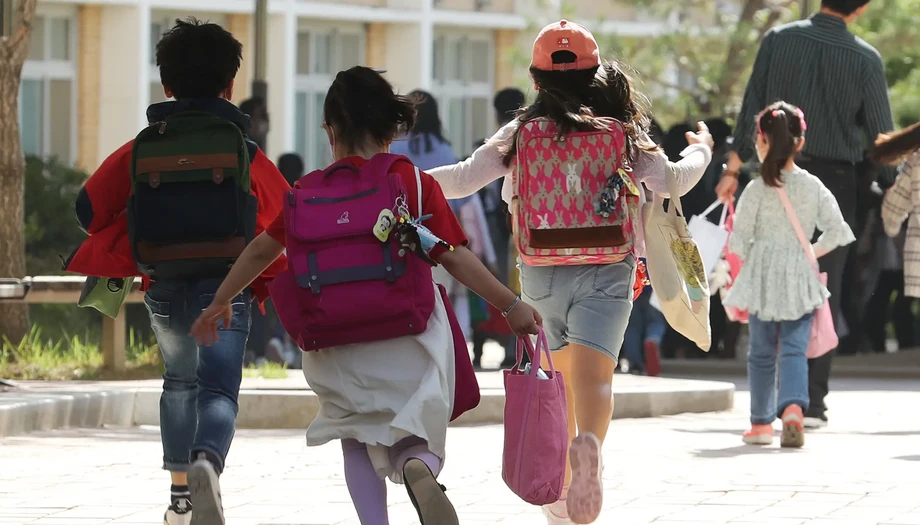
Nearly two thirds of South Korean children in fourth to sixth grade have less than two hours of free time a day. Almost 16% have less than one hour, according to a 2024 survey by the Korean Teachers & Educational Workers' Union. For many, school is followed by private academies, homework and more lessons, with little room left for play.
Contents
- Less Than Two Hours to Be a Child
- A Seoul Child's Schedule Shows the Pressure
- Record Spending Deepens the Divide
- Play Is Shrinking Inside and Outside School
- Unhappiness Accompanies Academic Achievement
- When Effort Begins to Feel Pointless
- The Entrance Exam Reaches Back Into Early Childhood
- Teachers Face Pressure From Both Sides
- A Play Curriculum Meets Parental Anxiety
- A Wider Decline in Outdoor Play
- Key Points
Families spent a record 30 trillion won, about $22.6 billion, on private education for students from kindergarten through high school in 2024, according to Statistics Korea. The spending reflects a powerful conviction: extra study is essential to securing a child's future in a society where university admission is closely tied to employment prospects and social standing.
South Korea's pursuit of educational success, often called education fever, has helped put the country near the top of global academic rankings. It has also created pressure that reaches into children's free time, parents' finances and teachers' working lives. Academic achievement and childhood happiness are increasingly difficult for families to balance.
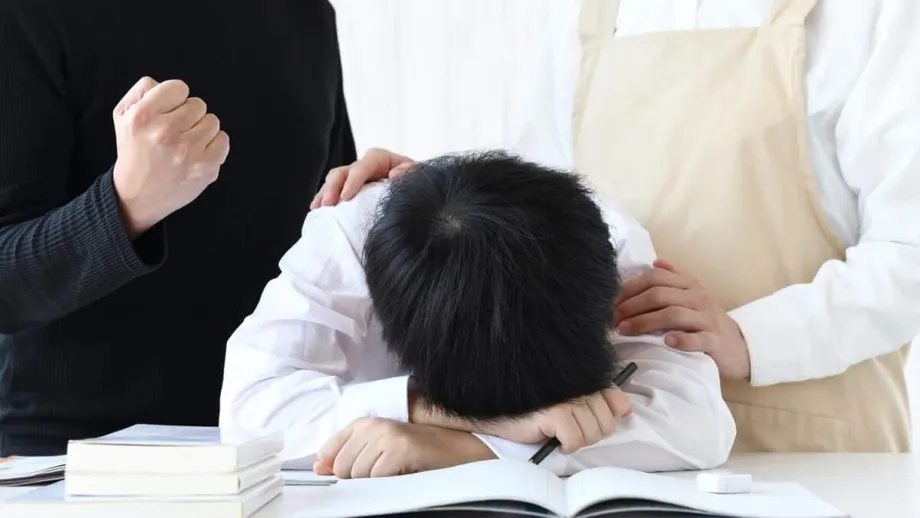
The consequences extend beyond crowded schedules. Children have fewer opportunities for active, social play, while research links academic pressure with helplessness, depression and lower satisfaction with life. Parents can feel compelled to pay for more instruction even when the expense strains the household.
Government efforts to put play back into early education face a difficult test. Teachers must translate new approaches into daily lessons, while parents worry that allowing more time to play could leave their children behind. The same fear that fills a child's timetable also makes that timetable difficult to change.
A Seoul Child's Schedule Shows the Pressure
Kim Min-jae, an 11-year-old student in Seoul, begins his day with English study, including on weekends. His routine also includes school, piano and taekwondo lessons, followed by hours of homework. When he missed one English session, he was barred from playing an online game with friends.
His mother described regular English study as a basic requirement, explaining why she believed even a short interruption mattered:
Learning English is only basic now. Because it's a language, the flow shouldn't cease.
For children following schedules like Kim's, leisure becomes something fitted around lessons or made conditional on completing them. Private academies, known as hagwons, extend instruction beyond school hours, often into weekends. Academic pressure begins early and grows as children move through school.
Parents also receive a steady message that a child's weaker subjects need more attention. Another mother described how discussions with teachers can keep families focused on shortcomings, even when a student is doing well in most areas:
Teachers always point out the weakest areas. Even if a child excels in everything except math, they'll still tell parents to help the child improve that one lower subject.
Record Spending Deepens the Divide
The 30 trillion won spent on private education in 2024 represents both an investment in children's futures and a substantial burden on families. Higher income households spend considerably more, giving their children access to more paid instruction. Families with lower incomes struggle to keep pace.
Parents' decisions are shaped by anxiety about a competitive system in which university entrance examinations can influence later opportunities. Paying for another class can feel necessary even when it adds financial pressure or takes away a child's remaining free time.
Research also connects a larger share of household income devoted to private education with higher rates of parental depression, particularly among fathers. Financial strain sits alongside the emotional responsibility parents feel for ensuring that their children do not fall behind.
Education costs reach beyond the immediate household budget. The expense of raising and educating children can contribute to decisions to have fewer children. The competition therefore affects family life in several ways at once: how money is spent, how parents feel and how many children they believe they can afford.
Play Is Shrinking Inside and Outside School
A survey covering 2,450 elementary schools found that more than 90% of students spent break time in classrooms rather than on playgrounds. School breaks, which might otherwise provide a chance to move around and meet friends, often remain periods spent indoors.
Children also spend much of their limited leisure on social media, games and videos instead of active play with others. A Welfare Ministry report found that 37.3% of elementary students were at risk of excessive smartphone use. Even during school breaks, many children work on study worksheets or attend online classes.
The COVID-19 pandemic accelerated the retreat from outdoor play when playgrounds closed. After they reopened, parental complaints about minor incidents led many schools to continue keeping children inside. Concern about small playground disputes or accidents became another constraint on time outdoors.
An elementary teacher described the attitude toward play that can develop under constant academic pressure:
Children feel guilty when they play and think it is a waste of time.
Older children face increasingly crowded lesson schedules. Tired after studying, they may turn to passive entertainment on their phones. Fewer opportunities for shared games and unstructured activity also mean less experience of teamwork, social play and creative problem solving.
Unhappiness Accompanies Academic Achievement
South Korea's strong academic results sit alongside troubling measures of children's wellbeing. In a 2022 OECD survey comparing child happiness across 22 member countries, South Korea ranked last. International surveys have repeatedly placed Korean children among the least happy in developed economies.
Suicide has been the leading cause of death among Korean young people for more than a decade, and the country's youth suicide rate is the highest in the OECD. Academic pressure is part of the wider concern about young people's mental health, alongside the strain visible in family and school life.
The problem reaches beyond examination results. A child can attend lessons, complete homework and keep working while feeling that the effort never brings enough success. Research on academic helplessness examines this experience and its connection to depression and satisfaction with life.
When Effort Begins to Feel Pointless
Studies published in BMC Public Health and Frontiers describe links between academic pressure, learned helplessness and depression. Learned helplessness is the feeling that trying will make little difference. In an academic setting, it can emerge when students repeatedly fall short of expectations despite their efforts.
Middle school can be an especially difficult stage because assessment shifts from absolute grading to relative ranking. Absolute grading measures performance against a set standard. Relative ranking compares students with one another, making a child's position depend partly on how classmates perform. Competition becomes more direct.
One large study found that depression mediates the relationship between academic helplessness and life satisfaction. In plain terms, feeling unable to succeed academically is linked to depression, which in turn is linked to feeling less satisfied with life.
Physical activity can soften these effects, and research links participation with lower rates of depression and greater life satisfaction. Yet the opportunity to be active often shrinks as academic demands grow. Children facing heavier pressure may have less time for activities associated with better mental health.
The Entrance Exam Reaches Back Into Early Childhood
The Suneung, South Korea's national college entrance examination, sits at the centre of this competition. Held once a year, it is widely regarded as a moment that can shape university admission, job prospects and social standing. Teachers and other specialists point to an outdated entrance system as a root cause of pressure that begins long before the examination itself.
On examination day, the country adjusts its routines to support candidates. Businesses open late, construction stops and flights are grounded to preserve quiet. The scale of those arrangements shows how much importance is attached to a single examination.
Preparation reaches back into kindergarten. Children as young as four attend preparatory academies, and nearly half of all children younger than six receive private education. Some critics have likened the intensity of the pressure to institutionalized child abuse.
The developments described in the debate span several years:
- 2019: The Revised Nuri Curriculum introduced an approach to early education centred on children and play.
- 2022: An OECD survey placed South Korea last for child happiness among 22 member countries.
- 2024: A teachers' union survey recorded limited daily free time among children in fourth to sixth grade, while private education spending reached 30 trillion won.
- June 26, 2025: Academic pressure, restricted playtime and the strain on families remained central concerns in the debate over children's wellbeing.
Teachers Face Pressure From Both Sides
Teachers are expected to produce academic results while also managing demanding parents. Recent prominent cases of teacher suicides have prompted national debate about working conditions, protection for educators and the need for changes to the education system.
School decisions about play show how closely parental expectations can shape everyday practice. Complaints about minor playground incidents have encouraged some schools to keep children indoors, narrowing the space available for informal activity even during breaks.
Teachers also work within a culture that asks them to identify and correct academic weaknesses. Parents then seek more instruction, while children receive the message that an area needing improvement deserves time that might otherwise go to rest or play.
A Play Curriculum Meets Parental Anxiety
The 2019 Revised Nuri Curriculum represents a government effort to change early childhood education. It puts children and play at the centre of learning instead of relying on memorization through repetition. Its approach gives exploration and children's own activity a larger place in the classroom.
Implementation has been difficult. Many teachers are uncertain about how to balance free play with learning goals. Parents can resist because they fear that time spent playing will reduce academic achievement or leave children less prepared for later competition.
International specialists and local researchers have identified several possible responses: expanding physical education in schools, limiting private academy hours and providing programs that help students cope with stress. These measures address different parts of the same daily routine, from the length of the study day to the support available when pressure becomes overwhelming.
Research also suggests that resilience, the ability to recover and keep going after setbacks, can buffer the effects of academic stress. Physical activity is another source of support. Making either widely accessible requires time in children's schedules, as well as changes in attitudes toward what counts as a valuable use of that time.
Curriculum changes alone face the wider pressures that drive families toward more lessons: competition for university places, concern about future income and the connection between educational attainment and social status. For parents, reducing study time can feel risky while those expectations remain in place.
A Wider Decline in Outdoor Play
South Korea's experience is particularly intense, but shrinking opportunities to play are also a wider concern. A report by the Raising the Nation Play Commission found that children's outdoor playtime had fallen by 50% in a generation. In other words, children were spending half as much time playing outdoors as the earlier generation.
The commission identified pressures that also appear in the Korean experience: rising academic demands, the loss of playgrounds, more screen time and overprotective parenting. The consequences described include greater stress, poorer emotional regulation and weaker problem solving skills. Emotional regulation means being able to manage feelings such as anger, disappointment or excitement.
South Korea's debate brings those pressures together with a particularly demanding education culture. The immediate stakes are concrete: whether children have time to go outside, play with friends and rest, whether parents can manage education costs, and whether schools can support learning without crowding out the rest of childhood.
Key Points
- A 2024 teachers' union survey found that 62% of children in fourth to sixth grade had less than two hours of free time daily; nearly 16% had less than one hour.
- Private education spending reached a record 30 trillion won in 2024, with wealthier families spending considerably more.
- A survey of 2,450 elementary schools found that more than 90% of students spent breaks in classrooms rather than on playgrounds.
- Research links academic helplessness with depression and lower life satisfaction, while physical activity and resilience can help buffer stress.
- Entrance examination pressure reaches into early childhood, with nearly half of children younger than six receiving private education.
- The Revised Nuri Curriculum promotes learning through play, but teachers face practical difficulties and parents fear their children will fall behind.